Halal Food Packaging Supplier Malaysia: Compliance Guide
May 25, 2026Die Cut Bag Malaysia: HDPE & Retail Branding Guide
May 25, 2026Malaysian F&B Packaging: Bakery, Sauce & Frozen
Malaysian F&B Packaging Guide: Bakery, Sauce, Frozen Snack & Traditional Food Solutions
Malaysian F&B Packaging: Bakery, Sauce & Frozen Guide
From artisanal bakeries to large-scale frozen food producers, malaysia diverse food culture — from industrial biscuits in Johor to artisanal sambal in Penang and frozen kuih in Sabah — demands packaging solutions tailored to each product category. One size does not fit all. This guide maps the right packaging structure, format, and specification to each Malaysian F&B category. This Malaysian food packaging guide covers the bakery, sauce, and frozen food sectors — three of the most active segments in Malaysia’s rapidly growing food and beverage packaging market.
Table of Contents
- Bakery & Biscuit Packaging
- Sauce, Sambal & Condiment Packaging
- Frozen Snack & Kuih Packaging
- Dry Food & Powder Packaging
- Snack & Confectionery Packaging
- Ready-to-Eat & Meal Kit Packaging
- Material Selection by Product Type
- Shelf Life Guide for Malaysian Products
- Filling & Sealing Guidelines
- Labelling & Compliance
- Supplier Selection
- Frequently Asked Questions
1. Bakery & Biscuit Packaging
For businesses in Malaysia requiring Malaysian food packaging, understanding material grades is essential.
1.1 Product Categories
| Product | Moisture Sensitivity | Recommended Structure | Closure | Shelf Life |
|---|---|---|---|---|
| Biscuits & cookies | High (goes soggy) | OPP/AL/PE or PET/AL/PE | Heat seal / ziplock | 6-9 months |
| Crackers (keropok) | Very high | PET/AL/PE | Heat seal + ziplock | 6-12 months |
| Soft cookies | Moderate (dries out) | OPP/CPP | Ziplock | 3-6 months |
| Cake & kuih lapis | High moisture | PET/PE (window pouch) | Heat seal | 3-7 days (fresh) |
| Bread & roti | Moderate | PE bag or OPP/CPP | Twist tie / adhesive | 2-5 days |
| Pau & steamed buns | Very high moisture | PE bag (perforated) | Twist tie | 1-3 days |
1.2 Malaysian Bakery Packaging Tips
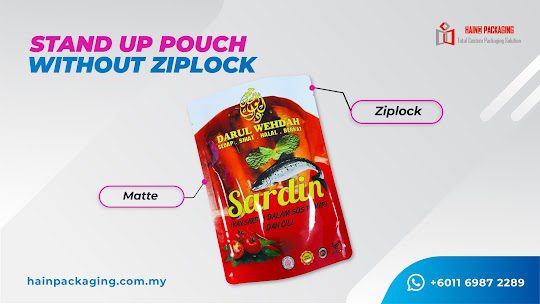
- Kuih kering (Raya cookies) — Pack in foil pouches with ziplock for Hari Raya gift market; premium matte finish for gift presentation
- Rotan kueh & traditional biscuits — Stand-up pouch with transparent window for product visibility at pasar malam and kedai runcit
- Industrial biscuits — High-volume OPP/AL/PE with rotogravure printing; nitrogen flush for extended shelf life
- Artisan bakery** — Short-run digital printed pouches (500+ MOQ) for product launches and seasonal specials
2. Sauce, Sambal & Condiment Packaging
Malaysian suppliers of Malaysian food packaging vary significantly in capability and certifications.
2.1 Product-Specific Recommendations
| Product | Viscosity | Acidity | Structure | Format | Size |
|---|---|---|---|---|---|
| Sambal belacan | Paste | Low | PET/AL/NY/PE | Spout pouch | 100-500g |
| Cili sos / kicap | Liquid | Medium | PET/AL/NY/PE | Spout pouch | 200g-1kg |
| Rendang paste | Thick paste | Low | PET/AL/NY/PE | Gusset stand-up | 200-500g |
| Oyster sauce | Thick liquid | Medium | PET/AL/NY/PE | Spout pouch | 300g-1kg |
| Single-serve condiment | Liquid/paste | Variable | OPP/AL/PE | Sachet (3-side seal) | 10-30g |
| Sos tomato / mayonnaise | Paste | Medium | PET/AL/NY/PE | Spout pouch | 200-500g |
2.2 Why Sauces Need Nylon Layer
- Puncture resistance — Chilli seeds, shrimp paste, and spice particles can puncture standard PE film
- Grease resistance — Oily sauces can delaminate PET/PE over time; nylon prevents this
- Seal integrity — Nylon layer maintains seal strength under the weight of heavy sauce
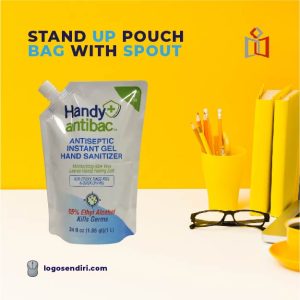
2.3 Spout Pouch Specifications
| Spout Size | Best For | Cap Type | Dosage |
|---|---|---|---|
| 9mm | Thin sauces, kicap, sos | Screw cap | Pour |
| 16mm | Thick paste, sambal, rendang | Screw cap / flip-top | Scoop |
| 28mm | Large format, bulk | Screw cap | Pour |
3. Frozen Snack & Kuih Packaging
3.1 Frozen Product Categories
| Product | Storage Temp | Structure | Format | Shelf Life |
|---|---|---|---|---|
| Frozen kuih (kuih lapis, kuih talam) | -18°C | NY/PE or PE | Flat pouch / tray pack | 6-12 months |
| Frozen curry puffs (karipap) | -18°C | NY/PE | Flat pouch | 6-9 months |
| Frozen dim sum & pau | -18°C | NY/PE | Tray + film overwrap | 6-12 months |
| Frozen otak-otak | -18°C | NY/PE | Flat pouch | 6-9 months |
| Frozen nuggets & finger food | -18°C to -25°C | NY/PE or PET/PE | Stand-up pouch with ziplock | 9-12 months |
| Ice cream & frozen dessert | -25°C | PE or OPP/PE | Tub or pouch | 12-18 months |
3.2 Freezer-Grade Requirements
- Low-temperature flexibility — PE and nylon films remain flexible at -25°C; avoid PP which becomes brittle
- Seal strength at -18°C — Heat seals must not delaminate during freeze-thaw cycles
- Frost resistance — Packaging must withstand frost formation without printing degradation
- Vacuum sealing — Recommended for frozen kuih and dim sum to prevent freezer burn
4. Dry Food & Powder Packaging
| Product | Sensitivity | Structure | Closure | Shelf Life |
|---|---|---|---|---|
| Rice & grains | Low | PE or OPP/PE | Heat seal | 12+ months |
| Flour & baking mix | Moisture | PET/AL/PE | Ziplock | 9-12 months |
| Milo & beverage powder | Moisture + aroma | PET/AL/PE | Ziplock | 12-18 months |
| Spice & rempah | Moisture + aroma | PET/AL/PE | Ziplock | 12-18 months |
| Dried seafood (ikan bilis) | Moisture + odour | PET/AL/NY/PE | Ziplock | 9-12 months |
| Bird’s nest | Moisture (premium) | PET/AL/PE (matte) | Ziplock + gift box | 18-24 months |
5. Snack & Confectionery Packaging
| Product | Key Requirement | Structure | Special Feature |
|---|---|---|---|
| Keropok (chips) | Moisture barrier | PET/AL/PE | Nitrogen flush |
| Murukku & chekarut | Moisture + breakage protection | PET/AL/PE | Ziplock, protective packaging |
| Chocolate & confectionery | Moisture + temperature | PET/AL/PE or OPP/AL/PE | Cold seal option |
| Gummy & jelly | Moisture (sticky) | OPP/CPP | Anti-block treatment |
| Dodol | Moisture + grease | PET/AL/NY/PE | Spout pouch |
6. Ready-to-Eat & Meal Kit Packaging
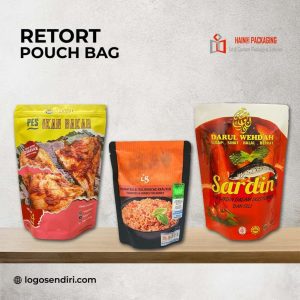
- Retort pouches — For shelf-stable ready-to-eat meals (rendang, kari, sambal). See Retort Pouch Malaysia for full guide.
- Meal kit pouches — Individual pouches for each ingredient component, assembled in outer box
- Microwaveable pouches
— CPP-based structures for microwave reheating
7. Material Selection by Product Type
| Product Category | Primary Barrier Need | Minimum Structure | Premium Structure |
|---|---|---|---|
| Dry snacks | Moisture | OPP/CPP | PET/AL/PE |
| Coffee & tea | O₂ + moisture + aroma | PET/AL/PE | PET/AL/NY/PE + valve |
| Wet sauce/paste | Leak-proof + puncture | PET/AL/NY/PE | PET/AL/NY/PE + spout |
| Frozen food | Low-temp flexibility | NY/PE | NY/PE + vacuum |
| Fresh bakery | Breathability | PE (perforated) | OPP/CPP + window |
| Powder & spice | Moisture + aroma | PET/AL/PE | PET/AL/PE + ziplock |
8. Shelf Life Guide for Malaysian Products
| Product | In Correct Foil Pouch | In Transparent Pouch | In PE Bag Only |
|---|---|---|---|
| Instant coffee powder | 12-18 months | 3-6 months | 1-2 months |
| Biscuits | 6-9 months | 2-4 weeks | 1-2 weeks |
| Sambal paste | 12-18 months | 3-6 months | 1-3 weeks |
| Frozen kuih | 6-12 months | N/A (freezer burn) | 2-4 weeks |
| Spice powder | 12-18 months | 3-6 months | 1-2 months |
9. Filling & Sealing Guidelines
9.1 Fill Temperature by Product
| Product | Fill Temperature | Seal Consideration |
|---|---|---|
| Sauce (hot fill) | 85-95°C | Heat-resistant seal layer, cool before stacking |
| Sauce (ambient) | 25-30°C | Standard seal, check for air pockets |
| Dry snacks | Ambient | Nitrogen flush optional, seal within 3s |
| Frozen products | -5 to 5°C | Ensure film is not frozen during sealing |
10. Labelling & Compliance
10.1 Mandatory Labelling (Food Regulations 1985)
- Product name
- Net weight/volume
- Ingredient list (descending order)
- Nutrition information panel
- Name and address of manufacturer/importer
- Country of origin
- Date marking (expiry or best-before)
- Storage instructions
- Halal logo (if certified)
- Allergen declaration
11. Supplier Selection
11.1 HAIN Packaging F&B Solutions
HAIN Packaging covers the full spectrum of Malaysian F&B packaging:
- Bakery: OPP/CPP, PET/AL/PE, ziplock pouches
- Sauce: PET/AL/NY/PE spout pouches in 9mm, 16mm, 28mm
- Frozen: NY/PE freezer-grade pouches and vacuum bags
- Dry food: Foil ziplock pouches for coffee, spice, powder
- Sachets: Single-serve condiment and 3-in-1 formats
- Halal: JAKIM-certified manufacturing, food-compliant inks and adhesives
- Nationwide delivery including Sabah and Sarawak
12. Frequently Asked Questions
What packaging is best for bakery products in Malaysia?
Bakery products in Malaysia require moisture-barrier packaging to maintain freshness. OPP/CPP or PET/PE stand-up pouches work for biscuits and cookies. For softer baked goods like kuih, PET/AL/PE provides superior moisture and aroma barrier. Add ziplock for consumer resealability.
How to package sambal and chilli paste?
Sambal and chilli paste should be packaged in PET/AL/NY/PE stand-up pouches (120-140μ) with spout or ziplock closure. The nylon layer provides puncture resistance against oil and particulate content. Spout pouches offer convenient dispensing for home cooks.
What packaging keeps frozen kuih fresh?
Frozen kuih and traditional snacks require PE or NY/PE pouches that withstand freezing temperatures (-18°C to -25°C) without becoming brittle. Vacuum sealing extends shelf life to 6-12 months. Avoid foil pouches for frozen items as they may crack at very low temperatures.
Can I use the same pouch for dry and wet food?
No. Dry foods (biscuits, snacks) need moisture barrier (OPP/CPP or PET/PE). Wet or oily foods (sambal, rendang) require stronger structures (PET/AL/NY/PE) with higher seal strength and grease resistance. Using the wrong structure leads to seal failure or shelf life reduction.
What is the typical MOQ for food packaging in Malaysia?
MOQ for custom-printed food pouches in Malaysia typically starts from 3,000-5,000 pieces for flexographic printing. Plain stock pouches are available from 500 pieces. Digital printing enables orders from 500 pieces for prototyping.
How to extend shelf life of Malaysian food products?
Extend shelf life by: (1) choosing the right barrier material (foil for oxygen-sensitive, PE for moisture barrier), (2) nitrogen flushing for oxygen reduction, (3) proper heat sealing with verified seal strength, (4) storage below 25°C, and (5) using appropriate thickness for product weight and shelf life target.
13. Packaging Machinery for Malaysian F&B
13.1 Filling Machine Selection by Product Type
| Product Type | Filling Method | Speed | Accuracy | Investment (RM) |
|---|---|---|---|---|
| Powder (coffee, flour) | Auger filler | 30-60 pouches/min | ±1-2% | 25,000-80,000 |
| Liquid (sauce, kicap) | Piston filler | 20-40 pouches/min | ±1% | 30,000-100,000 |
| Paste (sambal, rendang) | Piston / servo filler | 15-30 pouches/min | ±1-2% | 40,000-120,000 |
| Granules (snack, keropok) | Volumetric / weigh filler | 20-50 pouches/min | ±2-5% | 20,000-60,000 |
| Counted items (biscuits) | Counting + collation | 15-30 pouches/min | 100% count | 40,000-150,000 |
13.2 Sealing Machine Options
- Impulse sealer — Basic, low-cost (RM 200-2,000). Suitable for PE bags and low-volume operations.
- Constant heat sealer — Consistent seal quality (RM 2,000-10,000). For laminated pouches and medium volume.
- Band sealer — Continuous sealing for high speed (RM 5,000-20,000). Stand-up pouch production lines.
- Vacuum sealer — For frozen food and fresh products (RM 3,000-30,000). Removes air before sealing.
14. Malaysian F&B Packaging Regulations Deep Dive
14.1 Food Regulations 1985 — Packaging Specifics
Regulation 24 of the Food Regulations 1985 specifically addresses packaging:
- Packaging must not transfer odour, taste, or toxic substances to food
- Printing ink on the inner surface of packaging is prohibited
- Materials must comply with Malaysian or internationally recognised standards
- Packaging for irradiated food must be approved by the Atomic Energy Licensing Board
14.2 Labelling Requirements Summary
| Requirement | Language | Size Minimum | Position |
|---|---|---|---|
| Product name | Malay or Malay+English | Legible | Principal display |
| Net weight/volume | SI units | Legible | Principal display |
| Ingredient list | Malay or Malay+English | Legible | Any panel |
| Nutrition info | Malay or English | Per NIP format | Any panel |
| Date marking | DD/MM/YY or DD Month YY | Legible | Any panel |
| Halal logo | JAKIM format | Per JAKIM guidelines | Any panel |
| Manufacturer details | Malay or English | Legible | Any panel |
15. Seasonal Packaging Demand in Malaysia
15.1 Hari Raya Aidilfitri
Malaysia biggest packaging demand spike — kuih raya, biscuit tins, rendang and kari retort packs, gift hampers: Hain Packaging provides complete food packaging solutions across bakery, sauce, and frozen food categories in Malaysia.
- Demand peak: 2-3 months before Raya (March-May)
- Key products: Kuih kering pouches, cookie packaging, Raya gift bags, festive retort packs
- Planning lead time: 4-6 months (order by November-December)
15.2 Chinese New Year
- Key products: Mandarin orange bags, pineapple tart packaging, bak kwa pouches, CNY gift bags (red/gold)
- Planning lead time: 3-4 months
15.3 Deepavali
- Key products: Murukku and snack pouches, sweetmeat packaging, gift packaging
- Planning lead time: 2-3 months
15.4 Year-Round Opportunities
- Monthly pasar malam cycles (weekend markets)
- School holiday snack demand spikes (March, June, September, December)
- E-commerce packaging demand (11.11, 12.12 sales events)
16. F&B Packaging Innovation Trends in Malaysia
16.1 Smart Packaging
- QR code integration — Scan for recipes, provenance, or promotional content. Low cost (same printing process), high consumer engagement.
- Time-temperature indicators (TTI) — Colour-changing labels showing temperature abuse history. Growing demand for frozen and chilled products.
- Freshness sensors — Detect spoilage gases within packaging. Pilot programmes in Malaysian supermarket chains.
- NFC tags — Tap-to-verify authenticity. Premium product anti-counterfeiting application.
16.2 Sustainable Packaging Innovations
| Innovation | Status in Malaysia | Cost Impact | Shelf Life Impact |
|---|---|---|---|
| Monomaterial PE pouches | Available (limited barrier) | +10-20% | Reduced vs foil |
| Paper-based barrier pouches | Available (coffee, dry food) | +15-30% | Comparable to foil |
| Compostable PLA pouches | Available (short shelf life only) | +40-80% | Significantly reduced |
| Recycled-content pouches | Emerging (food-grade rPET) | +5-15% | Comparable to virgin |
| Edible packaging | R&D stage | TBD | Limited |
16.3 Convenience Features
- Easy-tear notches — Pre-scored tear points for easy opening without scissors
- Resealable zippers — Press-to-close ziplock for multi-use products
- Pour spouts — Controlled dispensing for liquid and powder products
- Microwaveable pouches — CPP-based structures for reheating
- Boil-in-bag — Retort-compatible pouches that can be heated in boiling water
17. F&B Packaging Cost Optimisation
17.1 Volume-Based Savings
| Order Size | Flexo Print (3-colour) | Rotogravure (6-colour) |
|---|---|---|
| 3,000 pcs | RM 0.40-0.60/pc | N/A |
| 5,000 pcs | RM 0.30-0.50/pc | RM 0.50-0.80/pc |
| 10,000 pcs | RM 0.22-0.40/pc | RM 0.35-0.60/pc |
| 25,000 pcs | RM 0.18-0.30/pc | RM 0.25-0.45/pc |
| 50,000+ pcs | RM 0.15-0.25/pc | RM 0.20-0.35/pc |
17.2 Design-to-Cost Tips
- Reduce colour count — Every additional colour adds RM 0.02-0.05/pc. Use 2-3 colours instead of 6-8.
- Standardise sizes — Use the same pouch size across 3-4 SKUs; reduces tooling and setup costs.
- Order ahead — 4-6 week lead time vs 2-week rush orders (which cost +20-30%).
- Bundle SKUs in one print run — Multiple designs on the same print run (versioning) saves setup costs.
- Consider stock pouches — Plain or single-colour stock pouches with adhesive labels for low-volume SKUs.
18. F&B Packaging Troubleshooting Guide
| Problem | Product Type | Root Cause | Solution |
|---|---|---|---|
| Soggy biscuits | Bakery | Moisture ingress through insufficient barrier | Upgrade to foil laminate (OPP/AL/PE); check seal integrity |
| Sambal pouch leaking | Sauce | Sharp particulate puncturing film or weak seal | Use PET/AL/NY/PE with nylon layer; increase seal width |
| Freezer burn on kuih | Frozen | Moisture loss from poor seal or non-vacuum packaging | Vacuum seal in NY/PE; ensure complete seal |
| Coffee aroma loss | Coffee | O₂ ingress through valve or seal leak | Test valve function; verify seal integrity with dye test |
| Snack oil staining pouch | Snack | Oil migration through inner PE layer | Use OPP/AL/PE with grease-resistant inner layer |
| Sachet seal failure | Condiment | Product contamination on seal area during filling | Install filler nozzle with drip-cut; add seal area cleaning |
| Product clumping in pouch | Powder | Moisture ingress or insufficient desiccant | Switch to foil laminate; add desiccant sachet if needed |
| Colour fading on sauce | Sauce | Light exposure through transparent packaging | Use foil laminate (opaque); add UV inhibitor if transparent needed |
19. F&B Packaging Decision Flowchart
Use this decision tree to select the right packaging structure:
- Is the product wet/oily? → Yes → Use PET/AL/NY/PE (nylon for puncture resistance)
- Is the product dry? → Yes → Is moisture the main enemy? → Yes → Use PET/AL/PE (foil barrier)
- Dry product, low moisture sensitivity? → Use OPP/CPP or OPP/PE (economical)
- Is the product frozen? → Yes → Use NY/PE (freezer-grade, no foil)
- Is it a ready-to-eat meal requiring sterilisation? → Yes → Use PET/AL/NY/CPP (retort-grade)
- Is it a liquid needing dispensing? → Yes → Use PET/AL/NY/PE with spout
- Is it a single-serve portion? → Yes → Use OPP/AL/PE sachet format
20. F&B Packaging Success Stories in Malaysia
20.1 Case Study: Premium Sambal Brand
A Penang sambal manufacturer switched from glass jars to spout pouches and achieved:
- Cost reduction: 40% lower packaging cost per unit (jar RM 1.20 vs spout pouch RM 0.72)
- Shipping savings: 60% weight reduction per unit; double the quantity per pallet
- Sales growth: 35% increase in first year due to lower retail price point
- Consumer preference: 78% of surveyed consumers preferred spout pouch for ease of use
20.2 Case Study: Frozen Kuih Expansion
A Kelantan frozen kuih brand expanded from local pasar to nationwide supermarket distribution by:
- Upgrading from simple PE bags to vacuum-sealed NY/PE pouches
- Adding custom printing with brand identity and preparation instructions
- Extending shelf life from 2 months (PE bag) to 9 months (vacuum NY/PE)
- Enabling distribution to Sabah and Sarawak without quality degradation
- Revenue growth: 150% in 18 months after packaging upgrade
20.3 Key Takeaways
- Packaging upgrades directly drive market access and revenue growth
- Consumer convenience features (spout, ziplock, easy-tear) command premium positioning
- Shelf life extension enables geographic expansion beyond local markets
- Packaging cost should be evaluated per-sale, not per-unit — better packaging enables more sales
21. F&B Packaging Quick Reference Card
21.1 Structure Selection by Product
Quick reference for Malaysian F&B products:
- Dry snacks (keropok, murukku): PET/AL/PE stand-up + ziplock
- Biscuits & cookies: OPP/AL/PE or PET/AL/PE heat seal
- Sambal & chilli paste: PET/AL/NY/PE spout pouch (16mm)
- Frozen kuih & dim sum: NY/PE vacuum pouch
- Coffee beans: PET/AL/PE + valve + ziplock
- 3-in-1 sachets: OPP/AL/PE stick pack
- Rendang & kari (retort): PET/AL/NY/CPP stand-up
- Honey & syrup: PET/AL/PE spout pouch (9mm)
21.2 Supplier Contact Template
When contacting HAIN Packaging for F&B packaging, have the following ready:
- Product type and description
- Current packaging format (if any)
- Fill weight and size requirements
- Desired shelf life
- Monthly volume estimate
- Print requirements (colours, design status)
- Halal certification requirement (yes/no)
- Target delivery date
This Malaysian food packaging guide is regularly updated to reflect the latest JAKIM requirements and ASEAN packaging standards.
Whether you’re launching a new F&B brand or expanding distribution, this Malaysian food packaging guide provides the supplier evaluation framework you need.
This Malaysian food packaging guide covers key supplier evaluation criteria for bakery, sauce, and frozen food packaging.
Related Articles
- Food Packaging Supplier Malaysia: How to Choose
- Bakery, Biscuit & Snack Packaging Malaysia
- Traditional Malaysian & Frozen Snack Packaging
- Sauce, Sambal & Condiment Packaging Malaysia
- Halal & Food Safe Packaging Malaysia
- Flexible Packaging MOQ & Pricing Malaysia
Cross-Cluster Resources
- Spout Pouch Malaysia
- Sachet Packaging Malaysia
- Ziplock Bag Malaysia
- Packaging Supplier Malaysia
- Eco Friendly Packaging Malaysia
About HAIN Packaging
HAIN Packaging provides category-specific packaging solutions for Malaysia diverse food industry — from bakery to sauce, frozen to dry, and everything in between.
📞 WhatsApp: +60 12-345 6789
📧 Email: [email protected]
🌐 Website: logosendiri.com The Food Packaging Forum provides authoritative guidance on food-grade packaging materials and safety standards relevant to Malaysian producers. The Food Packaging Forum provides authoritative guidance on food-grade packaging materials and safety standards.
For expert guidance on your packaging requirements, contact HAIN Packaging for customised solutions and competitive pricing.