Aluminium Foil Pouch Malaysia: Materials & Applications
May 25, 2026Halal Food Packaging Supplier Malaysia: Compliance Guide
May 25, 2026Coffee Packaging Malaysia: Formats & Freshness Guide
Coffee Packaging Malaysia: Formats & Freshness Guide
With Malaysia’s coffee culture booming across the peninsula, malaysia coffee culture is booming — from traditional kopi O stalls to third-wave speciality roasters in Kuala Lumpur. The right packaging is the difference between coffee that delights and coffee that disappoints. This guide covers every aspect of coffee packaging for the Malaysian market: pouch formats, barrier materials, one-way degassing valves, freshness science, and supplier selection.
Table of Contents
- Malaysia Coffee Market Overview
- Coffee Pouch Formats
- Barrier Materials for Coffee
- One-Way Degassing Valve Guide
- Freshness Preservation Science
- Traditional Kopi Packaging
- Speciality Coffee Packaging
- Instant & 3-in-1 Coffee Sachets
- Cold Brew & RTD Coffee Packaging
- Coffee Pouch Sizing Guide
- Printing & Customisation
- Supplier Selection
- Frequently Asked Questions
1. Malaysia Coffee Market Overview
1.1 Market Size & Segments
Malaysia coffee market is valued at approximately RM 5.2 billion (2026), split across:
Throughout this guide on coffee packaging Malaysia, we examine the key factors Malaysian businesses should evaluate when selecting packaging solutions.
- Traditional kopi (45%) — Kopitiam, kopi O, kopi susu, Ipoh white coffee
- Instant & 3-in-1 (35%) — Nescafé, Kopi Kenangan, private label
- Speciality coffee (15%) — Third-wave roasters, single-origin, premium blends
- Ready-to-drink (RTD) (5%) — Canned and bottled cold coffee
1.2 Packaging Demands by Segment
| Segment | Primary Format | Key Requirement |
|---|---|---|
| Traditional roasters | Foil stand-up pouch | Cost-effective, good barrier |
| Speciality roasters | Premium foil pouch with valve | Freshness, branding, sustainability |
| Instant coffee | Sachet / stick pack | Portion control, speed |
| Café retail | Branded pouch + ziplock | Shelf appeal, resealability |
| White label / OEM | Standard foil pouch | Low MOQ, fast turnaround |
2. Coffee Pouch Formats
For businesses in Malaysia requiring coffee packaging, understanding material grades is essential.
2.1 Stand-Up Pouch (Doypack)
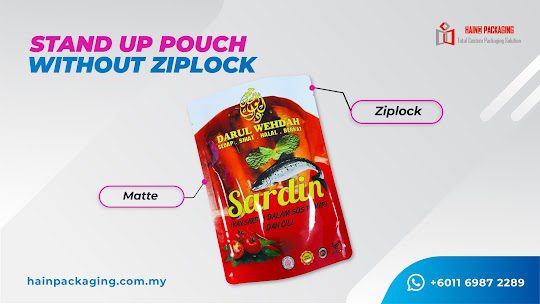
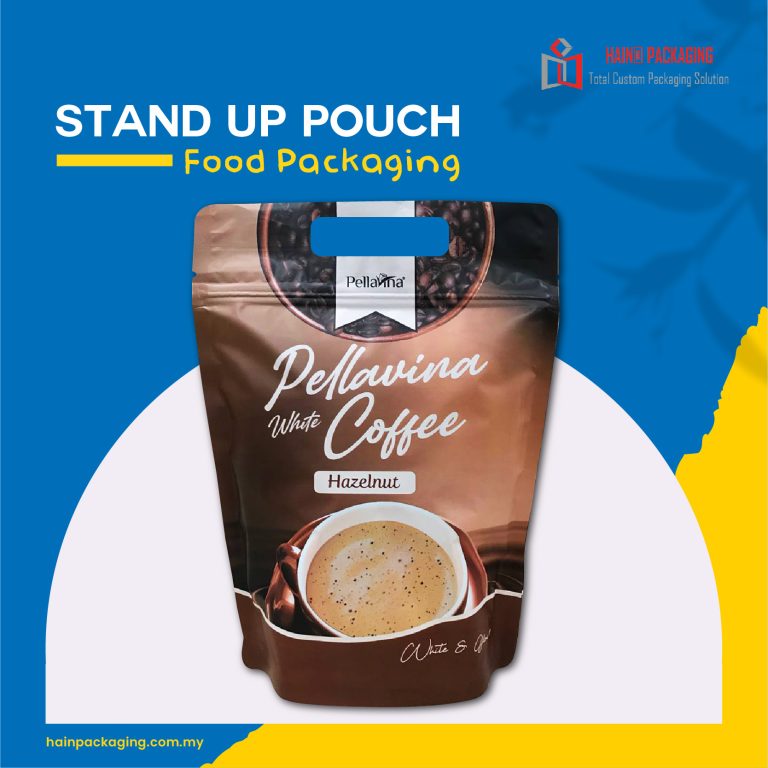
The most popular coffee packaging format in Malaysia. Bottom gusset allows the pouch to stand upright on retail shelves.
- Structure: PET/AL/PE with optional ziplock and degassing valve
- Sizes: 100g, 250g, 500g, 1kg
- Pros: Excellent shelf presence, large printable area, consumer-friendly
- Cons: Higher material cost than flat pouches
2.2 Flat Bottom / Block Bottom Bag
Premium format with flat bottom panel for stable standing and professional presentation. Popular with speciality roasters.
- Structure: PET/AL/PE, 5-panel construction
- Pros: Maximum shelf stability, premium appearance, large branding area
- Cons: Higher cost, larger MOQ
2.3 Side-Gusset Bag
Traditional coffee bag format with side gussets. Efficient for packing and stacking.
- Structure: PET/AL/PE with tin tie or valve
- Pros: Cost-effective, efficient packing line speed
- Cons: Less shelf presence than stand-up pouch
2.4 3-Side Seal Flat Pouch
Economical format for sample packs and small quantities.
- Structure: PET/AL/PE
- Best for: 30g-100g sample packs, tasting sets, B2B sample bags
- Pros: Lowest cost, fast production
2.5 Stick Pack / Sachet
Single-serve format for instant coffee, 3-in-1 mixes, and drip coffee.
- Structure: OPP/AL/PE or PET/AL/PE (thin gauge)
- Sizes: 10g-40g single-serve
- Production: High-speed FFS (form-fill-seal) lines at 60-120 packs/minute
3. Barrier Materials for Coffee
Malaysian suppliers of coffee packaging vary significantly in capability and certifications.
3.1 Why Coffee Needs Aluminium Foil
Coffee is one of the most sensitive food products to oxygen, moisture, and light. The “flavour staircase” of coffee degradation is rapid without proper barrier:
| Time After Roasting | Exposed to Air | In Foil Pouch (O₂ <0.01) |
|---|---|---|
| Day 1 | Peak freshness | Peak freshness |
| Week 1 | Noticeable staling | Full freshness |
| Week 2 | Dull, flat flavour | Full freshness |
| Month 1 | Stale, papery taste | Full freshness |
| Month 3 | Undrinkable | Slight aroma softening |
| Month 6 | — | Good quality |
| Month 12 | — | Acceptable quality |
3.2 Recommended Laminate Structures
| Coffee Type | Structure | Thickness | Shelf Life |
|---|---|---|---|
| Whole bean (premium) | PET/AL/PE + valve + ziplock | 120μ | 12-18 months |
| Ground coffee | PET/AL/PE + valve | 110μ | 6-12 months |
| Traditional kopi | PET/AL/PE | 100μ | 9-12 months |
| Instant / 3-in-1 sachet | OPP/AL/PE | 70-80μ | 12-18 months |
| Cold brew (liquid) | PET/AL/NY/PE spout | 130μ | 6-12 months (refrigerated) |
4. One-Way Degassing Valve Guide
4.1 How Degassing Valves Work
After roasting, coffee beans release carbon dioxide (CO₂) — a process called degassing. Peak degassing occurs in the first 24-72 hours, with continued release for up to 7 days. Without a valve:
- CO₂ builds up inside the sealed bag
- Bag inflates like a balloon and may burst
- Forced CO₂ can compromise seal integrity
A one-way valve allows CO₂ to escape while preventing O₂ from entering — the single most important feature for freshly roasted coffee packaging.
4.2 Valve Types
| Valve Type | Mechanism | Opening Pressure | Best For |
|---|---|---|---|
| Standard foam valve | Foam disc opens under CO₂ pressure | 3-5 mbar | General coffee packaging |
| High-flow valve | Larger aperture for dark roasts | 2-3 mbar | Dark roast, high-volume degassing |
| Aroma valve | Pressure + aroma release | 3-5 mbar | Speciality retail (customers smell coffee) |
| Filter valve | Integrated filter prevents particles | 3-5 mbar | Ground coffee |
4.3 Valve Placement Options
- Back panel (most common) — Unobtrusive, does not interfere with front design
- Front panel — Visible, can be branded with logo on valve cap
- Bottom gusset — Hidden, maximum front branding area
5. Freshness Preservation Science
5.1 Enemies of Coffee Freshness
- Oxygen (O₂) — Primary staling agent; oxidises lipids and aromatic compounds
- Moisture — Accelerates chemical reactions, causes clumping in ground coffee
- Light — UV and visible light catalyse photo-oxidation of coffee oils
- Heat — Accelerates all degradation reactions (Q10 rule: every 10°C doubles reaction rate)
- Time — Even in perfect packaging, slow chemical changes continue
5.2 Nitrogen Flushing
Nitrogen flushing replaces oxygen in the headspace with inert nitrogen gas (N₂):
- Reduces residual O₂ to <2% (target <1%)
- Common in commercial coffee packaging in Malaysia
- Requires packaging line with N₂ injection system
- Extends shelf life by 3-6 months vs non-flushed packaging
6. Traditional Kopi Packaging
6.1 Ipoh White Coffee
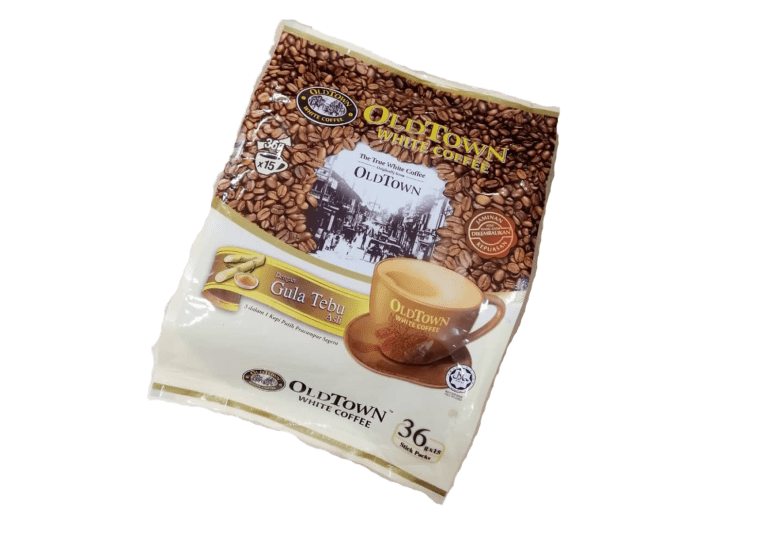
Malaysia most iconic coffee export requires packaging that preserves its signature smooth, light-roast character:
- Format: Stand-up pouch or side-gusset bag
- Structure: PET/AL/PE (100-120μ)
- Features: Ziplock for resealability, traditional branding elements
- Common sizes: 200g, 400g, 1kg
6.2 Kopi O & Kopi Susu Premix
- Format: Sachet / stick pack for single-serve
- Structure: OPP/AL/PE (70μ) — adequate barrier for dried powder
- Sizes: 20g-40g per sachet
- Production: High-speed FFS lines
7. Speciality Coffee Packaging
7.1 What Speciality Roasters Need
- Premium materials — Matte-finish PET for tactile experience
- Degassing valve — Mandatory for fresh-roast packaging
- Origin story space — Room for roast date, origin, processing method, tasting notes
- Sustainability — Compostable or recyclable options increasingly demanded
- Low MOQ — Small-batch roasters need 500-2,000 piece orders
7.2 Eco-Friendly Coffee Packaging
| Option | Barrier | Compostable | Cost Premium | Shelf Life |
|---|---|---|---|---|
| Standard PET/AL/PE | Excellent | No | Baseline | 12-18 months |
| Paper/AL/PE laminate | Excellent | No | +10-15% | 12-18 months |
| PLA/AL/PE | Excellent | Partially | +25-40% | 12-18 months |
| Compostable (no foil) | Moderate | Yes | +40-80% | 3-6 months |
8. Instant & 3-in-1 Coffee Sachets
Tea brands use the same sachet formats — our tea packaging Malaysia guide compares the formats, barriers, and printing options side by side.
- Market size: RM 1.8 billion in Malaysia (2026 est.)
- Format: Stick pack or 4-side seal sachet
- Structure: OPP/AL/PE or PET/AL/PE (60-80μ)
- Size range: 15g-40g per sachet
- Production speed: 60-120 sachets/minute (automatic FFS)
- Key feature: Accurate fill weight (±0.5g), strong seal integrity (no moisture ingress)
9. Cold Brew & RTD Coffee Packaging
- Format: Spout pouch or stand-up pouch with spout cap
- Structure: PET/AL/NY/PE (130-150μ) — heavy-duty for liquid weight
- Spout size: 9mm or 16mm diameter screw cap
- Storage: Refrigerated (2-8°C), shelf life 6-12 months
- Growing segment: Cold brew coffee in Malaysia growing 25% annually
10. Coffee Pouch Sizing Guide
| Size | Dimensions | Capacity | Best For |
|---|---|---|---|
| Sample (30-100g) | 80×140mm | Tasting, B2B samples | Café promotions |
| Small (200-250g) | 130×210+40mm BG | Standard retail | Speciality, premium |
| Medium (450-500g) | 160×240+60mm BG | Family size | Traditional kopi |
| Large (1kg) | 200×300+80mm BG | Wholesale, commercial | Café supply, OEM |
11. Printing & Customisation
| Customisation | Options | MOQ Impact | Lead Time |
|---|---|---|---|
| Flexographic print | Up to 8 colours | 5,000 pcs | 2-3 weeks |
| Rotogravure print | Up to 10 colours | 10,000 pcs | 4-5 weeks |
| Digital print | Full CMYK + white | 500 pcs | 1-2 weeks |
| Matte over-laminate | Soft-touch finish | 5,000 pcs | +3-5 days |
| Custom valve cap colour | Match brand colour | 10,000+ valves | +5-7 days |
| Spot UV / embossing | Tactile branding | 10,000 pcs | +5-7 days |
12. Supplier Selection
12.1 HAIN Packaging Coffee Solutions
HAIN Packaging provides complete coffee packaging solutions for the Malaysian market:
- All pouch formats: stand-up, flat bottom, side-gusset, sachet, stick pack
- One-way degassing valves (standard, high-flow, aroma)
- Aluminium foil and eco-friendly laminate options
- In-house printing (flexographic, rotogravure, digital)
- Ziplock, tin tie, spout, and velcro closures
- Low MOQ for small-batch speciality roasters
- Nationwide delivery including East Malaysia
13. Frequently Asked Questions
What packaging is best for coffee in Malaysia?
The best coffee packaging in Malaysia is an aluminium foil stand-up pouch (PET/AL/PE) with a one-way degassing valve and ziplock closure. This combination provides maximum oxygen and moisture barrier while allowing CO₂ to escape from freshly roasted beans. Hain Packaging delivers custom coffee packaging solutions in Malaysia with degassing valves and high-barrier materials.
Do I need a one-way valve for coffee bags?
Yes, if you package coffee within 48 hours of roasting. Freshly roasted coffee releases CO₂ for 3-7 days after roasting. Without a valve, this gas build-up can inflate and burst the bag. The one-way valve lets CO₂ out while preventing O₂ from entering.
What is the MOQ for custom coffee packaging in Malaysia?
MOQ for custom-printed coffee pouches in Malaysia typically starts from 3,000-5,000 pieces for flexographic printing and 10,000+ for rotogravure. Digital printing options are available from 500 pieces for prototyping or limited edition runs.
How long does coffee stay fresh in foil pouches?
Whole bean coffee stays fresh for 12-18 months in sealed aluminium foil pouches. Ground coffee has a shorter freshness window of 6-12 months due to increased surface area exposure. Once opened, consume within 2-4 weeks and reseal with ziplock.
Can I use transparent pouches for coffee?
Transparent or clear window pouches are not recommended as primary coffee packaging. Light exposure accelerates staling and flavour degradation. If a window is desired for branding, keep it small and position it away from direct light exposure.
What sizes do coffee pouches come in?
Common coffee pouch sizes in Malaysia include 100g (sample), 250g (standard retail), 500g (family size), and 1kg (commercial/wholesale). Custom sizes are available for speciality roasters with MOQ requirements.
14. Coffee Packaging Machinery & Filling Lines
14.1 Semi-Automatic vs Automatic Filling
| Factor | Semi-Automatic | Fully Automatic |
|---|---|---|
| Speed | 10-20 pouches/min | 30-80 pouches/min |
| Fill accuracy | ±2-5g | ±0.5-2g |
| Staff required | 2-3 operators | 1 operator |
| Investment | RM 15,000-40,000 | RM 80,000-300,000 |
| Best for | Small roasters (≤500 kg/month) | Medium-large roasters (500+ kg/month) |
14.2 Nitrogen Flushing Equipment
Nitrogen flushing systems for coffee packaging in Malaysia:
- Spray lance system — N₂ injected into pouch before sealing. Reduces residual O₂ to 2-3%. Cost: RM 5,000-15,000 add-on.
- Vacuum + N₂ back-flush — Pouch evacuated then back-filled with N₂. Achieves <1% residual O₂. Cost: RM 15,000-40,000.
- Modified atmosphere packaging (MAP) — Precise gas mixture control. Premium option for export-grade packaging. Cost: RM 30,000-80,000.
14.3 Valve Application Equipment
- Manual valve applicator — Hand-placed valve, heat-welded. Speed: 5-10 pouches/min. Cost: RM 3,000-8,000.
- Semi-auto valve applicator — Auto-feed valves, manual pouch positioning. Speed: 15-25 pouches/min. Cost: RM 15,000-30,000.
- In-line valve application — Integrated into pouch making machine. Speed: 50-100+ pouches/min. Cost: RM 50,000-150,000.
15. Coffee Packaging Market Trends in Malaysia
15.1 Growth Segments
- Speciality coffee — Growing 20-25% annually; demand for premium packaging with degassing valves, matte finishes, and sustainability claims
- E-commerce coffee — Online coffee sales grew 40% during COVID-19 and continue at 15-20% growth; need for protective packaging that survives courier handling
- White label / OEM — Growing segment of café chains launching retail bags; low MOQ and fast turnaround essential
- Cold brew RTD — Spout pouch format growing 25% annually for liquid coffee products
15.2 Sustainability Pressures
| Sustainability Initiative | Impact on Coffee Packaging | Timeline |
|---|---|---|
| Zero single-use plastics roadmap | Shift from multi-layer to recyclable structures | 2025-2030 |
| EPR legislation | Producer responsibility for end-of-life packaging | 2026-2027 |
| Compostable packaging demand | PLA and cellulose-based alternatives gaining share | Ongoing |
| Carbon footprint labelling | LCA-based carbon labels on packaging | 2027+ |
15.3 Design Trends
- Minimalist design — Clean, modern aesthetics with origin storytelling
- Roast date prominence — Roast date displayed prominently on front panel
- QR code integration — Link to brewing guides, origin story, or subscription
- Transparency — Small windows for bean visibility (with barrier trade-off)
- Matte/satin finish — Premium tactile experience driving brand differentiation
16. Coffee Packaging for Malaysian Retail Channels
16.1 Supermarket & Hypermarket
- Requirements: Eye-catching design, stand-up format for shelf presentation, clear branding visible from 3+ metres
- Recommended: PET/AL/PE stand-up pouch with ziplock, rotogravure printing (8-10 colours)
- Key metric: Shelf presence score — how well the pouch stands out among competitors
16.2 Online & E-Commerce
- Requirements: Protective outer carton, robust seal to survive courier handling, clear product identification
- Recommended: PET/AL/PE with reinforced seal, individual carton packaging for shipping
- Key consideration: Coffee bags with valves may be punctured by automated sorting machines — add protective overwrap
16.3 Café & Specialty Retail
- Requirements: Premium presentation, small batch flexibility, roast date visibility
- Recommended: Matte PET/AL/PE with valve, digital printing for low MOQ
- Key trend: Subscription model — weekly or monthly roast bags with rotating origins
16.4 OEM & White Label
- Requirements: Cost-effective, fast turnaround, consistent quality across batches
- Recommended: Standard PET/AL/PE with flexographic printing, 2-3 colour design
- Key consideration: Design template system allowing easy brand swap without new plate costs
17. Coffee Packaging Cost Calculator
17.1 Cost Breakdown per Unit (250g Pouch)
| Component | Cost Range (RM) | % of Total |
|---|---|---|
| Pouch (PET/AL/PE, custom printed) | 0.50-1.00 | 60-70% |
| One-way degassing valve | 0.03-0.08 | 5-10% |
| Ziplock closure | 0.05-0.10 | 5-10% |
| Printing setup (amortised) | 0.05-0.15 | 5-15% |
| Filling & sealing labour | 0.05-0.15 | 5-15% |
| Total per unit | 0.68-1.48 | 100% |
17.2 Volume Price Breaks
| Order Quantity | Price per Pouch (RM) | Saving vs 5K |
|---|---|---|
| 5,000 | 1.00-1.48 | Baseline |
| 10,000 | 0.80-1.20 | 15-20% |
| 25,000 | 0.65-1.00 | 25-35% |
| 50,000 | 0.55-0.85 | 35-45% |
| 100,000+ | 0.45-0.70 | 45-55% |
18. Coffee Packaging Troubleshooting Guide
| Problem | Root Cause | Solution |
|---|---|---|
| Bag inflated like balloon | No degassing valve; freshly roasted coffee emitting CO₂ | Install one-way degassing valve; allow degas period before sealing |
| Coffee stales within weeks | Poor barrier (no foil) or seal leak | Switch to PET/AL/PE; verify seal integrity |
| Valve leaking air IN | Defective or incorrectly installed valve | Test valve direction; replace defective valve stock |
| Ziplock fails to close | Coffee grounds in zip track | Fill below ziplock line; clean zip before closing |
| Pouch collapses on shelf | Insufficient headspace; vacuum too strong | Reduce vacuum; ensure proper fill level |
| Print smears after filling | Hot fill temperature affecting ink | Use retort-grade inks; reduce fill temperature for non-retort products |
| Bag tears at seal corner | Stress concentration at seal corners | Use rounded seal corners; increase seal width to 10mm+ |
19. Coffee Packaging Glossary
| Term | Definition |
|---|---|
| Degassing | Process where roasted coffee releases CO₂ gas, peaking 24-72 hours after roasting |
| One-way valve | Check valve that allows CO₂ to exit pouch while preventing O₂ ingress |
| F₀ value | Lethality value measuring cumulative thermal process effectiveness |
| OTR | Oxygen Transmission Rate — measures how much O₂ passes through packaging material (cc/m²/day) |
| WVTR | Water Vapour Transmission Rate — measures moisture permeability (g/m²/day) |
| Gravure printing | Intaglio printing using engraved cylinders; highest quality for flexible packaging |
| Flexo printing | Relief printing using flexible plates; cost-effective for medium runs |
| Stand-up pouch | Bottom-gusset pouch that stands upright on shelf (also called Doypack) |
| Nitrogen flush | Replacing headspace air with nitrogen to reduce O₂ to below 2% |
| Flat bottom bag | 5-sided pouch with flat bottom panel for stable shelf standing |
20. Coffee Packaging Sustainability in Malaysia
20.1 The Sustainability Challenge
Coffee packaging faces a sustainability paradox: the highest-barrier materials (aluminium foil laminates) are the most difficult to recycle, while recyclable and compostable alternatives provide inferior barrier performance. Malaysian roasters must balance freshness preservation with environmental responsibility.
20.2 Current Solutions
- Paper-based foil pouches — Paper outer layer with foil barrier and PE inner seal. The paper component (40-50% of total weight) is from FSC-certified sources. Offers the premium look of paper with foil barrier performance. Available from HAIN Packaging with MOQ of 5,000 pieces.
- Home-compostable pouches — Cellulose-based films with bio-based barrier coatings. Currently limited to 3-6 month shelf life for whole bean coffee. Suitable for high-turnover speciality roasters who sell within weeks of roasting.
- Return-and-refill programmes — Some Malaysian roasters offer discount for customers returning empty pouches. Collected pouches are industrially processed. Still niche but growing in urban centres (KL, Penang).
20.3 Consumer Perception Research
Recent surveys of Malaysian coffee consumers show:
- 65% consider packaging sustainability when choosing coffee brands
- 42% are willing to pay 5-10% more for sustainable packaging
- 78% prefer recyclable or compostable packaging if quality is equal
- Only 15% would accept shorter shelf life for sustainable packaging
This data suggests Malaysian roasters should pursue sustainable packaging options that maintain freshness performance — exactly the positioning of paper/foil hybrids.
Malaysian specialty coffee roasters increasingly invest in premium coffee packaging Malaysia to protect freshness and communicate brand quality.
Malaysian specialty coffee roasters increasingly invest in premium coffee packaging Malaysia to protect freshness and communicate brand quality.
Related Articles
- Coffee Packaging Materials Malaysia: Complete Guide
- Coffee Packaging: Beginner’s Guide for Malaysian Businesses
- Premium Coffee Bags with Valve Malaysia
- Coffee Packaging Manufacturer Malaysia
- Coffee Packaging Supplier Malaysia
Cross-Cluster Resources
- Spout Pouch Malaysia
- Sachet Packaging Malaysia
- Ziplock Bag Malaysia
- Packaging Supplier Malaysia
- Eco Friendly Packaging Malaysia
About HAIN Packaging
HAIN Packaging is Malaysia specialist in coffee packaging, offering aluminium foil pouches with degassing valves, ziplock closures, and premium printing for roasters from Ipoh to KL.
📞 WhatsApp: +60 12-345 6789
📧 Email: [email protected]
🌐 Website: logosendiri.com Mordor Intelligence projects continued growth in specialty coffee packaging demand in Southeast Asia. Mordor Intelligence projects continued growth in Southeast Asian specialty coffee packaging demand.
For expert guidance on your packaging requirements, contact HAIN Packaging for customised solutions and competitive pricing.