
Bakery, Biscuit & Snack Packaging Malaysia: Complete Guide (12 Product Types)
May 22, 2026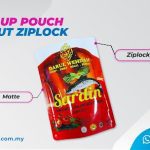
Sauce, Sambal & Condiment Packaging Malaysia: Complete Guide for Food Brands
May 22, 2026Traditional Malaysian & Frozen frozen food packaging supplier Snack Packaging: Kuih, Keropok & Beyond
Malaysia’s food heritage is rich, colourful, and deeply rooted in tradition. From the delicate layers of *kuih lapis* sold at morning markets to the satisfying crunch of *keropok lekor* along Terengganu beaches, traditional snacks are a source of national pride. In recent years, these beloved snacks have found a new home in freezers across the country — and increasingly, in export markets overseas.
But traditional snacks present unique packaging challenges. Kuih is moist and delicate. Keropok needs to stay crisp. Frozen dumplings, spring rolls, and curry puffs must survive temperature swings without freezer burn. Ice cream pouches must prevent crystallisation. And boil-in-bag meals need packaging that can transition straight from freezer to boiling water.
This industry deep-dive explores the packaging solutions that keep Malaysia’s traditional and frozen snacks fresh, safe, and market-ready. Whether you are a home-based food business scaling up or an established manufacturer exploring new formats, understanding your packaging options is the first step to protecting your product — and your brand.
—
Traditional Kuih Packaging Malaysia: Preserving Freshness & Heritage
Kuih is one of Malaysia’s most iconic food categories. From *kuih seri muka* and *kuih talam* to *ondeh-ondeh*, *kuih lapis*, and *kuih bahulu*, the variety is staggering. But kuih is also notoriously perishable. Many varieties rely on coconut milk, glutinous rice flour, and fresh pandan — ingredients that spoil quickly at room temperature.
The Freshness Challenge
Traditional kuih sold at wet markets usually goes straight into styrofoam trays wrapped in plastic film or simple plastic bags. This works for same-day consumption, but it is inadequate for extended shelf life, retail display, or export.
For longer-term preservation, freezing has become the go-to solution. Properly frozen, many types of kuih (especially steamed varieties like *kuih lapis* and baked types like *kuih bahulu*) can last 3 to 6 months without significant quality loss. The key is the packaging.
Best Packaging Formats for Kuih
1. Vacuum-Sealed Pouches
Vacuum packaging removes air, which slows oxidation and prevents moisture loss. This is excellent for denser kuih like *kuih bingka* or *kuih kosui* that hold their shape well. The pouch clings tightly to the food, minimising ice crystal formation during freezing.
2. Stand-Up Pouches with Zipper
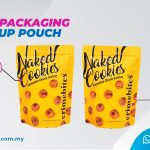
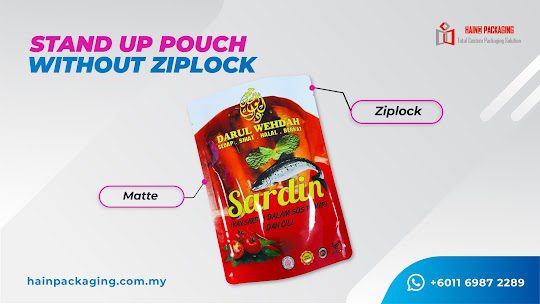
For kuih sold in smaller retail quantities, stand-up pouches with resealable zippers are ideal. Customers can open the pack, take what they need, and reseal the rest — reducing waste. A clear window lets buyers see the product, which builds trust for traditional foods where visual appeal matters.
3. Modified Atmosphere Packaging (MAP)
MAP replaces the air inside the package with a controlled gas mixture (typically nitrogen and carbon dioxide). This dramatically slows microbial growth and oxidation. Kuih packed under MAP can achieve refrigerated shelf life of 14–21 days, compared to just 2–3 days in standard packaging.
Key Considerations for Kueh Packaging Malaysia
- **Moisture barrier:** Kuih contains high moisture — your packaging must have a strong moisture vapour transmission rate (MVTR) to prevent dehydration.
- **Grease resistance:** Many kuih contain santan (coconut milk) or ghee, which can seep through low-quality films.
- **Printability:** Heritage branding works exceptionally well for kuih. Traditional motifs, batik patterns, or kampung-style illustrations reinforce the artisanal quality of the product.
Custom-printed pouches for traditional kuih are now widely available in Malaysia from speciality packaging suppliers. A well-designed pouch does more than protect — it tells the story of your family recipe.
—
Keropok Packaging: Keeping the Crunch

Keropok — whether *keropok lekor*, *keropok keping*, or *keropok udang* (prawn crackers) — is beloved for one defining quality: crunch. Once that crunch is gone, the product loses its soul. Packaging for keropok must be engineered to preserve texture above all else.
Keropok Lekor: Semi-Moist Meets Frozen
Fresh keropok lekor has a chewy, semi-moist texture that is quite different from dried keropok. When sold frozen, it requires packaging that:
- Prevents freezer burn from dulling the exterior
- Maintains the distinctive fish flavour
- Allows for easy portioning (many consumers cook half a pack at a time)
Vacuum pouches are the standard here. A 250g or 500g vacuum-sealed pack of frozen keropok lekor is a staple in Malaysian supermarket freezers. The tight seal minimises air exposure, and the transparent film lets shoppers verify the colour and texture before buying.
Dried Keropok Keping & Prawn Crackers
For deep-fried or sun-dried keropok, the enemy is humidity. Once a pack of prawn crackers goes soft, it is unsellable. The packaging needs:
- **High-barrier metallised film:** Aluminium foil laminated with PET or BOPP provides near-zero moisture and oxygen transmission.
- **One-way degassing valve:** If the keropok is packaged immediately after frying (still warm), a degassing valve allows residual steam to escape without letting humid air in.
- **Rigid standing pouch:** Dried keropok is brittle. A stand-up pouch with a gusseted bottom provides structural protection against crushing during transport.
Nitrogen Flushing for Extra Protection
Nitrogen flushing is widely used in keropok packaging. By replacing oxygen with nitrogen inside the pack, manufacturers slow rancidity of the fish oils (keropok is deep-fried in oil, which can oxidise) and prolong shelf life significantly. A nitrogen-flushed pack of keropok can stay crunchy for 6 to 12 months at room temperature.
—
Frozen Snack Packaging Malaysia: Dumplings, Spring Rolls & More
Malaysia’s frozen snack category has exploded in recent years. Dumplings (*siew mai*, *gyoza*, *wonton*), spring rolls (*lumpia*), curry puffs, samosas, and popiah are now routinely found in supermarket freezers. Home delivery and frozen food subscriptions have further accelerated demand.
Challenges of Frozen Snack Packaging
Frozen snacks face a unique set of packaging demands:
1. **Temperature tolerance:** Packaging must withstand -18°C without becoming brittle or delaminating.
2. **Moisture barrier:** Frozen snacks lose moisture over time, leading to freezer burn. A strong barrier film prevents this.
3. **Physical protection:** Dumplings and spring rolls are delicate. They need packaging that prevents crushing during stacking and transport.
4. **Portion control:** Consumers want to take out a few pieces at a time, not defrost the entire bag.
Best Packaging Formats
Flat Bottom Pouches (Doypacks)< For more options, check out our guide on doypack pouches Malaysia./p>
Doypacks with flat bottoms are the industry standard for frozen snacks. They stand upright on the shelf, provide a large printable surface for branding, and can be designed with tear notches for easy opening. A 500g flat-bottom pouch is perfect for gyoza, siew mai, or mini spring rolls.
Resealable Stand-Up Pouches
For premium frozen snack brands, resealable zipper pouches add convenience. The consumer can open, remove a portion, and reseal — keeping the remaining snacks protected. This is particularly popular for higher-price-point products targeting health-conscious or quality-driven buyers.
Tray + Sleeve Combo
For high-value frozen snacks (artisanal curry puffs, premium siew mai), a plastic tray inside a printed cardboard sleeve offers premium presentation. The tray holds each piece in its own compartment, preventing sticking and breakage. This format works well for boutique frozen brands selling in specialty grocers.
The growth of frozen snack packaging in Malaysia reflects a broader shift: consumers want restaurant-quality snacks at home, and packaging plays a central role in delivering that experience.
—
Boil-in-Bag Packaging for Ready Meals
Boil-in-bag packaging is a game-changer for frozen ready meals — and increasingly, for traditional Malaysian dishes as well. The concept is simple: the food is sealed in a heat-resistant pouch that can go directly from the freezer into boiling water. No thawing, no mess, no added dishes.
How It Works
The pouch is typically made from a laminate of PET, nylon, and PE or CPP. This combination provides:
- High puncture resistance (important for bones in rendang or curry dishes)
- Temperature tolerance from -40°C to 121°C
- Excellent oxygen and moisture barrier
- Microwaveability in some configurations
Traditional Malaysian Dishes in Boil-in-Bag
Forward-thinking Malaysian brands are now packaging *rendang*, *gulai*, *kari ayam*, *nasi lemak* components, and even *laksa* broth in boil-in-bag pouches. The format is perfect for:
- **Busy urban professionals:** Heat and eat in under 10 minutes
- **Export markets:** Long shelf life (12–18 months frozen) with proven food safety
- **Meal kit brands:** Individual sauce components for DIY cooking kits
Retort Pouches vs Boil-in-Bag
It is worth distinguishing between boil-in-bag (frozen, not shelf-stable) and retort pouches (shelf-stable, heat-processed after sealing). For frozen traditional meals, high-barrier boil-in-bag pouches are more common in Malaysia. Retort pouches require expensive autoclave equipment and are better suited for shelf-stable exports.
Key Features to Look For
- **Easily peelable seal:** Consumers should be able to open the pouch without scissors
- **Tear notch:** For quick access
- **Clear vs metallised:** Transparent pouches let consumers see the food; metallised offers better light and oxygen barrier
—
Ice Cream & Frozen Dessert Pouch Packaging
Traditional Malaysian ice cream — think *ais krim potong*, *cendol ice cream*, *durian ice cream*, or *pulut hitam* flavoured frozen desserts — has grown far beyond the *ais krim* man on a bicycle. Today, these products sit alongside international brands in supermarket freezers.
Pouch Formats for Ice Cream
Stand-Up Pouches (300ml–1L)
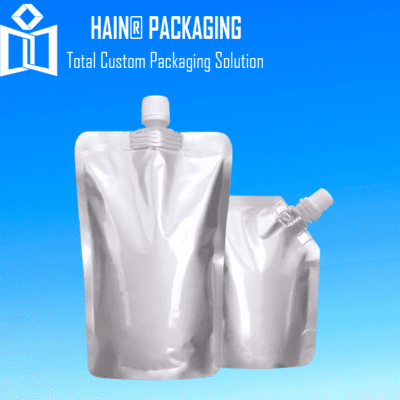
For scoopable or soft-serve style ice cream, stand-up pouches offer a space-efficient alternative to tubs. They use less plastic, take up less shelf space, and can be designed with a resealable spout or zipper.
Flat Pouches for Stick & Bar Ice Cream
Individually wrapped ice cream bars and sticks are typically packed in flat flow-wrapped pouches. The film must resist cold-temperature cracking. OPP/PE laminates with cold-seal adhesive are common.
Multi-Pack Outer Pouches
For family packs, a large printed outer pouch containing individually wrapped ice cream bars provides brand visibility at the point of sale. The outer pouch should be designed with a strong puncture-resistant film to prevent ice cream edges from poking through.
Critical Material Properties
Ice cream packaging faces extreme conditions: constant -18°C to -25°C storage, frequent temperature fluctuations during transport (open freezer doors, loading docks), and high condensation upon removal. Key material requirements:
- **Cold crack resistance:** The film must not become brittle at sub-zero temperatures
- **Low-temperature seal strength:** Seals must hold below freezing
- **Moisture barrier:** Prevents ice crystallisation inside the pack
- **Print abrasion resistance:** Printing must survive rubbing against other frozen packages in transit
Ice Cream Pouch Packaging Malaysia
The Malaysian market for ice cream pouch packaging is growing, driven by the rising popularity of artisanal and premium ice cream brands. Small-batch producers — from *gula Melaka* ice cream makers to vegan coconut-based frozen dessert brands — are driving demand for custom-printed stand-up pouches in small to medium runs.
—
Puff Pastry & Frozen Dough Packaging
Puff pastry — used for curry puffs, egg tarts, sausage rolls, and sweet pastries — requires packaging that maintains the integrity of the lamination. The butter or margarine layers must stay cold and separated during frozen storage.
Puff Pastry Packaging Challenges
- **Puncture risk:** Frozen pastry sheets have sharp edges that can pierce standard films
- **Temperature sensitivity:** Puff pastry dough must stay below 5°C; any warming damages the lamination
- **Moisture control:** Condensation inside the pack can make the dough sticky and unworkable
Best Packaging Solutions
Vacuum-Sealed Flat Pouches
For blocks of puff pastry dough, vacuum-sealed flat pouches offer excellent protection. The tight seal prevents air pockets that could cause uneven thawing. A nylon/PE laminate provides good puncture resistance.
Roll-Wrapped Packaging
For pre-rolled puff pastry sheets (ready-to-use), roll-wrapped packaging inside a cylindrical box or flow-wrapped tube is the industry standard. The pastry is rolled with parchment interleaving, then sealed in a high-barrier film.
Bulk Packaging for Bakeries
For B2B bakery supply, frozen puff pastry blocks are typically packed in large polyethylene bags inside cardboard boxes. As bakeries move towards more sustainable practices, recyclable mono-material PE pouches are gaining traction.
Frozen Dough: Roti Canai & Beyond
Frozen roti canai dough, frozen pizza bases, and frozen *paratha* have huge markets in Malaysia. These products need packaging that:
- Prevents the dough from drying out
- Allows individual portion separation (interleaving sheets)
- Stacks efficiently for freezer storage
Flat PE or PP pouches with perforation for individual separation are the standard. Some premium brands use zipper pouches for home-use frozen dough.
—
Material Requirements for Frozen Storage
Regardless of the snack type, frozen food packaging must meet certain minimum material standards. Here is what to look for when selecting packaging for traditional and frozen snacks.
Film Structure
Most frozen food pouches use multi-layer laminates. A typical structure looks like this:
| Layer | Material | Function |
| Outer | PET (12–15µ) | Print surface, gloss, heat resistance |
| Middle | Aluminium foil (7–9µ) or metallised PET | Oxygen & light barrier |
| Inner | PE or CPP (50–80µ) | Heat seal, food contact, flexibility |
For transparent pouches (when product visibility is important), metallised PET is replaced by transparent barrier coatings like EVOH or PVDC. The trade-off is lower barrier performance.
Key Performance Tests
Reputable packaging suppliers test their films against:
- **MVTR (Moisture Vapour Transmission Rate):** Measured in g/m²/day. For frozen snacks, aim for <5 g/m²/day.
- **OTR (Oxygen Transmission Rate):** Measured in cc/m²/day. For fatty or oil-based snacks, aim for <10 cc/m²/day.
- **Cold crack test:** Film is flexed at -18°C to ensure it does not crack.
- **Seal strength:** Measured at both room temperature and frozen temperature.
Sustainability Considerations
The packaging industry is moving towards recyclable mono-materials. For frozen food, this is challenging because mono-material films (all-PE or all-PP) cannot match the barrier of multi-layer laminates. However, advances in coating technology are closing the gap. If sustainability is a priority for your brand, look for:
- **MDO-PE (Machine Direction Orientation PE):** High-strength PE that approaches the performance of multi-layer films
- **Water-based barrier coatings:** Replace aluminium foil in some applications
- **Recyclable paper-pouch hybrids:** Emerging for dry-frozen products like keropok
—
Custom Branding for Traditional & Frozen Snacks
Your packaging is your most powerful marketing tool. In a crowded freezer section, consumers make purchase decisions in seconds. Custom branded packaging sets your traditional and frozen snacks apart.
Design Principles for Heritage Snacks
1. **Embrace cultural visual cues:** Batik patterns, ketupat motifs, or kampong illustrations communicate authenticity.
2. **Use warm, appetising colours:** Red, orange, gold, and brown evoke the spices and flavours of Malaysian cuisine.
3. **Show the product:** A clear window or high-resolution product photo is essential — traditional snacks sell on visual appeal.
4. **Tell your story:** Share your family heritage, the region your recipe comes from, or the artisanal process behind your product.
Logo and Brand Placement
On a stand-up pouch, the logo should be placed in the upper third of the front panel — the area most visible when pouches are stacked on shelves. The product name (e.g., “Frozen Keropok Lekor Asli”) should be prominent, followed by net weight, ingredient highlights, and certifications.
Printing Technologies
- **Rotogravure:** High-volume runs (10,000+ units). Excellent colour consistency and image quality.
- **Flexography:** Mid-volume runs (1,000–10,000 units). Good quality at lower cost.
- **Digital printing:** Low-volume runs (100–1,000 units). Ideal for startups and small batches. Full-colour customisation with no plate costs.
UTM & QR Integration
Modern pouches should include a QR code linking to your website (or a landing page with recipes and brand story). UTM-tagged QR codes allow you to track exactly how many scans came from your packaging — valuable data for marketing ROI.
—
FAQ
1. What is the best packaging for traditional kuih in Malaysia?
Vacuum-sealed pouches or stand-up pouches with a strong moisture barrier work best for traditional kuih. For premium branding, consider custom printed stand-up pouches with a clear window so customers can see the product. Modified Atmosphere Packaging (MAP) can extend refrigerated shelf life to 2–3 weeks.
2. How do I keep keropok crunchy in packaging?
Use high-barrier metallised film (aluminium foil laminate) with nitrogen flushing to remove oxygen. This prevents the fish oils from turning rancid and keeps moisture out. A one-way degassing valve helps release residual heat without letting humidity in.
3. Can boil-in-bag pouches be used for frozen Malaysian curry dishes?
Yes. High-barrier boil-in-bag pouches made from PET/Nylon/PE laminate are ideal for frozen rendang, gulai, kari ayam, and laksa broth. They withstand freezing (-18°C) and boiling (100°C) without degradation.
4. What material is used for ice cream pouch packaging in Malaysia?
Ice cream pouches typically use OPP/PE or PET/PE laminates with cold-seal adhesive. The film must have excellent cold crack resistance (does not become brittle at -20°C) and a strong moisture barrier to prevent ice crystallisation.
5. How much does custom printed packaging cost in Malaysia?
Costs vary based on film structure, print design, and order quantity. Digital printing (100–1,000 pouches) is accessible for small brands starting from approximately RM 1.50–RM 3.00 per pouch. Flexographic and rotogravure printing become cost-effective at 5,000–10,000+ units, bringing per-pouch costs down to RM 0.30–RM 1.00.
—
Conclusion
Malaysia’s traditional snacks are a national treasure — and they deserve packaging that protects them as well as the big international brands protect theirs. From the delicate layers of kuih to the satisfying crunch of keropok, from frozen dumplings to boil-in-bag rendang, every product has specific packaging needs that directly affect shelf life, quality, and consumer satisfaction.
Choosing the right packaging is not just about preservation — it is about presentation, branding, and creating a memorable unboxing experience that builds customer loyalty. In a competitive market, the package that catches the eye in the freezer aisle is the one that gets picked up.
At [**Hain Packaging**](https://hainpackaging.com.my/?utm_source=logosendiri&utm_medium=article&utm_campaign=traditional-frozen-snack-packaging&utm_content=conclusion-cta), we specialise in custom flexible packaging for Malaysia’s food manufacturers and snack businesses. Whether you need vacuum pouches for traditional kuih, stand-up pouches for frozen snacks, or custom-branded boil-in-bag solutions, our technical team can guide you through material selection, print design, and production. Contact us today to discuss your packaging requirements — your heritage recipes deserve nothing less.
—
*Published on logosendiri.com — Your guide to smart packaging choices in Malaysia.* For reference, visit Federal Agricultural Marketing Authority (FAMA). We go deeper on this in Malaysian F&B Packaging: Bakery, Sauce & Frozen.