Frozen Food Packaging Guide: Freezer-Safe Films
May 22, 2026
Aluminium Foil Bag Malaysia: Complete Buyer Guide
May 22, 2026Frozen Food Packaging Materials: All Types Compared for Malaysian Manufacturers
Frozen Food Packaging Materials — For industry insights and trends, refer to this resource.
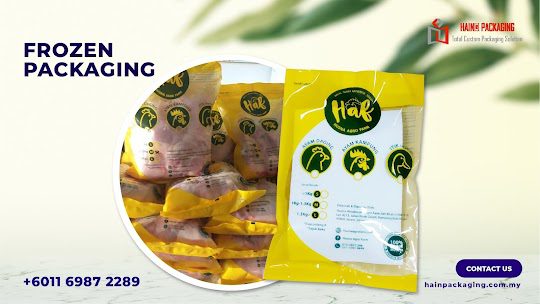
Selecting the right frozen food packaging materials is one of the most consequential decisions a manufacturer can make. The material you choose directly impacts product shelf life, cold-chain reliability, branding potential, and cost per unit. This comprehensive comparison covers every major packaging material used for frozen food — from polyethylene to EVOH — with detailed thickness charts, temperature ranges, barrier properties, and application guidance tailored to Malaysian frozen food businesses.
Overview of Frozen Food Packaging Materials
Frozen Food Packaging Materials — Frozen food packaging in Malaysia typically uses one or more of these primary material families. Each offers distinct properties in terms of barrier performance, temperature tolerance, mechanical strength, and cost.
| Material | Symbol | Primary Function | Freezer Rating | Cost Index |
|---|---|---|---|---|
| Low-Density Polyethylene | LDPE | Heat seal layer, moisture barrier | -18°C | 1 (baseline) |
| Linear Low-Density Polyethylene | LLDPE | Improved puncture, seal strength | -20°C | 1.2 |
| Polypropylene (Cast) | CPP | Heat seal, higher temp resistance | -10°C | 1.5 |
| Biaxially-Oriented Polypropylene | BOPP | Outer layer, printability, stiffness | -10°C | 1.8 |
| Polyester (Polyethylene Terephthalate) | PET | Structural strength, print substrate | -40°C | 2.0 |
| Polyamide / Nylon | PA / NY | Puncture resistance, oxygen barrier | -40°C | 2.5 |
| Biaxially-Oriented Polyamide | BOPA | Enhanced puncture, flex crack resistance | -30°C | 2.8 |
| Ethylene Vinyl Alcohol | EVOH | Ultra-high oxygen barrier | -30°C | 3.5 |
| Aluminium Foil | AL | Absolute barrier (light, O₂, moisture) | -40°C | 4.0 |
For most frozen food applications, materials are combined into multi-layer laminates to leverage the strengths of each layer. A typical frozen food pouch might combine PET (outer print layer), NY (oxygen barrier and puncture resistance), and LDPE (heat seal and moisture barrier).
As a leading plastic packaging supplier in Malaysia, HAIN® Packaging manufactures custom frozen food laminates with precise control over layer composition, thickness, and barrier properties.
Complete Material Comparison Table
This comprehensive comparison table covers all key performance parameters.
| Material | Melting Point (°C) | Min Service Temp (°C) | OTR (cc/m²/day) | WVTR (g/m²/day) | Tensile Strength (MPa) | Puncture Resistance | Printability |
|---|---|---|---|---|---|---|---|
| LDPE | 105–115 | -18 | 5000–8000 | 1.0–1.8 | 10–20 | Moderate | Fair (treated) |
| LLDPE | 120–130 | -20 | 4000–7000 | 0.8–1.5 | 20–35 | Good | Fair (treated) |
| CPP | 160–170 | -10 | 2000–4000 | 0.3–0.6 | 30–50 | Moderate | Good (treated) |
| BOPP | 165–170 | -10 | 1500–3000 | 0.2–0.5 | 120–200 | Low | Excellent |
| PET | 250–260 | -40 | 50–150 | 1.0–2.0 | 150–250 | Moderate | Excellent |
| NY (PA6) | 215–225 | -40 | 30–80 | 200–400* | 80–120 | Excellent | Good |
| BOPA | 215–225 | -30 | 20–50 | 200–400* | 180–250 | Superior | Excellent |
| EVOH (44% E) | 185–195 | -30 | <1 | 30–100* | 60–100 | Low-Moderate | Fair |
| Aluminium Foil | 660 | -40 | <0.5 | <0.01 | 30–100 | Low (tears easily) | N/A (laminated) |
* Nylon and EVOH have high WVTR due to their hydrophilic nature — they must be sandwiched between moisture-barrier layers (LDPE or PP) in a laminate structure.
Material Properties Deep Dive
Polyethylene (PE / LDPE / LLDPE)
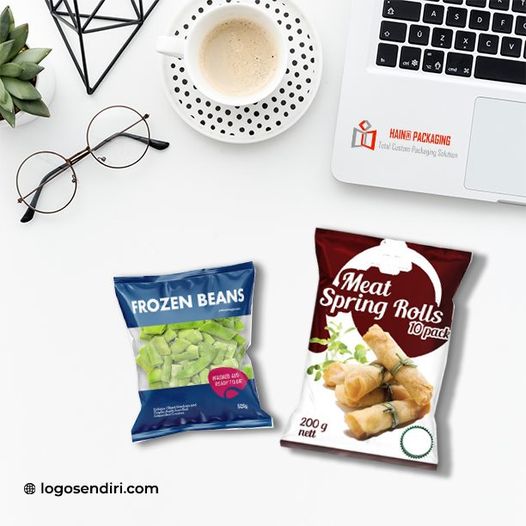
Polyethylene is the workhorse of frozen food packaging. LDPE offers excellent flexibility at low temperatures, good moisture barrier, and superior heat-seal properties. It is the most cost-effective material for simple frozen applications such as bread, basic vegetables, and dry frozen goods.
LLDPE improves upon LDPE with higher puncture resistance, better tensile strength, and improved seal strength — making it suitable for more demanding frozen products like frozen vegetables with sharp stems. Both materials perform reliably down to -18°C and are fully recyclable in PE recycling streams.
Common applications: Frozen bread bags, vegetable polythene bags, freezer liners, inner seal layer in multi-layer laminates.
Polypropylene (PP / CPP / BOPP)
Polypropylene offers higher temperature resistance than polyethylene (up to 120°C), making it suitable for frozen ready meals that are reheated in the packaging. Cast polypropylene (CPP) is used as a heat-seal layer in retort and boil-in-bag applications. Biaxially-oriented polypropylene (BOPP) serves as an excellent outer print layer with high stiffness and gloss.
PP-based structures are gaining traction in sustainable packaging initiatives because mono-PP laminates are easier to recycle than mixed-material structures. However, PP becomes brittle at temperatures below -10°C, limiting its use in deep-freeze applications.
Polyester / PET
PET (Polyethylene Terephthalate) is widely used as an outer layer in frozen food laminates due to its excellent printability, dimensional stability, and temperature resistance down to -40°C. It provides moderate oxygen barrier (50–150 cc/m²/day) and serves as an ideal substrate for rotogravure and flexographic printing.
In frozen food packaging, PET is typically used at 12 µm thickness in laminates such as PET/NY/LDPE and PET/AL/NY/LDPE. Metallized PET (MPET) can provide enhanced barrier properties without the weight and cost of aluminium foil.
Polyamide / Nylon (PA)
Nylon is prized in frozen food packaging for its exceptional puncture resistance and oxygen barrier. PA6 (Nylon 6) is the most common grade, typically used at 15 µm thickness. Nylon performs excellently down to -40°C without embrittlement, making it ideal for bone-in meat, seafood with spines, and products with sharp edges.
A key consideration: Nylon is hygroscopic — it absorbs moisture, which degrades its oxygen barrier. For this reason, nylon is always sandwiched between moisture-barrier layers (LDPE, PP) in a laminate structure. BOPA (biaxially-oriented polyamide) offers enhanced flex crack resistance and superior printability for premium packaging.
For Malaysian frozen food manufacturers, the NY/LDPE combination is the most popular choice, offering an excellent balance of performance and cost for dim sum, popiah, seafood, and meat products.
EVOH (Ethylene Vinyl Alcohol)
EVOH provides the highest oxygen barrier among polymeric materials — with OTR values below 1 cc/m²/day. This makes it the material of choice for oxygen-sensitive frozen products where long shelf life is critical, such as frozen seafood, prepared meals with sauces, and premium meat cuts. The barrier performance of EVOH improves as the material becomes drier — paradoxically, the film actually performs better over time in frozen storage as moisture levels in the surrounding layers stabilise.
For Malaysian frozen food manufacturers exporting to premium markets like Japan, Singapore, and Europe, EVOH-based films offer a compelling balance: transparent packaging that allows product visibility (unlike foil laminates), high oxygen barrier for extended shelf life, and compatibility with high-speed form-fill-seal packaging machinery. The primary trade-off is cost — EVOH co-extrusions are approximately 20–40% more expensive than equivalent NY/LDPE laminates. However, the extended shelf life can more than offset the additional material cost through reduced waste, expanded distribution reach, and access to higher-margin export markets.
Like nylon, EVOH is moisture-sensitive and must be protected by moisture-barrier layers (PE or PP) in a multi-layer co-extrusion or laminated structure. EVOH-based structures are typically 5-layer or 7-layer co-extrusions (e.g., PE/tie/EVOH/tie/PE). The EVOH content by volume is typically 3–8% of the total film thickness.
Aluminium Foil
Aluminium foil provides an absolute barrier to light, oxygen, and moisture — the gold standard for long-shelf-life frozen products. A 7 µm aluminium layer in a laminate like PET/AL/NY/LDPE achieves OTR below 0.5 cc/m²/day and WVTR below 0.01 g/m²/day, enabling shelf life beyond 18 months at -18°C.
Foil is used when product protection is the top priority — premium exported frozen seafood, high-value meat cuts, and frozen foods destined for markets with less reliable cold chains. However, foil laminates are more expensive, non-recyclable in standard plastic streams, and susceptible to flex cracking if handled roughly.
For more details on foil-based packaging, see our guide on aluminium foil bags in Malaysia.
While aluminium foil remains the ultimate barrier material, it is worth noting its limitations. Foil is susceptible to flex cracking — repeated folding or creasing creates pinholes that compromise the barrier. For applications where the package undergoes significant flexing during handling and transport, EVOH-based transparent barrier films may provide more reliable performance despite their slightly higher OTR. Foil also blocks product visibility, which is a disadvantage for retail products that benefit from consumer seeing the product through the packaging.
Thickness Charts & Temperature Ranges
Selecting the correct film thickness is critical for both performance and cost optimisation. Below are recommended thickness ranges for common frozen food applications.
Single-Layer Film Thickness Guide
| Application | Recommended Material | Thickness | Min Temp |
|---|---|---|---|
| Frozen bread / roti | LDPE | 50–75 µm | -18°C |
| Frozen vegetable bags (retail) | LLDPE | 60–100 µm | -18°C |
| Frozen vegetable bags (bulk) | LDPE or LLDPE | 80–150 µm | -18°C |
| Ice cream tub liner | LDPE | 60–100 µm | -18°C |
| Frozen dessert film lid | PET/LDPE laminate | 12/30–50 µm | -40°C |
Multi-Layer Laminate Thickness Guide
| Application | Structure | Layer Thickness (µm) | Total (µm) | Min Temp |
|---|---|---|---|---|
| Frozen dim sum / popiah | NY/LDPE | 15 / 60–100 | 75–115 | -40°C |
| Frozen meat / seafood (standard) | NY/LDPE | 15 / 75–100 | 90–115 | -40°C |
| Frozen meat / seafood (premium) | PET/NY/LDPE | 12 / 15 / 75–100 | 102–127 | -40°C |
| Premium export frozen | PET/AL/NY/LDPE | 12 / 7 / 15 / 75 | 109 | -40°C |
| Frozen ready meal (stand-up pouch) | PET/NY/CPP | 12 / 15 / 80–120 | 107–147 | -30°C |
| Frozen boil-in-bag | PET/NY/CPP | 12 / 15 / 100–150 | 127–177 | -30°C (boil: 100°C) |
| High-oxygen barrier frozen | PE/EVOH/PE (co-ex) | Variable | 80–150 | -30°C |
How Multi-Layer Laminations Work
No single polymer offers the perfect combination of barrier, strength, flexibility, sealability, and printability for frozen food. Multi-layer laminations solve this by combining two or more materials through adhesive lamination or co-extrusion.
Adhesive lamination bonds pre-made films together using solvent-based or solvent-free adhesives. This allows the broadest combination of materials and is the standard for PET/NY/LDPE and PET/AL/NY/LDPE structures.
Co-extrusion extrudes multiple polymer melts simultaneously through a single die, forming a multi-layer film in one step. This is common for PE/EVOH/PE barrier structures and offers cost advantages for high-volume applications.
The outer layer (typically PET or BOPP) provides printability and gloss. The middle layers (NY, EVOH, AL) provide barrier properties and mechanical strength. The inner layer (LDPE, CPP) provides heat sealability and food contact compliance. This engineered approach is why laminated food packaging dominates the frozen food sector.
HAIN® Packaging uses solvent-free adhesive lamination for all food-contact packaging, eliminating residual solvent concerns and meeting the most stringent food safety requirements. Our lamination process is ISO 9001 certified, with in-house testing for bond strength, seal integrity, and barrier performance at every stage of production.
The choice between adhesive lamination and co-extrusion depends on volume, application, and barrier requirements. Adhesive lamination offers greater flexibility in material selection — you can combine almost any two or three films. Co-extrusion is more economical for high-volume runs of standard structures like PE/EVOH/PE barrier films. Many large frozen food manufacturers use co-extruded films for their core product lines and adhesive-laminated structures for premium or export variations.
Choosing the Right Material for Your Product
The material selection process should follow a structured decision framework. Here is a step-by-step guide for Malaysian frozen food manufacturers.
Step 1: Define Your Product’s Requirements
- What is the product’s fat content? (Fatty foods oxidise faster, requiring higher O₂ barrier)
- Does the product have sharp edges? (Bone-in meat, vegetable stems need puncture resistance)
- What is the target shelf life? (3 months vs 18 months drives material choice)
- Will the packaging be reheated by the consumer? (Requires heat-resistant seal layer)
- What is the storage temperature? (-18°C retail vs -30°C to -40°C industrial freezer)
Step 2: Match Material to Product Category
| Product Category | Recommended Material | Rationale |
|---|---|---|
| Frozen vegetables (IQF) | NY/LDPE or LLDPE | Puncture resistance, moderate barrier, cost-effective |
| Frozen meat (domestic) | NY/LDPE | Puncture resistance, oxygen barrier for 6–12 months |
| Frozen meat (export) | PET/NY/LDPE or PET/AL/NY/LDPE | Extended shelf life, cold-chain abuse tolerance |
| Frozen seafood | PET/NY/LDPE or EVOH-based | Odour barrier, oxidation prevention |
| Frozen dim sum / popiah | NY/LDPE | Puncture resistance for rolled products |
| Frozen ready meals (reheatable) | PET/NY/CPP | Withstands both freezing and reheating |
| Ice cream (retail tub) | LDPE-lined paperboard or PP tub | Moisture barrier, structural rigidity |
| Ice cream (multi-serve pouch) | PET/NY/LDPE with zipper | Resealability, moderate barrier |
Real-world example — Frozen seafood exporter: A Malaysian prawn exporter shipping to Japan required packaging that could endure 14–21 day transit with variable cold-chain conditions. The solution was PET/AL/NY/LDPE laminate with absolute oxygen barrier, 8-colour rotogravure printing, and verified performance through temperature cycling tests. The material cost was 2.5x standard LDPE, but zero rejected containers and 18+ month shelf life delivered 300% ROI on packaging investment in the first year.
Real-world example — Local frozen dim sum brand: A Malaysian dim sum manufacturer selling through AEON and Village Grocer needed packaging that balanced cost, 9-month shelf life, and retail shelf appeal. NY/LDPE laminate with 6-colour flexographic printing delivered adequate puncture resistance, sufficient barrier, and attractive branding — at 15–20% lower cost than premium alternatives. This allowed competitive retail pricing while meeting all shelf-life targets.
Step 3: Consider Print & Branding Needs
If your product competes on brand recognition at retail (supermarket freezer aisles, convenience stores, hypermarkets), PET or BOPP as the outer layer is essential for high-quality rotogravure or flexographic printing. For foodservice and industrial packaging where branding is less critical, simpler NY/LDPE structures with minimal printing can reduce costs significantly.
HAIN® Packaging offers full packaging printing services in Malaysia with both rotogravure (10 colours) and flexographic (6 colours) options, all using food-grade, freezer-safe inks.
Sustainability & Mono-Material Trends
The global packaging industry is moving toward recyclable mono-material structures, and frozen food packaging is no exception. While multi-material laminates offer unbeatable barrier performance, they are difficult to recycle because the different polymers cannot be separated economically.
Mono-Material PE Structures
All-PE laminates are emerging as a recyclable alternative for frozen food packaging. By using different PE grades (LDPE, LLDPE, MDPE, HDPE) in different layers, manufacturers can achieve adequate barrier and mechanical performance while maintaining full recyclability in PE recycling streams.
Mono-Material PP Structures
For applications requiring higher temperature resistance (microwavable frozen meals), all-PP structures offer recyclability in PP streams. CPP/CPP or BOPP/CPP combinations can deliver adequate performance for many frozen ready-meal applications.
Down-Gauging & Lightweighting
Reducing total film thickness while maintaining performance — known as down-gauging — is another sustainability strategy. Advances in material science allow thickness reductions of 15–20% (e.g., from 100 µm to 80 µm total laminate thickness) without compromising barrier or mechanical properties. This reduces material consumption, production energy, and packaging waste.
For businesses exploring sustainable options, our guide on custom plastic packaging in Malaysia covers eco-friendly materials and design strategies.
Material Cost Analysis for Malaysian Manufacturers
Cost is naturally a primary consideration when selecting frozen food packaging materials. The table below provides a relative cost comparison to help manufacturers budget effectively.
| Material Structure | Relative Cost Index | MOQ Range (pieces) | Best Value For |
|---|---|---|---|
| LDPE single-layer bag | 1.0 (baseline) | 5,000–10,000 | Budget frozen products, short shelf life |
| LLDPE single-layer | 1.1–1.3 | 5,000–10,000 | Improved strength, similar cost |
| NY/LDPE (2-layer laminate) | 1.4–1.8 | 5,000–10,000 | Best value for standard frozen food |
| PET/NY/LDPE (3-layer laminate) | 1.8–2.3 | 5,000–10,000 | Premium retail packaging + good barrier |
| PE/EVOH/PE (co-extrusion) | 2.0–2.8 | 10,000–20,000 | High barrier without foil |
| PET/AL/NY/LDPE (foil laminate) | 2.5–3.5 | 10,000–15,000 | Maximum shelf life, export cold chain |
When evaluating material costs, manufacturers should consider the total cost of packaging per unit of product, not just the per-bag price. A slightly more expensive film that extends shelf life by 6 months or reduces product waste by 5% often delivers a better return on investment than a cheaper film that leads to higher product rejection rates. Additionally, thicker films may offer better protection but increase raw material consumption and shipping weight — another important cost factor for export-focused manufacturers.
HAIN® Packaging offers volume-based pricing and works with manufacturers to optimise film structures for their specific product, minimising both material cost and waste. Our stand-up pouch manufacturing capabilities allow us to produce custom frozen food bags in a wide range of sizes, from 100g retail packs to 5kg bulk bags, with consistent quality across every run.
Frequently Asked Questions
What is the best frozen food packaging material for long shelf life?
PET/AL/NY/LDPE laminate provides the longest shelf life (18–24 months at -18°C) thanks to the aluminium foil layer that blocks all oxygen, moisture, and light. For ultra-high barrier without foil, EVOH-based co-extruded films are the next best option.
Can LDPE be used for frozen food packaging?
Yes, LDPE is suitable for frozen food at -18°C for short to medium shelf life. It is commonly used for frozen bread, vegetables, and as the seal layer in multi-layer laminates. However, LDPE alone does not provide sufficient barrier for high-fat frozen products requiring long shelf life.
What is the difference between NY/LDPE and PET/NY/LDPE?
NY/LDPE is a two-layer laminate offering puncture resistance and moderate oxygen barrier — suitable for standard frozen meat, seafood, and dim sum. PET/NY/LDPE adds a PET outer layer that dramatically improves print quality, stiffness, and temperature resistance, while also boosting the overall oxygen barrier.
Which material is best for frozen ready meals that go in the microwave?
PET/NY/CPP structures can withstand both freezing at -30°C and microwave reheating up to 100°C. CPET (crystallised PET) trays are another popular option for dual-ovenable frozen ready meals.
Are frozen food packaging materials recyclable?
Mono-material structures (all-PE or all-PP) are recyclable where collection infrastructure exists. Mixed-material laminates (PET/NY/LDPE, PET/AL/NY/LDPE) are currently not recyclable in standard recycling streams. Industry efforts are focused on developing recyclable high-barrier alternatives.
What certifications should frozen food packaging materials have?
HAIN® Packaging materials are KKM (Malaysia) and FDA (USA) certified for food contact. For export to Europe, EU Regulation No 10/2011 compliance is also available. SIRIM certification covers quality management systems.
Choose HAIN® Packaging for Your Frozen Food Materials
Navigating the range of frozen food packaging materials can be complex, but the right choice pays dividends in product quality, shelf life, and brand perception. At HAIN® Packaging, we bring over a decade of manufacturing experience to every frozen food packaging solution.
Our team of material specialists can help you select the optimal film structure for your product category, budget, and shelf-life requirements. From standard LDPE bags to premium 5-layer EVOH co-extrusions and aluminium foil laminates, we manufacture to your exact specifications. For businesses exploring frozen food packaging materials, finding the right packaging partner is essential.
Contact us today via WhatsApp or email [email protected] for a free material consultation and quotation.