Checklist for satay sauce packaging: 9 Checks Before Bulk
November 23, 2026
retort pouch vs stand up pouch: Which Fits | Logos Sendiri
November 24, 2026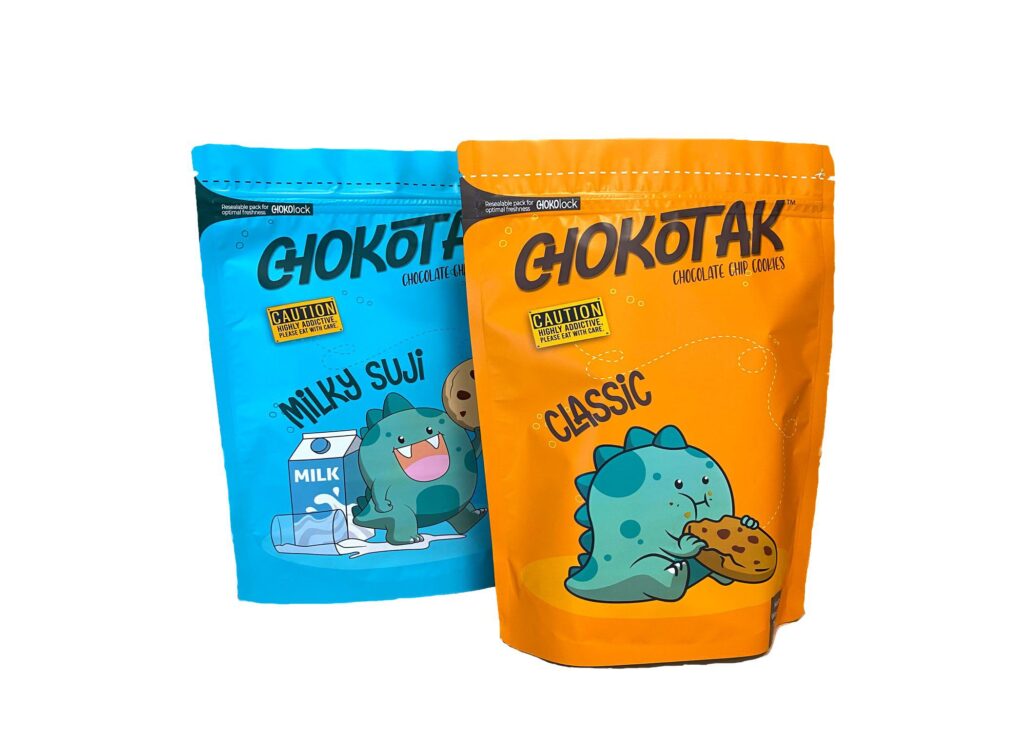
Choosing an oxygen barrier pouch is not a question of buying the thickest film on the shelf. The right specification starts with what your product does badly when air reaches it, then works backwards to a layer structure that answers that one problem. Get that order right and the rest of the brief — seal window, gusset, closure, print surface — falls into place. Get it wrong and you pay for barrier you never needed while still discovering the failure mode you were trying to avoid.
You agree with that already, I suspect: nobody orders a laminate for the love of laminates. What you may not have is a repeatable way to turn “our coffee goes stale” into a line a supplier can quote against. That is what this guide gives you. I will walk through five specification steps, show you a simple way to translate sensitivity into structure, and flag the mistakes that appear when a sample becomes a bulk order. By the end you should be able to hand a supplier a short, testable brief instead of a hope.
Key takeaways – Start with the product’s failure mode, not a film name; oxygen sensitivity, oil, aroma and light each pull the structure in a different direction. – Oxygen transmission rate (OTR) is a useful comparison number, but a published value is not a shelf-life promise — confirm behaviour on your own pack. – Extra layers add cost and can narrow the seal window; the best structure is the simplest one that passes a real line trial. – Bring closure, gusset and artwork into the same conversation as the barrier layer, because they constrain each other. – Lock a written brief before you request quotes, so two suppliers are pricing the same pouch.
Why oxygen barrier pouch performance starts with the product, not the film
Ask two buyers what makes an oxygen barrier pouch work and you will often hear a film name — metallised polyester, aluminium foil, EVOH — as if the material alone decided the outcome. It does not. A structure is a response to a problem. If you cannot describe the problem in one sentence, you cannot judge whether the proposed structure is clever or merely expensive.
Picture a small roaster who packed whole bean coffee in a clear, glossy bag because it photographed well. Six weeks into distribution the aroma flattened and customers began asking whether the beans were old. The roaster’s first instinct was to add another layer. The real issue was that the pack was chosen for the shelf, not for the product’s sensitivity to oxygen and light. Once the brief began with “whole bean, aromatic, long distribution”, the converter could propose a metallised or foil-based structure with a valve, and the conversation moved from guesswork to specification.
That story repeats across snacks, nuts, spices, dried fruit and pet food. The film is the answer; the product is the question. When you brief from the product outwards, three things improve at once: you stop paying for barrier you do not use, you shorten the trial loop, and you give the supplier something measurable to quote.
A useful habit is to write the product’s problem as a single sentence at the top of the brief: “whole bean coffee, aromatic, sold through distributors, must taste fresh at the point of brew.” That sentence becomes the test every later decision has to pass. If a proposed layer, closure or finish cannot be linked back to it, it is probably decoration rather than specification. Buyers who do this find that conversations with converters get shorter, because both sides are arguing about the same outcome rather than comparing unrelated film names.
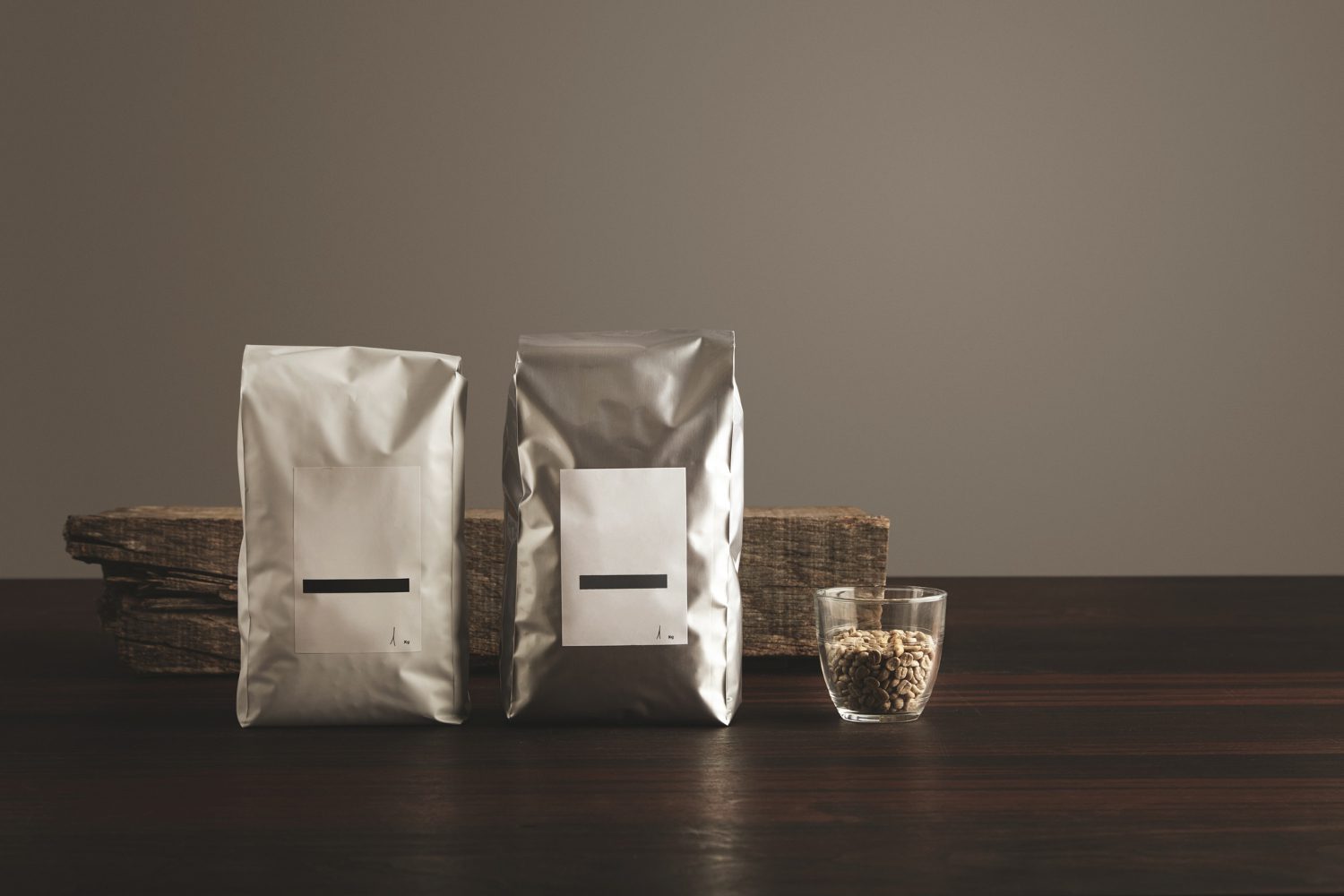
The photograph above is a good visual reminder: silver, foil-looking bags beside coffee beans are a common answer for products that dislike air and light. But notice what the picture cannot tell you — the seal temperature, the layer order, or how the pack behaved on the filling line. Those are specification questions, not photography questions.
Step 1: list what your product reacts to (oil, aroma, light)
Before anyone discusses microns or layer counts, write a plain list of the ways your product changes during storage. Most food and aroma-rich products react to a short set of triggers, and each trigger points toward a different part of the structure.
- Oxygen. Fats go rancid, colours brown, and some vitamins degrade when oxygen reaches the product. If this is your main problem, you are genuinely in the market for an oxygen barrier pouch rather than a general-purpose bag.
- Aroma loss or gain. Coffee, spices and herbs are volatile. A pack that keeps oxygen out but lets aroma escape still fails the customer, and a pack that lets outside odours in fails just as badly.
- Light. Clear windows look excellent in a supermarket and quietly undo a careful barrier specification for light-sensitive contents. A metallised layer or an opaque print often does more than an extra micron of plastic.
- Oil and grease. Oily or seasoned products can attack the inner seal layer. The barrier in the middle of the structure may be fine while the seal itself softens and leaks.
- Moisture. Crisp products go soft and dry products go cluggy. Humidity control is a separate job from oxygen control, even though the two are often discussed together.
Rank these triggers rather than listing them flat. The one that causes customer complaints first deserves the first design decision. Industry groups such as the Food Packaging Forum publish accessible background on how these degradation pathways interact, which is useful reading before you fix a number in a brief.
Over-specifying is the quiet cost here. A product that only needs moderate moisture protection does not benefit from a foil layer, yet the request for “the strongest pack you make” is common. The stronger build may seal over a narrower window, cost more per unit and remove the option of a clear window — three disadvantages bought in exchange for protection the product never uses. Rank the triggers, then let the supplier propose the lightest structure that covers them.
Step 2: work back from sensitivity to the barrier layer you need
Once the trigger is ranked, translate it into a barrier target. The usual shorthand is oxygen transmission rate, often written as OTR: how much oxygen passes through a given area of film over a given time under stated conditions. Treat OTR as a comparison tool, not a destination. A lower number means the film resists oxygen better, but it does not by itself tell you how long your product will last on your shelf in your climate.
This is where the phrase oxygen barrier pouch becomes useful in a brief only if you attach a test condition to it. “High barrier” means different things to different converters. Instead, state the product, the expected distribution conditions, and the performance you need to verify. A supplier can then suggest a barrier layer that fits: metallised polyester for a balance of good looks and oxygen resistance, aluminium foil where near-total blockage and light protection matter, or EVOH where clarity and strong oxygen resistance are both wanted and moisture is controlled by the surrounding layers.
There is no single winner. EVOH performs beautifully for oxygen but loses much of that performance when it gets wet, so it is normally buried between moisture-resistant layers. Foil is an excellent block but creases can become pinholes, and it removes the option of seeing the product. Metallised films sit between the two. Your job at this step is to choose the family of barrier, not the exact micron build — that comes next.
If you want a deeper primer on how these films are specified before you narrow the choice, the Institute of Packaging Professionals offers general technical resources, and our own notes on high-barrier film roll selection describe how barrier layers are combined in practice.
Step 3: translate barrier level into a film structure
Now turn the barrier family into a layer stack. A pouch film is rarely one material; it is a laminate where each layer has a job. A typical logic runs: an outer layer for print and scuff resistance, a middle layer for barrier, and an inner layer that seals cleanly and touches the food. The art is in making those jobs compatible rather than simply stacking the maximum of everything.
The table below is a starting map, not a recipe. It shows how a sensitivity might be translated into structure logic and what still needs checking. For an oxygen barrier pouch, treat the “typical layer logic” column as a conversation opener with your converter rather than a finished answer.
| Dominant sensitivity | Barrier family to discuss | Typical layer logic | What still needs a trial |
|---|---|---|---|
| Oxygen + light (coffee, spices) | Metallised polyester or foil | Print outer / metallised or foil barrier / heat-seal inner | Aroma retention and crease pinholes after filling |
| Oxygen with clear window wanted | EVOH buried between polyolefins | Clear outer / EVOH barrier / moisture-tie / seal inner | OTR after humidity exposure and seal integrity |
| Oil, grease and seasoning | High-barrier inner plus robust sealant | Print outer / barrier core / oil-resistant seal inner | Seal softening and long-term leak path |
| Moisture-led crispness | Moisture barrier emphasis | Print outer / metallised or foil / strong seal inner | Water vapour behaviour in your storage climate |
| Mixed, moderate sensitivity | Balanced laminate | Print outer / single barrier / seal inner | Whether the simple build already passes your trial |
The point of this table is to make the trade-off visible. Every extra layer can improve one property and make another harder — a stiffer laminate may seal over a narrower temperature window, and a foil layer can improve barrier while reducing the convenience of a clear window.
When you receive a structure proposal, read it from the outside in. The outer layer tells you how the print will survive handling; the middle layer tells you what the barrier actually is; the inner layer tells you how the pouch seals and what it touches. A proposal that lists only a total thickness is not enough to compare, because the same overall gauge can hide very different jobs. Ask for the layer order and the reason for each one, and the quote becomes much easier to judge.
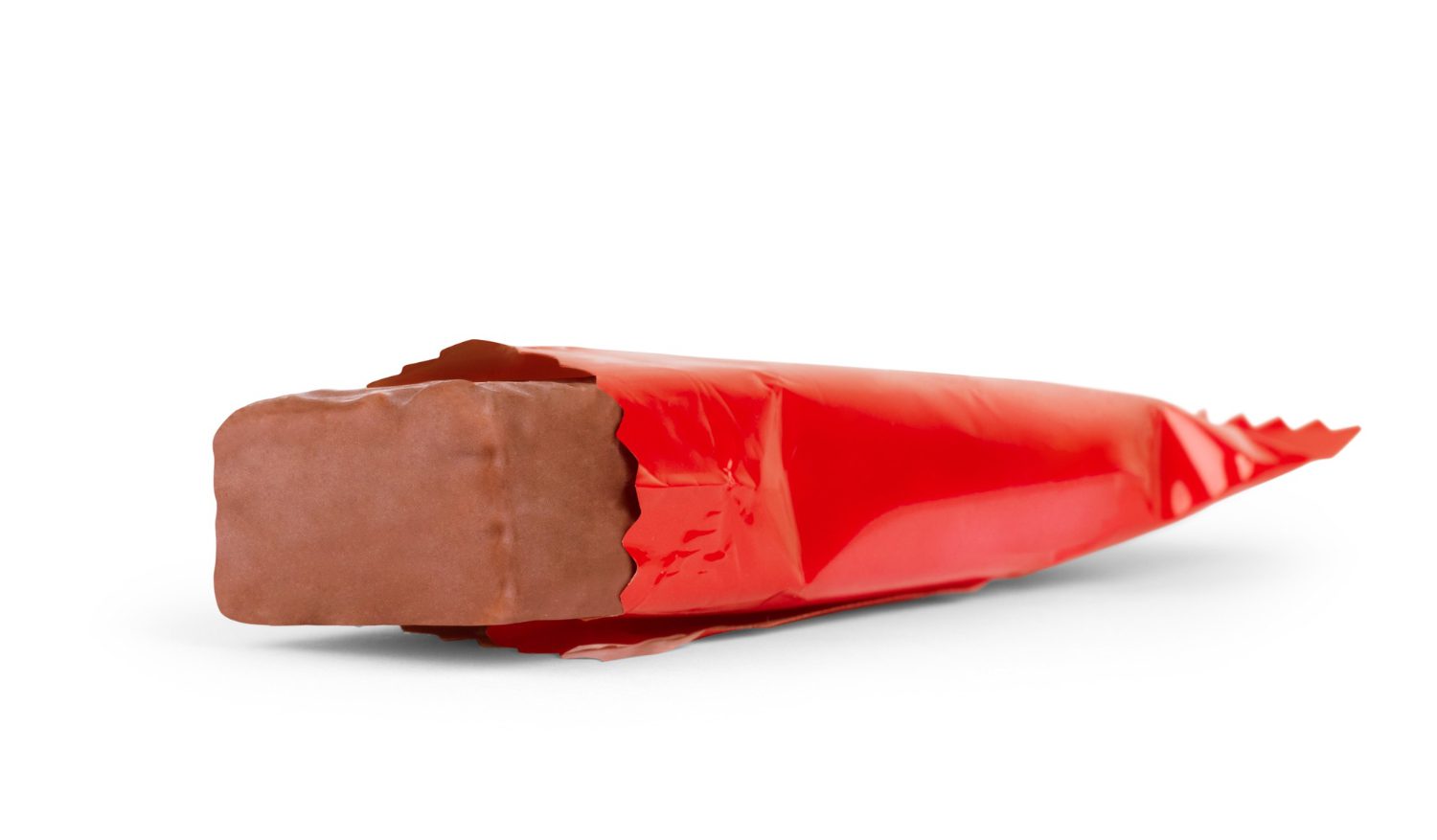
Chocolate is the classic example of why structure matters more than thickness: a shiny foil wrap manages light, aroma and melt behaviour at once. Your product may need a different balance, but the principle holds — name the jobs first, then choose layers. Our overview of customised laminated films for food packaging explains how converters combine layers once the jobs are agreed.
Step 4: check seal window, gusset and closure against the structure
An oxygen barrier pouch specification that ignores the seal is waiting to fail on the line. The seal is the weakest part of most pouches by design: it is where two film surfaces are melted together, and it is where oil, powder or product residue most often interferes. When you change the laminate, you change the seal window — the range of temperature, pressure and dwell time that produces a reliable seal.
Ask your converter to state the seal window for the proposed structure and to confirm it on the actual filling equipment, not on a laboratory sealer. A high-barrier inner layer can seal beautifully in isolation and behave differently when a dusty spice or an oily sauce creeps into the seal area. This check belongs in the same conversation as the barrier choice, because a better barrier with a contaminated seal is still a leaking pouch.
Gusset and closure are the other two constraints. A side gusset adds panel area and improves shelf presence, but it also adds folds where film can crease — and creases in foil-based structures can become leak paths. A zipper or slider makes a pouch reclosable, which customers like, but it interrupts the seal and adds a component that must match the film’s behaviour. If you need a venting feature for a fresh-roasted product, discuss that at the same time; retrofitting a valve into an oxygen barrier pouch is a common source of rework.
Write these decisions down as one paragraph in the brief: format, gusset style, closure type, and the confirmation you expect from the supplier. That paragraph prevents the quiet drift where sales quotes one build and production prepares another.
Step 5: confirm shelf behaviour with a small line trial
No published oxygen barrier pouch rating replaces a trial on your own pack, with your own product, on your own line. The purpose of a small run is not to prove that the film is good; it is to find out where the real limitations sit. Keep the first trial modest and instrument it properly.
A useful trial records a handful of things: seal integrity across the run, how the film feeds and registers on the equipment, whether the closure or gusset causes jams, and what the pack looks like after a period in realistic storage. If the product is aromatic, include a simple sensory check alongside any instrument reading. If it is oily, pay particular attention to the seal area after the pack has been filled and closed.
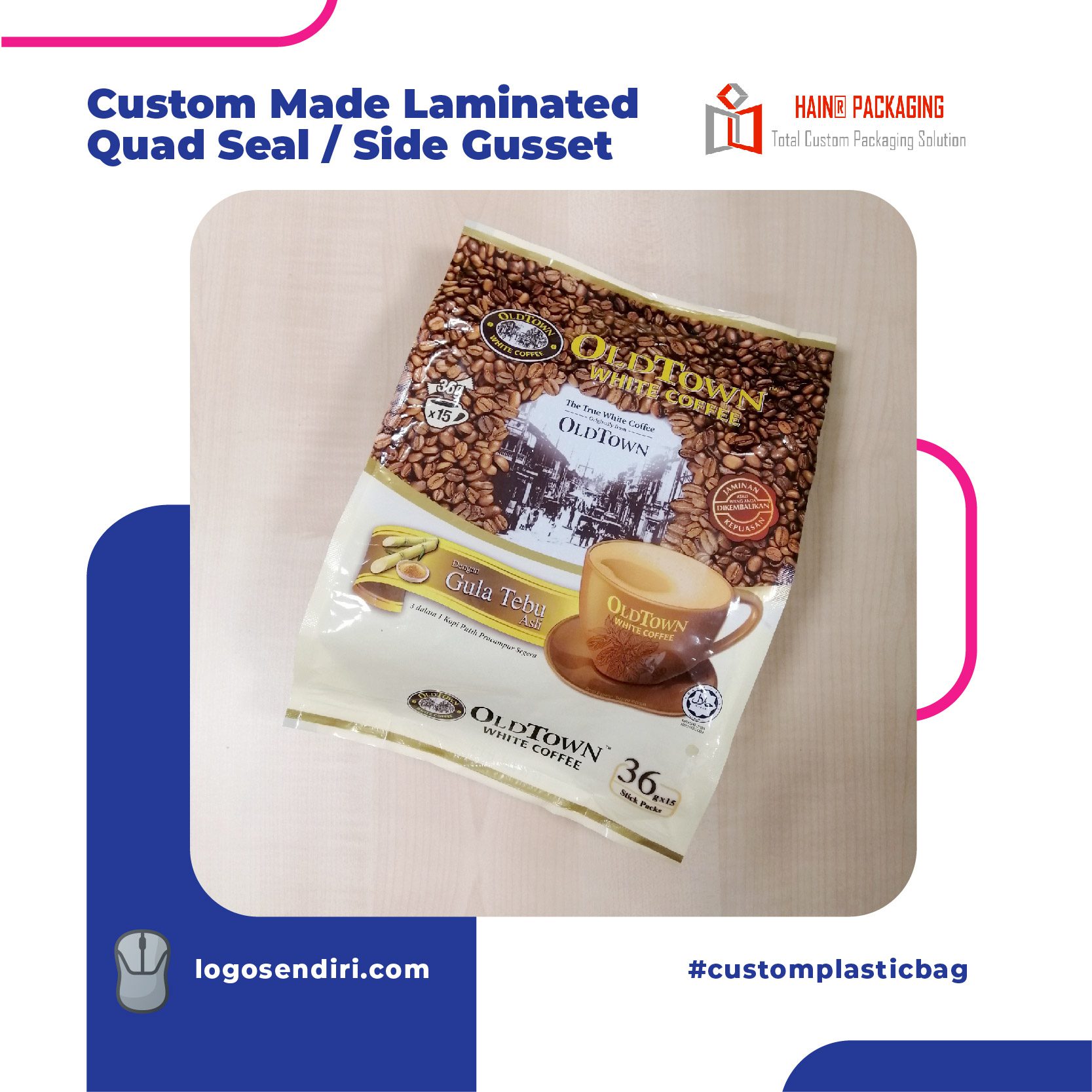
A laminated, gusseted coffee pack like the one shown is exactly the sort of format where the drawing looks simple and the line behaviour is not — the folds, the print registration and the seal all interact. This is why the trial should use production-intent materials rather than a hand-made mock-up.
Record the outcome as a short written summary: what passed, what drifted, and what you would change. That summary becomes the baseline for the next conversation with your supplier, and for the next order. If your product is aimed at long distribution, our notes on long shelf life barrier packaging describe how buyers frame that conversation without turning a barrier rating into a promise.
Common spec mistakes when moving from a sample to bulk
The distance between an approved sample and a first bulk order for an oxygen barrier pouch is where most packaging projects lose time. The sample was often made by hand, on a small machine, with a converter’s standard film. Bulk runs use production tooling, roll stock and line speeds. Four mistakes recur.
First, changing the artwork without rechecking the structure. A new design may move a dark ink block over the seal area or cover a gusset fold, changing how the pack behaves even though the film is identical. Second, treating a barrier rating as a shelf-life verdict. A lower OTR on a data sheet is encouraging, but storage temperature, humidity and product chemistry all change the result — the number is a comparison, not a fixed shelf-life outcome. Re-test in realistic conditions rather than assuming.
Third, discovering the minimum order quantity after the specification is fixed. A beautiful oxygen barrier pouch structure that no mill will run at your volume is not a specification; it is a wish. Raise quantity and tooling questions early, and confirm how long the supplier needs to prepare materials — timing depends on the specification and the order quantity, so agree it with the sales team before you commit to a launch date.
Avoiding these mistakes is mostly a matter of sequencing: agree the jobs, confirm the structure, test the seal, then freeze the artwork and the quantity together.
There is a fourth trap worth naming: approving a sample in one season and ordering bulk in another. Humidity and temperature can shift how a film behaves on the line and how the product behaves in storage, so a sample that looked fine in a cool month may crease or block differently later. If your climate swings, mention it in the brief and ask the supplier to confirm the structure under the conditions you actually expect.
FAQ
How do I know which barrier level my product needs?
For an oxygen barrier pouch, start with the failure mode you are trying to prevent — rancidity, aroma loss, light damage or moisture — and share that with your converter alongside your product, typical storage conditions and distribution route. A supplier can then suggest a barrier family and a test condition rather than a vague “high barrier” label. Treat any published transmission value as a starting comparison, and confirm the real behaviour with a trial on your own pack.
Does a higher barrier always mean a longer shelf life?
Not necessarily. A stronger oxygen barrier only helps if oxygen is the limiting factor. If your product fails because of light, oil attack at the seal, or moisture, adding oxygen resistance alone will not fix it, and it may add cost and narrow the seal window. The right question is whether the proposed structure addresses your dominant failure mode, and the answer is confirmed by testing rather than assumed from a data sheet.
Can an oxygen barrier pouch still be recyclable?
It depends on the structure. Monomaterial polyolefin builds are generally easier to recycle than mixed-material laminates containing foil or EVOH, but they may offer a different level and balance of protection. Discuss the end-of-life requirement at the same time as the barrier requirement, because the two pull the design in different directions. Your converter can explain which structures are practical for your product and local collection stream.
Conclusion: turn oxygen barrier pouch needs into a supplier brief
A good oxygen barrier pouch specification is short, testable and written from the product outwards. Name the trigger that fails first, translate it into a barrier family, choose the simplest structure that answers it, check the seal and closure against that structure, and confirm the whole thing on a small line trial. When you brief an oxygen barrier pouch this way, two suppliers price the same object and you can compare their answers honestly.
The five steps in this guide are a sequence, not a shopping list: skipping from “our product goes stale” straight to a film name is how budgets disappear. Keep the focus on the failure mode, keep the confirmation in writing, and the specification will survive the move from sample to bulk.
Talk to Logos Sendiri about your oxygen barrier pouch specification
If you would like a second pair of eyes on a draft specification, the team at Logos Sendiri can walk through barrier options, seal behaviour and format choices against your product and quantity. Share what your product reacts to and what you have tried so far, and we will help you turn it into a brief you can quote. Tell us about your pouch project and start the conversation.