Heat Shrink Tubing Packaging: What the Term Means Here
October 23, 2026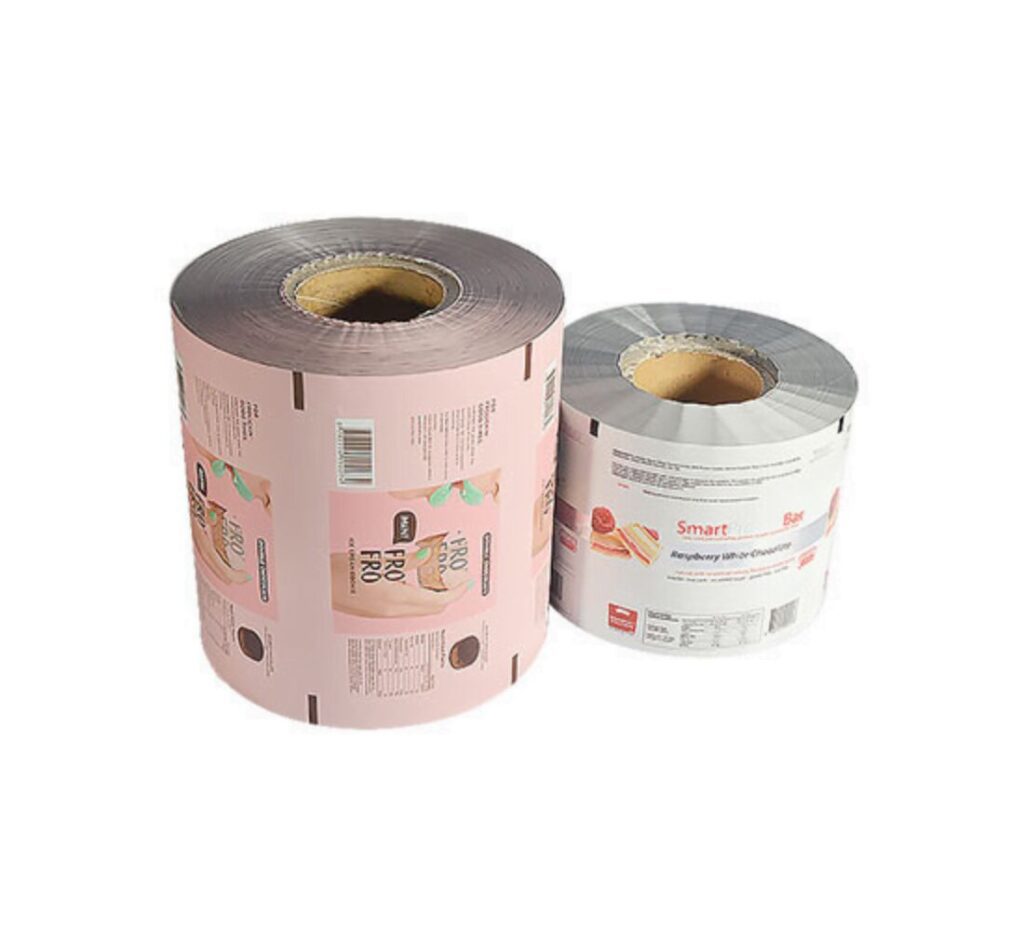
Ask five suppliers for a high barrier film roll and you will get five different structures, because “high barrier” has no industry-standard threshold. It is a comparative word, not a specification. One supplier’s high barrier keeps a dry snack crisp for four months; another’s protects coffee for eighteen. Both are honest. Neither is comparable.
The fix is to stop asking for “high barrier” and start asking for two numbers — oxygen transmission rate and moisture vapour transmission rate — and for the shelf-life target those numbers have to support. Once those are on the table, the structure question answers itself. This page maps the four tiers that the market actually buys, the laminate structures behind them, and where each barrier material sits. The converting options for whatever structure you land on are covered on our roll stock film page.
Key takeaways
– “High barrier” is not a defined grade. It only becomes a specification when it is expressed as OTR and MVTR, backed by a shelf-life target.
– OTR and MVTR cause different failures: oxygen drives oxidation and rancidity, moisture drives caking, softening and loss of crispness. You rarely need both at maximum.
– Four tiers cover most buying decisions — basic, medium, high and ultra — and each has a characteristic structure and a characteristic cost profile.
– EVOH, metallised film and aluminium foil trade off against each other on transparency, flex-crack resistance and cost. There is no free upgrade.
– On a form-fill-seal line, the seal window and coefficient of friction cause more failures than the barrier number does.
A coffee exporter in Selangor asked us to “upgrade the barrier” after two shipments came back with flat aroma. The pack was already a metallised laminate, which is a genuinely good oxygen barrier. The problem was elsewhere: the valve and the seal, not the film. Another two months of shelf life would have cost more per roll and achieved nothing. That is the failure mode this page is written to prevent — buying barrier you do not need, in the wrong direction.
“High Barrier” Is Not One Thing
Treat “high barrier” as a direction, not a destination. There is no standard that defines where medium barrier ends and high barrier begins, no certification that a film can carry to prove it, and no reason to assume two suppliers are quoting to the same performance when both use the phrase. What differs between them is the barrier layer — and the barrier layer is what you are actually paying for.

Two practical consequences. First, a quote comparison between two “high barrier” films is meaningless until both are reduced to measured transmission rates under the same test conditions. Second, the correct target is derived backwards from your product: how long does it have to last, under what storage and transit conditions, and what is the failure mode you are protecting against. The barrier number falls out of that. It is not chosen first.
The Two Numbers That Define a Barrier
Two measurements do almost all the work, and they describe different threats.

OTR — oxygen transmission rate. How much oxygen passes through a given area of film in a given time. Oxygen drives oxidation: rancidity in fats and oils, colour loss in cured meats and coffee, flavour degradation in most dry foods. If your product’s failure mode is “it tastes stale or off”, oxygen is usually the culprit. OTR is measured by standardised methods such as ASTM D3985, and the number is reported for a defined temperature and humidity — which is why two datasheets are only comparable if the test conditions match.
MVTR — moisture vapour transmission rate. How much water vapour crosses the film, measured under standards such as ASTM F1249. Moisture causes caking in powders, softening in biscuits and crackers, and mould growth in products that were dried to a safe water activity. If your failure mode is “it went soft”, “it clumped”, or “it grew”, you are looking at MVTR.
The mistake buyers make is asking for both at maximum. Barrier cost is not linear with performance, and most products fail on one axis first. Milk powder fails on moisture. Roast coffee fails on oxygen. A frozen product may need almost no barrier at all beyond what the temperature provides. Match the barrier to the failure mode, then confirm with shelf-life testing rather than with a datasheet comparison.
Four Barrier Tiers and the Structures Behind Them
This is the comparison most buyers are actually looking for when they search for a high barrier film roll. The tiers below are described by structure and by the kind of product each one is built for — not by numeric thresholds, which vary by laboratory conditions and by supplier.

| Tier | Typical structure | Characteristic use | What you trade away |
|---|---|---|---|
| 1 — Basic | Monolayer PE or PP; sometimes a simple PE/PE coextrusion | Short ambient life, frozen goods, dry non-fat products, secondary packaging | Minimal cost, minimal protection |
| 2 — Medium | BOPP or PET outer with PE sealant; sometimes a two-ply coextruded sealant | Dry snacks, bakery, confectionery with a moderate shelf life | Moderate barrier; no foil or EVOH layer keeps cost down |
| 3 — High | PET or BOPP outer, EVOH or metallised barrier layer, PE sealant | Coffee, nuts, dried fruit, powdered drinks, products with an oxidation-driven failure | Higher material cost; metallised layers block product visibility |
| 4 — Ultra | Multi-ply with aluminium foil core, or high-spec EVOH structures, often with nylon for puncture resistance | Retort, pharmaceutical, long ambient shelf life, export with extended transit | Highest cost, opaque, and flex-cracking must be engineered around |
Two things to read off this table. First, tier is a structure question, not a marketing tier — the jump from 2 to 3 is the addition of a barrier layer, and the jump from 3 to 4 is usually foil plus puncture resistance. Second, moving up a tier costs money in more ways than material: thicker structures run differently on the line, and some need slower speeds or different sealing parameters.
Picking a tier for an ambient product is a shelf-life question at least as much as a structure question: how many months the pack has to survive, and under what storage and transit climate, is what decides whether tier 3 will do or whether you are pushed to foil. Our long shelf life barrier packaging guide goes through how that target is set before the structure is chosen.
Want the tier question answered for your product? Send the product, the failure mode you have actually seen, and your target months — we will tell you which tier is defensible and which is over-specification.
Where EVOH, Metallised Film and Foil Each Sit
Three materials carry most of the barrier work above tier 2, and each has a real cost.

EVOH (ethylene vinyl alcohol). Excellent oxygen barrier, and — importantly — it is transparent, so it works where product visibility matters. Its weakness is moisture: EVOH loses barrier performance when it absorbs water, so it is normally buried inside a laminate with polyolefin layers protecting it on both sides. That makes the structure more complex and more sensitive to how well the sealant does its job. On a high barrier film roll built around EVOH, the seal is part of the barrier system, not just a closure.
Metallised film. A microscopically thin aluminium layer vacuum-deposited onto a PET or BOPP film. It gives a strong barrier at lower cost than foil and is the workhorse of tier 3. The trade-offs: it is opaque, though semi-transparent grades exist; it is more susceptible than foil to flex-cracking — repeated bending creates pinholes that compromise the barrier — and it cannot be detected by a standard metal detector reliably at that layer thickness, which matters for some food safety plans.
Aluminium foil. The reference barrier: effectively total, against oxygen, moisture and light. It is also opaque, it has no recovery once creased, and flex-cracking is a genuine engineering constraint that has to be managed with supporting plies. Foil structures are heavier to convert and slower to run. It is the right answer when nothing else reaches the shelf-life target, and the wrong answer when something else would have done.
The pattern across all three: barrier is bought by giving up something. Transparency, flex life, line speed, or cost. There is no material that wins on four axes, which is why the tier table starts from the product’s failure mode rather than from the material.
Barrier vs Machine: What Your FFS Line Cares About
A film with the right barrier number still fails on a form-fill-seal line, and this is where most trials are lost.

- Sealing window. The gap between the temperature at which the sealant initiates and the temperature at which it degrades or distorts. Barrier structures run at different windows from standard laminates, and a narrow window means more sensitivity to jaw temperature drift across a shift.
- Hot tack. Seal strength while the seal is still hot. On a vertical FFS line the pack is filled almost immediately after sealing, so a film with good cold-seal strength and poor hot tack will open under the weight of the product.
- Coefficient of friction. Barrier films often run with different slip packages. If COF is too high, film drags over the forming collar and tracking drifts; too low, and the roll telescopes or the finished pack slides on the conveyor.
- Stiffness and gauge. Adding plies for barrier increases stiffness, which affects how the film forms around the collar and how it folds on a horizontal flow wrapper.
- Seal-through contamination. Powders and oils in the seal area defeat even the best film. This is a filling-line problem, not a film problem, but it is usually reported as a film problem.
Run any tier change as a line trial, not a datasheet comparison. Bring your actual line speed, jaw temperature and dwell, and test the structure under production conditions before committing to volume.
Fields to Put on a Barrier Film Roll Spec
Tier and structure are the headline of a high barrier film roll spec. These fields are the rest of it, and a complete specification removes the guesswork from quoting:
- Product and failure mode — what goes wrong today, if anything already does.
- Target shelf life and storage condition — ambient, chilled, frozen, and the distribution climate for export.
- Required barrier direction — oxygen, moisture, or both, and which one is critical.
- Structure preference — if you have one, with the reason.
- Roll format — core size, outer diameter, roll width, and the maximum roll weight your unwind will take.
- Print — whether it is surface or reverse printed, and whether any window must stay clear.
- Line parameters — machine type, speed, jaw temperature range, and whether sealing is through contamination.
- Quantity per run and annually — both material and print economics move with volume.
One practical note on a high barrier film roll for export: transit temperature and humidity are part of the barrier requirement, and a structure specified for a Malaysian ambient warehouse is not automatically specified for a container crossing an equatorial route with a week of temperature cycling.
For food contact applications, our food packaging film roll page covers the compliance and material options alongside barrier. And for anything going on a machine you already own, send the line parameters above with your enquiry — they narrow the options faster than any material conversation.
Lead time and unit price depend on specification, print method and order quantity — confirm both with our sales team before ordering.
The One Question Worth Taking Back
Every section on this page comes down to a single question, and it is not “which film is best”:
What actually goes wrong with this product today?
If the answer is “nothing”, you are probably buying barrier you cannot justify, and the useful next step is a shelf-life test on the structure you already have — not an upgrade. If the answer is “it goes stale or tastes off”, oxygen is your axis, and EVOH or metallised film is where the conversation opens. If it is “it clumps, softens or grew”, moisture is your axis, and foil or a high-spec EVOH structure is the candidate. If the answer is “cartons arrive crushed”, the barrier number was never your problem.
That question is free to answer and expensive to skip. It is also the first thing we ask, because the tier follows from the answer — not the other way round.