
Sachet Printing Malaysia: 7 Mistakes That Ruin Small Brands
November 20, 2026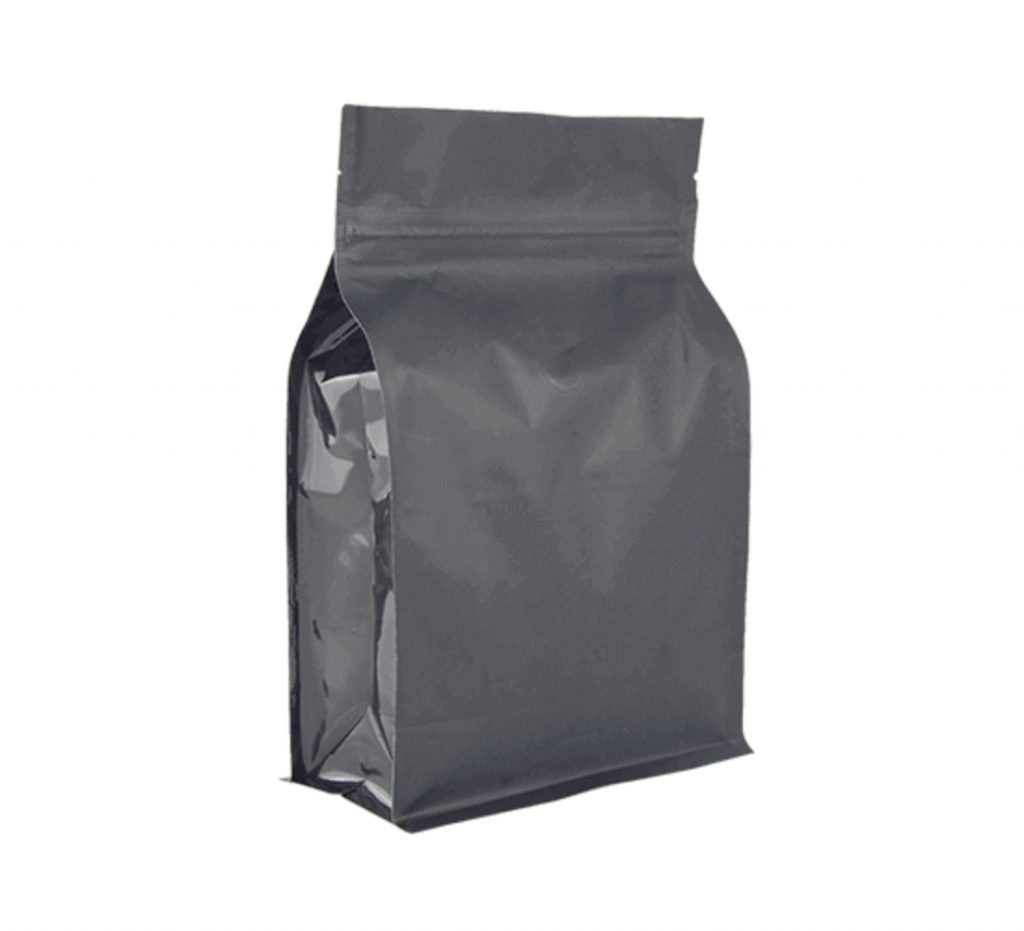
Choosing a retort pouch with zipper is a specification decision rather than a catalogue decision. The zipper is a separate component from the permanent retort seal, and both have to survive the same sterilisation cycle as the rest of the pack. This checklist works through what “retort compatible” actually means for a zipper, how PE, PP and specialty profiles behave under retort conditions, where stress concentrates around the zipper seal zone, the failure modes worth testing before you commit, and the validation steps that turn a promising sample into a specification you can repeat across production runs.
Key takeaways
• A zipper is not a standard fitting on a retort pouch. It is a separate component that must be validated against the actual sterilisation cycle.
• The zipper profile and the permanent retort seal are two closure systems in one pack, and they age differently.
• Zipper material has to match the inner sealant layer and the retort curve, not a generic temperature claim.
• Most leaks start at the zipper flange, the profile terminations or the corners, where stress concentrates during heat and pressure.
• Validate on filled packs in the orientation they will be stored, not on empty samples that have never seen a retort.

A zipper is not a standard fitting on a retort pouch. It is a separate component with its own material limits, its own seal geometry and its own failure behaviour under heat, pressure and time. That distinction is the reason a specification for a retort pouch with zipper cannot simply be borrowed from a stand-up pouch that never sees a sterilisation cycle. Buyers who treat the closure as an ordinary catalogue accessory tend to find the problem only after a shelf-life trial, when a pack that looked sound on the filling line has distorted, leaked or lost its reclosable grip. The sensible approach is to treat the zipper as a component in its own right, with a test plan of its own.
This article takes a spec-profile approach. Rather than explaining what retort packaging is, we work through the combination layer by layer: what the zipper is made from and how that material behaves under a retort cycle, how the film structure surrounds the zipper seal zone, where stress and leakage concentrate, and what should be checked once real product has been filled and heat processed. We write from the perspective of a flexible packaging supplier that is Australian-owned and operated, with a global manufacturing network, working with food brands across the region. Where a figure would be misleading without the conditions behind it, we describe the condition rather than quote a number. The aim is to give you a set of questions that shortens the conversation with any supplier, including our own.
Why a Retort Pouch With Zipper Is Not a Standard Fitment
A conventional retort pouch is closed by a continuous, permanent seal running around the perimeter. There is one closure system, and its job is to stay intact from the retort vessel to the moment the consumer tears or cuts the pack open. Adding a reclosable closure changes that logic completely. A retort pouch with zipper now carries two closure systems in the same piece of film: the permanent retort seal that keeps the pack sealed during distribution, and the interlocking profile that the consumer opens and closes repeatedly afterwards. These two systems are made of different materials, formed by different sealing conditions, and stressed in different ways. They should never be specified as though they were the same thing.
The counterintuitive part is that the zipper is usually the first element of the pack to be chosen and the last to be validated. A buyer selects a pouch format, asks for a zipper because the product is meant to be portioned or stored after opening, and assumes the closure will simply survive the retort because the film does. In practice the zipper profile is a relatively thick, stiff insert sitting inside a much thinner, more compliant web. When the pack is heated and pressurised, the film wants to expand and the profile resists. That mismatch does not appear in an empty-pouch sample. It appears in a filled pouch with a headspace, under a real pressure differential, and it appears most sharply at the ends of the profile and where the profile crosses a seal.
That is why the decision deserves to be treated as a specification question rather than an accessory question. The zipper must survive the same thermal and pressure history as the rest of the pack, remain easy to open after that history, and still engage cleanly when the consumer closes it again. None of those outcomes follows automatically from the fact that the pouch itself is retort grade. They follow from a deliberate match between the zipper material, the film structure, the seal conditions and the sterilisation curve, followed by validation on filled packs. If you are new to the underlying formats, our practical guide to retort pouch formats and use cases provides the background on the pouch body; the sections below deal with the closure that sits inside it.

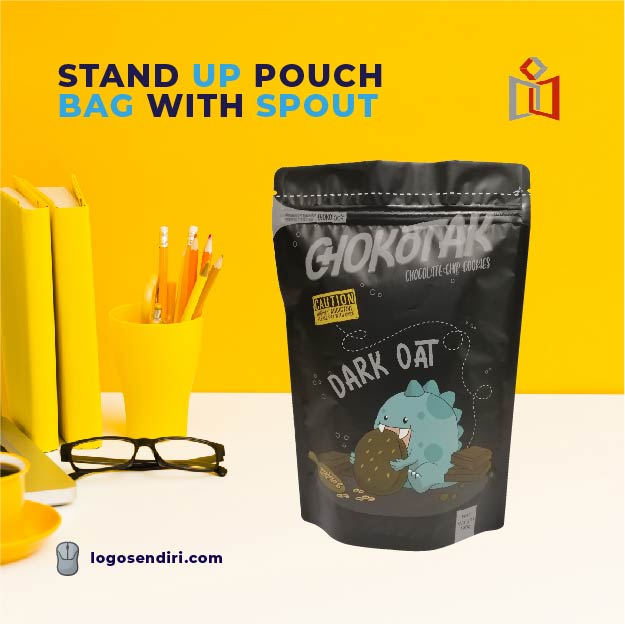
Notice in a format like this how the reclosable closure is integrated into the top of the pack while the body below it remains a conventional stand-up structure. The same visual logic applies to a retort build, but every seal around that closure has to be re-examined once heat processing enters the picture.
What “Retort Compatible” Actually Means for a Zipper
The phrase is used loosely in supplier literature, and that loose usage causes real problems. A zipper described as retort compatible is not universally compatible. What it means, or should mean, is that the specific zipper profile, in the specific film structure, sealed under the specific conditions, has been shown to withstand the specific sterilisation cycle intended for the product. Change any one of those variables and the claim has to be re-examined. The cycle includes the ramp up to the target temperature, the holding period, the pressure profile, the cooling rate and the total time at elevated temperature. It also includes what the product itself does during that cycle, because expansion, vapour pressure and product migration all affect the closure differently than an empty test pack would.
A useful mental model is to think in terms of a window. Every zipper and sealant combination has a range of sealing conditions over which it forms a reliable weld without closing or deforming the interlocking profile. Below that range the flange seal is weak; above it the profile distorts and the zipper may stick shut or fail to engage. The retort cycle then applies a second, thermal window that the same combination must survive without excessive shrinkage, curl or loss of grip. A workable specification sits where those two windows overlap. That overlap is a property of the whole assembly, not a property the zipper carries on its own, and it is why a generic temperature rating printed on a data sheet is not a sufficient basis for a buying decision.
This is also where the distinction between a supplier’s claim and your own evidence becomes important. A material can be entirely suitable for a retort application in principle and still fail in your pack because the product is aggressive, the headspace is generous, the pack is large, or the distribution climate is demanding. Independent discussion of how retort systems behave is available through the Food Packaging Forum resource library, which is a useful place to frame the questions before you sit down with a converter. The practical rule is simple: treat any compatibility statement as a starting hypothesis, and design a validation that tests it under your conditions rather than the supplier’s.
Zipper Materials Under Retort Conditions: PE, PP and Mono-PP
The material of the zipper profile is the first variable to settle, because it determines the sealing window and the thermal behaviour that everything else has to accommodate. The table below sets out the three families most often considered and the questions each one raises. It deliberately avoids presenting fixed temperature limits as commitments: the correct limit is the one demonstrated against your actual sterilisation curve and your actual film structure.
| Zipper family | Typical starting point | What must be verified | Main risk to watch |
|---|---|---|---|
| PE zipper | Soft profile, low sealing energy, widely available | Whether it retains shape and grip after the full thermal history | Softening and distortion at retort conditions, leading to a stuck or misaligned profile |
| PP retort zipper | Stiffer profile, higher heat tolerance, narrower sealing window | Whether the flange seal is strong without closing the interlocking teeth | Higher seal energy needed; small process drift can close the profile |
| Mono-PP compatible zipper | Chosen to match an all-polypropylene recyclable structure | Whether its seal window coincides with the film’s inner sealant layer | Mismatch with the sealant layer causing a weak weld or a distorted profile |
Polyethylene profiles are familiar and easy to run on conventional equipment, but that familiarity is exactly what makes them risky in a retort application. A profile that seals beautifully at ordinary stand-up pouch conditions may soften, flow or lose its interlock geometry once it has been through a hot, pressurised cycle. The pack can still look acceptable when it leaves the retort and only reveal the problem weeks later, when the consumer finds that the zipper will not close or that the flange has creased into a leak path.
Polypropylene profiles address the heat tolerance problem but move the difficulty to the sealing process. A stiffer profile needs more energy and a tighter control of temperature, dwell and pressure. The window between a sound flange weld and a closed, unusable zipper is narrower, so process consistency matters more. That is not a reason to avoid polypropylene; it is a reason to specify the seal conditions explicitly and to check them on production equipment rather than on a laboratory sealer.
Mono-material structures add a further consideration. Where the whole pouch is built around polypropylene to support recyclability, the zipper should belong to the same material family so that the assembly stays coherent. The attraction is clear, but the zipper still has to be matched to the inner sealant layer of that structure. A mono-PP zipper paired with an incompatible sealant can produce a weld that looks fine and fails under retort pressure. In every case the question to ask your supplier is not whether the zipper is retort grade in isolation, but whether this zipper, in this structure, on this equipment, has been validated against this cycle. For more on how the closure behaves in ordinary, non-retort food packs, see our guide to food zipper bags and closure options.
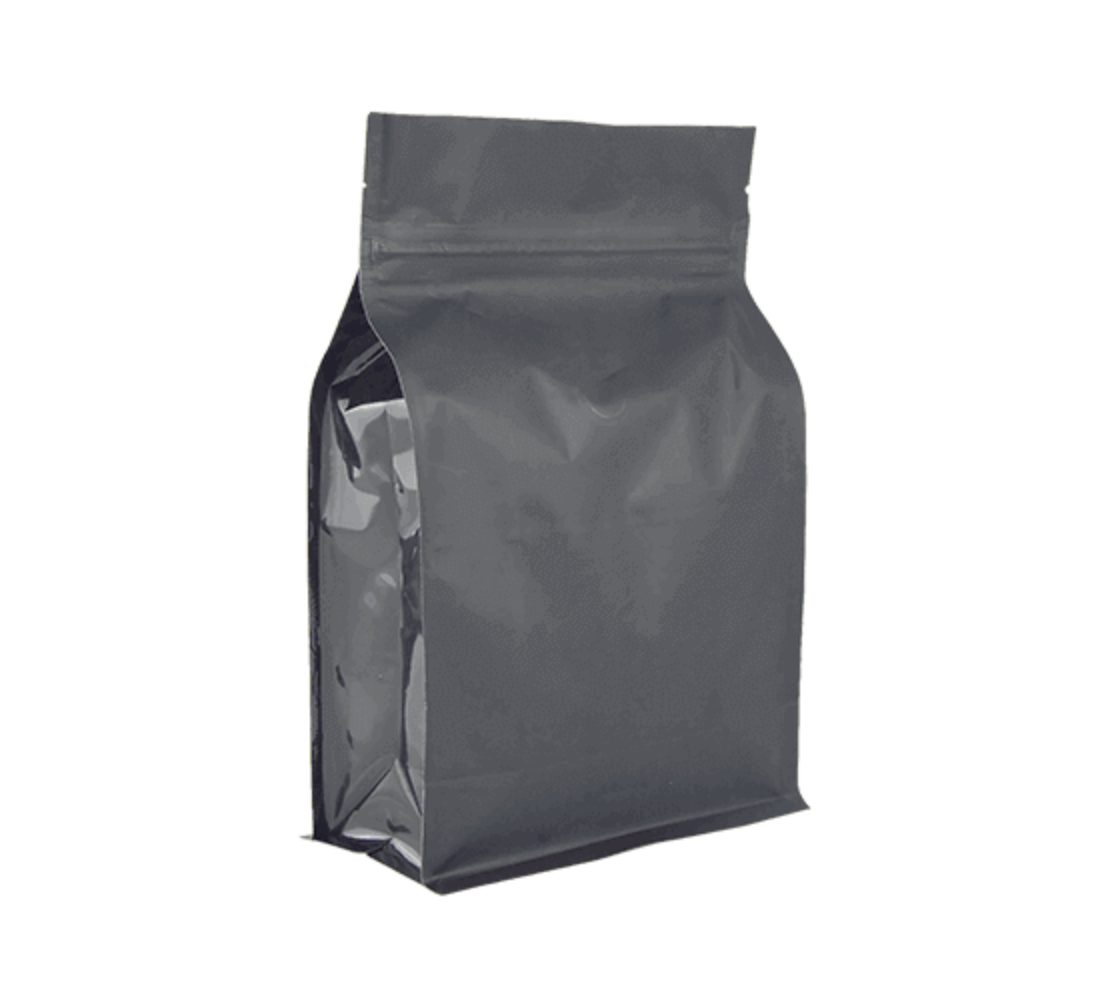
A clean zipper line like this is a good visual reference for what the closure should look like before processing. The question in a retort build is whether that line survives the cycle unchanged.
Layer Structure and the Zipper Seal Zone
A retort pouch is a multilayer construction, and each layer plays a different role. The zipper does not sit on top of that structure; it is embedded in it, right at the point where the inner sealant layer has to flow around a relatively thick insert. Understanding the layer stack is therefore the quickest way to understand why the zipper seal zone is the most sensitive part of the pack. The table below describes the functions in profile form rather than prescribing a fixed structure, because the right stack depends on the product, the cycle and the required shelf life.
| Layer position | Primary function | Relevance to the zipper seal zone |
|---|---|---|
| Outer layer | Print surface, scuff resistance, mechanical strength | Provides stiffness near the top seal; too much rigidity transmits stress into the zipper flange |
| Barrier layer | Protection against oxygen, light and aroma loss | Usually stopped short of the immediate zipper area so the seal can form cleanly |
| Tie or bond layer | Holds dissimilar layers together | Determines whether the structure delaminates at the profile edge during thermal cycling |
| Inner sealant layer | Forms the permanent seal and the zipper flange weld | Must flow around the profile without filling the interlocking teeth or narrowing the channel |
The critical relationship is between the inner sealant layer and the zipper. When the flange is sealed, the sealant has to wet and encapsulate the profile flanges firmly enough to hold pressure, while leaving the interlocking teeth free to engage and disengage. Too little flow and the flange weld is weak; too much flow and the sealant creeps into the closure, making the zipper stiff, sticky or impossible to align. Because that balance is struck during sealing and then tested again during the retort, the seal zone is effectively asked to perform two different jobs in sequence.
Layer rigidity matters just as much. A stiff outer layer or a heavy barrier layer close to the top of the pack can turn a small local stress into a crease that runs straight into the zipper flange. This is why converters often adjust the layer stack near the closure rather than using a uniform structure across the whole pouch. The area around the profile may need a more forgiving construction, with the barrier function maintained by the body panels where the pack is less likely to be flexed. That kind of local design decision is only visible when you look at the pack as a profile, layer by layer, instead of as a finished bag.
Food contact is part of the same conversation. Every layer that touches the product, including the inner sealant and the zipper profile, must be appropriate for the intended use and checked against the requirements of the market where the pack will be sold. The European Food Safety Authority’s food contact materials topic page is a useful authoritative reference for understanding how food contact materials are assessed. We would point you to the relevant official guidance for your destination market rather than make any blanket statement here; the obligation is to verify suitability for the specific product and conditions of use.
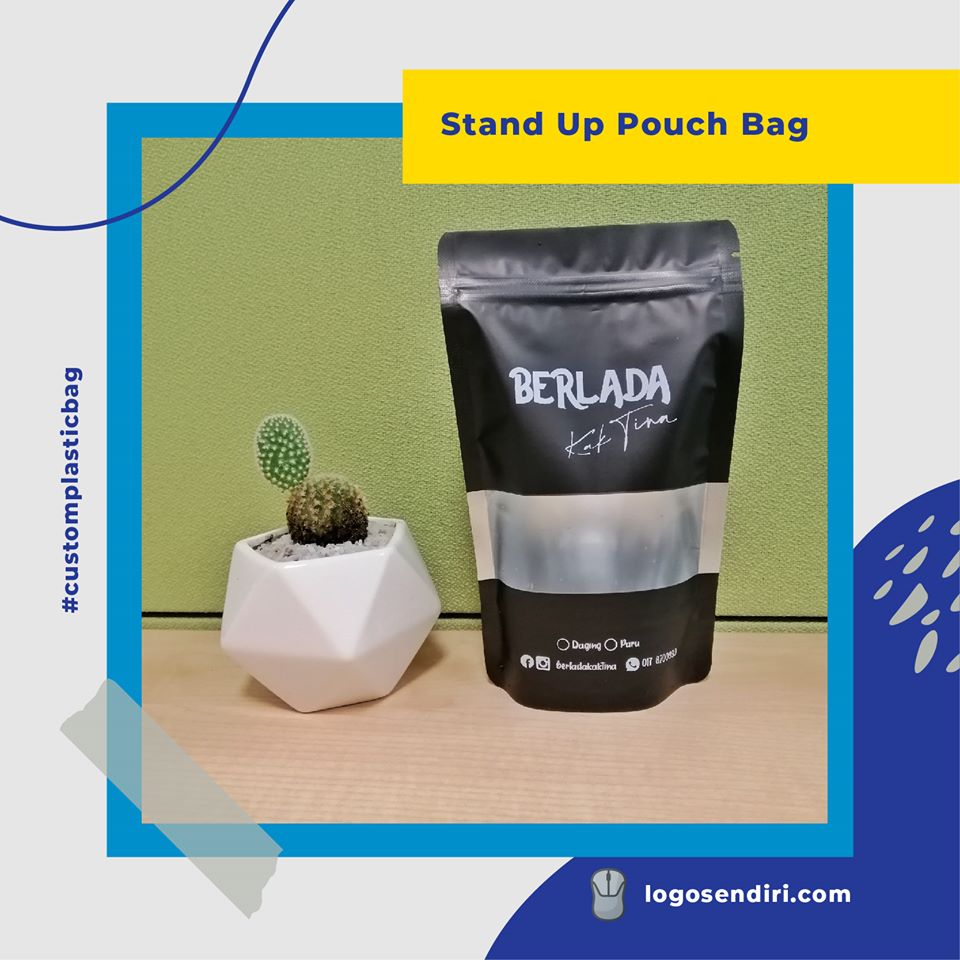
Features such as a window or a printed panel change where the structure is thick and where it is flexible. In a retort build those changes need to be read alongside the zipper seal zone, not separately from it.
Stress Concentration and Leak Risk Around the Reclosable Zip
Leaks in a retort pouch with zipper rarely begin in the middle of a panel. They begin where something changes: a thickness step, a stiffness discontinuity, a corner, or the point where the zipper profile starts and stops. The reclosable closure concentrates all four. Its profile is thicker than the surrounding film, it is stiffer than the web that carries it, it terminates at two points near the side seals, and it runs close to the top seal that closes the pack. During a retort cycle, the film expands and contracts while the profile resists that movement, and the pressure differential across the pack adds a load that the flange has to carry. The result is a set of predictable hot spots.
The first hot spot is the zipper flange itself. If the weld is uneven, a channel can form along the edge of the profile. Under normal handling the channel may be invisible; under the pressure of a retort it becomes a leak path. The second is the profile termination, where the zipper ends meet the side seal. That junction combines a vertical seal, a horizontal closure and a thickness change in a very small area, and it is a common origin for both leaks and creasing. The third is the corner region near the top seal, where the film is already being asked to turn a tight radius. A stiff layer stack can make that corner behave like a hinge, driving a fold into the zipper area on every heating cycle.
Headspace and product behaviour influence all three. A pack with too much headspace carries more compressible gas into the retort, which increases the pressure swing the seals must withstand. A product that expands significantly or releases vapour adds its own load. Filling temperature and the way the pack is positioned in the retort tray also change the stress pattern. This is why an empty sample, or a sample filled with water, can pass a benchtop check and still fail in production. The stress is generated by the interaction of product, headspace, geometry and cycle, not by the film alone. Our guide to sterilisation methods, materials and shelf life goes deeper into how those variables interact over the life of the pack.
There is also a post-process dimension. A retort pouch with zipper is expected to stand, or at least lie flat, and to look presentable on shelf. Stress locked in around the closure can cause the top of the pack to curl after cooling, which affects both appearance and the way the zipper aligns when opened. Flatness and stand-up performance are therefore not cosmetic extras in this format; they are visible indicators of whether the layer stack and the closure are working together. A pack that emerges from retort with a tight curl at the top is telling you something about the seal zone, and it is worth listening to that signal before moving to a full run.
Failure Modes to Check Before You Commit to a Retort Pouch With Zipper
Once you know where the stress concentrates, the next step is to name the failure modes you are looking for. Giving each one a clear symptom, a likely cause and a verification action turns a vague worry about the zipper into a short, repeatable test plan. The table below is written as a troubleshooting aid, not as a claim that any single change will solve a problem. Use it to decide what to measure on your own packs.
| Symptom | Likely cause | Verification action |
|---|---|---|
| Zipper will not close after processing | Profile distorted or sealant has flowed into the teeth | Check engagement before and after the cycle on filled packs; inspect the profile cross-section |
| Localised leak at the top of the pack | Uneven flange weld or a channel along the profile edge | Dye or pressure leak test focused on the flange and profile terminations |
| Creasing that runs into the closure | Stiff layer stack near the top seal or excessive headspace | Review the layer build around the zipper and compare packs with different fill levels |
| Loss of stand-up or pronounced curl after cooling | Locked-in stress around the seal zone | Compare flatness on filled packs after a full cycle, in the intended storage orientation |
| Zipper feels stiff or sticky | Seal conditions too aggressive for the profile | Re-examine seal temperature, dwell and pressure; confirm the flange weld without closing the teeth |
A useful discipline is to record which symptom appears first. A zipper that becomes stiff immediately after sealing is a process-window problem. One that becomes stiff only after the retort cycle is a material-and-structure problem. One that is fine at dispatch but stiff after a period in storage is a compatibility or migration problem. The timing of the symptom tells you which variable owns it, and that in turn tells you which part of the specification to change first. Changing several variables at once is the fastest way to lose the ability to learn from the test.
It is worth separating the closure failures from the broader retort questions. If the body film is failing across multiple packs, the issue may sit with the base structure rather than the zipper, and that is a different investigation. Keeping the two questions distinct prevents the common mistake of rebuilding the whole pouch when only the flange needs attention. If you are comparing formats before specifying the closure, the retort pouch overview linked earlier is a useful starting point; the failure modes in this table are specific to the addition of the reclosable profile.

Different products place different demands on the same basic format. The closure specification should follow the product and the cycle, not the other way around.
Validation Checklist: Test Filled Pouches, Not Just Empty Ones
Validation is where a specification becomes evidence. An empty pouch that has been sealed and heated can tell you something about the film, but it cannot tell you how the closure behaves when a real product pushes against it under pressure. The following checklist is written for filled packs that have been through the intended sterilisation cycle, in the orientation in which they will actually be stored.
- Confirm the zipper engagement and opening force before processing and again after a full cycle, on packs filled with the real product.
- Inspect the flange weld along its whole length, with particular attention to the profile terminations and the junction with the side seals.
- Run a leak check on cooled packs, targeting the top seal and the zipper area rather than sampling only the body panels.
- Compare flatness, stand-up performance and top curl across packs with different headspace levels.
- Check the closure after a period of storage, in the position the pack will occupy on shelf or in a carton.
- Record reclosure behaviour over repeated open-and-close cycles on aged samples, not only on fresh packs.
- Keep samples from each trial so that a change in performance can be traced back to a change in the specification.
Two habits make this list far more useful. The first is to change one variable at a time. If you alter the zipper, the seal conditions and the layer stack together, a pass tells you nothing about which change helped. The second is to test at the uncomfortable end of the process, not the comfortable middle. Seals made at the edge of the acceptable window, packs with the largest realistic headspace and samples held in the warmest part of the distribution chain are the ones that reveal whether the specification has real margin. A pack that only works under ideal conditions will meet the real world eventually, and usually at the worst possible moment.
Frequently Asked Questions
Can a standard PE zipper be used in a retort pouch with zipper?
It can be used only if it has been validated against your specific cycle. A polyethylene profile that works well on an ordinary stand-up pouch may soften or distort under retort conditions, which can leave the zipper stuck shut or misaligned. Polypropylene and mono-polypropylene profiles are common starting points for heat-processed packs, but they are starting points, not finished answers. The deciding evidence is a filled-pack trial under your conditions.
Does the zipper survive more than one sterilisation cycle?
A retort pouch with zipper is normally designed around a single intended heat-processing cycle. Repeated cycles add cumulative thermal history to a relatively small, stiff component, and the closure may lose grip or distort even when the body film remains sound. If your process genuinely involves more than one cycle, say so explicitly at the specification stage so that the profile and seal zone can be evaluated for that history.
Will the reclosable closure affect shelf life?
It can, because the closure sits within the seal system that protects the product. A sound flange weld and a profile that stays aligned after processing support shelf life; a micro-channel along the profile edge or a crease at the termination can undermine it. The closure also matters after opening, since repeated reclosure determines how well the remaining product is protected. Both phases should be included in any shelf-life plan.
How should I specify a retort pouch with zipper to a supplier?
Describe the product, the sterilisation curve, the pack geometry and the intended storage conditions before discussing the zipper itself. Ask which profile is proposed, which sealant layer it pairs with, and what evidence exists from filled packs under comparable conditions. A supplier who can answer those questions in terms of your pack is more useful than one who quotes a generic temperature rating.
Conclusion: Confirm These Points on a Retort Pouch With Zipper Before You Quote
A retort pouch with zipper is a sound choice when the closure is treated as a component to be validated rather than an accessory to be added. The short version of the specification task is this: match the zipper material to the sterilisation cycle and the inner sealant layer, examine the layer stack around the seal zone, identify the stress hot spots at the flange and profile terminations, and confirm everything on filled packs in the orientation they will be stored. A good retort pouch with zipper does not happen because the film is heat resistant; it happens because the zipper, the seal and the cycle have been designed together.
Work through those points in that order and the conversation with any supplier becomes specific. Instead of asking whether a zipper is retort compatible, you will be asking how this profile behaves in this structure under this cycle, and how that will be demonstrated on your product. That is a question with a verifiable answer, and it is the fastest route from a promising format to a pack that performs as intended.
If you are at the point of turning a trial into a specification for a retort pouch with zipper, you can discuss your retort zipper specification with a supplier who works back from the failure mode rather than starting from a catalogue option. Share the product, the intended cycle, the pack size and the storage conditions; those four inputs narrow the field far more effectively than a request for a generic quote.