
Sachet Packaging Malaysia: Complete Guide
May 22, 2026
Food Packaging Supplier Malaysia: How to Choose
May 22, 2026Why Retort Pouch Matters for Malaysian Businesses
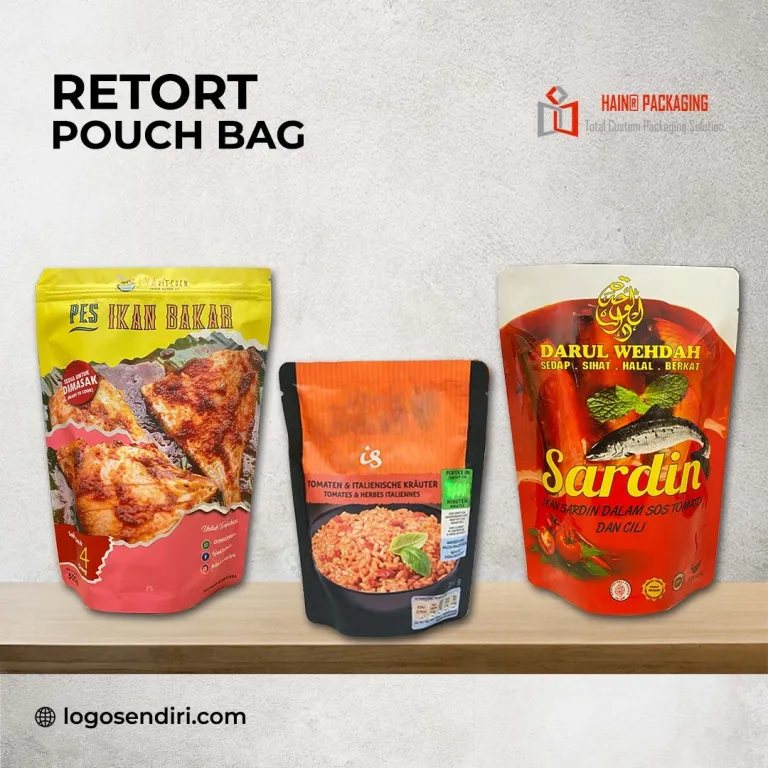
In Malaysia’s fast-growing food manufacturing and retail sectors, packaging is far more than a container — it is a branding asset, a regulatory necessity, and a critical determinant of product shelf life. For brands producing ready meals, curry pastes, pet food, and sauces, the retort pouch Malaysia market offers a packaging solution that rivals traditional canning in preservation while outperforming it in cost efficiency and consumer appeal.
Retort Pouch Malaysia — Malaysia’s processed food industry has expanded steadily, with the broader packaging market projected to grow at a CAGR of 3.86% through 2031 (Mordor Intelligence). This growth is driven by rising demand for convenient, shelf-stable meal solutions among urban consumers and expanding export opportunities for Malaysian Halal food brands. At the heart of this shift is the retort pouch — a flexible, multi-layer package engineered to withstand high-temperature sterilisation while preserving food quality for 12 months or longer without refrigeration.
Whether you are launching a new line of frozen curry packs or scaling up production of wet pet food, choosing the right retort pouch Malaysia supplier is a decision that affects your production costs, shelf-life targets, brand perception, and export readiness. This guide covers everything you need to know — from material structures and sterilisation science to quality testing and supplier selection.
What Is a Retort Pouch?
A retort pouch is a multi-layer flexible packaging container engineered to survive high-temperature sterilisation inside industrial autoclaves (retorts) operating at 121–135°C. Unlike standard flexible packaging, retort pouches are designed to maintain seal integrity and barrier performance through the extreme heat and pressure of the retort cycle, after which the packaged food remains commercially sterile for 12–24 months at ambient temperature.
The key distinction between a retort pouch and a standard stand-up pouch lies in the material structure and seal performance. Standard pouches cannot survive the retort process — their seals fail, layers delaminate, and barrier properties degrade. A proper retort pouch uses specialised adhesives, heat-resistant sealant layers, and precisely engineered film thicknesses to withstand the thermal and mechanical stress of the sterilisation cycle. Whether you need retort pouch malaysia, choosing the right packaging partner is key to your success.
Compared to metal cans, retort pouches offer several compelling advantages: they consume up to 80% less packaging material, weigh 40–60% less, transfer heat faster during sterilisation (reducing processing time), and provide 360° printable surface area for branding. HAIN® Packaging Retort Pouch delivers SIRIM-certified manufacturing with food-grade compliance for Malaysia’s Halal food processing standards.
Retort Pouch Material Structure

Retort pouches require a carefully engineered multi-layer structure. Each layer serves a specific purpose and must withstand the thermal, mechanical, and chemical demands of the retort sterilisation process. The standard structure for a high-performance retort pouch is PET / AL / NYLON / CPP:
| Layer | Material | Thickness | Function |
|---|---|---|---|
| Outer | PET (Polyester) | 12 µm | Print surface, abrasion resistance, dimensional stability |
| Barrier | Aluminium foil | 7–9 µm | Oxygen, light, and moisture barrier (OTR <1 cm³/m²/day) |
| Strength | NYLON (Biaxial Nylon) | 15 µm | Puncture resistance, flexibility at high temperature |
| Inner sealant | CPP (Cast Polypropylene) | 70–80 µm | Food contact layer, heat seal at 180–220°C |
For brands requiring transparent retort pouches (e.g., for products where visual inspection is important), the aluminium layer can be replaced with a transparent high-barrier coating such as SiO₂ (silicon oxide) or AlOx (aluminium oxide) deposited on PET film. These transparent variants offer good barrier performance — typically OTR 2–5 cm³/m²/day — though significantly lower than the near-zero OTR of aluminium-based structures.
CPP is the preferred inner sealant layer for retort pouches because it offers higher temperature resistance than standard PE. CPP maintains seal integrity at 121°C+ and through the rapid pressure changes of the retort cooling cycle. The 70–80 µm thickness ensures sufficient molten material to bridge any minor seal contamination from product residue.
The Retort Sterilisation Process Explained
Understanding the retort process is essential for brands evaluating retort pouch packaging. The sterilisation cycle consists of four distinct phases, each carefully controlled to ensure food safety while maintaining package integrity.
Phase 1: Come-Up Time (CUT)
The retort chamber is pressurised and heated to the target sterilisation temperature (typically 121°C or 135°C). This phase lasts 5–15 minutes depending on retort type, product density, and pouch thickness. For pouches, overpressure (typically 2–3 bar) is applied to counteract internal pouch pressure that could cause bursting or seal failure.
Phase 2: Holding Time (Sterilisation Phase)
The temperature is maintained at the target level for a calculated duration. This is where the actual microbial kill occurs. The lethality of the process is measured using the F₀ value — the equivalent minutes of sterilisation at 121°C. Most food products require F₀ 3–6 for commercial sterility, while low-acid foods (pH >4.6) such as meats, fish, and dairy require F₀ 6–12 under Malaysian Food Regulations.
Phase 3: Cooling Phase
Cold water is introduced while overpressure is maintained to prevent pouch bursting from internal steam condensation. The product must cool to below 40°C before the retort is depressurised. This phase typically takes 15–30 minutes.
Phase 4: Drying and Inspection
Pouches are dried, inspected for seal integrity and pinholes, and packed for secondary packaging. Automated inspection lines use vacuum decay or dye penetration testing to detect micro-leaks.
Sterilisation Levels and F₀ Values
| Sterilisation Level | F₀ Value | Temperature | Time | Typical Products |
|---|---|---|---|---|
| Pasteurisation | <1 | 85–100°C | 5–20 min | High-acid sauces, juice |
| Commercial sterilisation | 3–6 | 121°C | 15–30 min | Meals, vegetables, soups |
| High-temperature sterilisation | 6–12 | 121–135°C | 20–45 min | Meat, poultry, seafood |
| Ultra-high temperature | 12+ | 135–150°C | 5–15 min | MRE, military rations |
Retort Pouch vs Canning: Complete Comparison
| Factor | Retort Pouch | Metal Can |
|---|---|---|
| Shelf Life | 12–24 months | 24–36 months |
| Processing Temp | 121–135°C | 121°C |
| Processing Time | 30–45 min (faster heat transfer) | 60–90 min |
| Package Weight | 15–30g (empty) | 50–100g (empty) |
| Transport Cost | ~40% lower (lighter, space-efficient) | Higher (heavy, rigid) |
| Consumer Convenience | Easy open notch, resealable zip option | Requires can opener |
| Branding Space | Full surface 360° gravure print | Limited label area |
| Material Usage | 80% less material vs can | High weight per unit |
| Microwave Ready | Yes (open pouch → plate) | No |
| Initial MOQ | 10,000 pcs (printed) | Higher (can body + lid) |
For most Malaysian F&B brands launching ready meals, curry packs, or pet food, the retort pouch offers superior economics at moderate production volumes. The faster processing time alone translates to 30–50% higher throughput per autoclave batch, directly reducing manufacturing cost per unit.
Retort Pouch Formats: Stand-Up vs Flat Pouch
Retort pouches are available in two primary formats, each suited to different product types and retail displays:
Stand-up retort pouches feature a gusseted bottom that allows the pouch to stand upright on retail shelves. They are the preferred format for premium ready meals, pet food, and retail consumer goods. The gusset requires additional material and more complex forming but offers superior shelf presence and consumer convenience. Popular sizes range from 100g to 1kg.
Flat retort pouches (3-side seal or pillow style) are simpler and more cost-effective. They are commonly used for sachet-style single servings (30–80g for condiments like sambal or ketchup) and for bulk institutional packs (1–5kg for food service kitchens). Flat pouches pack more efficiently for shipping and storage, maximising cube utilisation.
Both formats can be produced with easy-open notches, tear notches, or laser scoring for consumer convenience. HAIN Packaging offers custom die-cutting and format optimisation for both stand-up pouch and flat pouch retort configurations.
Halal Compliance for Retort Pouches
For Malaysian F&B brands targeting domestic and export Halal markets, retort pouch compliance with JAKIM Halal certification requirements is non-negotiable. HAIN® Packaging ensures all retort pouch materials meet these standards:
- All inner contact layers use Halal-certified food-grade CPP
- Printing inks and lamination adhesives are free from animal-derived components and alcohol-based solvents
- Production facility follows Halal hygiene protocols and segregation practices
- SIRIM certification available for export-grade retort pouches
- Full traceability from raw material receipt to finished pouch delivery
For brands exporting to Middle Eastern markets, HAIN Packaging can provide supporting documentation for your product’s Halal certification application, including material compliance certificates and production facility hygiene audit reports.
Retort Pouch Applications in Malaysia
Traditional Malaysian Dishes — Ready Meals & Curry Packs
Retort technology has revolutionised the shelf-stable ready meal sector in Malaysia. Rendang, curry, sambal, and nasi lemak kits now fill retail shelves nationwide, with retort processing preserving authentic flavour profiles for 12–18 months without refrigeration. The rapid heat transfer of the flat pouch format is particularly well-suited to liquid and semi-liquid products, ensuring every portion reaches sterilisation temperature uniformly. Products like retort pouch Malaysia curry packs have become staples in convenience stores and hypermarkets across the country.
Pet Food
Premium wet pet food is one of the fastest-growing segments for retort pouches. The format allows brands to offer single-serve portions with differentiated flavours, presented in visually appealing stand-up pouches. The high-temperature retort process ensures complete pathogen elimination — critical for pet food safety standards. Malaysian pet food brands are increasingly adopting retort pouches to compete with imported premium brands on shelf appeal and product freshness.
Sauces, Soups & Liquid Products
Retort pouches offer significant advantages for liquid and semi-liquid products over traditional bottle or jar formats. A retort pouch weighs 90% less than an equivalent glass jar, reducing shipping costs dramatically. Products such as ready-to-heat soup bases, cooking sauces, and coconut milk are increasingly moving to retouch pouch formats for both retail and food service channels.
Military & Emergency Rations (MRE)
MRE (Meal Ready-to-Eat) retort pouches meet defence-grade specifications for 3-year shelf life under extreme conditions. The Malaysian civil defence and disaster relief sectors have adopted retort pouch MRE packs for their lightweight, durable, and long-lasting characteristics. These pouches typically use the highest barrier structures and are tested to MIL-STD-810 environmental standards.
Retort Pouch Quality Testing Standards
Burst Strength
Retort pouches must withstand internal pressure generated during processing. Industry standards require minimum burst strength of 0.15 MPa (22 psi) at 121°C, tested per ASTM F1141. HAIN Manufacturing tests to 0.20 MPa minimum, providing a 33% safety margin. Burst testing is performed both pre- and post-retort to verify material performance through the complete processing cycle.
Seal Integrity
Heat seals must remain intact through the retort cycle and throughout the product’s intended shelf life. Key specifications include seal strength minimum of 35 N/25 mm after retort processing, seal temperature range of 180–220°C for CPP sealant layers, and contamination resistance — the ability to achieve a food-grade hermetic seal even with minor product residue in the seal area.
Barrier Performance Testing
- OTR (Oxygen Transmission Rate): AL-based retort pouches achieve <1 cm³/m²/day at 23°C, 0% RH. This near-zero oxygen transmission is essential for preventing lipid oxidation and maintaining flavour stability.
- WVTR (Water Vapour Transmission Rate): AL retort structures achieve <0.01 g/m²/day, effectively eliminating moisture ingress even in Malaysia’s high-humidity environment.
- Light transmission: AL layer blocks 100% of UV and visible light, protecting light-sensitive nutrients including vitamins A, D, E, and riboflavin.
Shelf Life Validation
HAIN Packaging recommends shelf life testing under accelerated conditions (40°C / 75% RH) per ASTM F1980 guidelines. A typical accelerated test protocol maps 6 months of accelerated aging to 18–24 months of real-time shelf life. Key quality indicators monitored include seal strength retention, OTR/WVTR stability, and sensory evaluation of packaged product.
Retort Pouch Cost Analysis for Malaysian Brands
Understanding the total cost of retort pouch packaging helps brands make informed budget decisions and compare against alternative formats:
| Cost Factor | Retort Pouch | Metal Can (Equivalent) |
|---|---|---|
| Empty package cost (per unit, 200g) | RM 0.25–0.45 | RM 0.50–0.80 |
| Case weight (24 units) | ~0.7 kg | ~2.4 kg |
| Processing cost per unit | RM 0.08–0.15 | RM 0.12–0.20 |
| Shipping cost (KL to Penang, per pallet) | ~RM 45 | ~RM 85 |
| Warehousing space (1,000 units) | 0.15 m³ | 0.42 m³ |
| Print/label cost per unit | RM 0.05–0.10 (integrated print) | RM 0.10–0.20 (label + can) |
The cost advantage of retort pouches becomes more pronounced at higher volumes due to lower shipping weight and more efficient warehousing. For a brand producing 100,000 units per month, switching from cans to retort pouches can save RM 15,000–25,000 monthly in combined packaging and logistics costs.
Additional cost considerations include: tooling costs for custom pouch sizes (one-time, RM 800–2,000 per design); MOQ impact — printed pouches require minimum 10,000 units per design; and volume discounts — orders above 50,000 units typically receive 10–15% price reduction.
How to Choose Your Retort Pouch Supplier in Malaysia
Selecting the right retort pouch Malaysia supplier involves evaluating several critical factors beyond pricing alone:
- Material expertise: Does the supplier manufacture retort-grade laminations in-house, or do they source from third parties? In-house lamination ensures consistent quality control.
- Certification: Verify SIRIM certification, food-grade compliance documentation, and Halal material certifications.
- Testing capability: The supplier should perform OTR, WVTR, seal strength, and burst testing in their own QC laboratory.
- MOQ flexibility: Standard printed MOQ is 10,000 pieces. Some suppliers offer lower MOQ for plain or unprinted formats for pilot runs.
- Print quality: For retail brands, rotogravure printing on the outer PET layer delivers the highest resolution and colour consistency.
- Lead time: Typical lead times range from 3–5 weeks for first orders, with 2–3 weeks for repeat orders of established designs.
For brands already using flexible packaging, HAIN also offers related solutions including custom doypack pouch printing and recyclable stand-up pouches for brands exploring eco-friendly alternatives.
Frequently Asked Questions
What temperature can retort pouches withstand?
Retort pouches are designed for sterilisation at 121–135°C, with the material structure PET/AL/NY/CPP engineered specifically retort processing. The CPP inner layer seals reliably at 180–220°C sealing bar temperature.
How long is retort pouch shelf life?
12–24 months at room temperature without refrigeration. Comparable to canned food shelf life for most product categories. Products with high oil content may have shorter shelf life due to lipid oxidation through non-AL barrier structures.
Are retort pouches Halal certified?
HAIN Packaging retort pouches meet JAKIM Halal requirements: food-grade CPP inner layer, animal-free inks and adhesives, Halal hygiene production protocols. Documentation available for your product’s Halal certification application.
What is the MOQ for retort pouches?
10,000 pieces for printed retort pouches with custom artwork. Lower MOQ may be available for plain unprinted test runs or for standard stock sizes. Contact HAIN Packaging for specific MOQ on your format and size.
Can retort pouches be transparent?
Yes. Transparent retort variants use SiO₂-coated PET or AlOx-coated PET instead of aluminium foil. Transparent structures provide OTR of 2–5 cm³/m²/day — adequate for shorter shelf life products but substantially lower barrier than AL-based pouches.
What is F₀ value in retort processing?
F₀ value is the integrated lethality of the sterilisation process expressed as equivalent minutes at 121°C. Most Malaysian food products require F₀ 3–6 for commercial sterility. Low-acid products (meat, poultry, seafood) may require F₀ 6–12.
Can retort pouches be used for export?
Absolutely. The lightweight, shelf-stable nature of retort pouches makes them ideal for export. No cold chain is required, reducing freight costs by up to 40% compared to refrigerated alternatives. Combined with Malaysia’s Halal certification, retort pouches enable access to Middle Eastern, ASEAN, and African markets where cost-effective shelf-stable food packaging is in high demand.
How does retort pouch thickness affect processing time?
Thinner pouch profiles (10–15 mm) allow faster heat penetration, reducing sterilisation time by 30–50% compared to thicker formats. This translates to higher production throughput and lower energy costs per unit. Most Malaysian manufacturers target a filled pouch thickness of 12–18 mm for optimal balance of processing speed and product volume. For businesses exploring retort pouch malaysia, finding the right packaging partner is essential.
Ready to Order Retort Pouches from HAIN® Packaging?
Don’t compromise on your packaging. Choose HAIN® Packaging as your trusted retort pouch Malaysia supplier for quality, customisation, and competitive pricing. Our manufacturing facility in Seri Kembangan serves F&B brands across Malaysia and export markets with SIRIM-certified retort pouches tailored to your product specifications.
Contact us today via WhatsApp or email [email protected] for a free consultation and quotation.
If you’re looking for a reliable packaging supplier, we at HAIN® Packaging are ready to help. Reach out to our sales representative for a consultation, or share your product specifications with us. For businesses exploring retort pouch malaysia, finding the right packaging partner is essential. We cover this in more detail in The Complete Guide to Shampoo, Conditioner & Body Wash Pouches.
You can reach us on WhatsApp, or find us on Facebook, Instagram, and Telegram!

HAIN® Packaging
No. B-6-3A, Streetmall, One South, Jalan OS, Taman Serdang Perdana, Section 6 Seri Kembangan, 43300 Selangor Darul Ehsan
Phone: +60 11-6987 2289
Email: [email protected]