
7 Specs to Lock Before Printing a Lotion, Serum & Essential Oil Pouch
October 7, 2026
Woven Sacks or Barrier Laminate? Choosing Animal Feed & Fish Feed Packaging
October 7, 2026
A buyer opens a carton of sheet masks that left the factory eight weeks ago and finds the sheets dry, the essence gone and the outer film tacky to the touch. Nothing leaked. Nothing was dropped. The formula passed every stability check in the jar. Yet the product is unsellable, because something in the pack quietly removed the water that made it work. Failures like this are routine in skincare, and they are almost always packaging failures rather than formulation failures. The difficulty is that they present in ways that look unrelated: a dry sheet, a sticky carton, a cloudy patch, a swollen panel, a label that cannot be read. Each symptom has a different cause and a different fix, and guessing between them is how budgets disappear. What follows is organised as a diagnostic: start with the symptom you can see, follow it to the mechanism, then apply the specification change that actually addresses it.
Key Takeaways
- Dry sheet means water left through the film, not through the seal — that is a barrier sizing problem.
- Sticky carton means a slow seal leak, usually caused by product contamination in the seal area.
- Cloudy patches mean delamination, which points at the adhesive or tie layer rather than the barrier.
- Swollen panels mean headspace or gas behaviour that was not accounted for at filling.
- Illegible text means the font was too small for the print method and finish chosen.
Table of Contents
- Symptom 1 — The sheet has dried out
- Symptom 2 — The carton is sticky
- Symptom 3 — The film has gone cloudy
- Symptom 4 — The panel is swollen
- Symptom 5 — The label cannot be read
- Diagnosing by product type: sheet, clay and treatment
- Choosing resealable or single-use
- Sampling formats
- Cost, minimum order and lead time
- Regulatory text and claims discipline
- Sample-to-Order checklist
Symptom-to-Cause Diagnostic Table
Find the symptom in the left column, then read across to the mechanism and the specification change that addresses it. A face mask & skincare pouch that fails in the field almost always matches one of these five rows.
| Symptom | Mechanism | Specification change |
|---|---|---|
| Sheet dried out | Water vapour transmission through the film | Raise the barrier layer; validate by weight-loss trial |
| Sticky outer carton | Slow leak from product in the seal area | Change filling method, jaw conditions, add wiping step |
| Cloudy or peeling film | Delamination from adhesive incompatibility | Change adhesive or tie layer; re-run compatibility |
| Swollen or creased panel | Headspace, gas release or thermal expansion | Revise headspace; trial at warmest storage condition |
| Unreadable label | Font below the print method’s legible minimum | Increase font; move text to a flat panel |
Why a Face Mask & Skincare Pouch Fails Differently Than a Food Pack
The outward similarity between a snack pouch and a skincare pouch hides a large difference in what the pack must do. Snacks are dry, are eaten quickly and fail visibly. Skincare products are wet, are kept for months, are applied to the face and are judged on sensory details such as smell and texture. A pack that lets two percent of water escape may be invisible on a biscuit and unacceptable on a sheet mask, where the whole product is the liquid.
There is also a regulatory dimension. Skincare labels carry ingredient listings, usage directions, caution statements and manufacturer details that must remain legible for the life of the product. That text competes for space with branding on a pack that is physically small, and the conflict is best resolved at dieline stage rather than at proof stage.
Finally, the commercial rhythm of skincare is different. Launches are frequent, ranges are wide, and a single brand may carry ten to thirty SKUs with shared artwork families. That makes short-run print flexibility and consistent colour between SKUs genuinely valuable, sometimes more valuable than shaving a fraction off unit cost.
Diagnosing by Product Type: Sheet, Clay and Treatment
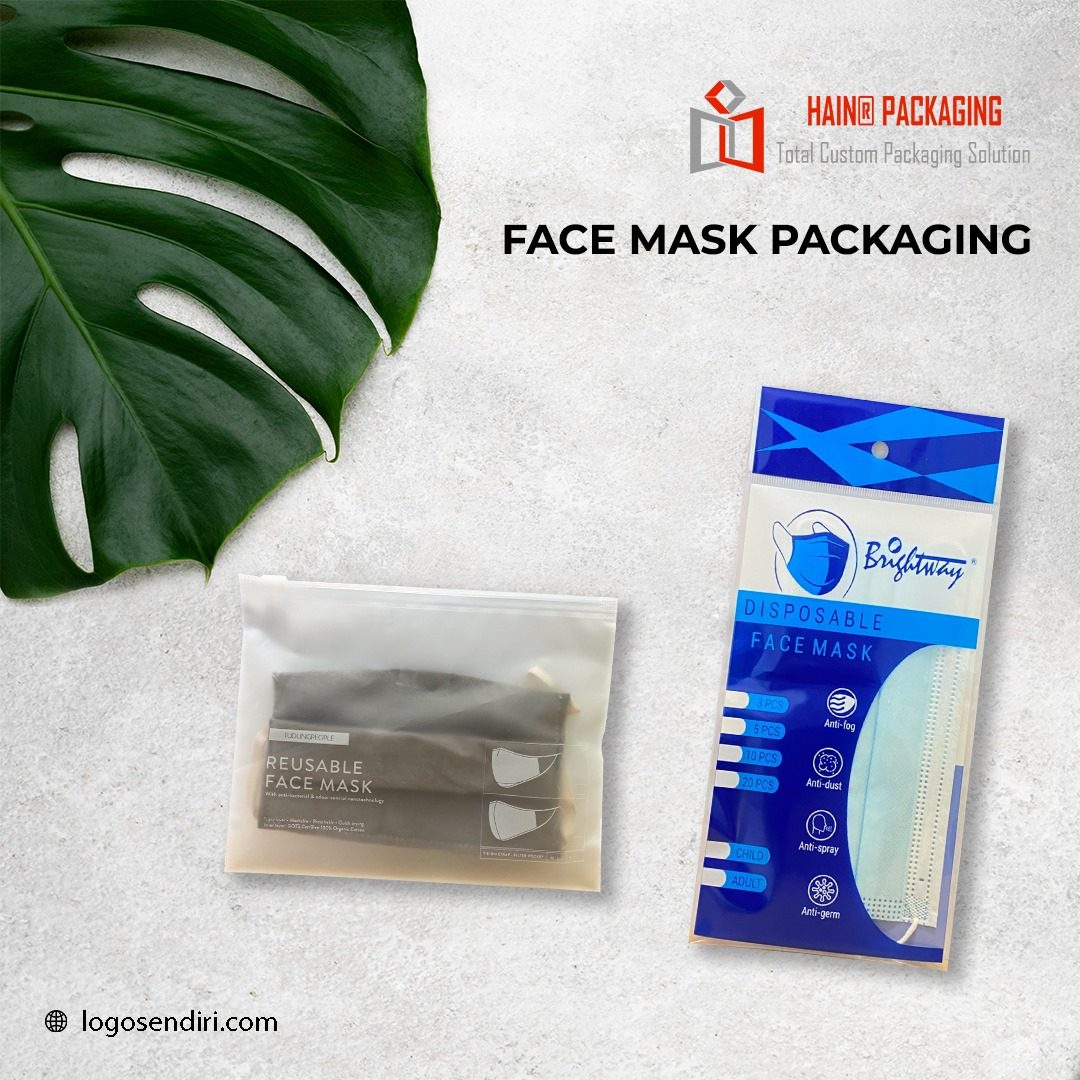
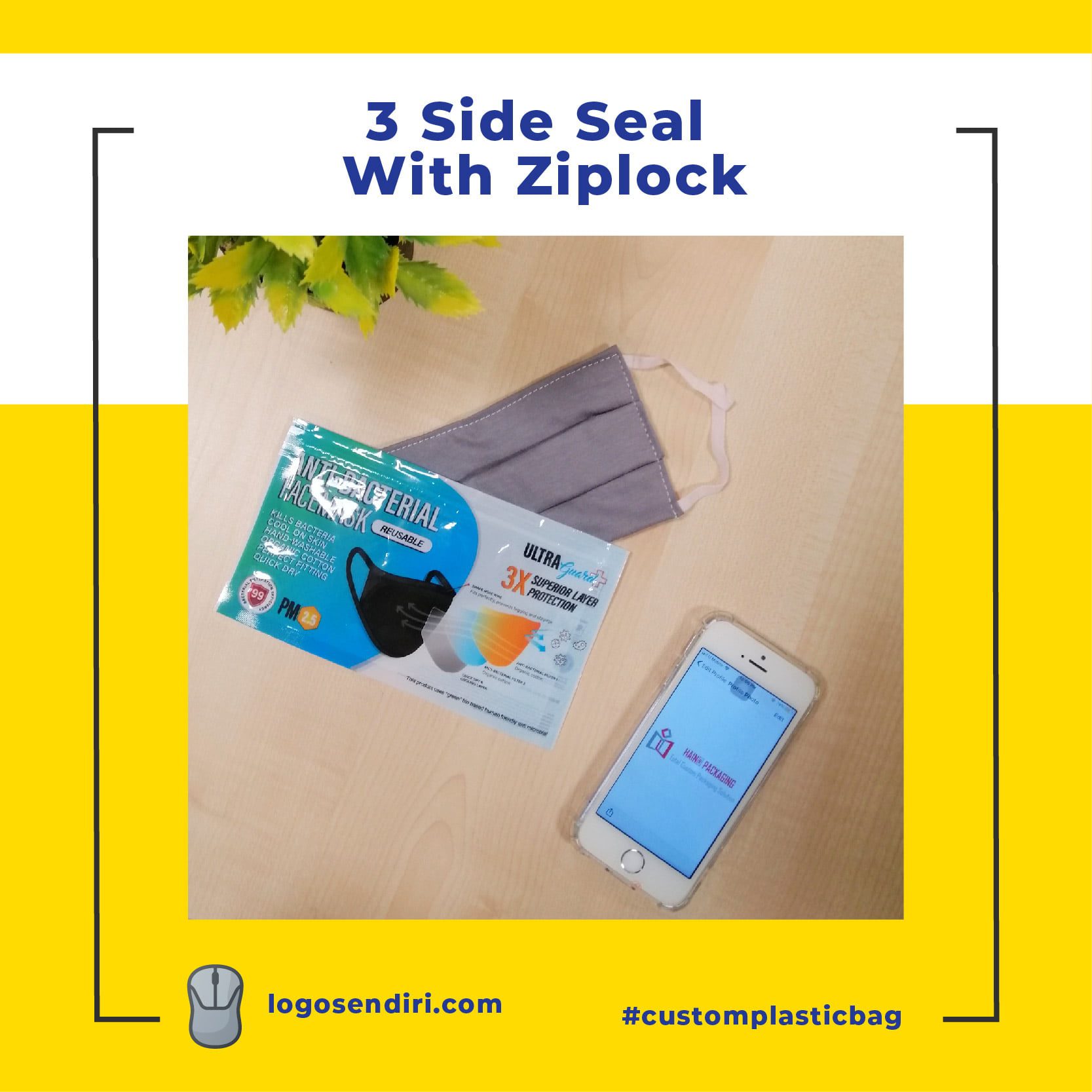
A sheet mask pack contains a substrate saturated with essence, so it is really a liquid product with a solid component. The pack must hold that liquid without loss for the whole shelf life, and it must open cleanly so the consumer can remove a slippery folded sheet without spilling. Tear notches, generous headers and a well-placed opening side all matter more here than in most categories.
Clay and wash-off masks behave more like thick creams. They can be packed in a sachet for single use or in a small resealable pouch for a few applications. Because they are viscous, they do not stress the seal as aggressively as a thin essence, but they do need a wide opening and a pack that can be squeezed without trapping product in the corners.
Treatment ampoules, essences and eye patches sit somewhere between the two. They are often sold in multi-packs, where an outer pouch holds several inner sachets. In that construction the outer pack is mostly about print and grouping, while the inner sachet carries the barrier burden, so the two should be specified separately rather than as one laminate.
Symptom 1 — The Sheet Has Dried Out
Water loss is the dominant failure mode for a face mask & skincare pouch. If essence evaporates through the film, the sheet dries out, the product feels cheap and the customer concludes the formula was poor when the pack was the problem. The defence is a barrier layer sized to the intended shelf life and validated by a weight-loss trial, not by assumption.
Weight-loss testing is simple and worth insisting on: fill a batch, weigh each pack, store at an elevated temperature and re-weigh at regular intervals. Compare the loss against a target agreed before the trial. Any structure that drifts beyond the limit at accelerated conditions will not survive a warm distribution chain.
Seal integrity is the second half of the same problem. Wet products are frequently filled through a spout or into a three-side seal with a narrow margin, and product contamination in the seal area is a common cause of slow leaks. Specify the filling method, the jaw conditions and any wiping step, then verify them on the line that will actually run the job.
| Failure mode | What the customer sees | Typical root cause |
|---|---|---|
| Weight loss through film | Dry sheet, weaker scent | Barrier layer undersized for shelf life |
| Slow seal leak | Sticky outer carton, residue | Product contamination in seal area |
| Delamination | Cloudy patches, peeling layers | Adhesive or tie layer unsuited to formula |
| Panel distortion | Pouch looks swollen or creased | Headspace or gas generation not accounted for |
| Illegible text | Complaints, retailer rejection | Font too small for print method and finish |
Choosing Resealable or Single-Use
A face mask & skincare pouch bought for a cream mask is a different brief from one bought for a sheet mask. The choice between a resealable pouch and a single-use sachet is a product decision before it is a packaging decision. A sheet mask is inherently a single application, so a sachet is the natural answer and a resealable feature adds cost without benefit. A cream mask used two or three times benefits from a zipper, because a customer who cannot close the pack will decant it into something else and lose the brand association.
Resealable formats carry their own engineering. The zipper track must stay clean in use, which is harder with a cream or clay product than with a dry one. The track width, the profile style and the way the pack is squeezed all affect whether the closure keeps working after the third opening. Ask for repeated open-close testing with the real product.
Single-use sachets win on unit cost, hygiene and portion control. They lose on perceived value and on the waste generated per millilitre. Many brands settle on a mix: sachets for sampling and travel, resealable pouches for the core retail line.
Sampling Formats for a Face Mask & Skincare Pouch
Sampling is where flexible formats are strongest in this category. A flat sachet slips into a magazine, an e-commerce parcel or a gift-with-purchase bundle at negligible weight, and it gives the customer a genuine trial of the formula. That makes the sachet a marketing asset as much as a container.
The engineering risks at small sizes are registration and fill accuracy, and the tolerances involved are described in the sachet packaging guide. On a five-gram sachet, the seal margin is a large share of the total area, so any drift shows immediately. Fill weight variation is also proportionally larger, which matters when the panel declares a nominal content. Specify the tolerance and verify it on a run rather than on a handful of hand-filled samples.
Print quality on tiny sachets deserves separate attention. Fine reverse text, thin rules and small logos behave differently at small scale, and a design that looks crisp on a monitor can close up in print. Ask for a physical proof at final size before approving artwork for a sampling run.
Symptom 3 — The Film Has Gone Cloudy
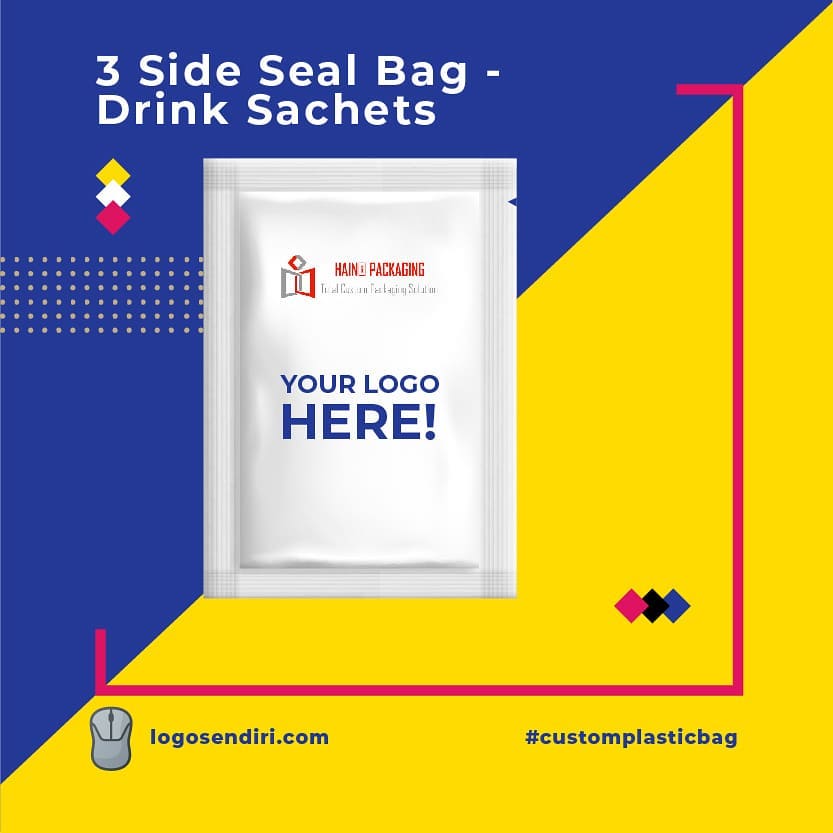
A face mask & skincare pouch usually relies on a metalised or foil-containing barrier, because the category expects both protection and a high-value appearance. Most skincare pouches use a laminate with an outer print layer, a barrier layer and a product-contact seal layer. Barrier behaviour over a long interval is set out in the long shelf life and barrier guide. For sheet masks, a metalised or foil-containing barrier is common because it slows both water loss and oxygen ingress, and because it gives the glossy, high-value appearance the category expects. Clear structures are used where the brand wants the product visible, accepting a lower barrier.
Kraft-look and matte-finish laminates are popular for natural and sensitive-skin positioning. They are an aesthetic choice layered over a functional structure, so the underlying barrier still has to be specified against the formula. A paper-look outer with an inadequate inner barrier will dry out a sheet mask just as quickly as any other poor choice.
Compatibility remains the deciding factor. Exfoliating acids, high-glycol essences, fragrance oils and preserved water systems each place different demands on the seal layer and the adhesive. Two structures that look identical on a data sheet can behave very differently in contact with the same essence, which is why comparative trials matter.
Symptom 5 — The Label Cannot Be Read
Skincare competes on visual credibility. The pack has to look considered at arm’s length and precise in the hand. That puts weight on print method, finish and shape. Digital print suits multi-SKU ranges with frequent artwork revisions and moderate volumes. Conventional print gives stronger colour consistency and lower unit cost at volume, once the plate or cylinder cost is amortised.
Shape is a quieter but powerful tool. A shaped pouch with a rounded corner, a die-cut profile or an unusual header reads as designed rather than generic. Custom shapes require a cutting tool and add cost, but for a premium line the shelf impact often justifies it. Standard shapes keep tooling cost out of the equation and shorten lead time.
Finish choice should follow handling conditions. Matte finishes look refined but show scuffing in transit and on shelf. Gloss resists rub better and holds colour intensity. Soft-touch coatings are attractive and need their own rub testing. Whatever is selected, test it on the real laminate and under real packing conditions.
Multi-Packs, Outer Pouches and Gift Sets
Many skincare ranges are sold as a set rather than as a single unit: a box of seven sheet masks, a trio of treatment sachets, or a gift bundle built around a launch. In those constructions the outer pack and the inner pack do different jobs, and specifying them as one material is a shortcut that usually costs money later.
The inner sachet carries the barrier burden, because it is the layer in direct contact with a wet formula for the whole shelf life. It should be specified exactly as a standalone face mask & skincare pouch would be, with the same attention to water loss, seal integrity and compatibility.
The outer pouch or carton is mostly a presentation and grouping device. It needs print quality, scuff resistance and enough structural strength to survive retail handling, but it does not need the same barrier performance. Treating the outer as a print-and-protection problem and the inner as a barrier problem usually lowers total cost while improving the result.
There is a practical caution for gift sets: mixed SKUs in one outer pack mean mixed artwork versions on the inner sachets, which increases the number of print setups and can push a job over a minimum-quantity threshold. Plan version counts early and ask the converter how versions are priced before finalising the range.
Symptom 2 — The Carton Is Sticky
Skincare products are applied to the face, so pack hygiene and clean filling conditions carry more weight than in many categories. Confirm that the converter and the filler can describe their handling controls, and specify any requirements about packaging, palletisation and protection of unsealed packs during filling.
Filling route matters. Hand filling is viable for very small runs and sampling but introduces variability. Semi-automatic and automatic filling improve consistency and throughput but require the film to run predictably, which is another reason to validate the structure on the intended equipment rather than only in the laboratory.
Symptom 4 — The Panel Is Swollen
Headspace and gas behaviour deserve their own check. Some formulations release small amounts of gas, and all of them expand with temperature, so a pack filled with too little headspace can swell into a panel that looks faulty even when the seal is sound. The fix is usually a filling change rather than a film change: revise the headspace, confirm the fill temperature and trial packs at the warmest realistic storage condition before approving the run. Inspect for distortion alongside the seal checks, because the two failure modes are easy to confuse.
Cost, Minimum Order and Lead Time for a Face Mask & Skincare Pouch
Skincare brands are often surprised that the film is not the dominant cost at low volume. Plate or cylinder charges, tooling for custom shapes, closure hardware and the minimum order quantity each weigh heavily. A small brand launching three SKUs may find that digital print with a standard shape gives a far better total cost than conventional print with a custom dieline, even though the per-unit film price is higher.
Lead time follows the same logic. Standard shapes, stock films and digital print are fast. Custom tooling, specialty laminates and conventional print add weeks. Plan launches backwards from the shelf date, and hold a buffer for compatibility trials, because a failed trial that lands close to launch compresses every remaining step.
Waste rate is the hidden cost. A pack that runs badly on the filling line costs far more in rejected product, especially when the formula itself is expensive per kilogram. Factor realistic waste into the comparison rather than comparing quoted unit prices alone.
Regulatory Text and Claims Discipline
Malaysian cosmetic products are notified through the National Pharmaceutical Regulatory Agency, and the label has to carry the information that notification expects. Ingredient listing, product name, manufacturer or importer details, batch coding and any required caution statements must all fit the panel legibly. Plan this text before the dieline is drawn, not after it is approved.
Claims need equal care. Statements about the product are the brand’s responsibility, and packaging should not imply properties the formula has not been shown to have. The same discipline applies to packaging claims: recyclability and material statements should match what the structure actually is and what local collection can handle.
Batch coding and date marking need a reserved area that will not sit over a seal, a fold or a curve. A code printed across a seal is unreadable, and a code that rubs off in transit creates traceability problems at the worst possible moment.
Sample-to-Order Checklist
- Describe the formula: water content, oil or acid content, fragrance level and viscosity.
- State the intended shelf life and the warmest storage condition the pack will see.
- Decide single-use or resealable per SKU, then test the closure repeatedly with real product.
- Select two candidate structures and run a weight-loss trial on both.
- Run filled compatibility trials at elevated temperature; keep retained samples.
- Confirm fill tolerance and seal integrity on the intended filling route.
- Reserve the coding area and the mandatory text panel on the dieline.
- Review a physical print proof at final size, including the smallest font.
- Approve one printed, filled, sealed pack before volume, and agree the waste-rate expectation.
Frequently Asked Questions
Why do some sheet mask packs feel dry even though the seal is intact?
Because water can leave through the film rather than through the seal. That is a barrier sizing issue, and it is confirmed by weighing filled packs during storage.
Does a face mask & skincare pouch always need a foil layer?
Not always, but foil or metalised construction is common because the product is wet and the shelf life is long. Fast-turning SKUs in a cool chain may be served by a simpler structure.
Is a resealable pouch worth the extra cost for a cream mask?
Where the product is used more than once, usually yes. The closure keeps the brand in front of the customer and stops decanting into an unbranded container.
Can one laminate serve sheet masks and cream sachets?
Possibly, but the barrier and seal demands differ. Test the most demanding formula first and see how far the specification stretches before committing the whole range.
What drives the biggest cost at low volume?
Usually print tooling, custom shape tooling and minimum order quantity, rather than the film itself. Digital print and standard shapes often give the better total cost early on.
The Sequence That Prevents All Five Symptoms
Every symptom above has one thing in common: it was already predictable while the pack was still a specification on paper. Weighing filled packs over time catches symptom one. Checking seals after an actual filling run catches symptom two. Inspecting laminates after heat exposure catches symptom three. Trialling at the warmest storage condition catches symptom four. Reviewing a physical proof at final size catches symptom five. None of those tests needs a laboratory, and all of them are cheaper than a recall. For structures, minimum order quantities and sampling formats, contact HAIN Packaging through WhatsApp, or read the broader personal care and cosmetic packaging guide for category context. Independent material-safety reading is available from the Food Packaging Forum.