The Complete Guide to Shampoo, Conditioner & Body Wash Pouches
October 6, 2026
Why a Face Mask & Skincare Pouch Dries Out, and What Fixes It
October 7, 2026
A lotion, serum & essential oil pouch is a specification problem long before it is a design one. The formula decides the seal layer, the viscosity decides the closure, and the shelf life decides the barrier. Miss any of the three and no amount of print quality will rescue the launch. This article is written as a specification sheet rather than a narrative: every section ends in a line you can copy into a purchase order.
Key Takeaways
- Write the formula down first. Solvents and essential oils change which films and seals are safe to use.
- Size the closure to viscosity. A thin serum and a thick body lotion place opposite demands on a spout or a zipper.
- Barrier follows the degradation route, whether that is oxygen, water loss, light or aroma migration.
- Run compatibility trials on the filled, sealed pack at elevated temperature before artwork is approved.
- Keep the print area realistic for a small format, and plan regulatory text before the dieline is drawn.
Table of Contents
- Spec 1 — Formula description
- Spec 2 — Closure and viscosity
- Spec 3 — Layer-by-layer structure
- Spec 4 — Barrier target
- Spec 5 — Compatibility protocol
- Spec 6 — Format and fill volume
- Spec 7 — Print, finish and label panel
- Filling, sealing and distribution
- Cost drivers and sustainability
- Sample-to-order checklist
Quick-Reference Specification Table
Use this table as the one-page brief you send to a converter. Every row is a field that should have a written answer before tooling or plates are ordered.
| Spec | Field to fill in | Why it is specified |
|---|---|---|
| 1. Formula | Carrier system, solvent %, essential oil %, pH, preservative type | Selects the seal layer and adhesive system |
| 2. Closure | Type, orifice or track width, torque range | Matches dosing to viscosity |
| 3. Structure | Outer / barrier / seal layer, gauge, finish | Determines protection and appearance |
| 4. Barrier | Water vapour and oxygen target, light requirement | Protects against the real degradation route |
| 5. Compatibility | Trial temperature, duration, inspection points | Proves the combination before volume |
| 6. Format | Fill volume, tolerance, shape, opening feature | Controls cost and user experience |
| 7. Print | Method, finish, smallest font, coding area | Keeps mandatory text legible |
Spec 1 — Formula Description
The instinct of many brand owners is to reuse a flexible structure that already works for a sauce or a shampoo. That shortcut is understandable, because the outer appearance is similar and the filling equipment looks the same. The trouble is that personal care formulas contain ingredient classes that food packs rarely meet. Essential oils are volatile and lipophilic, which means they dissolve into and migrate through many polyolefin seal layers. Surfactant systems can lower surface tension dramatically, so a product that seals cleanly in a test may wick into the seal area and weaken it. High-glycol serums carry small molecules that travel through films that stop larger ones.
A lotion, serum & essential oil pouch should therefore begin with a written description of the formula: the continuous phase, the solvent or carrier system, the level of fragrance or essential oil, the pH and the presence of any preservative solvents. That single paragraph does more to prevent field failures than any number of thickness measurements. It also lets the converter propose a seal layer and an adhesive system that suit the product instead of guessing.
Brands that already buy rigid containers often assume the switch to flexible is only about cost and freight. In practice the switch changes the product’s entire exposure profile. A bottle has thick walls, a narrow neck and a small closure, so the liquid sees limited surface and limited headspace. A pouch has a large surface-to-volume ratio and thin walls, so any incompatibility shows up faster and more visibly.
Spec 2 — Closure and Viscosity
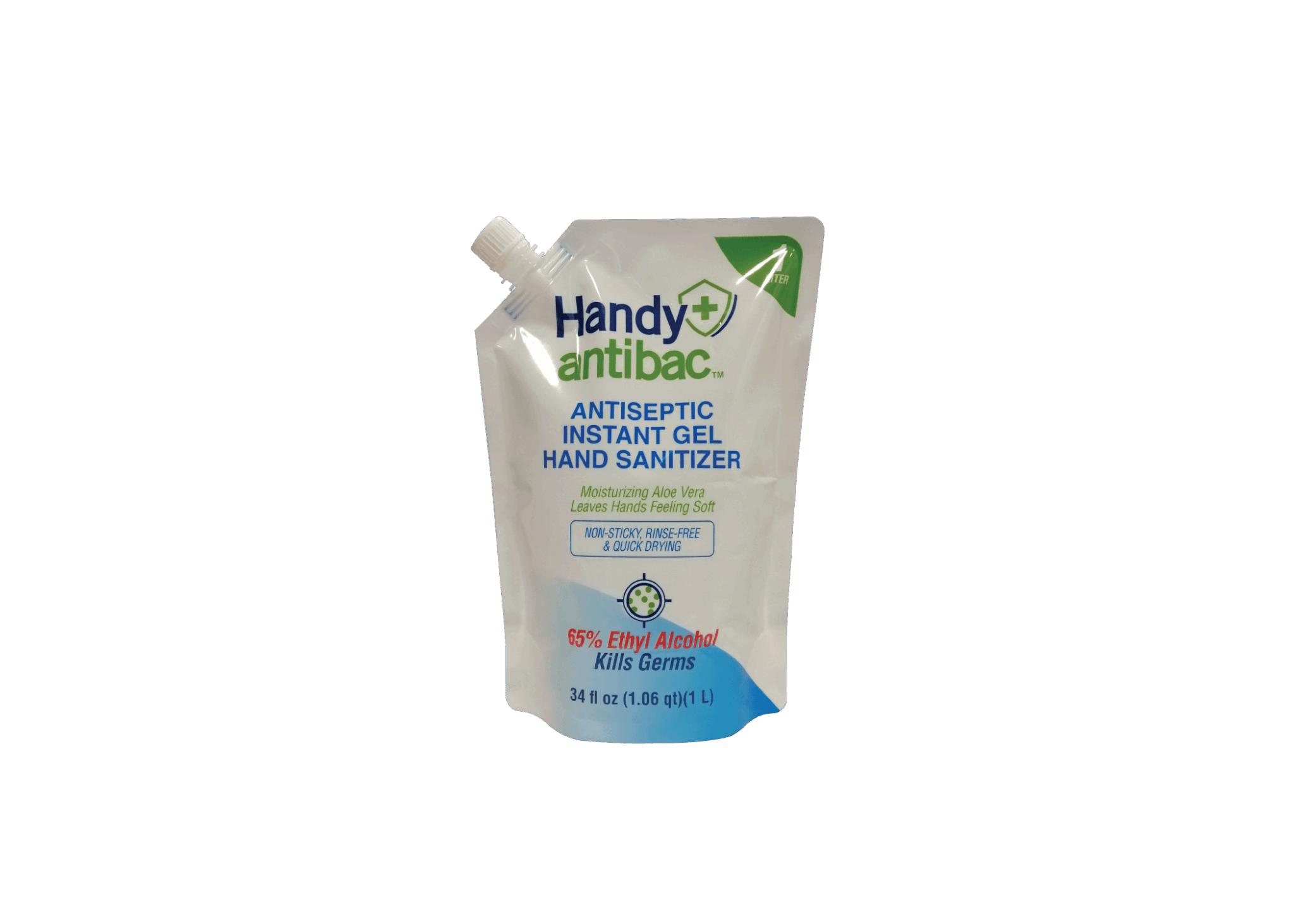
Viscosity decides more about the closure than any other property. A watery essence flows at the slightest pressure, so it will find every microscopic defect in a seal and every gap in a cap thread. A thick body butter barely moves, so the consumer’s problem is not leaking but getting the last portion out. A lotion, serum & essential oil pouch has to be engineered for the product’s real flow behaviour at both the coldest and the warmest point of its distribution.
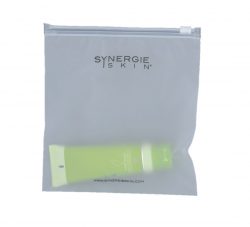
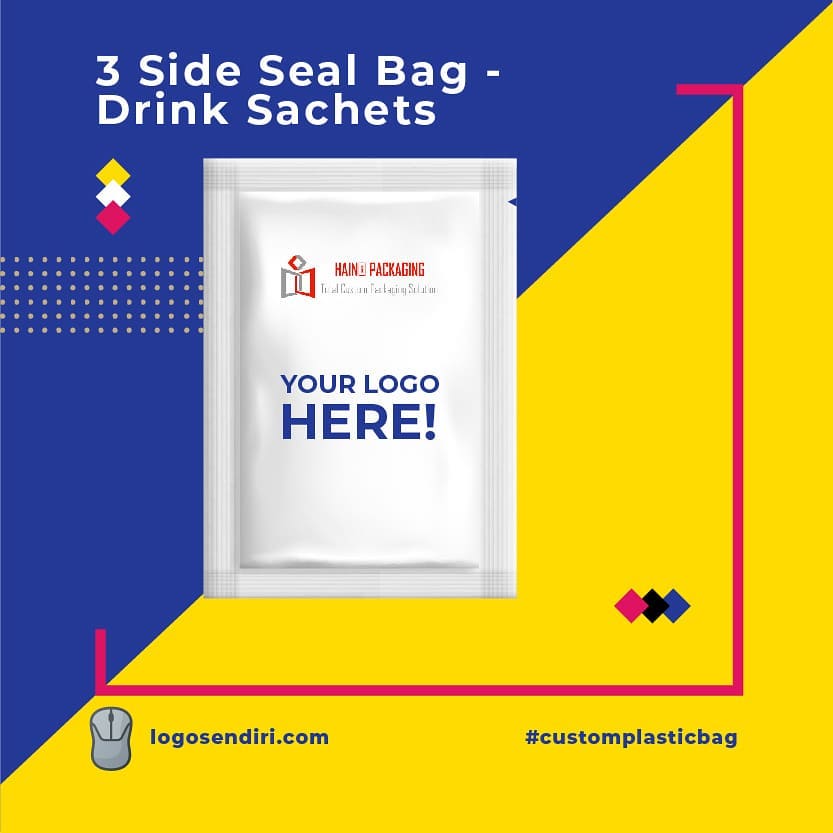
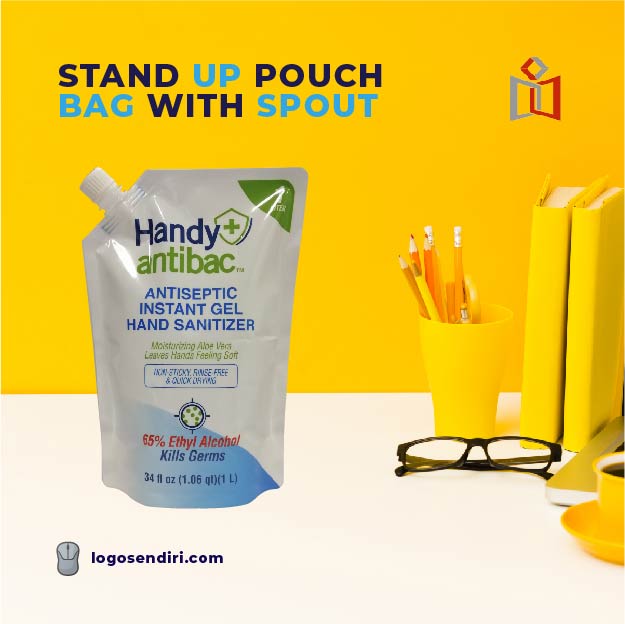
Screw-top spouts suit low to medium viscosity liquids and give controlled dosing, which matters when the product is expensive per millilitre. The trade-offs between spout types are set out in the spout pouch guide. Press-to-close zippers suit creams and thicker lotions that will not migrate into the zipper track. Flip-top and twist caps add convenience for travel sizes but introduce an extra component that must be sourced, stocked and tested with the same care as the film. For single-use samples, a tear notch on a sealed sachet is often the right answer, because there is no closure to fail.
Ask for dispensing trials with the actual product, not a water substitute. A formula’s surface tension changes how it leaves a spout, how much clings to the orifice and whether it drips after the cap is closed. This is where a pack that looked elegant in a mock-up starts to annoy a customer at the basin.
Where a Lotion, Serum & Essential Oil Pouch Beats a Bottle
Flexible packaging earns its place in personal care on several measurable grounds. Empty pouches ship flat, so inbound freight and warehouse space drop sharply compared with bottles. The product-to-pack ratio improves, which matters for brands whose customers care about waste. A pouch collapses as it empties, so more of the formula is delivered rather than clinging to the inside of a rigid container. And the flat surface takes high-quality print, which suits brands competing on shelf presence.
There are cases where a bottle still wins. A product that must stand upright on a basin edge, a very low viscosity liquid that customers pour rather than squeeze, and a formula requiring an airless pump for preservative reasons all point back to rigid. The honest recommendation is to decide by product rather than by category fashion.
Refill formats are an especially strong fit. A concentrated refill pouch that the customer decants into a permanent bottle at home reduces packaging weight substantially and keeps the brand’s premium rigid item in the bathroom. That combination is increasingly the commercial logic behind a lotion, serum & essential oil pouch project.
Spec 3 — Layer-by-Layer Structure
A flexible laminate is a stack of layers, each doing one job. The outer layer carries the print and resists scuffing. The barrier layer slows the passage of gases, vapour or light. The seal layer is the surface that fuses to itself during sealing and the one that touches the product. Tie layers hold the stack together. Understanding which layer is failing turns a vague complaint into a fixable specification.
| Layer | Job in a personal care pouch | What to ask the converter |
|---|---|---|
| Outer print layer | Graphics, scuff resistance, shelf appearance | Print method, varnish type, rub resistance data |
| Barrier layer | Slows oxygen, water vapour or light | Transmission figures for the barrier actually used |
| Seal layer | Product contact, fusion during sealing | Compatibility with solvents and essential oils |
| Tie layers | Keep the laminate from delaminating | Behaviour after heat exposure and after filling |
| Closure hardware | Dosing, resealing, leak prevention | Torque range, orifice size, closure leak testing |
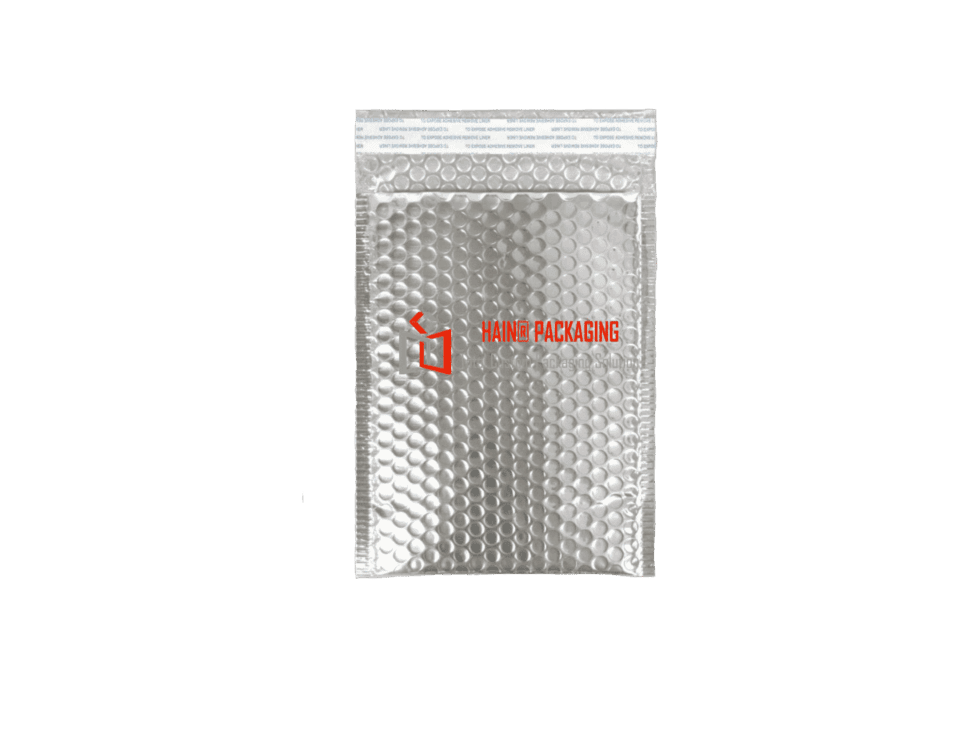
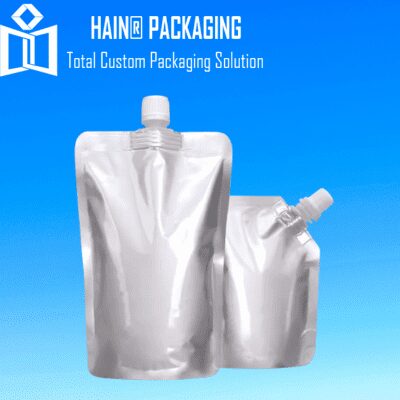
Metalised films and foil-containing structures are common choices for high-value serums and essential oil blends, because they cut both light and oxygen transmission. Clear high-barrier films suit brands that want the product visible, at some cost in barrier performance. Kraft-look laminates are popular for natural positioning but need a functional inner structure, because paper appearance and product protection are separate things.
Spec 4 — Barrier Target
Every formula degrades by a route, and the route should drive the barrier. An anhydrous oil blend is not worried about water loss, but it is very worried about oxidation. A water-based gel lotion is the opposite: it can dry out through a film that would be perfectly acceptable for an oil. A vitamin-rich serum may be sensitive to light as well as oxygen, which argues for an opaque or metalised structure even if the brand prefers transparency.
Aroma is the barrier requirement most often forgotten. Essential oils are aromatic by definition, and aroma molecules are small and mobile. A pouch that holds liquid without leaking can still lose scent through the film, so the pack smells weaker than the batch did at filling, or the fragrance taints a neighbouring product in the same carton. Ask for odour and aroma-retention trials, not only for transmission figures.
Size the barrier against a target shelf life and a realistic storage temperature. Personal care products are frequently stored in bathrooms, which are warm and humid, and shipped in containers that can be hotter still. A specification validated only at ambient laboratory conditions will look optimistic in the field.
Spec 5 — Compatibility Protocol
Compatibility is where most flexible personal care projects succeed or fail. A lotion, serum & essential oil pouch that clears this protocol is ready for artwork; one that fails it is not ready for anything. The test is straightforward but must be done on the real system: fill the actual product into the actual pouch, seal it with the production parameters, then store filled packs at an elevated temperature for a defined period. Inspect for seal creep, delamination, panel distortion, odour change, colour shift and changes to the product’s own pH or viscosity.
Run the same trial on at least two candidate structures rather than one. The comparative data is what makes the final choice defensible, and the cost of an extra candidate is trivial next to a failed launch. Keep retained samples from every trial so that production output can always be compared against something known.
Do not approve artwork before compatibility work has finished. It is a common and expensive sequencing error: the printed film arrives, the trial then reveals a seal problem, and the whole inventory becomes unusable. The structure should be fixed first, the dieline second and the print proof third.
Spec 6 — Format and Fill Volume
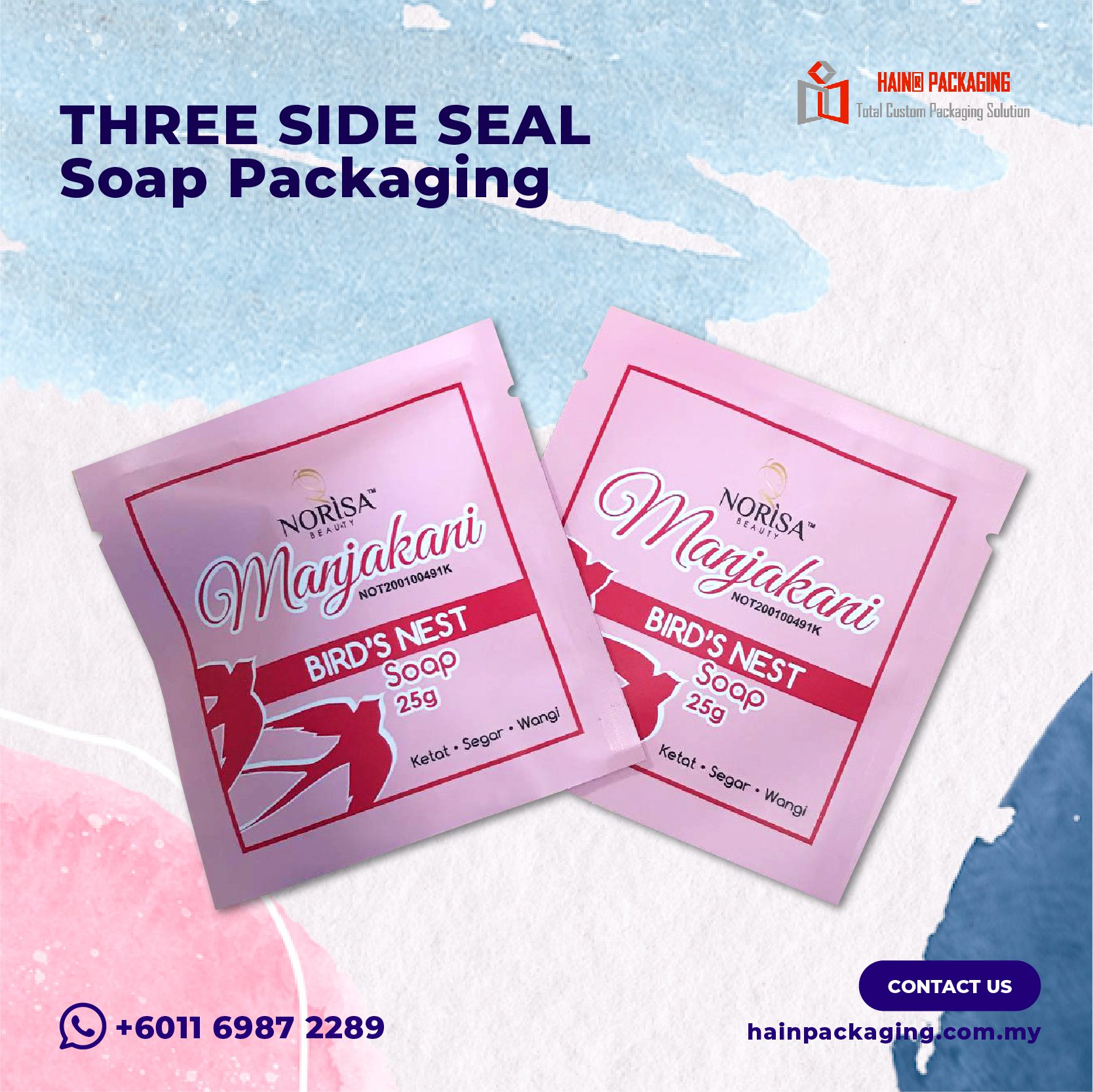
Small formats are the fastest-growing part of this category. Sachets of one to ten millilitres serve sampling, e-commerce inserts and hotel amenities. Travel-size pouches of thirty to one hundred millilitres serve airline rules and gym bags. Refill pouches of two hundred millilitres and above serve the decant-at-home habit. Each has its own economics and its own failure modes.
Sachets are the cheapest per unit but the most demanding in registration and fill accuracy, because the seal area is a large share of a very small pack. Sizing and tolerance expectations for that format are covered in the sachet packaging guide. Travel sizes must survive being crushed in a bag next to other items, which argues for robust seals and, ideally, a rounded corner profile. Refill pouches need a pourable closure and clear on-pack decanting instructions, because a customer who spills expensive product will blame the brand rather than the pack.
| Format | Typical fill | Design priority |
|---|---|---|
| Sample sachet | 1–10 ml | Clean tear, accurate fill, legible mini-label |
| Travel pouch | 30–100 ml | Crush resistance, secure reseal |
| Standard pouch | 100–300 ml | Dosing control, shelf appearance |
| Refill pouch | 200 ml and above | Pour control, decant instructions, stability when part-empty |
Spec 7 — Print, Finish and Label Panel
Print area is the constraint that surprises brands moving from bottles to pouches. A bottle has a label with a defined panel; a pouch has a shaped surface with curved edges, seal margins and, in a stand-up format, a base that consumes space. Regulatory text, ingredient listing and batch coding all have to fit into that reduced area without becoming unreadable.
Plan the mandatory text before the dieline is drawn. Put ingredient information on a reverse panel where possible, reserve a clean area for coding that will not sit over a seal, and check the smallest font at the actual print method rather than on screen. Digital print suits short runs and frequent artwork changes; conventional print suits volume and gives stronger colour consistency across long campaigns.
Finish choice is both aesthetic and functional. Matte varnish reads as premium but shows scuffing more readily. Gloss gives colour punch. Soft-touch finishes are attractive but need rub testing. Whatever is chosen should be tested on the real laminate, because finish behaviour depends on the film underneath.
Filling, Sealing and Distribution
A personal care pouch project succeeds in the factory as much as in the laboratory. Confirm the filling route early: manual or semi-automatic filling for small brands, contract filling for mid-volume, and dedicated equipment for scale. Each route has different tolerances for seal contamination, fill accuracy and headspace control.
Seal contamination deserves particular attention with oily and surfactant-rich products, because a lotion, serum & essential oil pouch is only as sound as its weakest seal. Product left in the seal area during filling weakens the seal and creates a slow leak that appears weeks later. Specify seal jaw conditions, dwell time and any needed wiping or air-knock step, and verify them on the actual line rather than in theory.
Distribution adds the final set of demands. Stacked cartons put sustained pressure on seals. Warm warehouses accelerate every degradation route. E-commerce shipping adds drops and vibration. Test the filled pack under the conditions it will genuinely see, then adjust either the specification or the outer carton.
Cost Drivers and Where the Money Actually Sits
Unit price is the first number a brand asks for and the least useful one on its own. The real cost of a flexible personal care pack is the sum of the laminate, the closure hardware, the print method, the tooling or plate cost, the minimum order quantity and the waste rate on the filling line. A structure that is slightly cheaper per pouch but causes double the rejection rate is more expensive by the time it reaches the shelf.
Tooling and plate charges matter most at low volumes, and the way they interact with order size is explained in the flexible packaging MOQ and pricing guide. Conventional print requires cylinders or plates whose cost has to be amortised over the run, which is why very small orders often cost disproportionately more per unit. Digital print removes that step and suits brands still testing a market, at a higher per-unit film cost. Closure hardware behaves similarly: a standard screw cap is cheap, while a bespoke moulded closure carries tooling and a minimum commitment.
Freight and storage are where flexible wins back ground. Empty pouches arrive flat and nested, so a pallet holds far more units than the same pallet of bottles, and the warehouse footprint before filling shrinks accordingly. Brands exporting from Malaysia feel this advantage twice, once inbound to the filler and once outbound to the distributor.
Sustainability and End-of-Life Questions
Sustainability claims need the same discipline as any other specification. A multi-layer laminate is engineered precisely because no single material does all the required jobs, and that construction is what makes it hard to recycle in most municipal streams. Saying so plainly is better for the brand than implying a recyclability that the local infrastructure cannot deliver.
Where a mono-material structure can meet the barrier requirement, it is worth evaluating, because a single-polymer pouch is far easier to place in a recycling stream. Where it cannot, the honest levers are weight reduction compared with rigid, refill formats that spread one durable container across many purchases, and right-sizing so that less material is used per millilitre delivered. Discuss these options with the converter and put only defensible statements on the pack.
Sample-to-Order Checklist
- Write the formula description: carrier system, solvent level, essential oil loading, pH and preservative type.
- State the target shelf life and the warmest realistic storage temperature.
- Choose the closure by viscosity and dosing requirement, then trial it with the real product.
- Select at least two candidate structures and request transmission data for each.
- Run filled compatibility trials at elevated temperature and keep retained samples.
- Confirm the barrier against the degradation route that actually applies, including aroma loss.
- Fix the dieline, reserve the coding area and check the smallest font at real print size.
- Verify sealing parameters on the intended filling route with production-format film.
- Approve one printed, filled, sealed sample before committing to volume.
Frequently Asked Questions
Can one lotion, serum & essential oil pouch structure serve a whole product range?
Sometimes, but the barrier requirement usually differs enough between a water-based lotion and an anhydrous oil blend to justify two structures. Start with the most demanding formula and see how far down the range one specification can stretch.
Why does a pouch containing essential oil sometimes smell weaker than the batch did?
Aroma molecules are small and mobile, so they can migrate through films that stop liquid. This is an aroma-retention problem rather than a leak, and it is solved by changing the barrier layer rather than the seal.
Do transparent pouches protect a vitamin serum adequately?
Only if the formula is not light-sensitive. Where light matters, an opaque or metalised structure is the safer choice, even at the cost of losing product visibility.
How long should compatibility trials run?
Long enough to cover the intended shelf life in accelerated form. Agree the protocol, temperature and inspection points with the converter in writing before the trial starts.
What to Put in the Purchase Order
Seven fields, written down, cover everything above: formula description, closure specification, layer-by-layer structure, barrier target, compatibility protocol, format and tolerance, and print and label panel. Fill them in before artwork starts, and the rest of the project becomes a scheduling exercise rather than a rescue. For structures, quantities and sampling, contact HAIN Packaging through WhatsApp, or read the wider personal care and cosmetic packaging guide for category context. Malaysian cosmetic product notification is administered by the National Pharmaceutical Regulatory Agency, and general material safety reading is available from the Food Packaging Forum.