Poly Bag for Shipping Failures Traced to Three Causes
October 13, 2026
A one-page request form is where most online store packaging malaysia decisions actually get taken. Six fields: bag type, flat size, film gauge, print colours, quantity, and a remarks box. Three get filled in from habit, two get copied off a competitor’s parcel, and the last one stays blank. What the form does not tell you is that the six fields carry very different weight. Two of them are decided before you reach the desk. Two can be traded, at a price you can name in advance. One is decoration, and dropping it is the cheapest saving available to a first run.
Sorting the six into those three groups takes about ten minutes and it decides whether the quote that comes back is usable or whether you spend a fortnight discovering that the artwork sits under the shipping label. The four situations below are ordered by how much room you have, starting with the ones that have none.
What an Online Store Packaging Malaysia Order Cannot Trade Away
The outer limits come from the carrier, and they are arithmetic before they are preference. Courier tariffs bill on whichever is greater, the actual weight or the volumetric weight, and volumetric weight is the product of the three dimensions divided by a divisor the carrier chooses. A parcel measuring 40 × 30 × 20 cm carries 24,000 cm³ of volume; against a 6,000 divisor that bills as 5 kg even if the contents weigh 900 g. You cannot negotiate the divisor. The only lever you have is the size of the box or bag you hand over, which means flat dimensions are a constraint inherited from the network, not a design choice.

Oversize surcharges work the same way: they trigger on a measured length or a measured girth, and the threshold is published, not discussed. The practical consequence for an online seller is that the largest unit in the catalogue sets the pack size, not the average one. Sizing to the average is the single most common reason a first run produces a stack of mailers that will not close over a third of the orders.
Prohibited items sit in the same non-negotiable bucket, and they are narrower than most sellers expect — aerosols, lithium cells without documentation, and liquids above a stated volume all pull a parcel out of the standard lane entirely. If any SKU in the range touches that list, the packaging decision for that SKU is not a packaging decision.
The Scannable Window on an Online Store Packaging Malaysia Run
The second fixed constraint is the label, and it is fixed in a different way: the requirement cannot be dropped, but there are several ways to satisfy it. A standard 100 × 150 mm thermal label has to sit on a surface the scanner can read, which rules out three things that otherwise look like good design. Print that runs underneath the label, because a busy pattern behind a barcode destroys the contrast the reader needs. A high-gloss varnish across the panel, because the reflection is read as noise. And a heavy texture on the film, because the label adhesion drops on anything the adhesive cannot wet out.
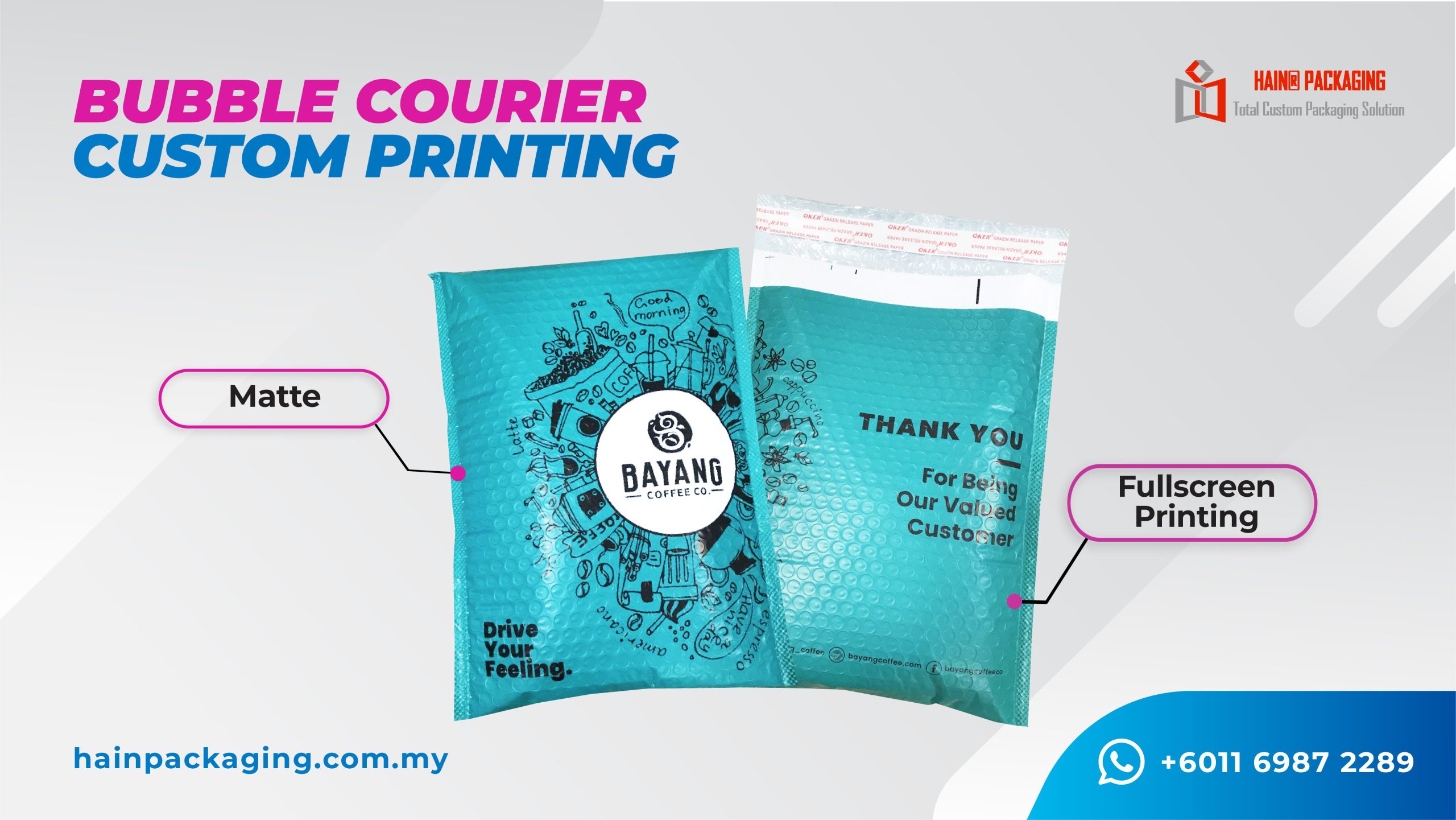
Each of those has a workaround, which is what makes this group different from the first. Move the artwork so the label lands in a plain reserved panel. Keep the gloss off the panel and put it on the rest of the face. Print the brand on the back of the bag, where it is visible when the parcel is picked up and invisible to the scanner. The constraint holds; the route around it is yours to pick, and none of the three routes costs more than a few cents a unit.
The test is cheap. Print one bag, stick a real label on it, and scan it with the courier’s own app rather than a phone camera. A label that fails in the hand will fail on the belt, and it will fail on every parcel in the run.
Where Online Store Packaging Malaysia Budgets Give Ground
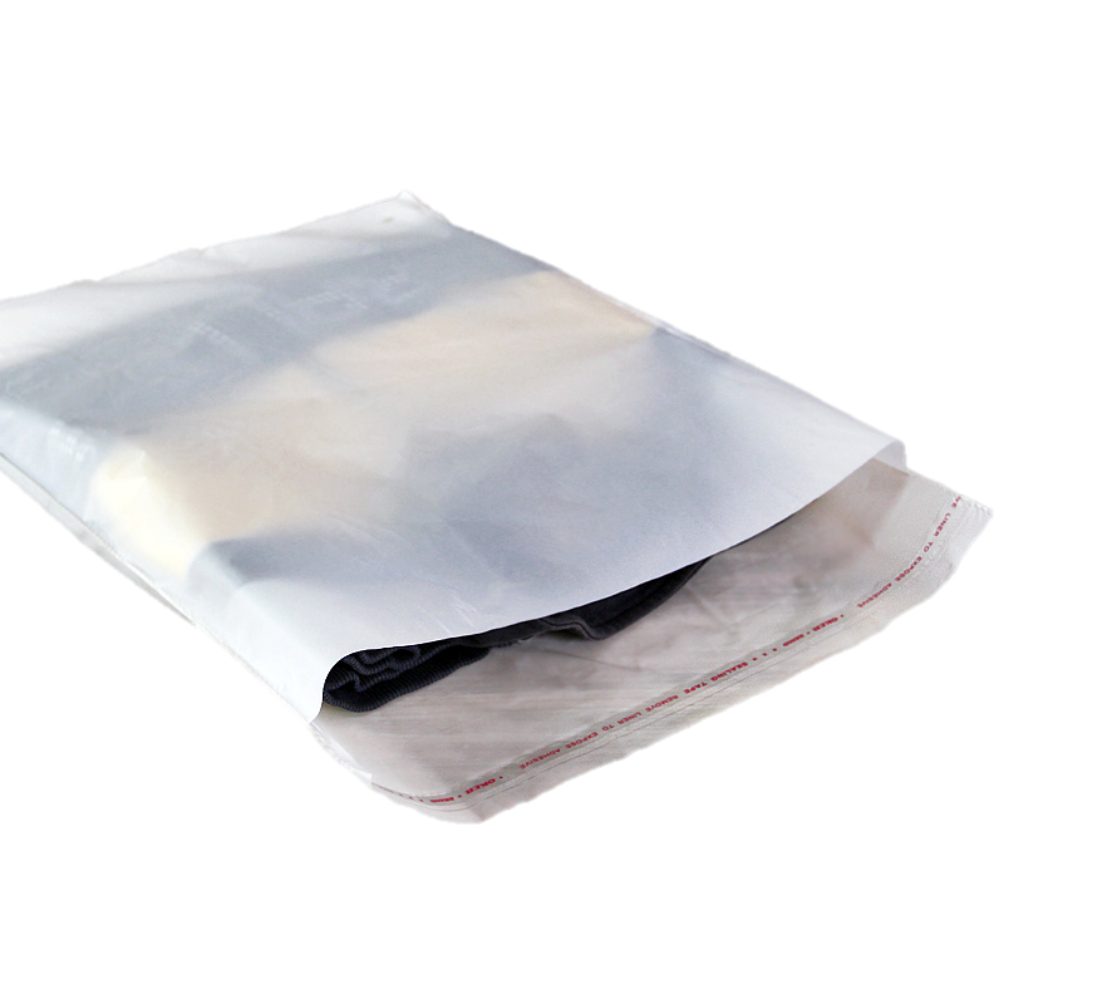
Everything from here down is tradeable, and the useful thing is that each trade has a price you can name before you make it. Film gauge is the clearest: moving a soft-goods mailer from 50 micron to 70 micron adds material to every unit and buys puncture resistance and opacity. Whether that is worth it depends on what is inside. A folded T-shirt with no hardware does not need it. A parcel containing a metal zip, a buckle or a rigid corner does, and finding that out after the run has landed costs the whole run.
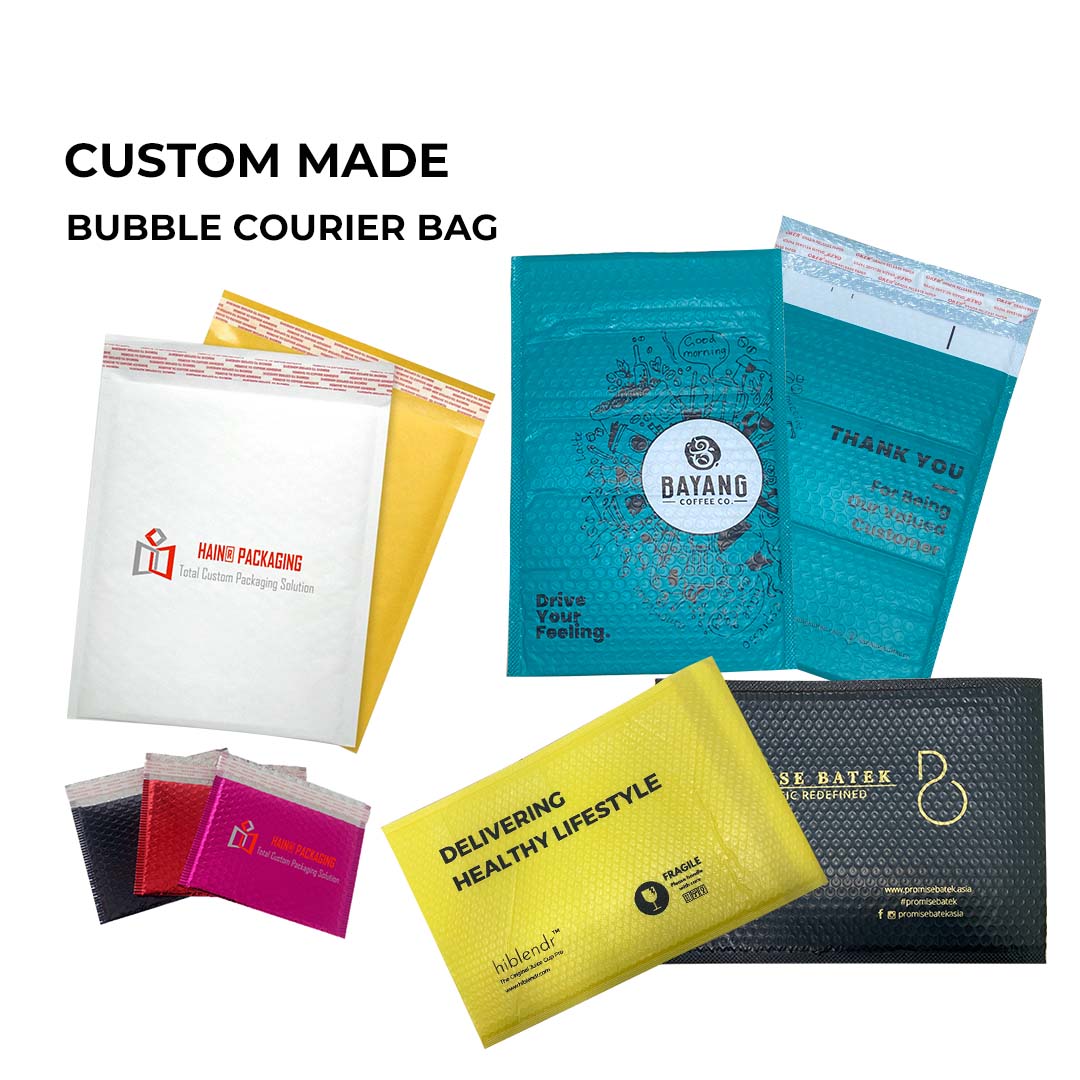
Structure trades the same way. A mono-layer film costs less and runs faster; a co-extruded film gives you a white opaque outer with a different inner layer, better seal behaviour and a stiffer hand. Print method trades money against change: flexographic printing carries a plate cost that only makes sense across a long run with artwork that will not move, while digital carries no plates and stays economical when the artwork changes between campaigns. Colour count sits with it — each extra spot colour is another plate and another registration to hold.
Quantity is the last trade and the one sellers get wrong in both directions. Unit price falls in steps as the run gets longer, but the step is only worth taking if the stock will be used before the specification changes. Order volumes in this region move quickly enough that a year of stock bought for a slightly better unit price often outlives the artwork printed on it, which is the pattern visible in the Malaysia e-commerce forecasts. The packing notes for Malaysian e-commerce sellers go through how to size a first run against a reorder cycle rather than against a price break.
The Finish Nobody Asked For
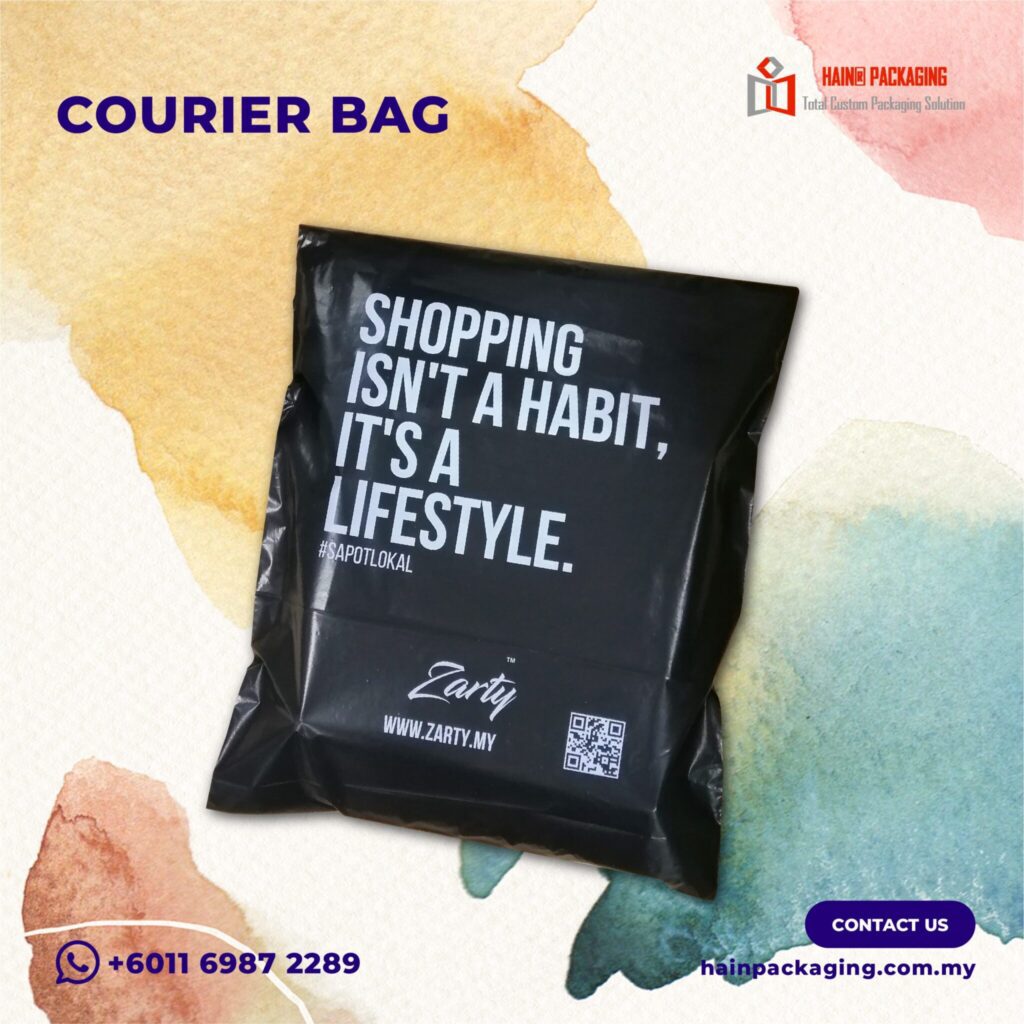
Delete the fourth group first, because it costs money and returns nothing measurable on a parcel that gets opened, emptied and thrown away. Matte or soft-touch lamination over the whole face. Spot effects on a logo that is 40 mm across. A die-cut handle on a bag that arrives in a letterbox. A custom-printed tape to match a printed bag, when the bag already carries the brand on both faces. Each of these is defensible on a retail shelf, where the pack sits under a light and competes for attention. None of them survives contact with a sorting belt.
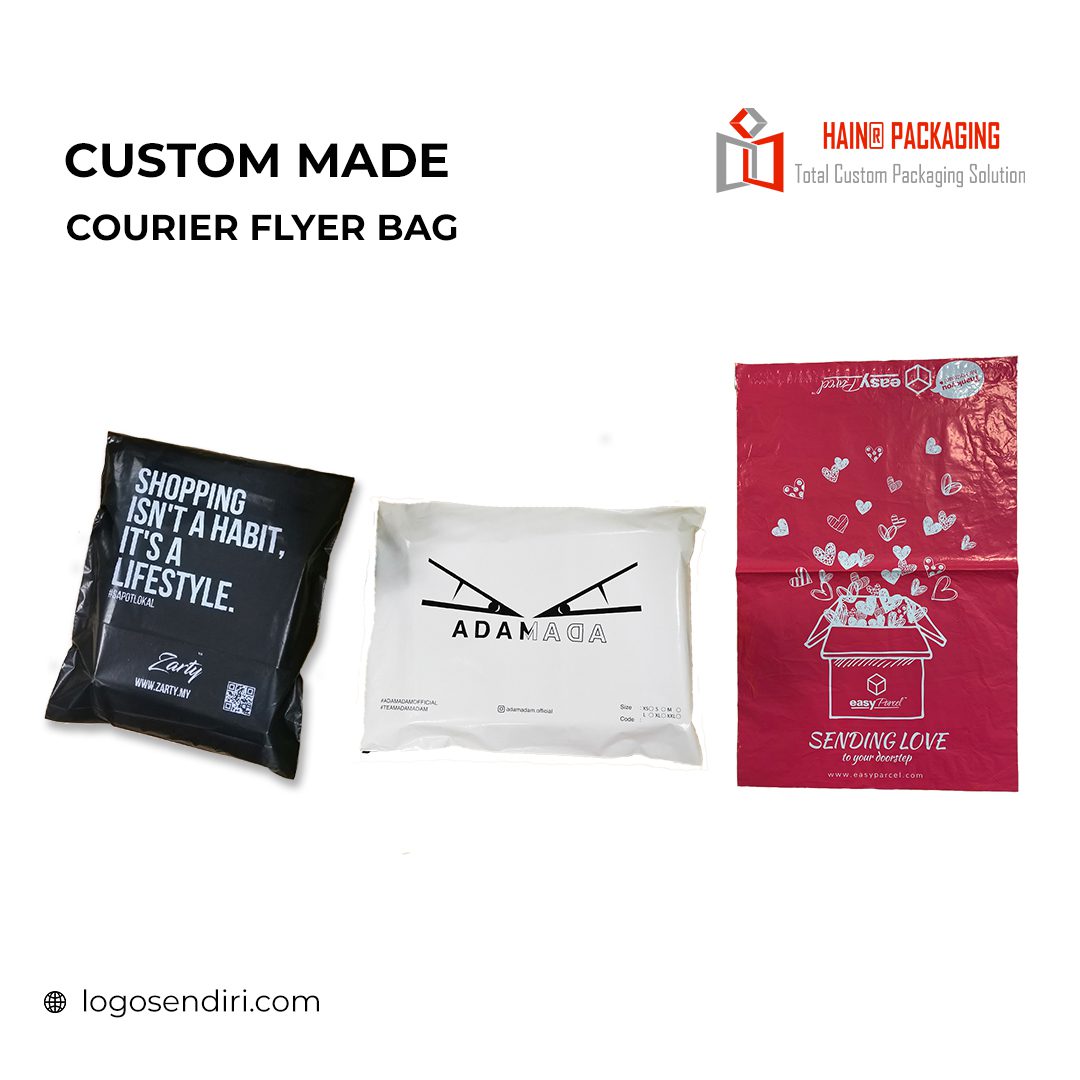
The discipline is to ask what the finish does on the doorstep rather than on the sample. If the honest answer is that the buyer will not notice it once the parcel is in their hands, it belongs in the remarks box on the form, not in the specification. Put the money into gauge or into a second strip for returns instead, both of which change what happens to the parcel after it leaves you.
Reading Every Field in the Order They Bind
Once the four groups are separated, the form fills itself in a fixed order, and the order matters because each field narrows the next. Flat dimensions come first, taken from the bulkiest unit you ship rather than the typical one. Gauge and structure come second, set by what is inside and by how much opacity you need. Print method and colour count come third. Quantity comes last, because it is the only field that should be answered after you know the other five. Sellers who start with quantity end up choosing a pack to fit a price break rather than a price break to fit a pack.
Two of the six fields also have an internal version of the same problem. The custom packaging route and the stock route diverge on artwork, and sellers whose monthly volume is still moving should look at the low minimum order options before committing to a quantity that assumes a volume they have not hit yet.
No figure for lead time, sampling or rush handling appears here on purpose. All three move with the finished specification, the print method and the order quantity, which is why the sales desk pins them to your actual job rather than to anything printed on a rate card.
How Sellers Usually Ask About Online Store Packaging Malaysia
How early should an online store packaging malaysia order be placed?
Early enough that the artwork can be proofed on the actual film rather than on screen. The binding constraint is usually the proofing cycle, not the press, and proofing is the stage where the label-window problem gets caught.
Can one pack size cover the whole catalogue?
Occasionally, and it is usually a mistake. Sizing to the largest unit means every smaller order ships air, and volumetric billing charges for it on every consignment. Two sizes cover most catalogues; three covers nearly all.
Is digital printing worth it for a first run?
For a first run, yes, in most cases. It removes the plate cost from a specification you have not yet validated, and it lets you change the artwork on the second run without writing off the first.
Most sellers reading this sit between the second field and the third — size settled, gauge still open. Send the first two with a photo of what you pack; the rest of the online store packaging malaysia spec we can price both ways.