Plastic Bag Supplier Selangor: Fast Delivery & Walk-In Showroom
September 29, 2026
Plastic Bag Supplier Johor Bahru: Reliable Manufacturer Supply
September 29, 2026
Penang sits roughly 350 kilometres from Malaysia’s packaging manufacturing heartland, and that distance shapes everything a plastic bag supplier Penang buyer has to manage: lead time, verification, and specification. The honest starting point is to name the problems — then solve them one by one.
A worked example makes the rhythm concrete: a Penang seller using 5,000 singlet bags and 2,000 mailers a month sets re-order points at 2,500 singlet and 1,000 mailers (two weeks of usage). If printed mailers take 14–21 working days, that trigger moves to five weeks of stock, and the order goes in on a fixed calendar date rather than when the pile looks low. Worked examples like this turn packaging from a recurring crisis into a scheduled line item.
Buffer planning is the habit that makes the lead time comfortable: keep two weeks of standard formats on hand, plan the printed re-order five weeks out, and hold a small emergency line with the supplier for genuine spikes. Northern buyers who run this three-layer buffer rarely face an empty shelf — and the calendar discipline transfers to every other part of their procurement.
Problem 1: A 3–5 Day Lead Time That Feels Uncontrollable
Published delivery to Penang is 3–5 days, with delivery only — there is no walk-in counter on the island. The solution is not a closer factory; it is a re-order rhythm built around the lead time. Set a re-order point at two weeks of usage, schedule a monthly stock order, and keep a small buffer for spikes. The delivery window then becomes a calendar date you plan rather than a crisis you absorb.
A retained colour proof is the closest thing to a quality guarantee you can hold from a distance: it fixes the colour standard at approval, and re-orders are matched against it rather than re-negotiated. Ask for one on every printed job, keep it on file, and reference it when the next order arrives. Suppliers who retain proofs themselves are signalling that consistency is part of their process, not an afterthought.
Ask specifically how re-orders are matched to the original: does the supplier keep the approved proof and colour standard on file, or is every re-order re-negotiated from scratch? Suppliers who retain references make re-ordering a copy-paste exercise, and their batch-to-batch consistency becomes something you can verify rather than hope for. That verification loop is the substitute for the site visit — and it works from any distance.
Problem 2: You Cannot Walk Into the Factory
Without a local showroom, trust must be earned another way: physical samples before bulk orders, documented compliance for food and medical lines, retained colour proofs, and batch consistency you can verify by re-ordering the same artwork and measuring that the second order matches the first. These four replace the site visit — and they hold a supplier accountable from a distance.


Shrink-sleeve labels show how far customisation reaches for brand owners — full-bleed graphics produced to a retained colour standard. The same proofing discipline applies to Penang’s industrial orders: the standard you approve is the standard every re-order meets.

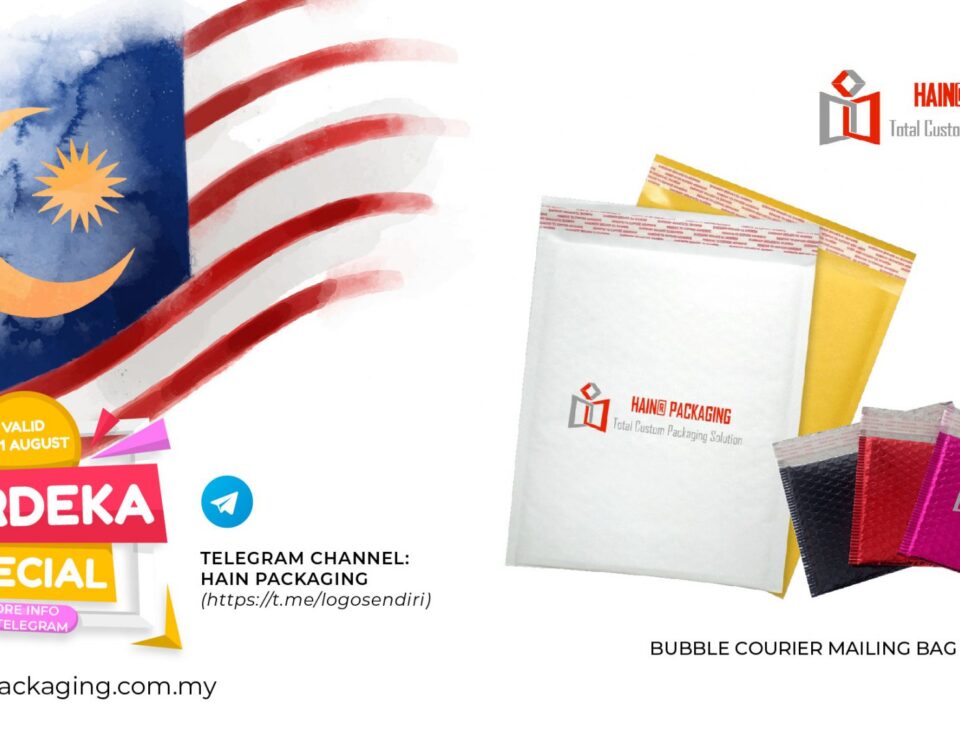
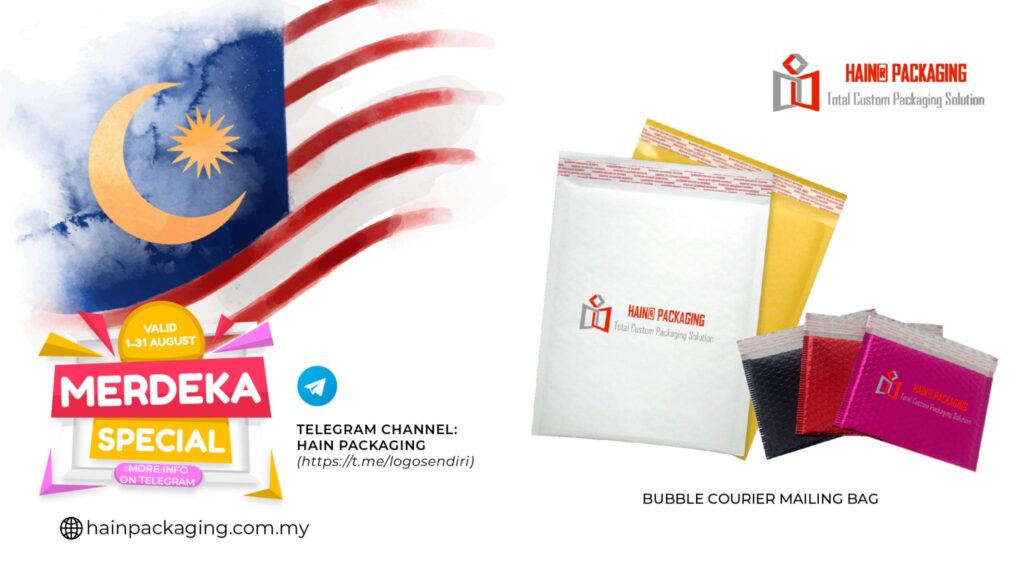
On the shipping side, bubble-lined mailers protect the fragile items electronics brands sell online — printed on the outer film and ready for the same courier networks the island runs on. Including them in the industrial programme keeps protection and branding in one place.
Specify before you buy: surface resistance range, film structure, and seal behaviour. A weak seal defeats even the best barrier film, so ask how the bag closes and how that seal holds under heat. These are the questions a manufacturer is built to answer — and the answers are what protect expensive components in transit.
Problem 3: Electronics Need More Than a Generic Bag
Penang’s electronics ecosystem needs anti-static and ESD-safe film for components, moisture-barrier options for humidity-sensitive parts, and clear ziplock bags for accessories. Specify the surface-resistance range and film structure — pink poly or metalised — and confirm how the film seals, because a weak seal defeats the barrier. A generic supplier shrugs at these; a manufacturer specifies for them.
A practical example: an electronics supplier in Bayan Lepas runs anti-static and moisture-barrier pouches for components alongside printed mailers for its direct-sales arm. Both lines share one artwork system and re-order on a monthly cycle, and the consolidation keeps freight flat while volumes grow. The documentation trail serves both industrial audits and e-commerce expectations — which is what dual-line supply with one partner actually looks like in practice.

On the commercial side of Penang’s demand, stand-up pouches with spouts serve F&B brands — clean dispensing, strong shelf presence, and full-surface branding. Pair them with industrial formats in one programme and the whole range stays consistent.
As a pricing anchor for planning, printed mailers run roughly RM400–800 per 1,000 pieces at a 2,000-piece MOQ, and plain mailers RM200–400 at 1,000 pieces — numbers that make the consolidation maths concrete before you ask for a quote.
The dual-line structure also simplifies compliance: one documentation folder serves both the industrial audits and the e-commerce retail expectations, because the same manufacturer issued both. That consolidation is a quiet efficiency that shows up at audit time and at every product launch.
The Solution Stack: Two Supply Lines, One Partner
Most Penang buyers run two parallel lines: industrial — component bags, anti-static options, heavy-gauge flat bags — and commercial — singlet bags, retail carriers, food-grade ziplock. Running both through one manufacturer consolidates artwork, documentation, and freight, and gives you a single accountable partner. Our manufacturer comparison guide explains why direct supply beats local redistribution for these dual-line buyers.
For steady consumers, consolidation improves the maths by roughly 5–10 percent in freight alone before volume pricing on the printed lines. Combine standard formats and custom printing into one quarterly programme and ask the supplier to price it as a single project; suppliers built for long-distance buyers can — and those that cannot are telling you something about their operation.
For steady consumers the quarterly programme also simplifies accounting: one supplier, one invoice cycle, one delivery window per quarter. Add the price anchors — plain poly mailers roughly RM200–400 per 1,000 pieces at a 1,000-piece MOQ, printed mailers RM400–800 at 2,000 pieces — and the consolidation maths becomes concrete enough to put in a budget.
- Consolidate quarterly — one freight charge, one delivery window.
- Combine formats — standard stock plus custom print in one programme.
- Plan the buffer — two weeks of standard stock covers the lead time.
- Consolidate quarterly — one freight charge, one delivery window.
- Combine formats — standard stock plus custom print in one programme.
- Plan the buffer — two weeks of standard stock covers the lead time.
Quarterly Consolidation and Pricing Realities
Freight from Selangor to Penang is a real line item, and the lever is consolidation: combine standard formats and custom printing into one quarterly order — one freight charge, one delivery window. As a price reference, printed mailers run roughly RM400–800 per 1,000 pieces at a 2,000-piece MOQ, and single-colour printed singlet bags RM150–300 at a 10,000-piece MOQ; volumes and structure move these numbers.
For evaluating suppliers at a distance, our supplier selection guide covers the checks that matter. A plastic bag supplier Penang buyers can trust earns that trust with samples, documentation, and batch consistency — the same evidence chain whatever the distance.
Frequently Asked Questions
What is delivery time to Penang? Published delivery is 3–5 days from Selangor, delivery only.
Can you supply anti-static packaging? Yes — ESD-safe film options are available; specify the component type and handling environment.
How do I verify quality without visiting? Samples, documentation, retained colour proofs, and batch-consistency checks on re-orders.
What are typical print MOQs? As a guide, printed singlet bags run from a 10,000-piece MOQ; printed poly mailers from 2,000 pieces.
Malaysia’s packaging demand across the northern states keeps climbing with electronics and F&B, per Mordor Intelligence.
Ready to set up your packaging properly? Contact HAIN® Packaging via WhatsApp or [email protected] for a quotation. For the full product range, see the HAIN® Packaging brand site.