retort pouch vs stand up pouch: Which Fits | Logos Sendiri
November 24, 2026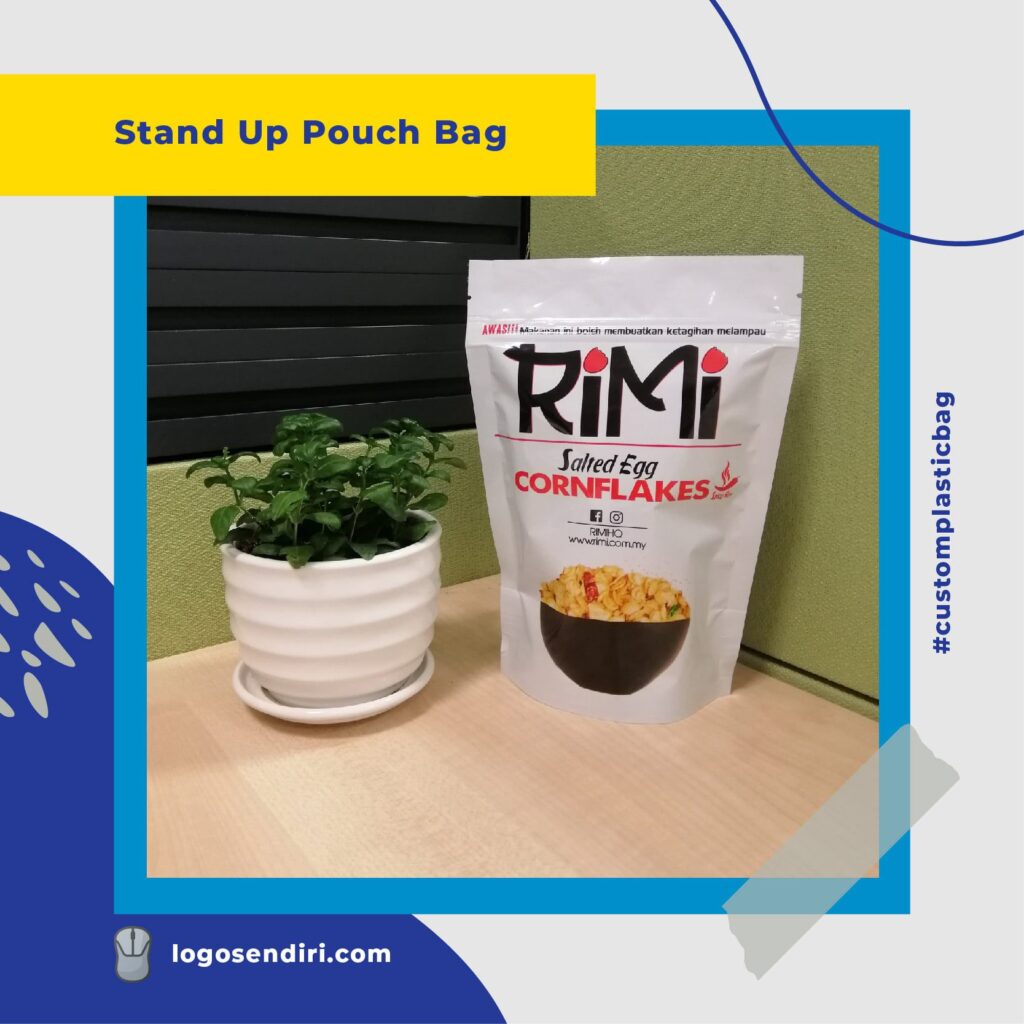
Two suppliers quote the same pouch and the numbers are nowhere near each other. Did somebody make a mistake? Usually not. A custom pouch price malaysia quote is the result of three moving parts — physical build, print specification and order quantity — and two buyers rarely hand suppliers the same set of answers. Change one input and the number moves, sometimes more than the change seems to deserve.
So here is the short answer before the detail: you compare quotes by locking the brief first, then tracing each number back to the three levers that produced it. This guide explains those levers in plain language, shows where the less obvious extras appear, and gives you a short list of questions to ask when two quotes sit far apart. No prices are guessed here, because a useful answer depends on your specification and volume.
The three levers are not equally visible in every quote. A supplier may list a film build in detail, describe the print job briefly and leave the quantity assumption implicit. That imbalance is normal, but it makes comparison harder. Your job as the buyer is to make each lever explicit before the numbers arrive, even if the supplier’s format does not invite it. A half-page brief usually does the trick.
Key takeaways – Size, film structure and layer count form the first lever: a bigger pouch or a more complex laminate changes material use and converting behaviour. – Print method, colour count and finish form the second: artwork changes can move a quote even when the pouch itself is unchanged. – Order quantity and setup recovery form the third: setup costs spread differently across runs, so the same pouch can price differently at different volumes. – Sampling, artwork revisions and delivery are the extras most often left out of a first quote — ask what is included. – Lock a written brief before comparing numbers, so two suppliers are answering the same question.
Why custom pouch price malaysia quotes differ for the same pouch
The phrase “the same pouch” hides a lot. Two buyers may show a supplier the same finished sample, yet one needs a different film structure for an oily product, another wants a matte finish, and a third is ordering a fraction of the volume. Each difference is invisible in the sample and obvious in the quote. That is why a custom pouch price malaysia comparison that starts with a picture rarely ends well.
The more useful starting point is a list of decisions. What exactly is the pouch made of, how is it printed, and how many will you order? Those three answers drive most of the variation. Once they are fixed in writing, the quote becomes a number you can interrogate rather than a figure you can only accept or reject.
Consider two buyers ordering a coffee pouch. One wants a clear window to show the beans; the other wants a metallised build for light protection. Both show the same mock-up to the same supplier, and both receive a quote. The numbers differ because the structures differ, not because one supplier is generous and the other is not. Once the buyers write down the reason for their choice, the quotes become easy to read — and a custom pouch price malaysia discussion stops being a contest of who got the better deal.

The collection above makes the point neatly: a bag, a coffee pouch and a small envelope may all be “custom packaging”, but they are very different objects to make. General background on how flexible formats are specified is available from the Institute of Packaging Professionals, and our notes on custom packaging cost in Malaysia set out the broader context before you narrow to a single pouch.
Lever 1: size, film structure and layer count
The first lever is physical. Pouch dimensions affect how much film each unit uses and how the roll is consumed on the line. Film structure affects cost more subtly: a simple laminate and a multi-layer high-barrier build are not equivalent, even if they look similar from the front. Each extra layer has a purpose — print support, barrier, tie layer, sealant — and each adds material and converting steps.
Oil-resistant or aromatic products may need a structure that a dry snack does not. A clear window may require a different layer plan from a metallised or foil build. When you ask why a custom pouch price malaysia quote sits higher than expected, the answer is often here: the supplier has specified a structure that matches the product, and you were picturing a simpler film. Bring the product’s behaviour into the first conversation rather than discovering it after a quote is issued.
This is also where a sample can mislead. A converter’s sample film is frequently a standard structure, not the final build. Approving a sample visually does not lock the laminate. State the structure you expect, or ask the supplier to propose one in writing with the reason for each layer, and keep that note beside the quote. A short line about layer count in your brief will do more for comparison than a long email about the design.
Layer count deserves a little more attention because it is easy to underestimate. A two-layer film and a five-layer laminate may look identical on the shelf, but the second has more material, more bonding steps and more chances for something to go wrong during converting. That does not make it worse — the extra layers may be exactly what your product needs — but it does explain part of the gap between two quotes. Ask for the layer order in writing, then compare the two structures on the jobs they perform rather than on the number of layers alone.
Lever 2: print method, colours and finish
The second lever is everything that happens to the surface. Print method, the number of colours, the coverage of those colours and the finish all affect setup and run time. A design with large solid areas of ink behaves differently from one with fine line work, and adding a special finish can introduce an extra process with its own setup.
This lever explains the most common surprise: a quote changes when only the artwork changed. Even if the pouch and quantity are identical, new artwork can mean new plates or cylinders, revised colour separations, a different number of ink stations, and a fresh proof round. The film did not change, but the work around it did. If you are tracking a custom pouch price malaysia number over several weeks, keep artwork revisions in a separate column so you can see what actually moved it.
Colour count is a simpler concept than it sounds, but it is worth being precise. Ask whether the quote assumes spot colours or process colours, whether a white underlay is needed on a metallised film, and whether both sides of the pouch are printed. Each answer can add a setup or an ink station. Buyers who record these details once, in the brief, avoid the slow discovery that two suppliers were quoting different print jobs under the same description.

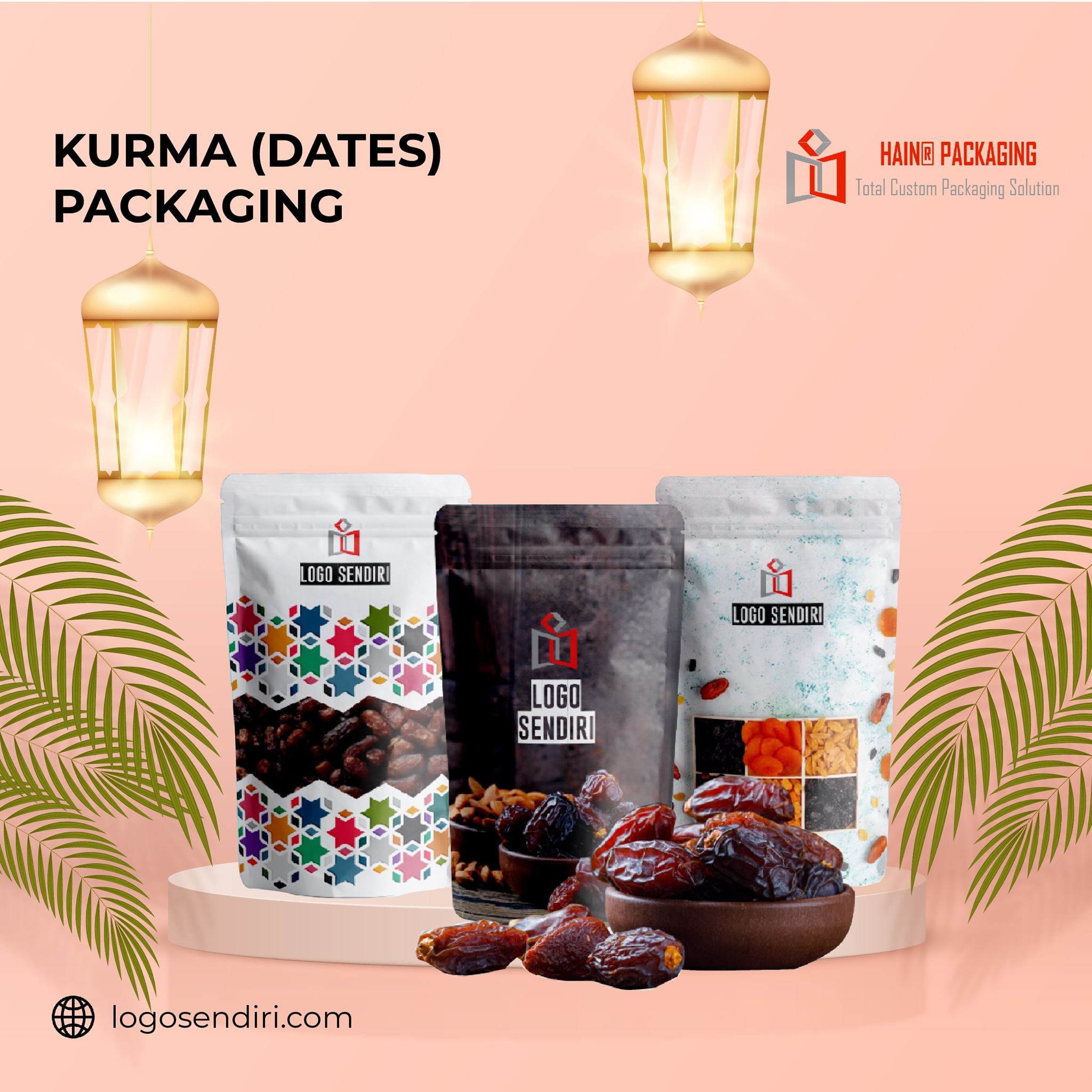
The differing graphics on the pouches shown are a fair illustration: each design is a separate print job with its own setup. If your brand relies on a matte or textured finish, raise it with the print specification rather than treating it as a decorative afterthought. Industry coverage such as Packaging World discusses how print and finish choices interact with flexible substrates, which helps when you are deciding what is worth specifying.
Lever 3: order quantity and setup recovery
The third lever is volume. Every print and converting job carries setup work that does not scale with the number of pouches. Spread across a small run, that setup cost is a large share of each unit; spread across a larger run, it becomes a smaller share. This is why a custom pouch price malaysia quote can look generous on one quantity and quite different on another, with no change to the pouch at all.
The table shows the shape of the effect without inventing figures. Treat it as a way to ask better questions, not as a price list.
| Order scenario | What happens to setup recovery | Typical effect on unit cost | What to confirm with the supplier |
|---|---|---|---|
| First small run or trial | Setup spread across few units | Unit cost carries more setup | Whether trial quantities are supported |
| Growing repeat order | Setup shared across more units | Unit cost usually softens | At what volume the price is re-quoted |
| Larger scheduled run | Setup diluted further | Unit cost generally steadier | How scheduling affects the quote |
| Split artwork in one order | Separate setups per design | Each design priced on its own run | Whether combining designs changes setup |
| Repeat with no artwork change | No new print setup | Fewer one-off charges | What must stay identical to keep the price |
Read the table as a warning against abstract comparisons. “Which format is cheaper” and “which supplier is cheaper” are both incomplete until the quantity and the artwork state are written down. If you want a broader explanation of how volume interacts with minimum quantities, our guide to flexible packaging MOQ pricing in Malaysia goes deeper, and a plastic packaging MOQ guide helps when the team is new to the topic.
Quantity and artwork are tied together more tightly than most buyers expect. If you split an order across three designs, you are effectively running three short jobs, each carrying its own setup. Combining them into one design on a longer run can change the figure without changing the pouch at all. Before you accept a higher quote, ask whether a small change to the artwork plan or the order quantity would bring it closer to your budget — and what you would give up in exchange.
How to write a brief that gives a comparable custom pouch price malaysia
A comparable brief is not a long one. It is a fixed one. Write down the decisions that drive the three levers so that every supplier receives the same inputs, then ask each to price exactly that.
Start with the physical description. State the pouch format and target dimensions, the product it will hold, and any behaviour the structure must handle — oil, aroma, light, moisture. Ask the supplier to name the proposed film build and the reason for each layer, rather than accepting a generic description. This gives you a baseline for the first lever.
Next, fix the print specification. Note the number of colours, whether both sides are printed, the finish you want, and the exact artwork version by name or date. Include how many separate designs are in the order, because that determines how many setups the run needs. Finally, state the quantity and whether you are asking for a trial run, a repeat order or an estimate at several volumes.
End the brief with three questions: what is included, what would change the number, and what must stay identical for the price to hold. A brief written this way turns a custom pouch price malaysia request from an open-ended question into a fair comparison. When buyers skip this step, they often end up comparing a fully specified quote with a rough estimate and calling the difference a price advantage.
One more habit helps: keep the brief under version control. Give each revision a date and a short note about what changed, then send the same version to every supplier. When a number arrives weeks later, you can match it to the exact brief it was based on. This matters especially for a custom pouch price malaysia request, where artwork edits and quantity tweaks can accumulate quietly between the first enquiry and the final decision.
The hidden extras: artwork changes, sampling and delivery
Even with a tidy brief, a few items tend to sit outside the headline number. Artwork revisions are the most frequent. A proof round that seems minor to a marketing team can mean a new plate, a re-separate of the file and another approval cycle. Sampling is another: ask whether samples are charged, how many rounds are included, and whether the cost is credited against a later order.
Delivery is the third extra that catches buyers out. Confirm what the quote covers, how the goods will be packed for shipping, and who arranges transport. Timing should be treated the same way — confirm it with the sales team for your specification and order quantity rather than assuming a fixed window, because material preparation and scheduling vary with both.
Sampling is worth planning as a stage rather than an afterthought. A first sample confirms that the structure and artwork work together; a second may be needed after the product changes or the print file is revised. Ask how many rounds are normally included and what a further round involves. Knowing this up front prevents the awkward moment when a useful improvement is skipped because nobody budgeted for the proof that would confirm it.
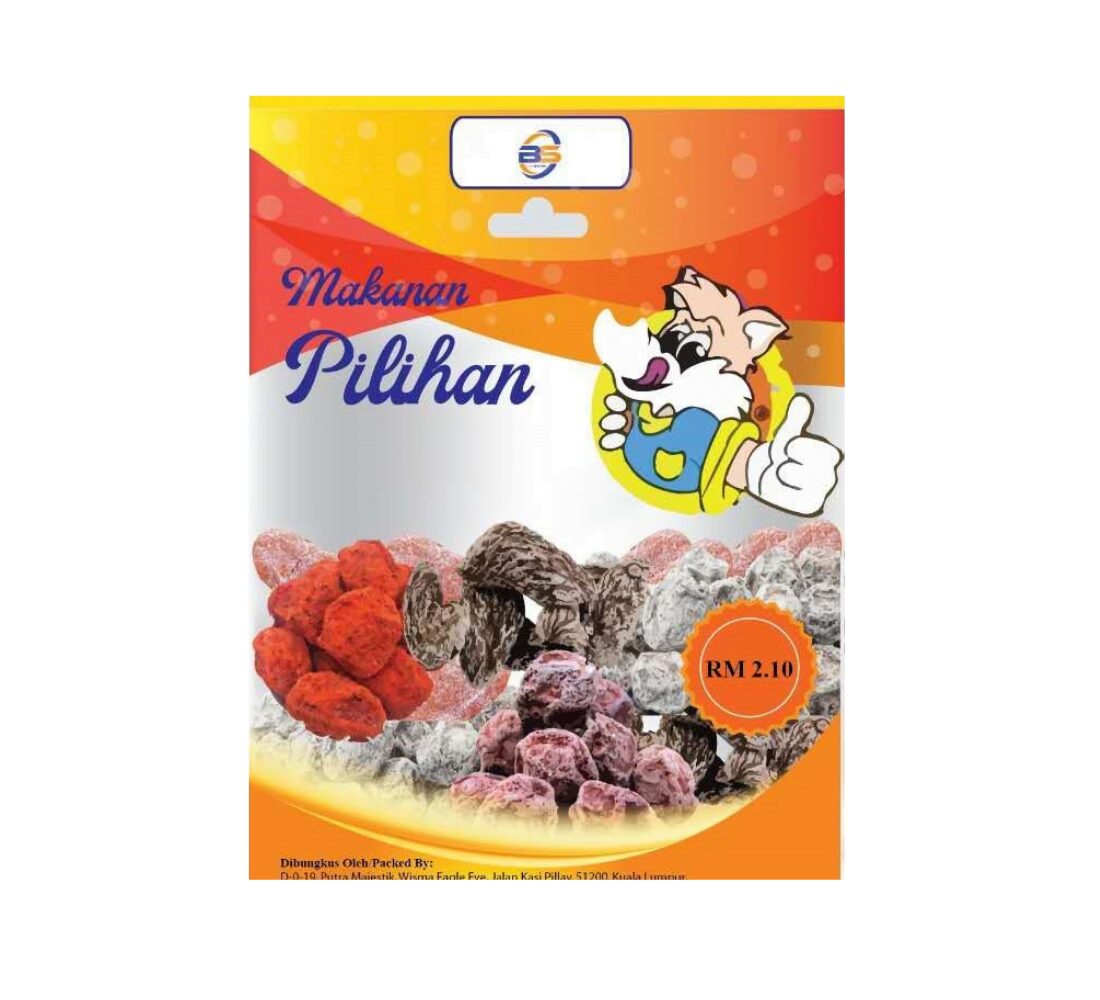
A finished pouch with a price tag, like the one pictured, is the end of a chain of small decisions — each of which can appear as a line item. None of these extras is unreasonable; the problem is only when they appear after the budget is approved. Bring them into the first conversation and they become easy to plan for.
What to ask when two quotes are far apart
When two numbers are far apart, resist the urge to ask only “can you match it?”. Ask what is different. Start with the three levers in order: is the film build the same, is the print specification the same, and is the quantity the same? In most cases the gap collapses into one or two concrete differences once these are laid side by side.
Then check the scope. Does each quote include sampling, artwork handling, tooling and delivery, or has one supplier priced a narrower job? A lower figure that omits several of these is not a lower cost; it is an incomplete one. Ask for the assumptions in writing and compare them line by line.
Keep the conversation factual rather than adversarial. Suppliers are used to being asked for a better number, and the ones worth working with will explain their assumptions when you ask about levers instead. If a supplier cannot say which part of the quote would change under a different quantity or print specification, that is useful information too — it suggests the number was assembled rather than calculated from your brief.
Finally, ask each supplier what would make their number move. A useful answer names a lever — a change in layer count, a reduction in colours, a different quantity — rather than shrugging. That answer tells you where there is room to negotiate without quietly reducing the quality of the pack. If the gap remains unexplained after this exercise, the two suppliers are almost certainly pricing different briefs, and the right next step is to reissue one fixed brief to both.
If you are still comparing a custom pouch price malaysia figure against a rough estimate from another supplier, pause and normalise the scope first. Ask the second supplier to reprice against the same fixed brief. It is surprising how often a gap that looked dramatic turns into a modest difference once both sides are quoting the same structure, the same artwork version and the same quantity.
FAQ
Why did my quote change when I only changed the artwork?
Because artwork drives print setup. New art may need new plates or cylinders, revised colour separations, extra ink stations or another proof round, even though the film and quantity are unchanged. Keep a version name or date on every file you send and record when a revision was approved. That way you can see which changes moved the number instead of guessing.
Does a bigger order always lower the unit price?
Usually the unit price softens as a run grows, because setup work is spread across more pouches, but it is not a straight line. Artwork splits, special finishes and material choices can each introduce a fresh setup or cost step. Ask at which volumes the price is re-quoted and what must stay identical for the lower figure to hold, rather than assuming a larger quantity automatically earns a better rate.
How do I compare quotes from two different suppliers?
Fix the brief first, then compare like with like. Send both suppliers the same format, dimensions, film requirement, print specification, artwork version and quantity. When the numbers arrive, check what is included — sampling, tooling, proof rounds and delivery — and ask each supplier what would change their figure. A gap that survives this process is usually a real difference in what is being supplied.
Conclusion: lock the brief, then compare quotes
A custom pouch price malaysia quote is not a mystery once you know the three levers behind it. Size, film structure and layer count set the physical baseline; print method, colours and finish set the surface work; and order quantity determines how setup is recovered. Add the hidden extras — artwork changes, sampling and delivery — and you have a complete picture of what the number includes.
The practical move is simple: lock the brief before you collect quotes, and keep artwork versions and quantities written down beside each figure. When two numbers differ, trace the gap back to a lever rather than treating it as a verdict on a supplier. Do that and the comparison becomes a decision you can explain to anyone on your team.
Talk to Logos Sendiri about your custom pouch price
Ready to compare quotes fairly? Send the team at Logos Sendiri your draft specification and we will help you fix the brief before you request numbers, so the answers you get are genuinely comparable. Send us your pouch brief and we will flag any gap before you request quotes.