
Compostable Pouch Malaysia Five Fields to Verify
October 18, 2026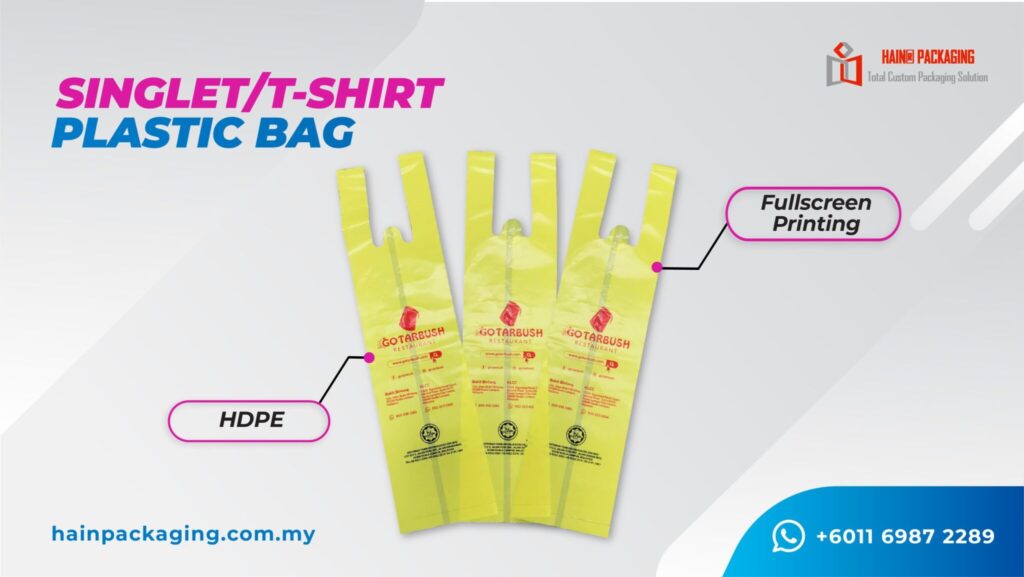
Most buyers asking about custom branded plastic bags malaysia expect three separate line items, one for the bag, one for the print and one for the quantity. What comes back rarely splits that cleanly. A quotation for custom branded plastic bags malaysia is a quotation for a single combination, and the three inputs that shape it are the bag shape, the printing method and the number of colours in the artwork. Move any one of the three and the other two shift with it.
The practical consequence is that a figure collected for one combination says very little about a different combination. A soft loop handle bag printed in two colours on one face sits in a different cost structure from a singlet bag printed in one colour on two faces, even at the same quantity, because the printable panel is not the same and the plate set is not the same. Buyers who compare quotations across combinations end up comparing things that were never alike to begin with.
This page walks the three inputs in the order in which they actually constrain each other, then shows where plate cost stops behaving the way people expect, and closes with what an enquiry has to list for the returning number to match the bag that arrives.
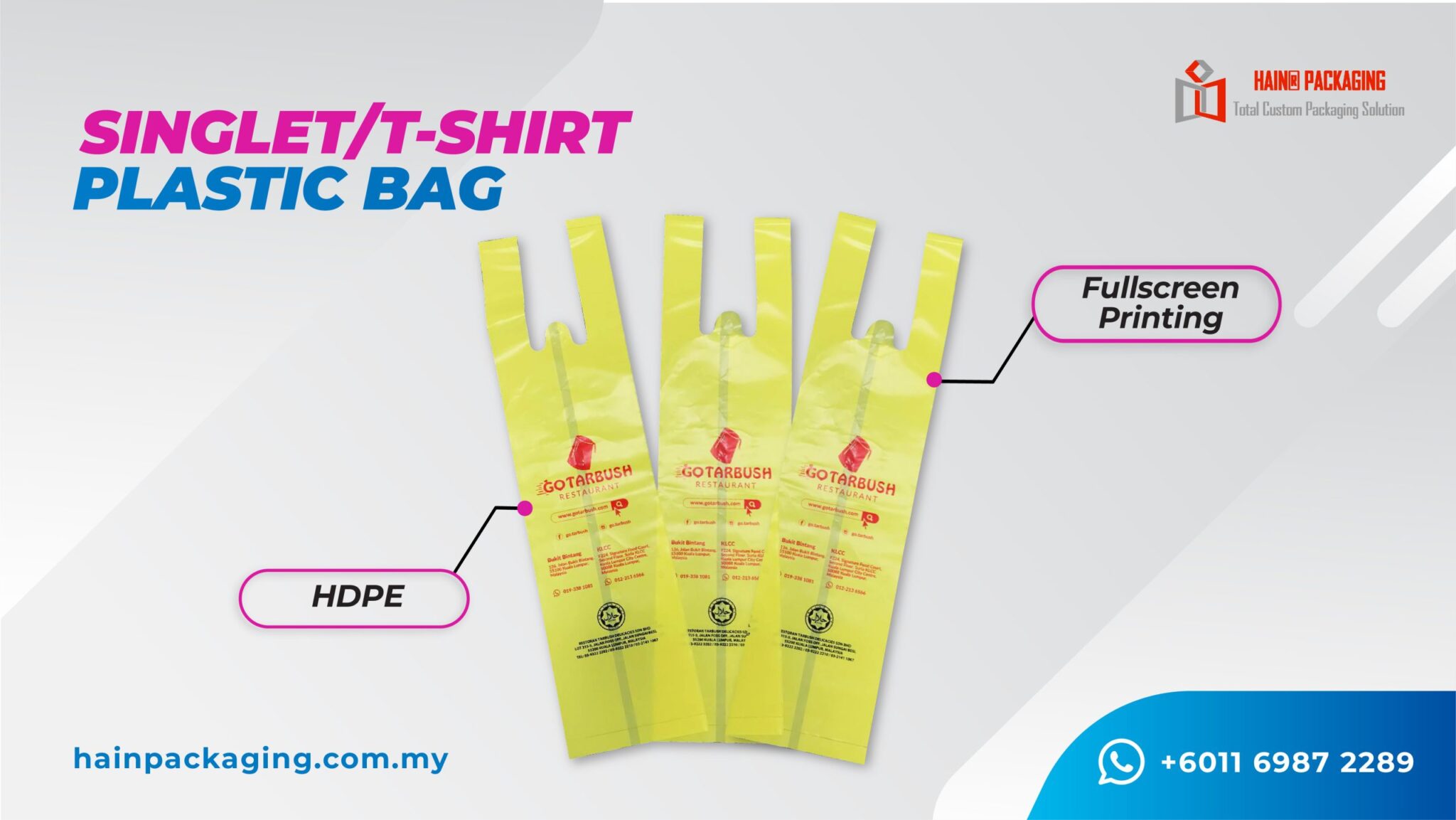
Why Custom Branded Plastic Bags Malaysia Orders Turn on Three Coupled Choices
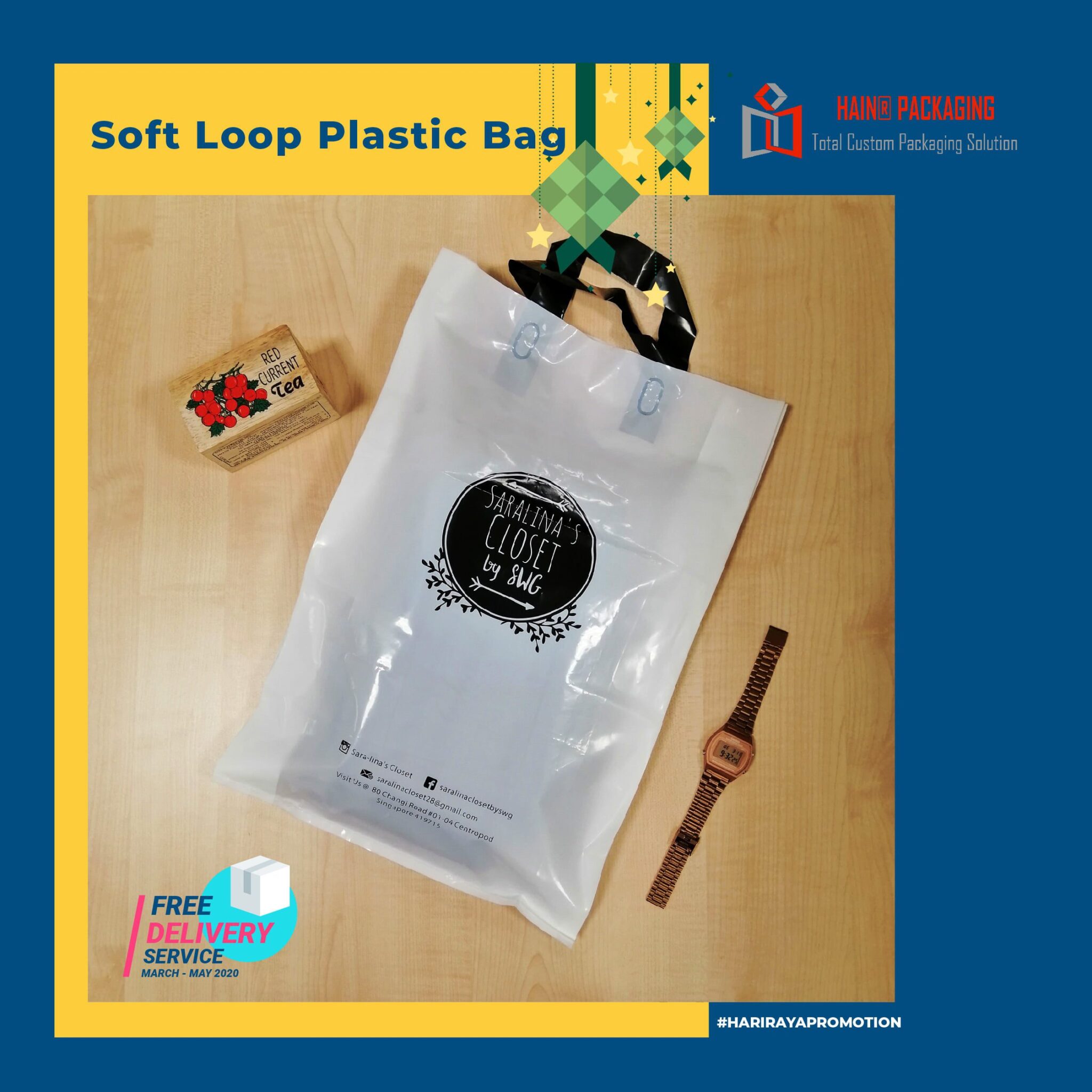
The coupling is easiest to see when one input is changed in isolation. Take a fixed artwork and a fixed quantity and change only the bag shape, from a flat singlet bag to a soft loop bag with a folded top. The printable panel shrinks at the top because the loop weld occupies film that a flat drawing shows as empty. The artwork that fitted comfortably now runs into the weld, and the fix is either to move the logo down or to change the bag.
Change the printing method instead and hold everything else still. A method that lays ink down in a thicker film will hold a solid block of colour on a dark bag, and a method that lays a thinner film will show the bag colour through it. The artwork file has not changed, but the printed result has, and the plate set behind it has changed with the method.
Change only the colour count and the plate set changes, but so does the make-ready, the waste at the start of the run while registration comes in, and the tolerance the artwork has to be drawn to. Three inputs, one quotation, and no honest way to quote one of them without the other two.
Bag Shape Sets the Printable Panel First
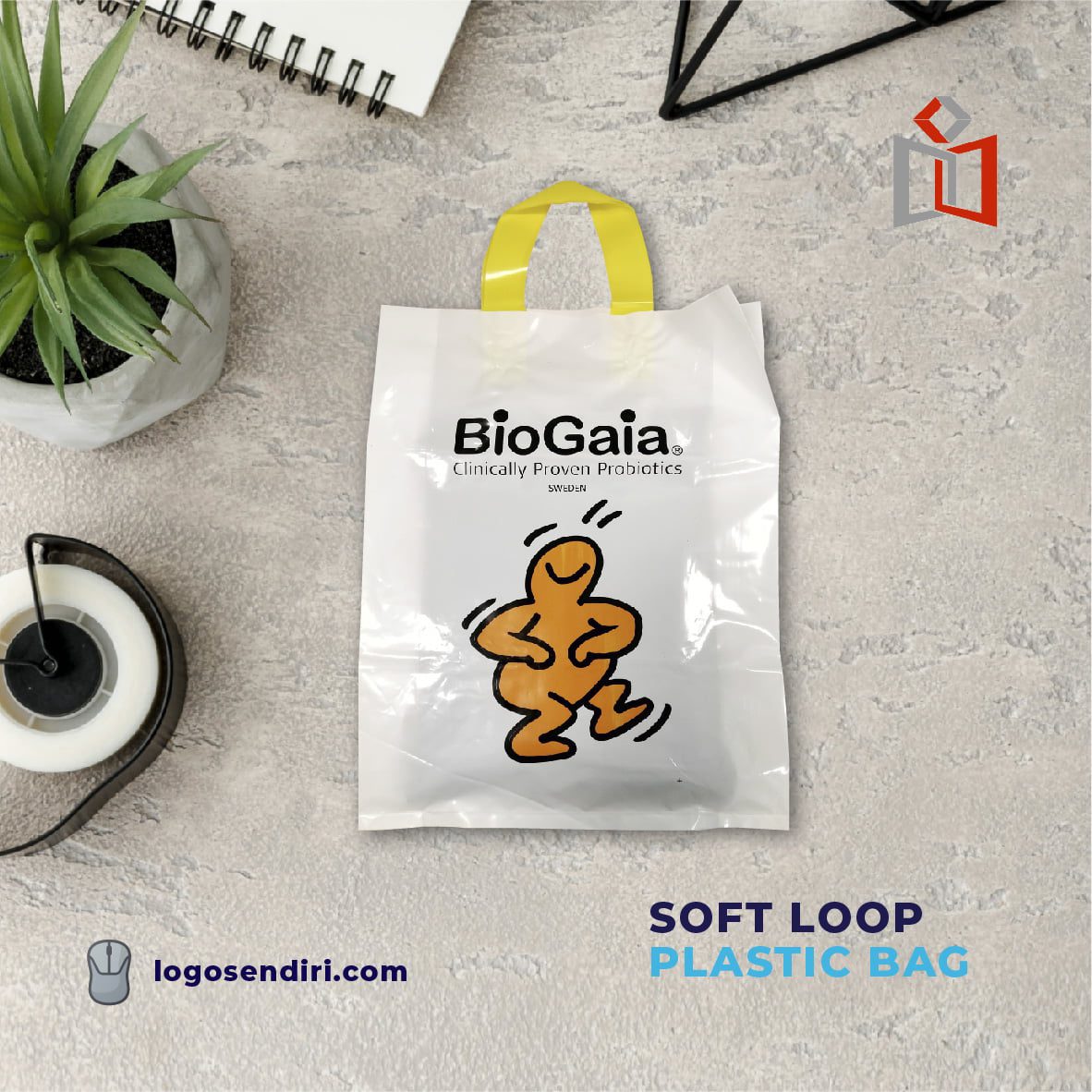
Bag shape is not an aesthetic decision taken after pricing. It decides how much flat film is available to print on, where the seams fall, and whether artwork has to dodge a fold. A singlet bag gives two broad faces with a handle cut-out that eats into the top of the panel. A soft loop bag gives a similar face, but the loop weld sits inside the printable area, so artwork placed high on the bag is artwork placed over a weld line.
A die cut handle bag supplied with a gusset adds a third surface, the gusset itself. The gusset is printable, but it is only flat while the bag is empty. Artwork registered across the face and the gusset will drift apart as soon as the bag is filled and the gusset opens. For a logo that only needs to sit legibly on the front, this never matters. For a continuous graphic that is meant to wrap around the bag, it matters a great deal, and it is the kind of problem that only shows up on a filled sample.
The useful habit is to mark the printable panel on a physical sample before artwork starts, rather than on a flat drawing in a proposal. Panels on a folded bag are smaller than panels on a flat drawing, because the fold consumes film that the drawing represents as flat. A panel marked on a sample is a panel the artwork can be drawn to with confidence.
Printing Method Decides Which Artwork Survives
Once the panel is known, the printing method determines what the artwork is allowed to contain. A simple one or two colour logo with hard edges prints well by the faster and more economical route. A photograph, a gradient that fades to nothing, or a fine screen of small type does not survive that route at small size, and the usual remedy is to change the method rather than to simplify the artwork.
Buyers often treat the method as the supplier’s concern and the artwork as their own. In practice the two are negotiated together. If the logo contains a gradient, the method capable of rendering it also changes the plate set, and the plate set is where the cost structure changes. Sending artwork without stating which parts are fixed tends to produce a quotation built on the supplier’s assumption, and that assumption is usually the simplest method that will physically print the file.
There is a second effect worth naming. Some methods hold registration tightly across a long run and some drift, which appears as the second colour sitting slightly off the first on bags late in the run. Where two colours touch in the artwork, drift is visible. Where two colours are separated by clear film, drift is invisible. Artwork drawn to tolerate drift can stay on a more economical method than artwork drawn to a tight register, and that difference belongs in the enquiry rather than in a later complaint. More background on how method choices are framed locally sits in the packaging print guide.
Colour Count and Plate Count Are Not One Number
The most common misunderstanding in this category is treating colour count and plate count as the same figure. They are related but not identical. Each colour in the artwork normally needs its own plate, so a four colour logo needs four plates. What breaks the one-to-one relation is the second side, because a plate is a physical cylinder or screen that prints whichever face is fed through it.
A one side four colour job and a two side four colour job can therefore carry the same plate count at a different running cost, while a four colour logo on the front and a single colour return address on the back carries five plates. Buyers who count the colours in the artwork and then double the result for the second side routinely over-state the plate set, and then wonder why the quotation is lower than they feared.
Spot colour and process colour behave differently again. Artwork built from four process colours needs four plates regardless of how many visual colours appear in the finished print, because the visual colours are produced by mixing. Artwork built from six flat spot colours needs six plates. The artwork that looks more colourful can be the cheaper plate set, and the way to know which you have is to ask the artwork’s originator rather than to count colours by eye.
Where Plate Cost Stops Rising With Colour
Plate cost rises as colours are added, but not in a straight line and not without limit. The first plate carries setup that later plates reuse, artwork preparation, mounting, and the make-ready that brings the first bags into register. Adding a second and a third colour adds plate cost plus a smaller increment of make-ready. By the fourth or fifth colour, the marginal change is mostly the plate itself.
The larger non-linearity sits on the other side of the quantity. Plate cost is a fixed cost spread across the run, so its contribution to each individual bag falls as quantity rises. At low quantity, plate cost dominates the unit figure and colour count is the loudest variable in the quotation. At higher quantity, film and conversion dominate, and a fifth colour becomes a rounding difference in the unit cost while remaining a real line in the setup total. The same plate set is expensive per bag at one quantity and almost invisible per bag at another, which is why the unit cost behaviour at small quantity is worth reading before the colour count is fixed.
This is the reason an honest answer to what a colour costs depends on the quantity it is spread across, and the reason a quotation request that fixes the colour count but leaves quantity open cannot be answered with a stable figure. Both numbers have to be pinned before either one carries meaning.
What a Custom Branded Plastic Bags Malaysia Enquiry Should List
An enquiry that returns a single figure rather than a range usually contains five items. The bag shape and size, including whether a gusset is present. The printing method, or an explicit statement that the supplier should propose one. The colour count per side, split by side rather than given as a total. The quantity, as a figure rather than a bracket. And which parts of the artwork are fixed.
The fifth item is missing most often and moves quotations furthest. If the gradient is fixed, saying so settles the method. If the gradient may be flattened to two spot colours, saying so opens a second quotation at a different plate count. Both are legitimate, and only one of them will be quoted unless the enquiry says which.
Wider context on how bag shape, material and print are selected together is covered in the customised plastic packaging overview. Independent industry reference material on printing and conversion is published by the Flexible Packaging Association at flexpack.org.
Custom branded plastic bags malaysia buyers rarely lose money on the bag itself. They lose it on a combination nobody wrote down and then re-quoted differently the second time. Fix the shape, the method and the per-side colour count in one message, and the figure that returns is one you can order against. Timing, sampling and freight are worth raising with the sales team once the specification is settled.