
Every Plastic Bag Supplier Kuantan Order Turns on the East Coast Rhythm
October 11, 2026Two quotes arrived on the same desk last week for the same pouch. Both were quoting small quantity packaging printing at three colours on a stand-up pouch, both quoted the same quantity, and the unit prices differed by more than half. Neither supplier had made an error. They had answered two different questions, because a unit price on a short run is not a price at all. It is a fixed cost divided by a number you chose.
That is the whole subject of this page. Small quantity packaging printing is not expensive because the printing is expensive. It is expensive because the costs that do not scale are spread across too few units, and because most of those costs are invisible on a quote that only shows a single blended figure. Once you can see which part of your price is fixed and which part moves with quantity, the curve stops being mysterious and you can make decisions on it.
One more thing worth settling before the numbers, which is who owns the specification. In most businesses the person who raises the purchase order is not the person who knows what the pack has to survive, and the gap between the two is where a lot of short runs go wrong. Put the film, the dimensions and the duty in writing, circulate them to both people, and ask whoever fills the packs to confirm them. It takes one email and it removes the most common cause of a wrong order.
This is not a page about printing methods. Rotogravure, flexographic and digital each have their place, and that comparison is written elsewhere. What matters here is the arithmetic that sits underneath all three, because the arithmetic is what decides whether a short run is viable and where the sensible order point is.
Why Two Small Quantity Packaging Printing Quotes Never Match
Ask two suppliers for a thousand pouches and you will get two numbers that look irreconcilable. The usual reason is not margin. It is that the two quotes are built on different assumptions about four things: how the plates are charged, how much waste the run is expected to produce, whether the material was bought for this job or comes out of stock, and how many versions the artwork has. Four assumptions, none of them stated on the quote, and any one of them can move the unit price more than the printing itself does.

There is a second reason, and it is a fair one. A short run occupies machine time that a long run would use more efficiently, so the opportunity cost of the slot is real and suppliers price it differently depending on how full the schedule is. That is why the same specification can be quoted differently in two different months by the same supplier, and why asking for a price held for sixty days is a reasonable thing to do.
There is a third reason, and it is the one buyers control least. Small quantity packaging printing is usually quoted during a growth phase, when the artwork is still moving and the volume forecast is a guess. A quote built on an assumed rerun will look cheaper than one built on a single run, and both may be honest. Ask which assumption the number rests on, because a price that only holds if you reorder in ninety days is a different product from a price that holds regardless.
Cost Layer One: The Fixed Block in Small Quantity Packaging Printing
Every printed pack carries a block of cost that does not change whether you order one unit or ten thousand. Plates or cylinders, machine set-up, the first make-ready, the colour approval, and the administrative handling of the job. Call this the fixed block. On a long run the fixed block is a rounding error. On a short run it is most of what you are paying for, and that is the single most useful fact in short run economics.
The practical test is to ask for the same job priced at two quantities. Any supplier can give you that, and the gap between the two is the clearest available picture of where the fixed block sits. If the unit price barely moves between one thousand and three thousand, the fixed block is small and you are mostly paying for material. If it moves sharply, the fixed block dominates and your decision should be about quantity rather than about design. This is the single most useful question in short run economics, and it takes one email to ask.
The consequence is arithmetic rather than opinion. If the fixed block is the same for one thousand units and for five thousand, spreading it over five thousand cuts that component by eighty percent. The material and machine time component does not fall at all, which is why the curve flattens rather than keeping on dropping. There is a point beyond which more quantity buys you very little, and on short runs that point arrives sooner than most buyers expect.
| Cost component | Behaviour as quantity rises | Who controls it |
|---|---|---|
| Plates or cylinders | Fixed per colour and per version | Buyer, through design decisions |
| Machine set-up and make-ready | Fixed per run, not per unit | Seller, through scheduling |
| Material at nominal width | Rises almost linearly | Shared, through size and yield |
| Changeover waste | Fixed per run, hidden in material | Shared, through run planning |
| Reprint or rework | Zero if right, full cost if wrong | Buyer, through artwork approval |
Comparing two numbers built on different films tells you nothing. Send us the quote you already have and we’ll cost the same specification back.
Lead time (standard): approximately 10–12 weeks from deposit and artwork approval. Lead time (rush order): 5-7 weeks, from the same deposit and artwork approval point. On a short run the lead time is driven by where the slot falls rather than by how many units are in it, which is why a small order is rarely quicker than a large one.

Cost Layer Two: Material Yield and Changeover Waste
The second layer is the one nobody itemises, and it is usually larger than buyers assume. Every run starts with the machine threaded, registered and brought up to colour, and every metre of film that goes through during that period is waste. On a long run that start-up waste is spread across thousands of units. On a short run it can be a meaningful share of the material you are billed for, and it is normally folded into the material line rather than shown separately.
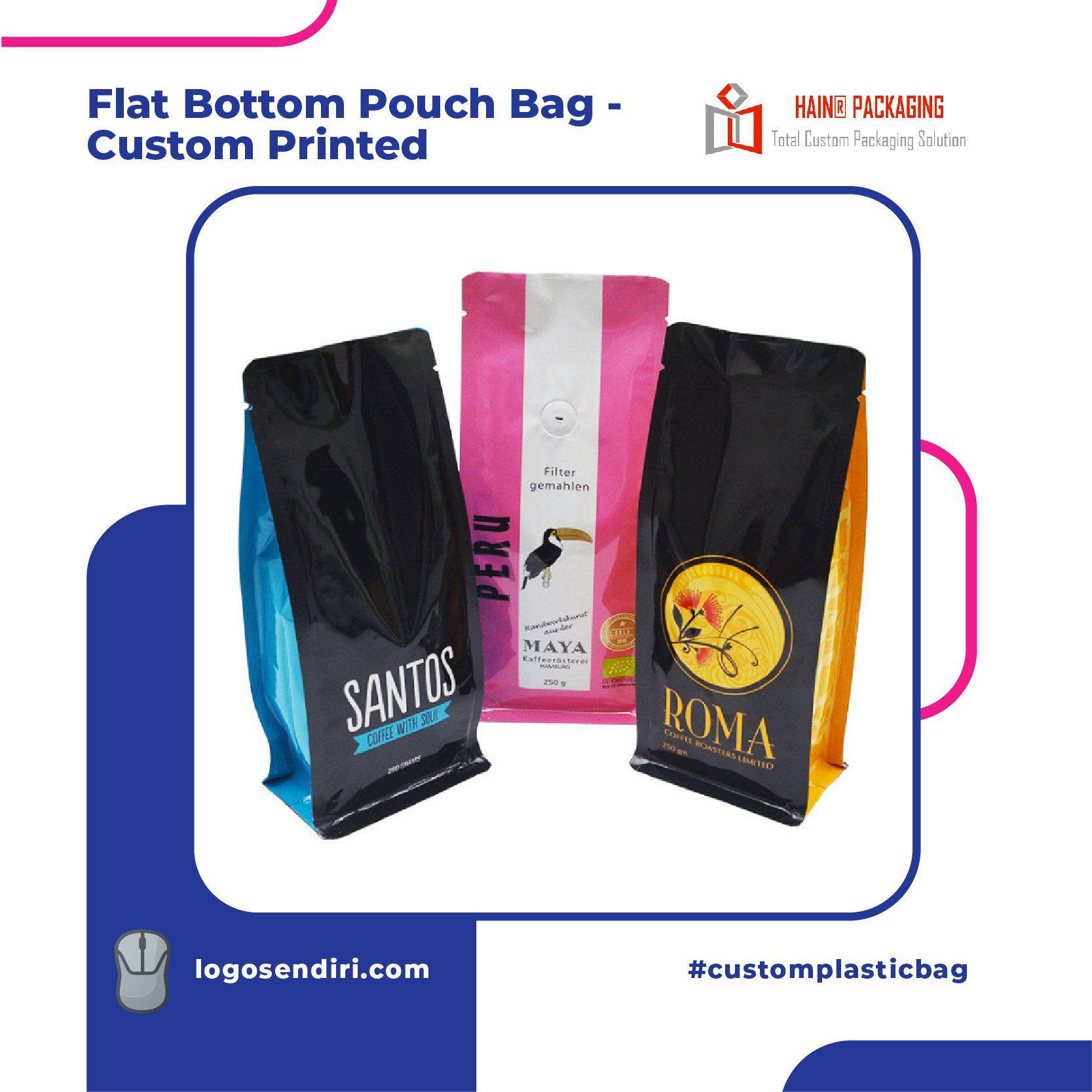
Yield is the other half of this layer. A pouch shape that nests badly on the film web leaves more skeleton between the shapes, and on a short run that skeleton is a bigger fraction of the job than it is on a long one. Two designs of identical size can carry different material costs simply because one nests efficiently and the other does not. This is worth asking about directly, because it is the one cost layer where a small design change produces a real saving without touching the print.
There is also a scheduling version of the same effect. Every time the press stops and restarts for a different job, the next job pays for the changeover, and a short run pays a proportionally larger share of it than a long one. Some of that is unavoidable. Some of it is not, and the part that is not is worth asking about: if your job can run immediately after another job on the same material and the same colour set, the changeover cost is smaller and the saving sometimes appears in the quote without being asked for.
Ask what the waste allowance is and how it is charged. A supplier who states it as a percentage of material is telling you something useful. A supplier who will not separate it at all is not hiding anything sinister, but is making it impossible for you to see where your money goes, and you should be able to see that on a short run.
Proofing deserves its own line in the plan as well, because it is the one place where spending a little removes a large risk. A digital proof catches layout errors and nothing else. A physical proof on the actual material catches the things that actually go wrong: the colour sits differently on a matte laminate than on a screen, a varnish shifts the perceived shade, and a fine reverse-out line may not hold at all. On a short run the proof costs a fraction of the fixed block it protects, which makes it the cheapest insurance available anywhere in the job.
Cost Layer Three: Colour Count and Version Complexity
Colours are the cleanest example of a fixed cost that buyers can actually control. Each additional colour adds a plate, a registration step and a make-ready allowance, and on a short run each one is a visible step in the unit price. This is not an argument for printing in one colour. It is an argument for knowing what the fourth colour costs before you specify it, and for asking whether a tinted base or a single spot colour achieves the same shelf result.

Versions are the more expensive mistake. Three variants of the same design are three sets of plates, and the third variant costs exactly as much as the first even though it sells a third as much. The cheapest fix is design: build the variants so they share plates and differ in one late-stage element. The second cheapest fix is consolidation, which is to run one design and differentiate with a label until you know which variant actually sells.
Ask your supplier how the pricing changes if all variants run in one production slot rather than three. Consolidating the slot removes two set-ups and two lots of start-up waste, which on a short run is frequently worth more than the discount you were negotiating for.
The Cost Nobody Quotes: Reprints and Rework
The fifth layer is not on any quote, and on short runs it is the one that hurts. A reprint costs the full fixed block again, because the plates, the set-up and the make-ready all happen a second time. On a long run a reprint is survivable. On a short run it roughly doubles your unit cost, which is why the money spent on getting the artwork right is the highest return spend in the whole job.

There is a subtler version of the same cost that catches experienced buyers. A specification that is almost right produces a run that is almost sellable, and almost sellable is the most expensive outcome there is, because you cannot return it and you cannot really use it. Approving a physical sample costs a little time. Discovering that the printable area sits two millimetres off the closure costs the entire fixed block again, and on a short run that is the whole job.
The three causes are consistent. Wrong colour reference, printable area that does not match the actual bag, and a late change after approval. All three are preventable with a physical proof and a named approver, and none of them are printing problems. If you only do one thing differently on your next short run, get a physical sample before the run rather than after it, and treat the approval as the point where the clock starts.
The same logic applies to the specification itself. Our minimum order quantity guide sets out where the quantity bands usually sit, and the flexible packaging pricing page goes through how the bands interact with material choice. Reading both before you fix a design will save you a reprint.
Checklist: Comparing Small Quantity Packaging Printing Quotes
To compare two short run quotes you need nine fields on both, and you need them in the same units. Film structure and thickness. Bag dimensions and shape. Number of colours per side. Number of printed sides. Number of artwork versions. Quantity, and the quantity point either side of it. Plate cost, stated separately. Waste allowance, stated as a percentage. Lead time, stated from deposit and artwork approval rather than from enquiry.
It is also worth being clear about what a short run cannot do. It cannot match the unit cost of a long run, and no amount of negotiation will change that, because the fixed block is arithmetic rather than margin. What it can do is remove the risk of committing to a design you have not tested. Buyers who understand that stop asking why the unit price is high and start asking where the break-even point is, which is the question that actually has an actionable answer.
There is one more field worth adding for yourself, which never appears on a quote and always appears in the outcome: how quickly you will know whether the design sells. A short run buys information, and information has a shelf life. If you will not have sales data before the next order point, the short run has not told you anything, and you would have been better served by ordering the larger quantity and accepting the unit cost. Decide when you will read the result before you place the order, and put that date in the same file as the quote.
Add a tenth line for yourself, which is the quantity either side of the one you are quoting. Ask for the same specification at half the quantity and at double it, and you will see the shape of the curve rather than a single point on it. Three data points turn a guess into a graph, and the graph is what tells you where to order. Most buyers never ask, which is why most short run decisions are made on a number that was never meant to carry that much weight.
Put the two quotes side by side with those nine lines and the difference usually explains itself. One quote has the plates amortised over a larger assumed rerun. One includes a higher waste allowance. One is quoting a different film. Very occasionally one is simply quoting a worse job, and you will only know that once the other eight lines match.
Where the curve turns is then a decision rather than a guess. Order at the point where the fixed block stops dominating, hold one design until you know it sells, and spend your saving on a physical proof rather than on a fourth colour. That is the entire economics of small quantity packaging printing, and it is why the cheapest quote on a short run is so often not the lowest cost option. If you want to see the formats that suit a short run, start on the products page, and read the printing overview for the process side. The Ministry of Investment, Trade and Industry publishes the manufacturing and industry reference material at miti.gov.my, which is useful if you are costing a local run against an imported one.
That is also the answer to the question buyers ask most often, which is whether they should wait until they are certain before ordering. Almost always, no. The cost of waiting is the sales you do not make while you wait, and on a growing product line that is usually larger than the premium you pay for a short run. Order the smaller quantity, learn from it, and move the volume up once the design has proved itself.
One thing worth saying plainly: a short run is a way to buy information, not a way to buy the lowest unit cost. It tells you which design sells. Once you know that, the unit cost question answers itself, and the fixed block that looked so expensive at a thousand units becomes the rounding error it was always going to be at ten thousand.