Small Quantity Packaging Printing: Reading the Unit Cost Curve
October 11, 2026
A seller in Shah Alam ships ceramic tumblers. In the first month roughly one parcel in eleven arrived chipped, and the two fixes on the table looked equally cheap. The first was to move to a carton one size up and add nothing else. The second was to keep the carton and move the product into bubble wrap bags sized to the item. In Malaysia, bubble wrap bags are usually bought by the roll or by the carton and cut at the bench, which is why the size printed on the invoice so rarely matches the size that ends up around the product. Both fixes were tried, on the same product, with the same courier, over the same route. The bigger carton cut the claim rate by about two thirds. The sized cushioning cut it by more than that and cost less per parcel.
Bubble wrap bags Malaysia enquiries almost always arrive at this same fork, and they are almost always resolved by a photograph of a returned parcel rather than by a price list. That result is not an argument for cushioning in general. It is an argument for measuring before choosing, because the two options solve different physical problems and a failing parcel is usually failing on one rather than the other. A larger carton moves the product further from the wall. Cushioning stops the product from reaching the wall at all. When a parcel fails, it fails through one of those two mechanisms, and the failure photograph almost always tells you which. Packing material that is doing the wrong one of those jobs looks busy, costs money and changes nothing about the damage rate.
The comparison here is between bubble cushioning in bag and mailer form and the carton that cushioning sits inside, and it is a comparison about how the two share a load. Void fill, which fills empty space rather than wrapping a product, sits outside it, as do foam-in-place and moulded pulp. Where a product breaks because it is heavy and the carton bottom gives way, the answer is a board grade, and cushioning added to a collapsing carton makes the collapse worse.
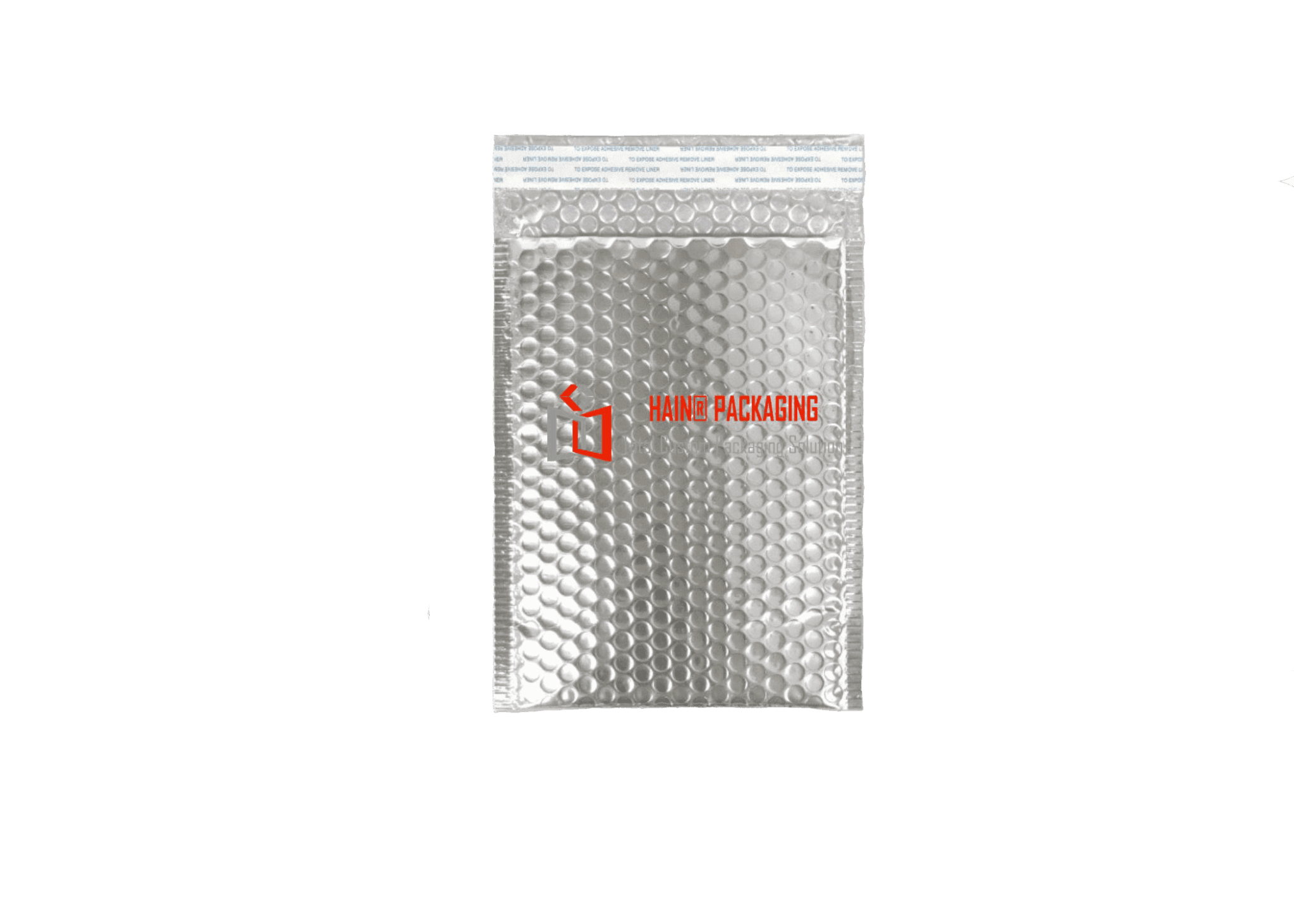
What Bubble Wrap Bags in Malaysia Are Actually Protecting Against
Cushioning does one thing: it extends the distance over which an impact is absorbed. A product dropped onto a hard surface stops in a millimetre or two and the peak force is enormous. The same product dropped onto a layer of trapped air stops over a much longer distance, and because the energy is the same, the peak force falls in proportion. Nothing else about the pack changes. The product is still heavy, the carton is still thin, and the courier still throws it. Bubble wrap bags Malaysia specifications get written as a flat size and a bubble height, and both of those numbers sit downstream of this one physical fact rather than upstream of it.
The practical consequence is that cushioning has a working range and outside that range it stops working entirely. Compress a bubble layer past its limit and the air escapes or the film splits, at which point the product meets a hard surface again with almost no benefit. The limit is set by bubble height, film gauge and how much of the surface is actually in contact. A bag that is too small for the product stretches, the bubbles flatten against the corners and the layer bottom out exactly where the product is most fragile. That is the single most common specification error in this category, and it is invisible on a packing bench because a stretched bag still looks tight and tidy.
Bubble height is the specification that buyers rarely name out loud, and it decides most outcomes. A small bubble at a low gauge is cheap, packs flat and does almost nothing for a dense product, because the layer compresses fully under a modest impact and the product then behaves as though it were packed bare. A large bubble at a heavier gauge costs more per piece, occupies more volume in storage and absorbs far more energy before it bottoms out. The right choice is a function of product weight and drop height rather than of product value, which is why a jewellery item and a ceramic mug of the same size can need completely different grades of the same nominal product.
There is a second failure mode that has nothing to do with impact. A bubble bag that is too large lets the product slide inside it, and sliding converts a single drop into a series of smaller ones while also moving the product off centre in the carton. Off centre is worse than touching, because an off centre product has somewhere to accelerate to. We see this constantly with glass jars and with anything sold as a set, where several items share one wrap and grind against each other for the length of the journey.
Print and closure are the part buyers forget. A bubble bag is also the outer surface of the parcel in a great many Malaysian e-commerce operations, which means it carries the label, the branding and the address. The cushioning decision and the artwork decision therefore have to be made together rather than one after the other. Send your carton dimensions and the quote comes back sized, not guessed.
One commercial note before the comparison itself. Standard production and delivery runs 10–12 weeks at the moment, so the cushioning specification and the artwork have to be settled in the same conversation. Changing the bubble height after plates are cut is possible, changing it after the film is extruded is not, and a buyer who discovers the wrong gauge halfway through a production window has very few options left.
Where a Bigger Carton Wins and Where It Does Not
Upsizing a carton is the first instinct because it is the easiest thing to order and it does not require anyone to learn a new packing routine. It works by creating standoff: the distance between the product and the nearest wall. Give a fragile item enough standoff and a moderate knock never reaches it. The reason this works less often than people expect is that standoff has to exist on every face, and a bigger carton only creates it if the product is held in the middle. Put a small item into a much larger box with no restraint and it simply travels further before it hits, arriving with more speed than it would have in a tight box.
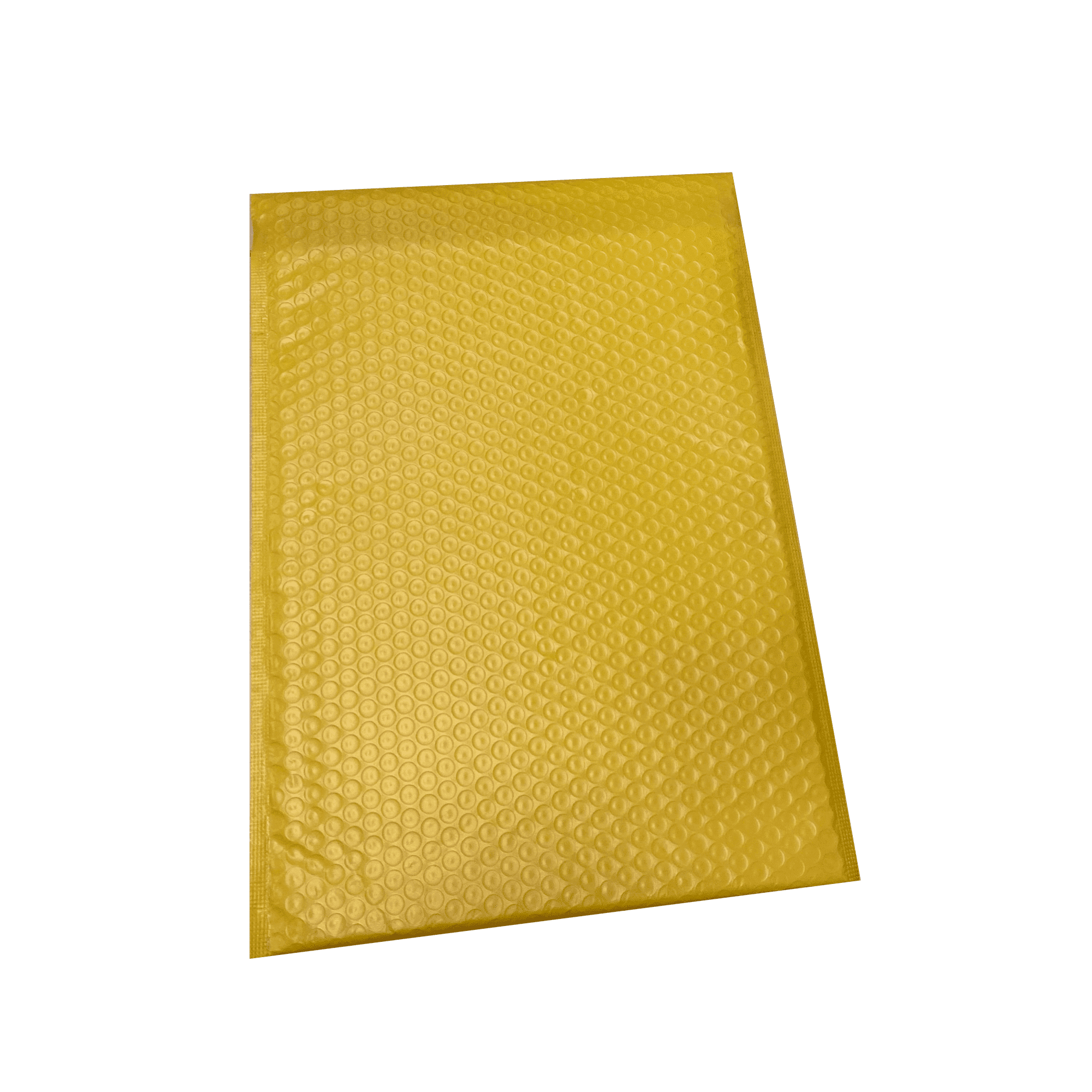
Bubble wrap bags Malaysia pricing moves with gauge and with piece count, while carton pricing moves with board area, and the two curves cross sooner than most buyers expect. Cost is where the comparison usually turns. Carton price rises with board area, and board area rises with the square of the linear dimension, so a carton one size up is meaningfully more expensive per unit and then again in volumetric weight. Most courier pricing in Malaysia is billed on the greater of actual and volumetric weight, which means an oversized carton is charged twice: once in board and once in freight. A parcel that grows by a third in each dimension nearly doubles its volumetric weight. Over a year of daily dispatch that difference dwarfs the price of the cushioning that would have let you keep the smaller box.
The upside of a bigger carton is real but narrow. It wins when the product is already close to filling the box and needs only a little more clearance, when the product has a fragile projection such as a handle or a spout that needs air around it, and when the packer is untrained and will not reliably wrap anything. It also wins when the product is light and large, because cushioning weight then matters less than the drop in freight class. It loses when the product is dense and small, when the carton is already at a volumetric breakpoint, and whenever the failure photographs show a crushed corner rather than a cracked item.
Bubble wrap bags Malaysia choices look like a product decision and behave like a freight decision, which is why the answer is usually found on the courier invoice rather than on the packaging one. A useful way to read the two options is to ask what the parcel looked like when it arrived. If the carton was intact and the product was broken, the energy went into the product, and that is a cushioning problem. If the carton was crushed and the product was broken, the energy went into the carton first, and that is a board grade or a void fill problem. Sorting returns into those two piles for a fortnight gives you a better answer than any rule of thumb, and it costs nothing but a marker pen and a box in the corner of the storeroom.
Sizing Bubble Wrap Bags Malaysia Orders Against the Carton, Not the Datasheet
Every bubble wrap bags Malaysia enquiry we see quotes the flat size first, and the flat size is the number that causes the most rework, because the flat size is not the size the product experiences. The measurement that matters is the inner usable size of the bag, taken after the closure, not the flat width on the datasheet. A bubble bag loses roughly the width of its bottom seal and a little more at the closure, and that loss is not linear because the bubbles themselves resist folding. In practice a bag specified at the exact product dimension will be tight at the corners and will not close cleanly. Most operations end up adding between ten and fifteen millimetres on each of the two open dimensions, then checking whether the product still moves when the bag is shaken.
The second measurement is the carton, and it has to be taken as an internal dimension, not as a nominal size. A carton sold as a standard size has an internal dimension that depends on the board grade, and two suppliers selling the same nominal size will often differ by several millimetres internally. If the wrapped product is a friction fit in the carton, the cushioning is doing two jobs at once and will bottom out under stacking load in a way it never does in a drop test on the bench. Leave at least a finger width of slack around the wrapped product, and treat any carton that needs to be forced shut as a size up.
One more sizing detail that catches out buyers moving from a plain mailer to a cushioned one. The closure consumes usable length, and on a peel and seal format the fold itself can take fifteen millimetres or more before any of it protects anything. Specify the bag by the inner space you need after the closure, then work backwards to the flat size, rather than the other way round. Suppliers quote flat sizes because that is what comes off the machine, and a buyer who orders the flat size that matches the product will receive a bag that cannot close around it.
What Overnight Stacking Does to a Bag That Passed the Drop Test
Stacking is the third constraint and the one that gets skipped. A pallet of cartons puts a continuous load on the bottom layer for hours or days, and cushioning under continuous load behaves nothing like cushioning under impact. Air slowly redistributes, bubbles creep, and the wrapped product sinks until it rests on the carton floor. If your parcels travel palletised rather than loose, test the wrapped product under a static load rather than a drop, and specify a higher bubble height than the drop test alone would suggest. The bubble wrap and poly mailer sizing guide goes through the same arithmetic for mailer formats, which are a different calculation because the wrap and the outer are one object rather than two.
Weight distribution is the last piece. A dense product wrapped in a light bag and placed in a carton that is much wider than it is tall will roll rather than slide, and rolling concentrates force on a corner instead of spreading it along a face. Square the carton up before you wrap, or choose a carton footprint that matches the wrapped product rather than the product itself. It sounds obvious and it is the single change that most often halves a damage rate without anyone buying anything new.
Why the Same Bag Fails in a Van and Survives a Warehouse
Parcel networks in Malaysia sort by hand at several points and by machine at others, and the two environments punish different failures. Hand sorting produces drops from waist height onto a conveyor or a floor. Machine sorting produces compression, vibration and the occasional pinch in a belt gap. Bubble wrap bags Malaysia shipments that leave an air conditioned storeroom and travel in an open truck are tested by the environment as much as by the handling. A bag that survives the first perfectly can fail the second, because the pinch loads one small area far past what the bubble layer can absorb, and because vibration over a long haul slowly walks a product out of a wrap that was never tight to begin with.

Humidity is the local factor that surprises buyers who have copied a specification from a European or North American supplier. A long stretch of wet weather softens carton board measurably, and a soft carton transfers load differently to the cushioning inside it. Adhesive on a peel and seal closure also behaves differently in high humidity, and a closure that tests perfectly in an air conditioned office can lift in a non air conditioned van. If your parcels leave the building into an open truck, test the closure the way it will actually be used rather than the way it looks on a sample card.
Where the Damage Claim Gets Decided
Returns handling is worth a paragraph because it is where the two options diverge most sharply. A cushioned pack that the customer can reopen and reseal turns a damaged parcel into a returnable one. A carton that has been upsized and filled with loose fill turns an otherwise minor damage claim into a mess the customer has to clean up, and that experience is what shows up in a review rather than in a claim form. The published acceptance and packing rules that carriers work to are worth reading once, and Pos Malaysia sets out its parcel conditions publicly, including the dimensional limits that decide whether an upsized carton stays in the same price band.
There is also a claims reality that has nothing to do with physics. Carriers assess whether a parcel was packed adequately, not whether it was packed well. A product sitting loose in an oversized carton reads as inadequately packed in a way that a wrapped product never does, even when the outcome is identical. That distinction decides who pays, and it is one more reason the comparison in this section usually resolves in favour of sizing the wrap rather than sizing the box. The custom bubble mailer range, the consignment formats and the courier bag sizing notes cover the three places that decision usually lands.
Two Broken Parcels, Two Different Orders
Four questions settle most of this before a price is worth discussing. Has the product been measured at its three largest dimensions, projection included, or estimated from memory? Does the wrapped product still move when the closed carton is shaken? Does the closure still hold when it is applied one handed, in a warm room, with the product in the other hand? And does the bottom layer of a pallet left overnight show compression the bench drop never produced? A price is only comparable after those four, because the cheapest bag per piece is rarely the cheapest bag per delivered parcel. The number that decides a bubble wrap bags Malaysia purchase is the piece price, plus the freight, plus the replacement cost of whatever fraction still breaks.
If the carton arrived intact and the product inside broke, the force reached the product, and the fix is one gauge heavier on the bubble wrap bags. If the carton arrived crushed, the board grade is the problem and no bag will rescue it. Read which of the two you have off the last ten returns before the next bubble wrap bags Malaysia order goes in.