
Clear Handle Plastic Bags at Receiving, Shelf, Return
October 18, 2026
A cafe chain in Petaling Jaya switched its retail coffee pouches to a compostable line in March. By June the pouches were splitting at the fold and the roaster was fielding complaints about coffee that had gone flat. The supplier’s certificate was genuine. It was also for a different laminate, at a different thickness, with a different ink set. Nobody had checked the scope. It was a compostable pouch malaysia purchase made the way most of them are made.
The failure was not material, it was clerical. A compostable pouch malaysia purchase carries five fields that have to be verified at the time of order, and four of them are routinely taken on trust. Each one has a check you can run before you sign, and none of the checks needs a laboratory. The same five fields reorder when the format changes rather than the material — see how they are set out for biodegradable stand-up pouches, where storage and end of life move ahead of certification.

Where a Compostable Pouch Malaysia Order Goes Wrong
The five fields are certification, standard, material, end of life and storage. In the Petaling Jaya case, four were assumed and one was checked, and the one that was checked turned out to have been read incorrectly.
What follows takes each field in turn and pairs it with the verification action that belongs to it. The order matters, because the first two fields decide whether the rest are even worth discussing.
Certification Field Check the Certificate Number Not the Logo
A compostability logo printed on a pouch is printed by the converter. It is artwork. It carries no more weight than the brand mark next to it until you have the certificate behind it in front of you.
Ask for five things. The certificate number. The issuing body. The exact product scope, meaning the structure, the thickness range and the ink set. The name of the certificate holder. And the expiry date, because these certificates run for a fixed term and a lapsed one is still in circulation for months afterwards.
The holder is the detail that gets missed. The certificate holder should be the entity that makes the film or converts the pouch. If the holder is a resin supplier instead, the converter’s structure has to be listed as an approved construction, and frequently it is not.
Scope is the second detail. A certificate covering a 60 micron pouch with a paper-based liner does not cover a 120 micron structure with a barrier layer and a metallised look, even when both are sold as the same product line. Verify the thickness range against the pouch in your hand, not against the product name.
Standard Field Match the Claim to ASTM D6400 or EN 13432
Two standards dominate the market. ASTM D6400 is the standard specification for labelling of plastics designed to be aerobically composted in municipal or industrial facilities. EN 13432 is the European packaging standard covering the same ground, and both are described in the overview published by European Bioplastics.
Both are industrial composting standards. They test four end points: biodegradation, meaning the conversion of carbon to carbon dioxide within a defined period; disintegration, meaning the material breaks up enough to pass a sieve; ecotoxicity, tested through plant growth; and limits on heavy metals.
Neither standard certifies breakdown in a backyard heap. Home composting runs at a lower temperature and over a longer period, and it is a separate claim under a separate scheme. Unless the certificate in front of you names home composting explicitly, the pouch has not been shown to break down in that setting, and no sales sheet should be allowed to imply otherwise.
The verification is one sentence. Ask which standard and which of the four end points are covered, and ask for the test report number. A supplier who can give you the standard but not the report has given you a claim, not evidence.
Material Field Compostable Is Not Biodegradable or Oxo
Three words get used interchangeably in quotations, and they describe three different disposal paths. Treating them as synonyms is a factual error, not a wording preference.
- Compostable means tested to a named standard, breaking down in a managed composting process within a defined period and leaving no toxic residue. It goes to an industrial composting facility.
- Biodegradable means the material will break down through microbial action. On its own the word says nothing about how long it takes, under what conditions, or what is left behind. A pouch can be described as biodegradable and still be unsuitable for a composting stream.
- Oxo-degradable means conventional polyethylene with a pro-oxidant additive. It fragments. The fragments are still plastic, and they are smaller and harder to collect than the item they came from. It does not belong in a composting stream.
Malaysia’s own policy line is consistent with that separation. The Roadmap Towards Zero Single-Use Plastics 2018 to 2030, published under the Ministry of Natural Resources and Environmental Sustainability, records SIRIM Berhad leading the revision of the ECO001 criteria document to include biodegradable and compostable products and to exclude photo and oxo-degradable ones. The document is public: Malaysia’s Roadmap Towards Zero Single-Use Plastics 2018 to 2030.
The verification is deliberately blunt. Ask the supplier to state in writing which of the three the pouch is. If the answer contains more than one of those words, ask again, because the answer is avoiding the question.
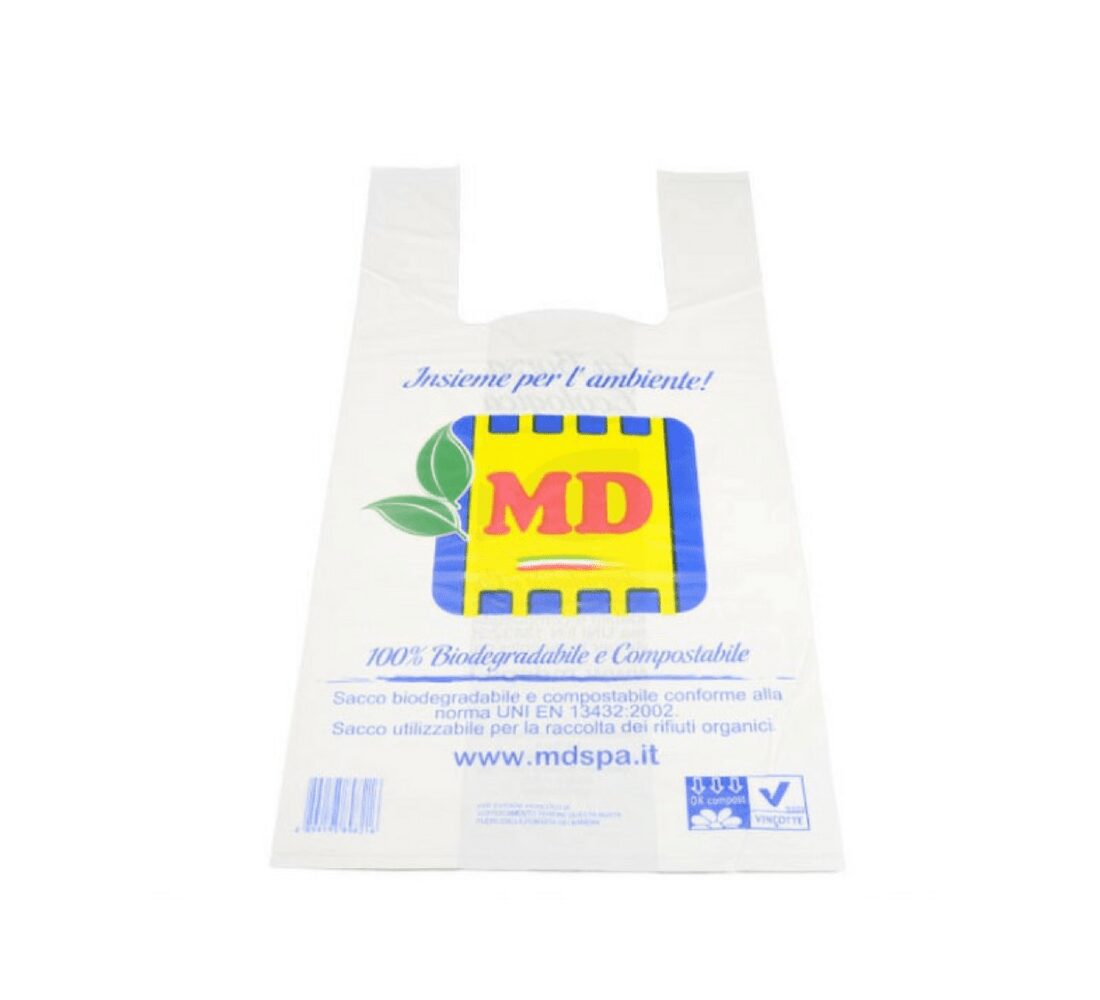
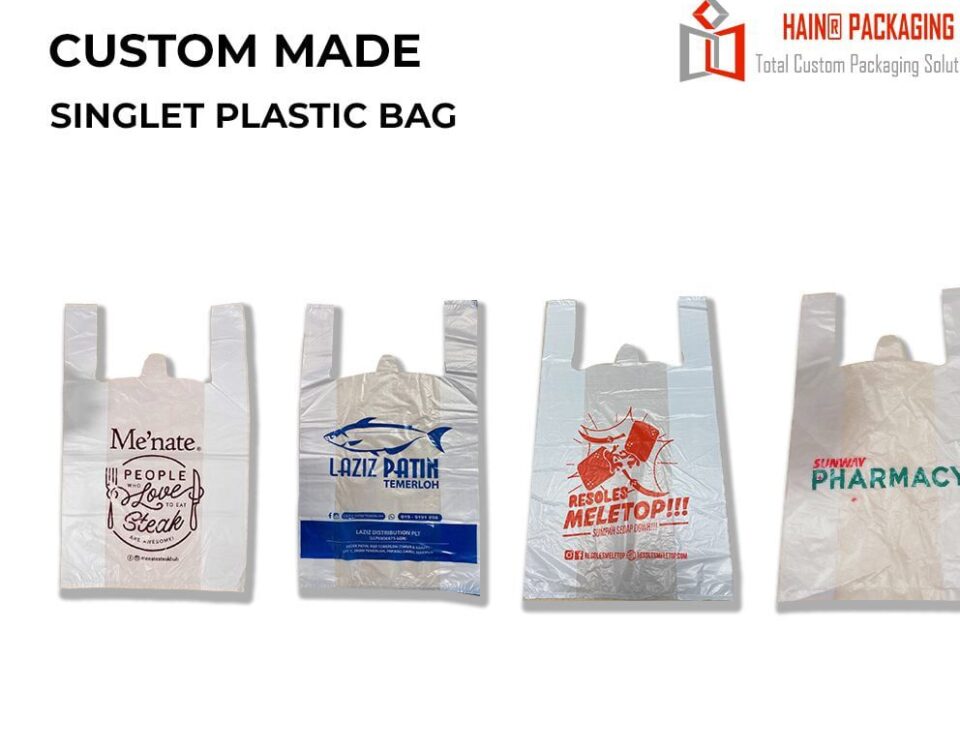
The three categories are easiest to keep apart when the finished products sit next to each other. A biodegradable shopping bag with die-cut handles, a certified compostable pouch malaysia line and an oxo-degradable carrier are three different specifications that can look identical in a catalogue photograph. When a food or beverage launch needs the full comparison, the food and beverage packaging range at hainpackaging.com.my lists the film structures against the applications they are actually quoted for, so the material category can be checked against the intended end use before the order is signed.
End of Life Field Ask Where the Pouch Actually Goes
A compostable pouch only composts if it reaches a composting facility. Buyers record the certificate and the standard, then leave the disposal route blank, because no supplier can answer it for them.
Ask two questions. Does your waste contractor accept this material? Does the local authority collect it? If the answer to both is no, the pouch goes to landfill, and in landfill a compostable claim buys the buyer nothing beyond a higher unit cost.
On regulation, be careful with the geography. Plastic bag and single-use plastic rules in Malaysia differ by state and by local authority, and both the scope and the timing change. Treat the current announcement from the state in question as the reference point. Do not assume a rule you read for one state applies in another, and do not treat a summary as a current rule.
The verification is to name the disposal route on the order itself, and to make sure the claim printed on the pouch matches that route. A compostable claim on a pouch that is going to landfill is a claim you cannot support.
Two practical checks hold for any Malaysian buyer. First, keep the disposal decision out of the supplier conversation entirely: name the route on the order, then test separately whether the local authority and the waste contractor will accept the material, because the two answers rarely come from the same office. Second, date-stamp the state rule you are relying on when you write the specification, so a regulation change announced after the order does not leave the buyer holding stock that a newer rule excludes.
Storage Field Verify Shelf Life Before You Commit
Compostable films are generally more sensitive to heat and moisture than polyethylene, and the failure shows up in storage rather than in transit. Ask for the shelf life in months, the storage temperature and relative humidity limits, and a manufacture date printed on the carton.
A pouch that has started to block in the carton, or whose print has lifted at the fold, has told you something about your storeroom that the certificate could not. Shelf life claims are given against stated conditions, and a Malaysian storeroom in the middle of the year is frequently outside them.
Sample discipline is part of the same check. Keep one carton from the delivery separate from the working stock, record its manufacture date and batch number, and open it only on the day the two week test ends. A film that looked sound at dispatch can show blocking, print lift or a stiffer fold within three days in an unconditioned Malaysian storeroom, and that reserved carton is the only evidence that separates a storage fault from a material fault when the claim is raised later.
The verification is a two week test. Hold one carton at your own storeroom condition for fourteen days, then open it and check the seal and the fold. If the film has blocked or the print has moved, the shelf life figure does not cover your conditions, and the order quantity should follow your storeroom rather than the certificate.
Sampling, plate cutting and the press slot depend on the structure, the ink set and the order quantity, so confirm them with our sales team before signing.
What a Compostable Pouch Malaysia Buyer Should Confirm
Five lines, one page, attached to the order.
- Certificate number, issuing body, product scope, holder name and expiry date.
- The standard the claim is tested against, and which of the four end points are covered.
- The material category in writing, using one word only.
- The actual disposal route the pouch will take after use.
- The storage window, with temperature and humidity limits, and a manufacture date on the carton.
Two of these are usually volunteered. Three are not, and the three that are not are the ones that produce the June complaint about coffee that has gone flat. The wider background on claims and labelling sits in the biodegradable and compostable packaging comparison, and there is more on where these materials sit against recycling routes in the recyclable packaging overview.
Five things to collect before you sign a compostable pouch malaysia order: the certificate number and its scope, the standard and the end points tested, the material category in writing, the actual disposal route, and the storage window. Put them on one page. If a supplier can fill four and not the fifth, you have learned where the risk sits. Keep it with the purchase order, because it is the only paper that settles a claim later.