
How to Choose Wafer, Brownie & Granola Packaging
October 2, 2026
Dried Fruit, Energy & Protein Bar Packaging Explained
October 2, 2026A snack range succeeds when each pack has a clear job in the assortment. For brand owners, confectionery, nut and trail mix packaging must connect product protection with channel, portion size and price point. A gift pouch, a convenience-store single serve and a family refill pack should not be treated as the same item with different dimensions. This buying guide uses six commercial checks to turn a mixed snack portfolio into a coherent packaging plan. Each check helps reduce duplicated tooling, confusing artwork and inventory that does not match the way customers buy.
Key Takeaways
- Define the channel and target price before selecting the pack format.
- Build a size ladder with a distinct role for every SKU.
- Match barrier and puncture resistance to the most demanding ingredient.
- Keep artwork architecture consistent while making flavours easy to identify.
- Compare total portfolio cost, not isolated pouch prices.
Table of Contents
- Check the channel economics
- Build the size and format ladder
- Control ingredient risks
- Design a scalable artwork system
- Model cost and inventory
- Score supplier control
Check 1: Confectionery, Nut & Trail Mix Packaging Starts with Channel Math
Start with where the pack will be sold and the margin structure of that channel. Convenience stores favour compact packs with fast visual recognition. Supermarkets need shelf efficiency, clear comparison between flavours and dependable case packing. Online sales can support larger pouches but expose them to parcel handling. Corporate gifts reward presentation, while food-service buyers may value simple bulk packs.
Write one commercial role beside every proposed SKU. If two sizes serve the same buyer, at the same price point, in the same channel, they may divide demand without adding useful choice. A tighter range improves forecasting and gives each printed order more volume.
| Channel | Pack role | Priority |
|---|---|---|
| Convenience | Single serve or impulse pack | Fast recognition and easy opening |
| Supermarket | Core retail pouch | Shelf stability and strong front panel |
| Online | Family or refill size | Seal strength and parcel protection |
| Gifting | Premium assortment | Presentation and unboxing |
| Food service | Bulk working pack | Handling efficiency and reclosure |
Check 2: Build a Size Ladder Instead of Random SKUs
A good size ladder guides customers from trial to repeat purchase. Use a small pack for discovery, a core pack for routine buying and a larger pouch for loyal users or sharing. Each step should offer a visible value difference without creating excessive artwork and stock complexity.
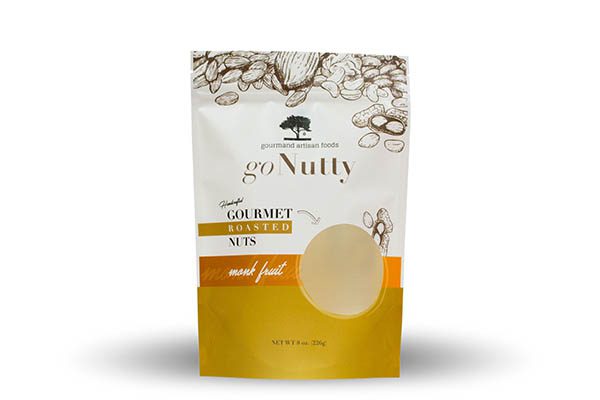
Test fill volume, not only net weight. Whole nuts create more empty space than small candy pieces. Trail mix distribution can change between fills, which affects how a pouch stands. Approve the physical sample with the real recipe and intended headspace. For related dry-snack decisions, compare the biscuit, cookie and cracker packaging guide.
Check 3: Protect the Most Demanding Ingredient
A mixed product should be designed around its highest risk. Nuts can oxidise because of their fat content. Dried fruit can transfer moisture to crisp inclusions. Chocolate can mark the inner surface when exposed to heat. Salt, sugar crystals and sharp nut edges can challenge seals or puncture weak structures.
Ask for a structure that addresses oxygen, water vapour, grease and puncture in the context of the whole blend. Then run storage trials with the final recipe. Testing one ingredient alone can miss moisture migration between components. Also check whether fine seasoning accumulates near the zipper or seal during repeated opening.
Check 4: Make the Artwork System Easy to Extend
Confectionery portfolios can expand quickly. Create a fixed hierarchy for brand, product name, flavour, net weight and required information. Reserve one colour or graphic zone for variation. This lets a new flavour join the family without redesigning the entire pack.
Review artwork on a filled pouch, not only on a flat screen. Gussets fold, windows reveal unpredictable product areas and glossy surfaces reflect store lighting. Keep essential information away from seals and folds. For a broader look at portfolio positioning, the white label packaging guide covers launch sequencing and controlled range growth.
Check 5: Model Total Portfolio Cost
A low unit price on one pouch can hide expensive consequences across the range. Include setup, printing, cylinders or plates where relevant, freight, storage, filling waste and obsolete stock. Then compare total annual packaging cost against expected sell-through by SKU.
Use a common pouch size where product fit truly allows it, but do not force standardisation when it harms presentation or protection. A shared dieline can reduce setup complexity, while separate artwork still supports flavour distinction. Request price steps at realistic quantities so the team can see where savings occur.
Check 6: Score the Supplier’s Control System
A supplier review should go beyond samples. Ask how material specifications are recorded, how artwork versions are controlled, how production batches are identified and how colour is compared on re-orders. Request a clear approval path from quotation to dieline, proof, sample and production release.
For standards and testing discussions in Malaysia, SIRIM is a useful reference point. Use such resources to frame the evidence you request. Your brand remains responsible for confirming that the final packaging and label meet the requirements of the product and destination market.
Create a Channel-Specific Sampling Plan
Do not test every sample in the same way. A convenience pack should be opened quickly and carried in a pocket or bag. A supermarket pouch should stand reliably, survive shelf handling and read clearly at distance. An online pack should travel through a parcel route. A gift format should be judged through the full unboxing sequence.
Record each failure by channel. A zipper that feels acceptable in the office may collect seasoning after repeated use. A window that looks premium under studio light may disappear against a dark shelf. Channel-specific evidence prevents subjective approval from becoming the only decision rule.
Confectionery, Nut & Trail Mix Packaging Buying Scorecard
| Area | Pass question | Evidence |
|---|---|---|
| Channel | Does the format fit how customers buy? | Channel brief and shelf review |
| Product | Does it protect the riskiest ingredient? | Filled storage trial |
| Operations | Can staff fill and seal it consistently? | Packing trial records |
| Brand | Can buyers identify every SKU quickly? | Filled artwork proof |
| Economics | Does volume match realistic sell-through? | SKU forecast and price ladder |
| Control | Can the approved result be repeated? | Retained sample and batch record |
Control Product Information Across the Range
A mixed assortment creates a version-control problem as well as a design opportunity. Build one approved information sheet for each recipe, then connect it to the correct artwork code and pack size. Check ingredient order, allergen statements, net quantity, storage directions, date-code space and contact details before releasing print files. The brand owns the accuracy of this information and any market-specific label review.
Use a two-person approval rule for text changes. One reviewer checks the source information, while another checks that the approved wording appears on the final proof. This is especially useful when nuts, dairy, soy or other allergens differ across flavours. A colour change alone is not enough to prevent an artwork mix-up.
At packing, separate printed materials by item code and return unused stock to a labelled location. Reconcile issued and returned quantities after each run. These basic controls reduce the chance of placing the right snack in the wrong pouch, which can create a far more serious problem than a minor print variation.
Frequently Asked Questions
Is a clear window suitable for nuts and trail mix?
It can improve product visibility, but the window changes barrier performance. Test the complete structure with the final recipe and target shelf period.
Should every size use a zipper?
No. A zipper is valuable for multi-use packs, while small impulse packs may need only a clean tear and dependable seal. Add features according to the pack’s job.
How many flavours should launch together?
Launch the number that your demand forecast and packaging budget can support. A smaller validated range usually produces clearer data and less obsolete stock.
What should be retained after approval?
Keep the signed artwork, dieline, material description, filled sample, colour reference and trial notes. Together they create a useful baseline for re-orders.
Conclusion: Confectionery, Nut & Trail Mix Packaging with a Commercial Job
Effective confectionery, nut and trail mix packaging is a portfolio decision, not a collection of unrelated pouches. Give every size a channel, every material a product risk and every artwork version a controlled role. For help turning an assortment plan into a packaging brief, contact HAIN Packaging through WhatsApp or explore the HAIN packaging site. We cover this in more detail in Microwave & Oven Safe Packaging: What to Specify.