
Bottom Gusset Bag Reverse the Size Not Guess It
October 18, 2026
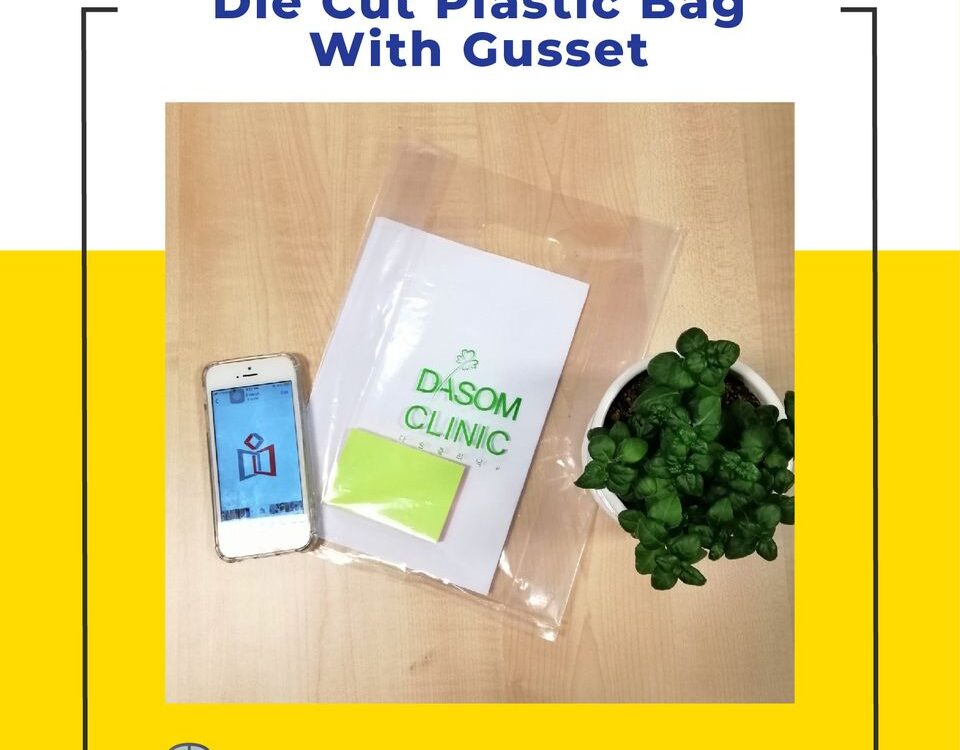
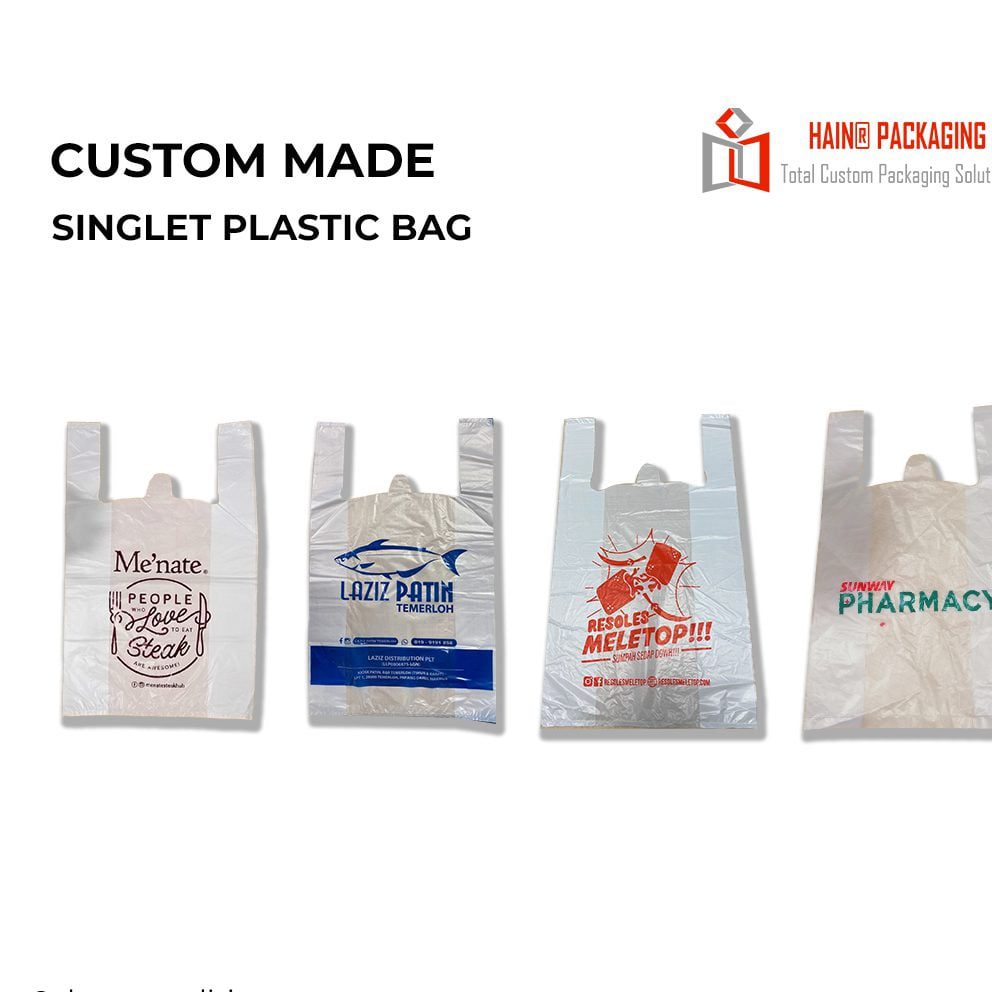
Nurul has two samples on the desk and a supplier call in eight minutes. One is a transparent body with a slot punched straight through a reinforced top fold. The other carries a separate clear handle strip welded on above the seal. Her quotation lists both as clear handle plastic bags, at a difference of less than half a sen a piece, and neither line says what happens after the bag is filled. She has to choose before the call ends.
The choice is not really about the handle. It is about which of four things gives way first once the bag is in service. Handle type, opening shrinkback, load path and attachment method each behave differently at three points in a bag’s life: the afternoon a carton is opened at receiving, the weeks a loaded bag sits on a shelf, and the day a customer brings one back. A construction that wins the first stage often loses the third.
Where Clear Handle Plastic Bags Get Judged
In Malaysian retail and food supply, these bags are not bought for their own sake. They move a defined load through three stages without generating a complaint. A 2 kg pack of frozen marinated chicken, a folded shirt in a box, six bottles of sauce in a tray. That is the whole job, and the job is easier to specify than the bag is.
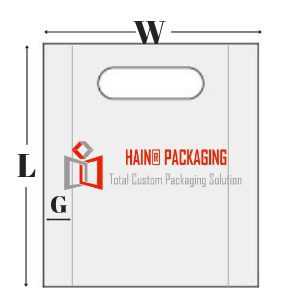
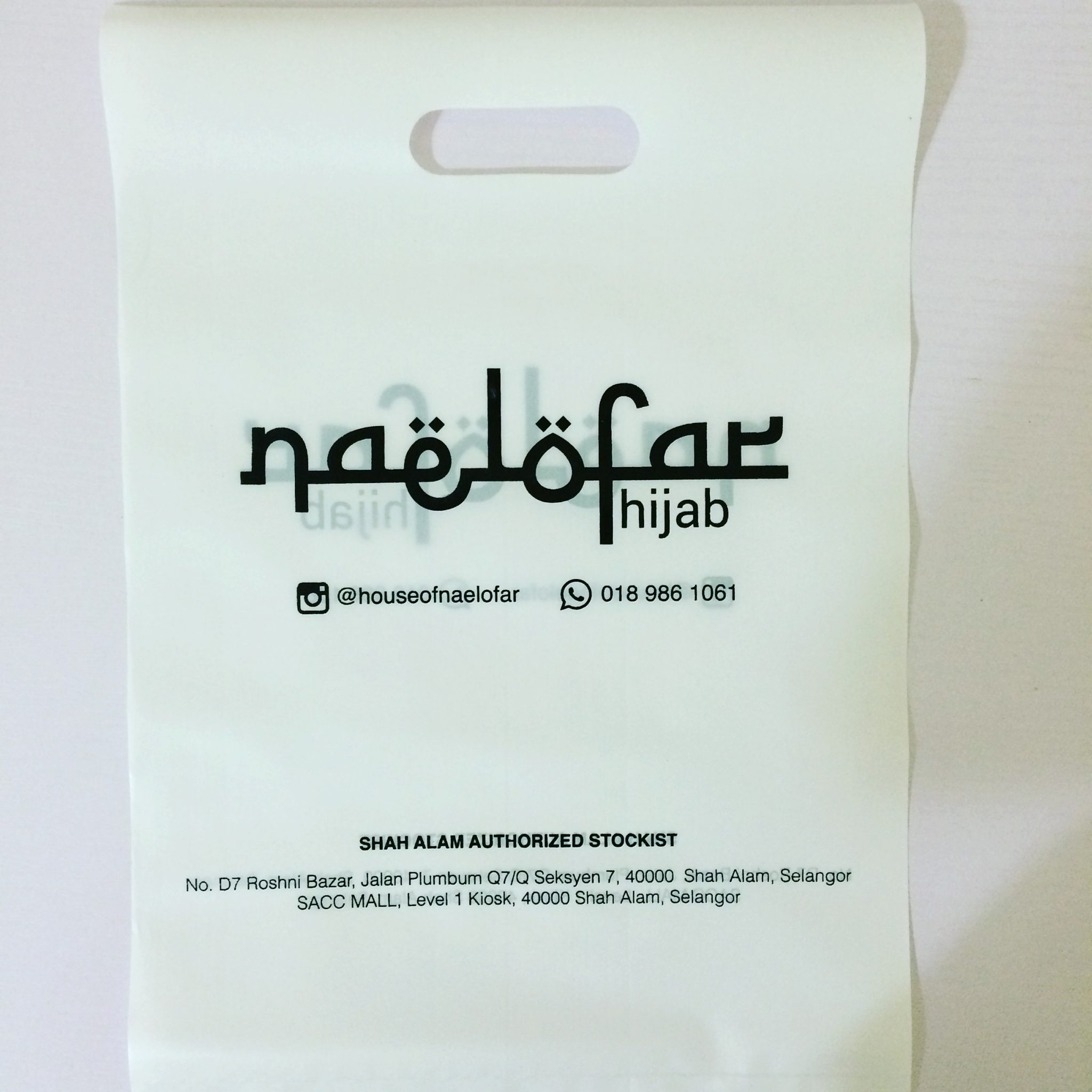
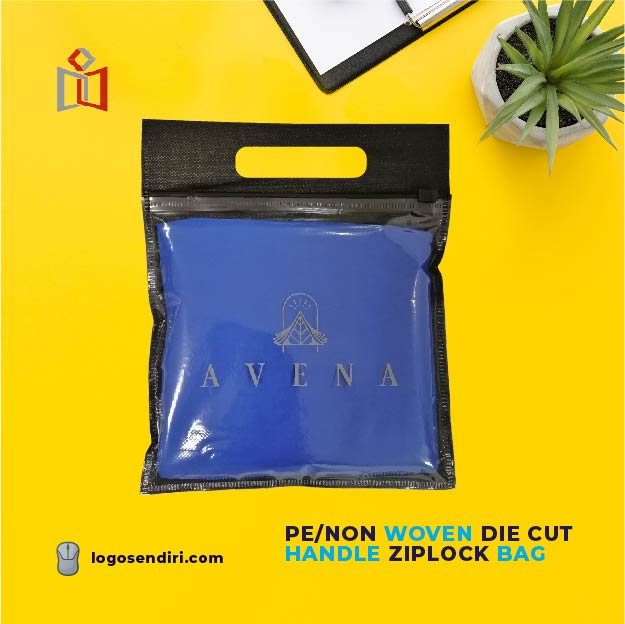
Two constructions get quoted under the same phrase. The first is a transparent body with an integrated handle, either a die-cut slot cut through a folded top or a slot backed by a reinforcement patch. The second is an opaque or tinted body carrying a separate clear handle element, a soft loop or a rigid bar. Two factories can answer the same inquiry with completely different goods and both be right, which is why the first question for any supplier is which construction is on the table.
The four dimensions worth weighing are handle type, opening shrinkback, load path and attachment method. Reading them stage by stage is the only way to see the trade, because each stage rewards a different construction.
Handle Type Across Receiving Shelving and Return
Four handle types dominate the market. The plain die-cut slot. The patch-reinforced slot. The soft loop, welded on as a separate extrusion. The rigid bar, heat staked or clipped to the top fold.
At receiving the plain die-cut slot wins, and it wins by a wide margin. It lies flat, so a carton holds 1,000 pieces where loop handles hold about 400, and the count at the bay is quick. Soft loops tangle inside the carton and rigid bars need separators between layers. Both slow the bay down, and bay labour is the cost nobody puts on the quotation.
On the shelf the ranking reverses. Loaded with 2 kg and left hanging for a week, a plain slot stretches along the top fold and the opening drifts down toward the load. A rigid bar holds its shape and keeps the bag upright in a way that matters when the shelf is a wall of similar bags.
At return, the soft loop wins. A bag coming back over the counter is usually re-packed by staff, and a soft loop survives being pulled open a second time. A slot that has stretched does not recover. A rigid bar that has been staked on tends to let go at the stake point when a customer yanks the bag out of a boot.

If you want the handle type matched to your load rather than to your unit price, send the packed weight and the shelf condition through the die cut handle bag guide and ask for the reinforcement thickness as a separate line item. For retail lines where the bag will be re-packed or re-used after the first sale, the soft loop construction shown in the range at hainpackaging.com.my survives the second opening; the die-cut slot usually does not, so compare the two on that basis rather than on the first-opening price.
Opening Shrinkback Across the Same Three Stages
The cut-out in a die-cut top is not dimensionally stable, and this is the failure mode most specifications leave out entirely. Cut a slot 90 mm by 18 mm into 60 micron LDPE and the material creeps. In a storeroom running at 33 to 35 degrees Celsius, a carton opened on Monday and measured again on Wednesday can show the slot 1.5 to 2 mm narrower, with the top fold drawn inward at the same time.
At receiving, the bags look correct, because they are counted straight out of a carton that arrived the same morning. The shrinkback shows up later, after the carton has sat in the store room behind the shop floor.
On the shelf, a narrower slot changes how the hand goes in. The grip enters at an angle, the load tilts, and the stress moves to a single corner of the slot instead of spreading across the fold.
At return, a slot that has crept closed cannot be re-used at all, so staff tear open a second bag and the daily draw rate climbs for a reason nobody can see from the paperwork.
The check costs nothing. Measure the slot on a bag straight out of the carton, write the number down, and measure the same bag again after 48 hours in your own storeroom. More than 1 mm of closure means the reinforcement patch is missing, or too thin to hold the cut-out open.
Load Path How Clear Handle Plastic Bags Carry Weight
A handle does not fail in the middle of the film. It fails at a junction, either where the slot ends or where a patch meets the bag wall.
This is why a film tensile figure can mislead a buyer. ASTM D882, the standard test method for tensile properties of thin plastic sheeting, pulls a strip of film in a straight line. A strip result of 18 MPa describes the film in isolation. It says nothing about a 90 mm slot carrying 2 kg, because stress at the slot corner is concentrated rather than distributed.
In practice, a 2 kg load in a 60 micron body with a plain 90 mm slot puts roughly four times the average stress on the film at the slot corner. Taking the top fold from 60 to 80 micron, or laying a 40 micron patch over the slot, moves the failure point out of the corner and back into the body, where the film has room to spread it.
You can see it coming before it tears. Hang a filled bag for two hours at storeroom temperature, then hold the slot corner up to a lamp. Whitening at the corner is stress crazing. A bag that has crazed is already failing, and it will tear the first time a customer swings it.
Attachment Method and What Rework Costs
There are three ways to put a handle on a bag. Heat sealing through the top fold, ultrasonic welding of a patch or loop, and adhesive application.
Heat sealing is the cheapest and the fastest, and it ties handle strength directly to seal strength. A seal made at the wrong dwell time or temperature peels rather than tears, and peel failure looks like a handle defect to the person holding the bag.
Ultrasonic welding gives a narrow, repeatable bond and adds almost no thickness at the fold, which matters when bags are stacked 1,000 to a carton and the carton has to close.
Adhesive attachment introduces a second material into the film stream, and it can lift at 35 degrees Celsius. That is a normal storeroom temperature in this country for a large part of the year, not an extreme case.
The three separate most clearly on rework cost. A bad heat seal shows up at the line and gets caught before packing. A lifted adhesive patch shows up two weeks later, in a customer’s hand, and by then the whole batch is under suspicion rather than one carton.
One practical note on the material side. Shop counters that want a stiffer feel usually ask for HDPE, and the trade-off is worth reading up on before you commit, because the same bag behaves differently at the fold. There is a longer discussion of that in the HDPE die cut bag material guide.
Sampling, plate cutting and the press slot all shift with the specification, the print method and the quantity per run, so settle the schedule with our sales team before the deposit is paid.
Reading All Four Dimensions Before You Order
Pick the handle type by the stage that costs you the most, not by the one that is easiest to picture. If your losses sit at the receiving bay, the plain slot is right and the money is better spent on a thicker top fold. If your losses sit on the shelf, buy the rigid bar. If they sit at the returns desk, buy the soft loop.
Then check shrinkback against your own storeroom rather than the supplier’s, check the load path with a two-hour hang test, and get the attachment method confirmed in writing. Those three checks take an afternoon, and they remove most of the risk from a decision that is otherwise made on price per piece.
Finally, ask for the handle dimension, the reinforcement thickness and the attachment method as three separate line items. A quotation that offers one micron figure for the whole bag has not described the handle at all. If you also run a heavy line, the heavy duty plastic bags range is worth comparing side by side, because the top fold construction differs.
Ask yourself which stage actually costs you money, because clear handle plastic bags are rarely returned for being weak. They come back because the slot has closed, or the corner has crazed. Fill one sample with your heaviest item, hang it for two hours, then measure the slot again. If it moved more than a millimetre, the handle type is wrong for your load.