
Document Pouch Plastic Tolerance and Closure Choices
October 19, 2026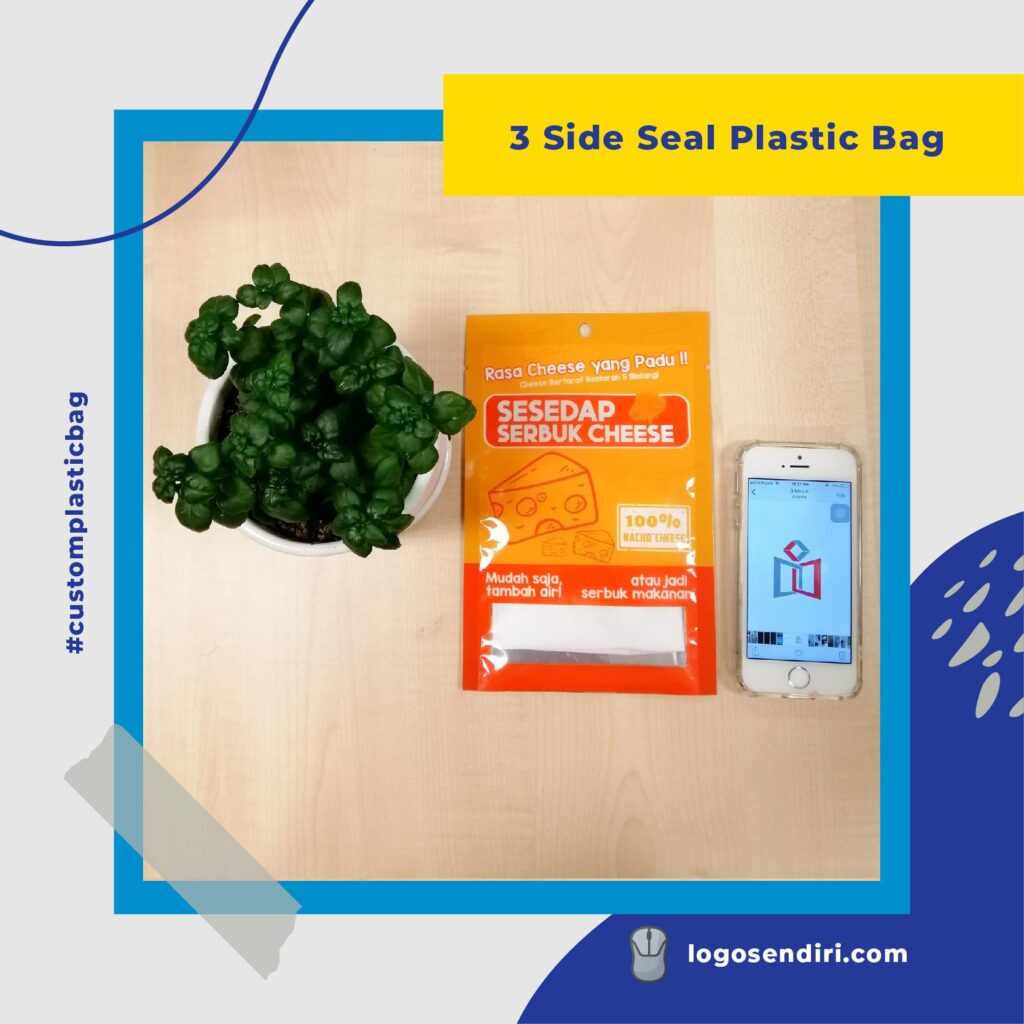
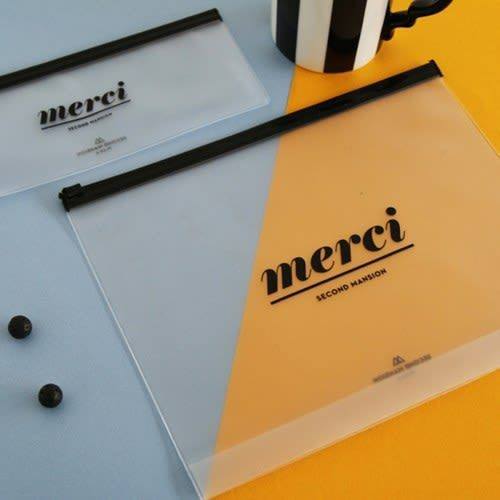
Four pouches laid side by side on a bench tell the whole story faster than a specification sheet does. One is a flat rectangle sealed on every edge, and that is the four side seal pouch. One has a narrow fin running down its back. One is sealed on three sides with a fold at the bottom. One stands up on its own because it has a base folded into it. They were made for different jobs, and the cheapest one is only cheapest against the job it was designed for.
Seal geometry is the least discussed part of a pouch specification and one of the most consequential. It decides how much film the pouch uses for a given volume, whether it stands on a shelf, where the weak point is, and which filling machines can run it. Choosing between the four types is mostly a matter of naming the job precisely and then matching, and most of the mistakes in this category come from naming the job loosely.
What a Four Side Seal Pouch Is Made Of
A four side seal pouch is made from two webs of film laid over each other and sealed along all four edges. There is no fold, no tube and no gusset. The result is a flat rectangle with a seal band running right around it, and two full faces available for printing.
That construction has two consequences worth stating early. The first is that both faces are clean, unbroken film, which makes it the strongest option where artwork has to run edge to edge on the front and the back. The second is that the pouch has no depth of its own. It holds what the two webs can be pushed apart to contain, and it lies flat whether it is empty or full.
Registration between the two webs is the main production risk. The front and back are separate pieces of printed film, and if they drift against each other the seal band moves and the artwork moves with it. On a pouch with a narrow seal band this is visible, and on a pouch where the artwork has to line up across the front and back it is a defect rather than a cosmetic issue.
Back Seal and Where It Wins on Speed
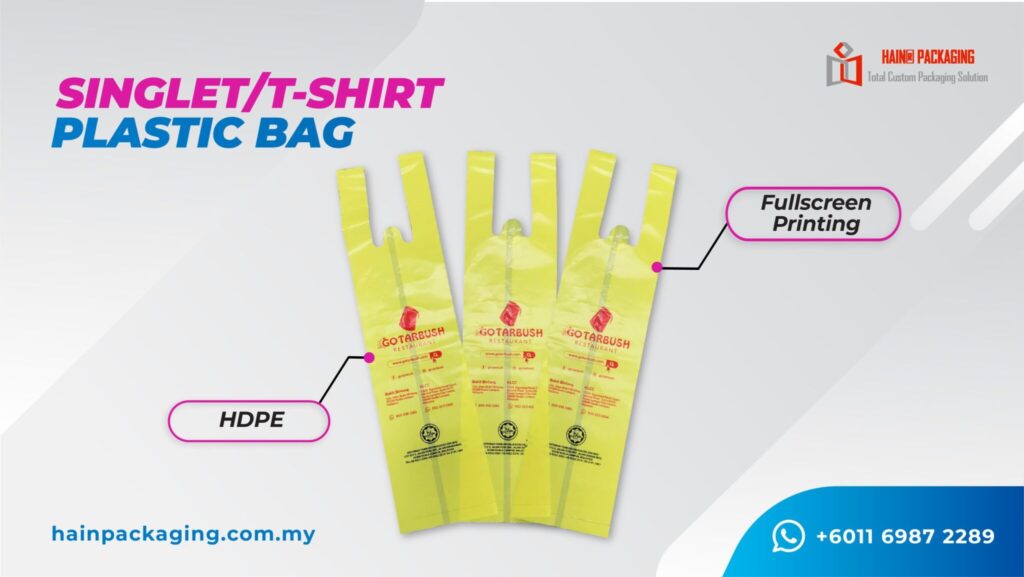
A back seal pouch, also called a fin seal or lap seal depending on how the two film edges meet, is formed from a single web wrapped into a tube. The tube is sealed down its length, then sealed across the top and bottom. Three seals instead of four, one web instead of two.
The saving is in material and speed. One web means one print repeat to register and half the printed area for the same pouch, and a vertical form fill seal machine forms, fills and seals the tube in a continuous motion. For a high volume product where the pouch will be filled and closed in one pass, this is the construction the line was built around.
The trade is in shape and presentation. The back fin is a ridge of sealed film running down the reverse of the pouch, and it prevents artwork from running cleanly across that face. The pouch is a pillow rather than a rectangle, so it does not sit flat on a shelf and it does not stack neatly. For a product sold on volume and price, none of that matters. For a product sold on appearance, it matters a great deal.
Three Side Seal and the Flat Sachet Case
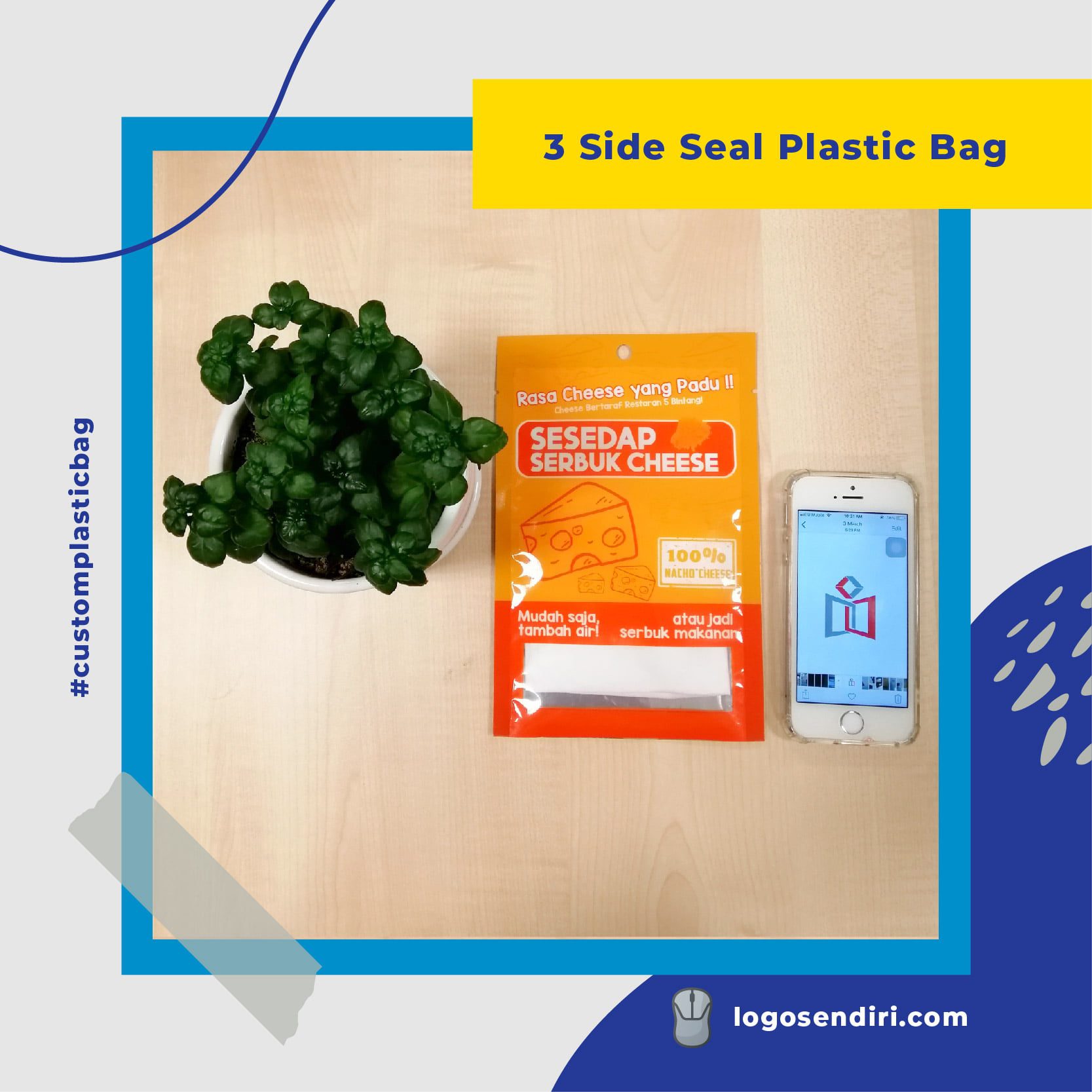
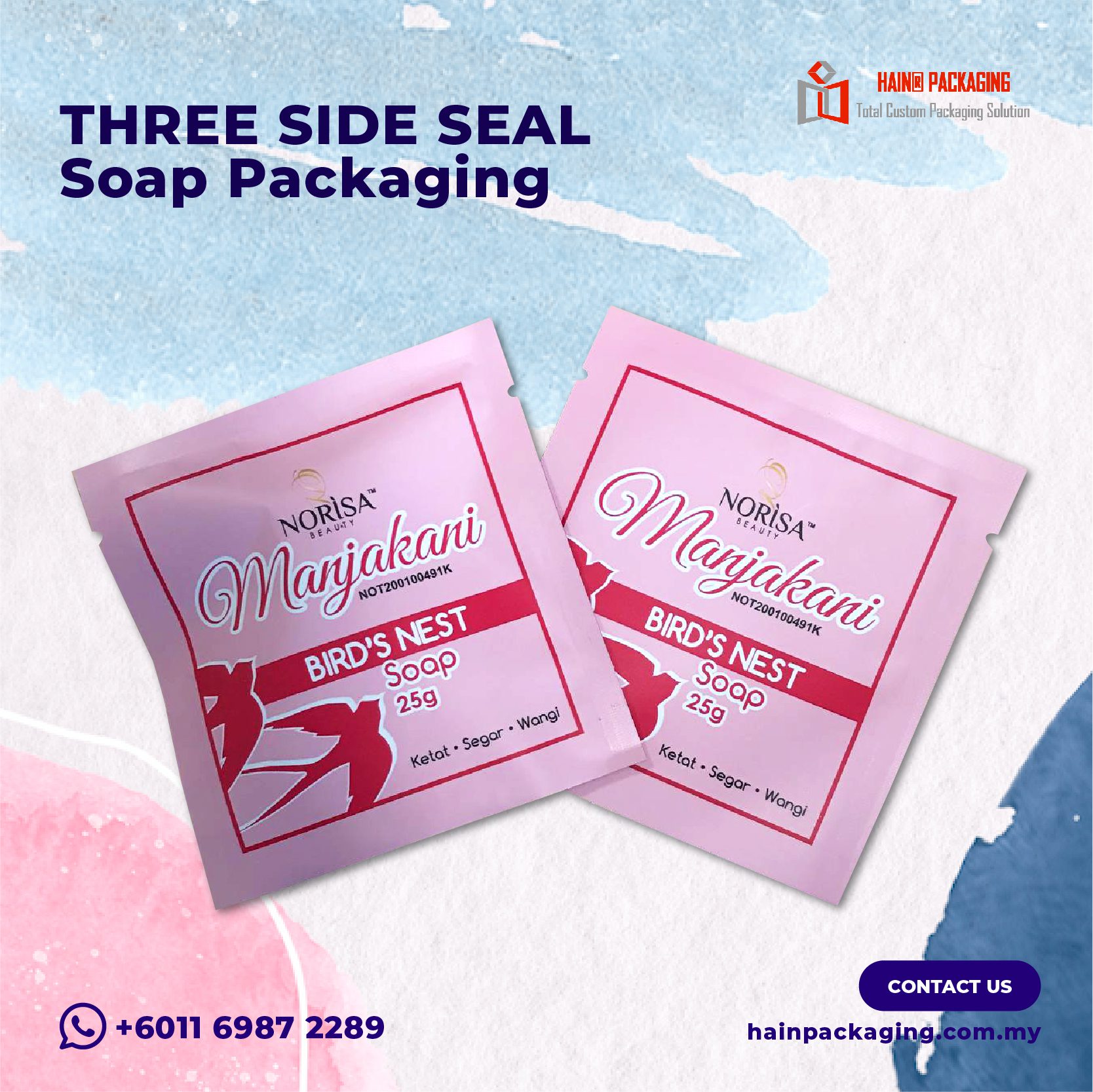
A three side seal pouch is the flat sachet. It can be made from one web folded at the bottom and sealed up two sides and across the top, or from two webs sealed on three edges. Either way the result is a flat, light, single portion pack with one fewer seal than the four side version.
It dominates the small end of the market, sauce sachets, shampoo sachets, sample portions, and anything where the pack is meant to be torn open and discarded. The pouch is cheap because it is small and simple, and because the fold replaces one seal entirely. Where the product is a liquid, a paste or a powder in a single use quantity, this is the default and the four side version would be a waste of film.
The limitation is size. A three side seal sachet scales poorly, because a large one becomes floppy and the fold at the bottom becomes a stress point. Past a certain fill volume, and certainly past the point where the pack needs to be resealed, the construction stops being the right answer, and the choice moves to one of the other three.
Stand Up Pouches and the Shelf Standing Trade
A stand up pouch adds a base. The bottom is gusseted and often shaped, so the filled pouch opens into a footprint and stands upright without support. Everything else about it is a consequence of that one addition.
Standing upright is a retail property, not a protective one. It buys shelf presence, it lets the front face carry a full panel of artwork at eye level, and it lets a consumer pick the pack up and put it back. It costs more film, more seals and more machine time, and it introduces a bottom seal that has to carry the weight of the contents when the pouch is lifted by its top.
Where the product never sees a shelf, the trade is poor value. A pouch shipped in a carton, a pouch used as an inner liner, and a pouch that is portioned out of a larger container all pay for a base they never use. The comparison between standing formats is set out in more detail in the spout and stand up pouch comparison, and the differences between a stand up pouch and a doypack construction are covered in the doypack comparison.
Where a Four Side Seal Pouch Has No Substitute
The four side construction earns its place in three situations. The first is a flat product that must stay flat, a document, a panel, a textile swatch, a medical device in a tray, where any curvature in the pack is a defect. The second is a product that needs two clean, fully printable faces with the artwork registered across them. The third is a pouch that has to be opened by peeling rather than tearing, because a four side seal gives a continuous band to peel from.
It is also the construction of choice where the seal itself is the specification. A four side seal pouch can be made peelable on one edge and permanent on the other three, which is how specimen and device packaging works. Achieving that on a formed tube is possible but less controllable, because the fin and the cross seals behave differently under the same heat and pressure.
What it is not good at is volume. For a given internal capacity the four side pouch uses more film than a back seal pouch, because it is sealed on four edges and has no fold contributing free height. On a high volume product that difference is a real cost, and paying it without a reason is the most common way this construction is misapplied.
Seal Width and Peel Behaviour Across Four Types
Seal width is specified in millimetres and behaves differently across the four constructions. A narrow seal looks better and uses less film. A wide seal is stronger and more forgiving of product trapped in the seal area, which is the usual cause of a leak on a liquid or powder fill.
The four types do not tolerate the same width. A back seal fin has two layers of film meeting, and it can be narrow and still hold. A four side seal has the same two layers on all four edges, so it is consistent, and a change in width changes all four edges together. A stand up pouch has a bottom seal where several layers meet at the corners, and that junction is where a narrow bottom seal fails.
Peel behaviour is a separate axis from strength. A permanent seal fails by tearing the film. A peelable seal fails by separating at the interface, which requires a coating or a specific film layer and is sensitive to sealing temperature. Asking for a peelable pouch without saying which edge and how much force is asking for a guess, and the guess will be checked by the customer rather than by the supplier.
Choosing a Four Side Seal Pouch Over the Other Three
The decision runs in a fixed order. Ask what has to happen to the pack after it is filled. If it must stand on a shelf, the base is decided and the choice is between stand up formats. If it must be filled on a vertical form fill seal line at high volume, the tube is decided and the choice is a back seal. If it is a single portion to be torn open, the fold is decided and the choice is a three side seal.
A four side seal pouch is the answer when none of those three applies, or when two clean printable faces and a peelable edge matter more than material efficiency. Stating that in the enquiry, rather than asking for a pouch and letting the supplier pick, is what gets the right construction quoted the first time.
Sachet scale work has its own considerations, covered in the custom sachet packaging guide. Broader background on the advantages of flexible formats is published by the Flexible Packaging Association at flexpack.org.

Four seal types, four jobs, and a four side seal pouch is the right answer only where a flat rectangle, two clean printable faces or a peelable edge is what the product needs. Say what the pack must do after filling and the choice mostly settles itself. Schedule, samples and carriage are worth confirming with the sales team, because each turns on construction and order size.