
Singlet Plastic Bags Wholesale Who Bears the Cost
October 18, 2026
Clear Handle Plastic Bags at Receiving, Shelf, Return
October 18, 2026
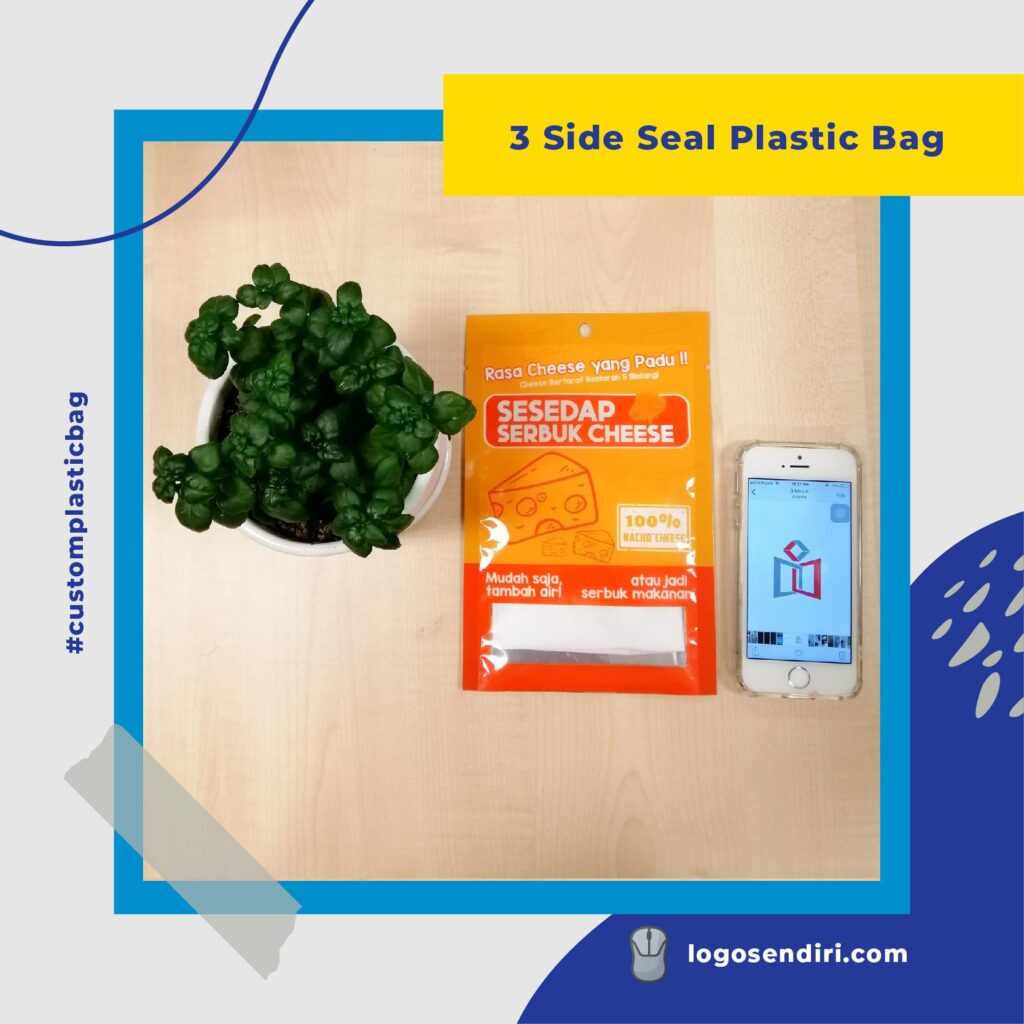
The sample arrives flat, and flat is the whole problem. On the bench it is a rectangle of clear film, 320 mm across and 180 mm tall, with a folded panel at the bottom that opens into a base when you push your thumbs into it. Pushed open and stood up, it holds a shape and sits square. Laid down again, it collapses back into a rectangle, and the number you read off it in that state is not the number you actually need from a bottom gusset bag.
Most sizing errors on a bottom gusset bag begin at exactly that moment. The bag gets measured in the condition it arrives in, and the measurement is then used as if the bag were already standing open.

What a Bottom Gusset Bag Has to Hold
The bottom gusset exists to turn a flat tube into something with a footprint. Two faces, one folded panel at the base, and a rectangle when it is filled. It is the construction behind folded garment packs, bakery loaves, bagged produce and boxed gift sets, anything that has to stand up on a shelf instead of lying in a heap.
Three numbers describe it. Lay-flat width, written F. Gusset depth, written G. Overall height, written H. The front face width, W, is not one of the three, and that omission is where the trouble starts, because W equals F minus G.
The right way to size the bag is to start from the product block and work backwards. Start from the bag and you will almost always read the wrong dimension first.
Start From the Product Stack Not the Bag
Take a concrete block. Four folded tea towels, stacked and banded, measuring 150 by 150 by 110 mm, weighing 480 g. The derivation runs in three short steps.
- Base clearance: 150 plus 10 mm of ease on each side gives a base of 160 by 160 mm, so W is 160 and G is 160.
- Lay-flat width: F equals W plus G, so F is 320 mm.
- Height: 110 mm of product, plus 10 mm of headroom, plus 60 mm for a fold-over and a tin tie, gives H of 180 mm.
The specification that goes to the supplier is therefore 320 mm lay-flat by 180 mm, bottom gusset 160 mm, in the film you have chosen. Every one of those three figures comes from the product block, not from a bag someone else was using.
The relation W equals F minus G is load bearing. It is the only thing you need to remember from this section, and forgetting it is what produces the next section.
The Wrong Derivation That Doubles Your Bottom Gusset Bag
Here is the derivation as it is usually done, and it is worth following all the way through, because it looks completely reasonable until the last line.
A buyer reads 320 mm off the flat sample and treats it as the front face width. The base becomes 320 by 160. Height is 180 mm, minus 60 mm for the closure, leaving 120 mm of fill height. Capacity is 320 times 160 times 120, which is 6.14 litres.
Now the correct version. The front face is not the lay-flat width, it is the lay-flat width minus the gusset depth. W is 320 minus 160, which is 160 mm. The base is therefore 160 by 160. Fill height is the same 120 mm. Capacity is 160 times 160 times 120, which is 3.07 litres.
Six point one four is exactly twice three point zero seven. The doubling is not a coincidence and it is not a rounding artefact. It comes from counting the gusset depth twice, once as the depth of the base and once again inside the lay-flat width, which already contains it. On a square base the error is a clean factor of two. On a base that is wider than it is deep, the error is smaller but it is still there, and it is still in the direction of overestimating.
Where the Wrong Derivation Breaks and How to Correct It
The important thing about that wrong number is the direction it pushes you. It does not give you a bag that is too big. It gives you a bag that is too narrow.
Because you believe you have 6.14 litres for a block that needs about 2.5 litres, you conclude there is slack, and you trim the specification to save money. Drop F from 320 mm to 260 mm and the front face becomes 260 minus 160, which is 100 mm. A 150 mm block will not pass through a 100 mm opening, and the entire order has to be reworked. The saving you thought you found was the cost of the job.
The correction takes two minutes on a bench. Lay the empty bag flat and measure straight across. That is F. Open the gusset and measure the front face only. That is W. F must equal W plus G within about 3 mm. If it does not, either the gusset is not what the specification claims or the bag was made on a different former, and both are worth knowing before the run starts.
Then check the base seal, because on a bottom gusset bag the base carries everything. ASTM F88/F88M is the test method for seal strength of flexible barrier materials, and it is the right reference to cite when you ask a supplier for a figure. Ask for seal strength and seal width, not for film gauge, because a thick film behind a narrow seal still fails at the seal.

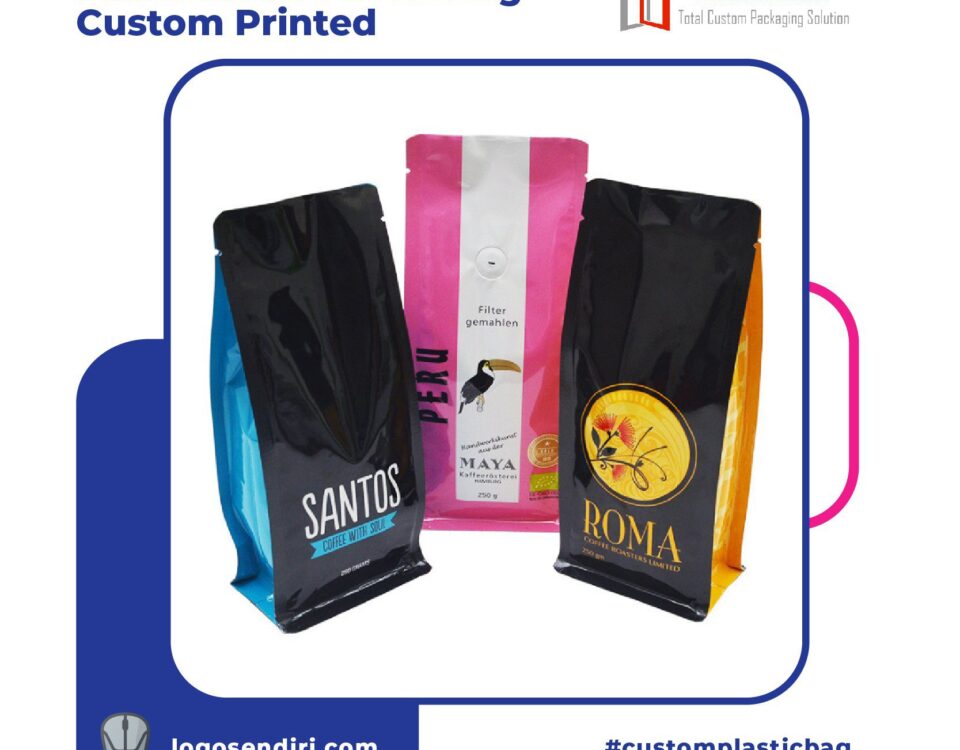
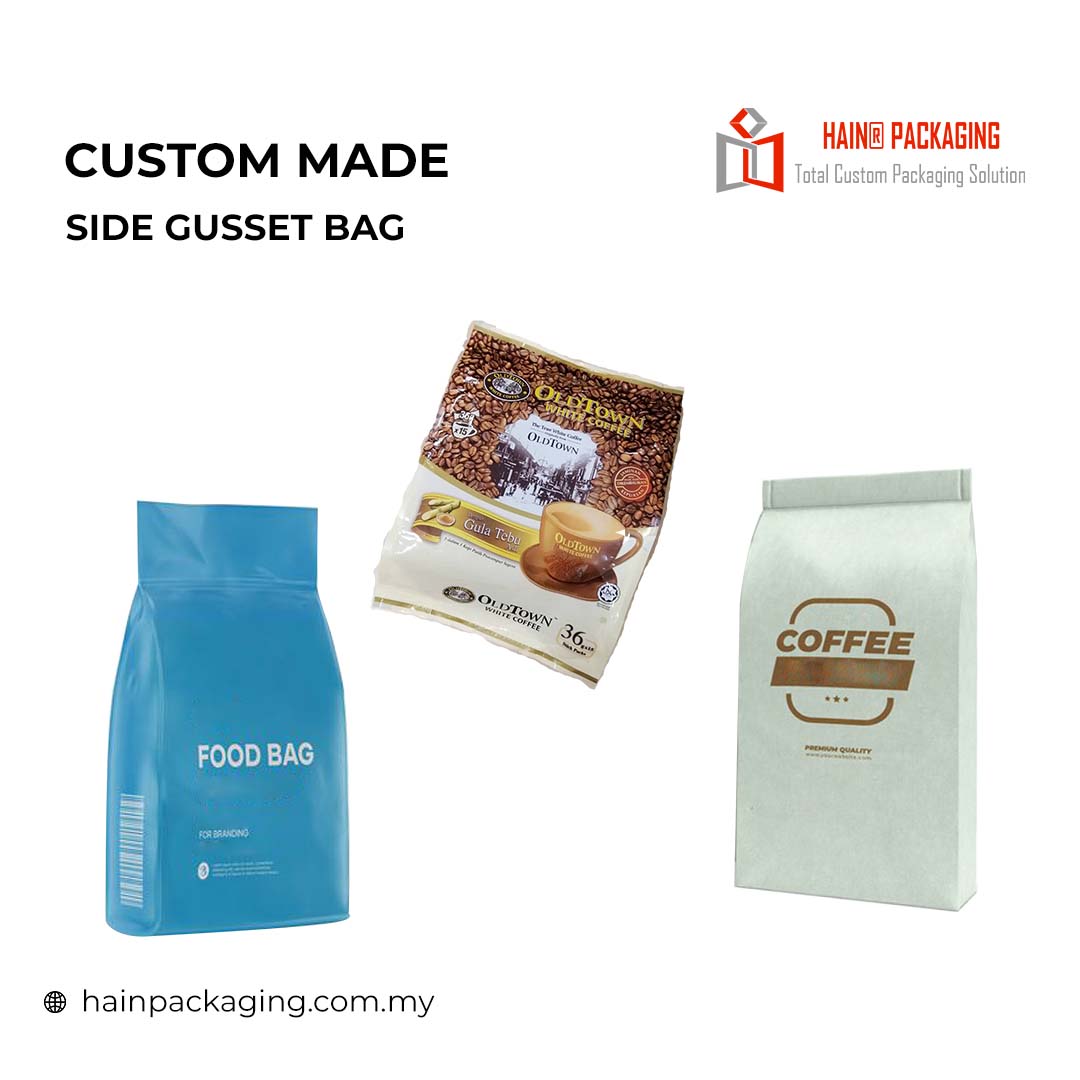
If you are weighing this construction against the alternatives, the side gusset against flat bottom comparison sets out where each one earns its cost, and the packaging materials guide covers what the film choice does to the fold at the base. Where the order needs a pouch with a fully flat, squared base rather than a gusset that is folded flat, the pouch packaging solutions range at hainpackaging.com.my shows how the same product block translates into a stand-up construction with the base sealed in.
Reversing the Remaining Parameters
Capacity is only the first parameter. Four more come out of the same product block.
- Film gauge from weight: 480 g is nothing, and 60 to 70 micron is generous. A 2.5 kg block needs 80 to 100 micron and a reinforced base seal.
- Seal width: 8 mm minimum on a base carrying 2 kg, and wider if the product has hard corners that will abrade the film from inside.
- Closure type, which consumes height differently. A fold-over takes about 40 mm, a tin tie about 25 mm, a plain heat seal about 10 mm.
- Print area, which is W by H and not F by H. Artwork drawn to the lay-flat width wraps around the corner, and roughly a third of it ends up on the gusset where nobody sees it.
The print point catches more buyers than the capacity point does. A logo sized to 320 mm of flat width looks correct on screen and lands half on the front face and half around the fold.

The Numbers to Send Before You Ask for a Bottom Gusset Bag Quote
Six lines are enough, and sending them in this order gets a usable quote back on the first pass instead of the third.
- Product block dimensions and weight, measured on the actual packed unit rather than on the drawing.
- Target base, width by depth, after ease.
- Target overall height, with the closure allowance named.
- Closure type, because it changes both height and the seal specification.
- Film and gauge preference, or the weight if you would rather leave the gauge to the converter.
- Print colour count per side and the quantity.
Sampling, tooling and the production slot vary with the structure, the closure type and the quantity, so confirm the timing with our sales team before you place the order. For a first run, the cost drivers are set out in the custom packaging cost page.
Under 1 kg, 70 micron and an 8 mm base seal is enough. Above that, go to 100 micron and ask for the seal strength figure. A bottom gusset bag fails at the base first.