What Decides a Bubble Poly Mailer Custom Order
October 13, 2026
Custom Shipping Bag From Measurement to Repeat Order
October 13, 2026
A poly mailer purchase order is a short document. Size, gauge, colour, quantity, print, closure. Six fields, one page, and almost every costly mistake in this category is made in one of those six fields before a single bag is made. The reason is that all six are cheap to write down and expensive to discover as wrong. A size that is 20 mm too small is invisible on a purchase order and obvious on the first hundred units, by which point the material has been cut. What follows is a checking sequence for a custom poly mailer malaysia order, arranged by how much it costs you to fix the answer at that point rather than by how important each item looks.
Every check below comes with what counts as a pass. A check without a pass criterion is not a check, it is an opinion, and opinions are what cause the argument after the delivery arrives.
Checks You Can Run Against the Quote Alone
These three need nothing but the numbers you already have. They are free to run and free to change, which is why they belong at the top of the sequence.
- Size against the folded product. Measure your bulkiest item folded the way it will actually be packed, allow 15 to 20 mm of slack across both flat faces and roughly 60 mm for the fold-over flap and its seal band. Pass: the bag closes with the flap lying flat and no tension pulling at the seal.
- Gauge against the contents. Soft contents tolerate a lighter film; anything with a corner does not. Pass: you cannot read the shape of the contents when the packed bag is held up to an office light.
- Volumetric weight against the freight rate. Multiply the packed length, width and height in centimetres and divide by your carrier’s volumetric divisor. Pass: the chargeable weight sits at or below what you budgeted per parcel, calculated on the packed size rather than the flat size.
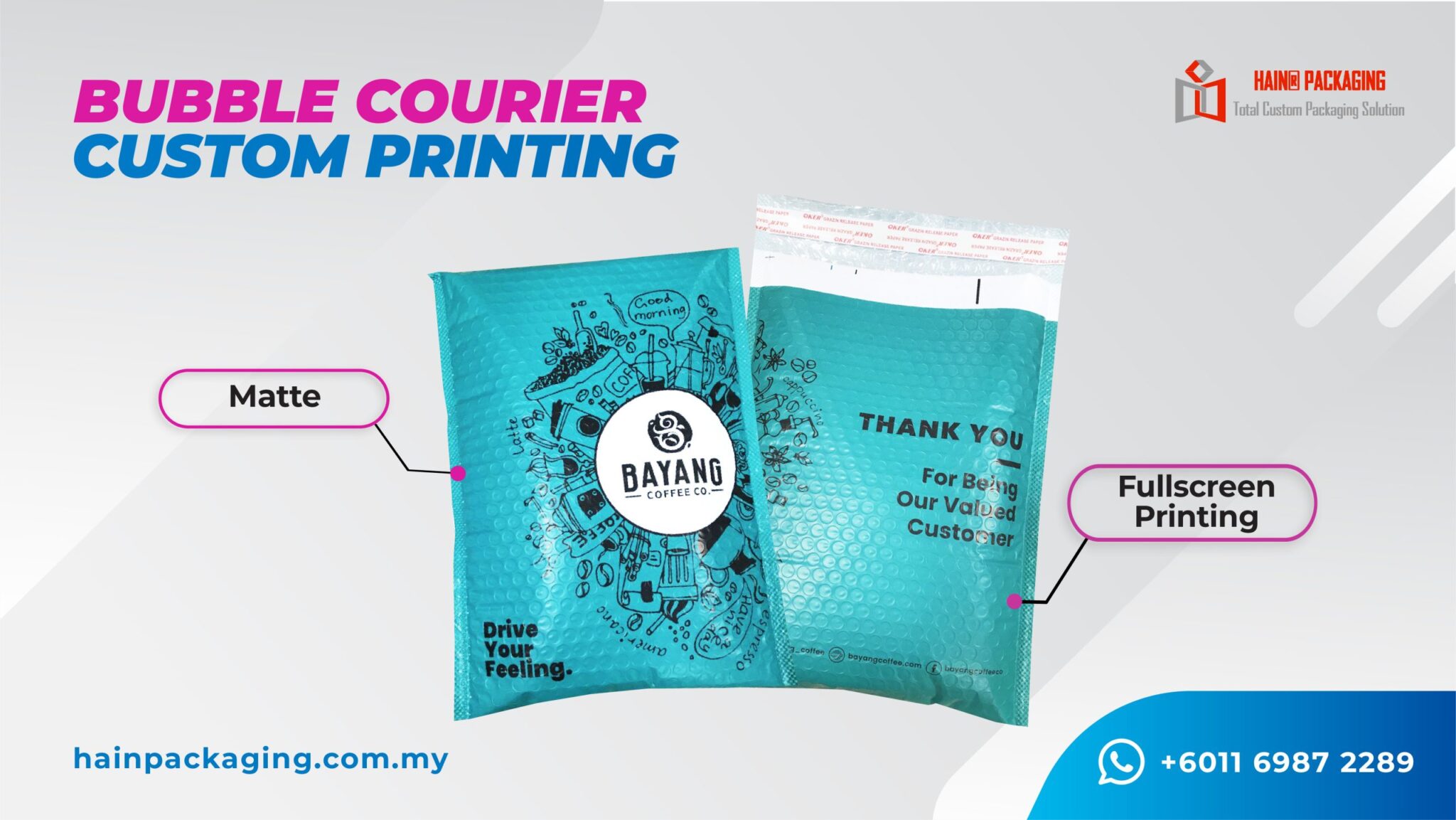
Checks That Need a Custom Poly Mailer Malaysia Sample in Hand
These move you from arithmetic to physical testing, and they are the point at which a change stops being free. Do all three on the same day, on a sample from the actual production film rather than a generic swatch, and write the results down.
- Seal integrity after a day. Load the bag with your heaviest product, close it the way your packer will close it, and leave it overnight at ambient temperature. Pass: the closure cannot be peeled open by hand the next morning, and there is no gap at either corner.
- Drop behaviour. Drop a packed sample flat onto concrete from about one metre, then open it. Pass: the bag stays shut. Where it opened is more informative than whether it opened — a gap at the seal points at the closure, a split in the body points at gauge.
- Print adhesion. Press packing tape onto the printed area and pull it off in one motion. Pass: no ink comes away on the tape. This is the check that catches a film that was never properly surface-treated, and it costs nothing to run at sample stage.
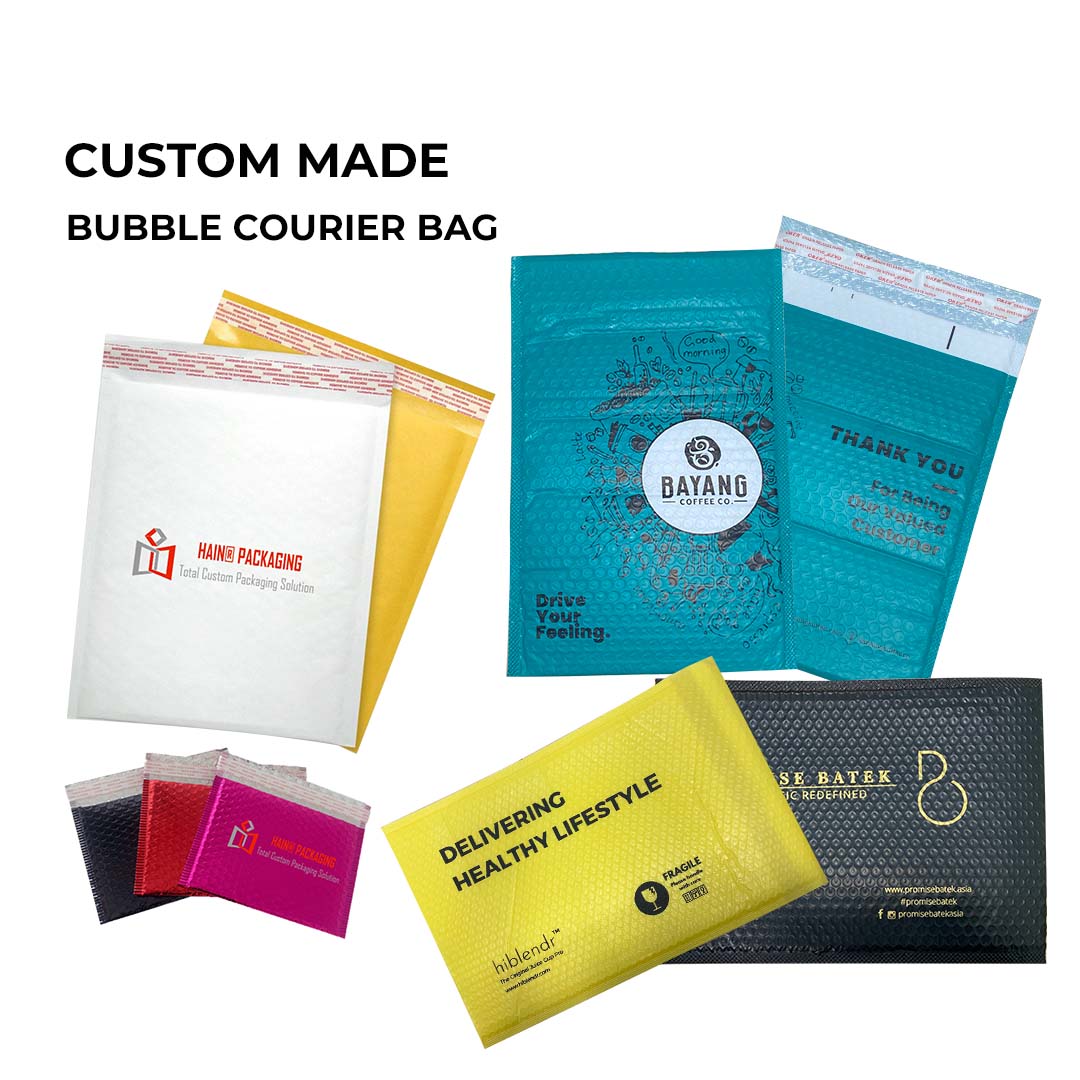
Checks That Need a Press Proof Before They Mean Anything
Two checks cannot be done on a sample bag, because they are about this artwork on this film rather than about the bag in general. Both are run on the proof, and both are where brand owners lose the most time, because colour is the item most likely to be approved by eye and rejected later.
- Colour under two lights. Look at the proof under office lighting and next to a window. Pass: the difference is acceptable to you in both, and you have signed off on the proof rather than on a screen rendering.
- Label window clearance. Stick a real 100 × 150 mm shipping label where your packer would put it. Pass: the label sits on clean film and does not cover any part of the mark or any text you need the customer to read.
Both of these are far cheaper to settle against a proof than against a delivered run, and both are the reason a proof exists. They also interact with decisions you may have already made elsewhere — a custom poly mailer bag ordered with a handle or a second closure, for instance, changes where the label can physically sit.
What a Failed Custom Poly Mailer Malaysia Check Costs at Each Stage
The sequence above is ordered the way it is because the price of being wrong rises sharply at each step. A size caught on the quote costs an email. The same size caught at proof stage costs a revised proof. Caught after the run, it costs the run. That is the whole argument for doing the cheap checks first and for refusing to approve a proof until the physical checks have been done on the sample.
One category of error does not follow that curve and deserves separate mention. Closure and adhesive problems often appear weeks after delivery rather than on day one, because they are caused by storage conditions rather than by manufacturing. Bags held in a hot, humid storeroom lose adhesive grab over time, and the loss shows up as closures that feel tacky and still fail. The check for that is a stock rotation habit rather than a test: buy in a quantity you will turn over within a few months, keep the cartons sealed, and keep them off the floor. Market data on how quickly e-commerce parcel volumes shift in this region, such as the Malaysia parcel volumes and revenue projections tracked in Statista’s Malaysia eCommerce market forecast, is a useful sanity check against ordering a year of stock to chase a unit price.
The practical shape of that curve is worth stating plainly. Changing a quoted size costs nothing but an email. Changing a size after the artwork has been laid out against it costs the layout work as well, because the mark has to be repositioned relative to the new fold line. Changing it after the plates or cylinders have been cut costs the tooling. And changing it after the run has been made costs the run, plus the weeks it takes to make another. Nothing in that list is a surprise, which is exactly why the cheap checks belong at the front and why an enquiry that arrives with the numbers already measured gets a firmer answer than one that does not.
Two Checks People Skip Because They Feel Obvious
Carton count and closure quantity are the two most common sources of a short delivery, and both are treated as trivial right up until they are not. Count the bags in the first carton you open and compare it to what the paperwork says. Then check that the number of usable closures matches the number of bags. A packer who runs out of closures halfway through an evening shift does not stop packing; they improvise, and the improvisation is what the customer receives.
The other item worth settling before the run is the size ladder itself. If your catalogue spans a small accessory and a bulky hoodie, two sizes will beat one large one on freight alone, because every small parcel shipped in a large bag pays for the air around it. Formats such as a poly mailer with handle also change how a customer carries the parcel, which matters more for retail handover than for courier delivery.
There is one more skip worth naming, because it produces the most awkward conversation. Nobody checks what happens when the order is reordered. The first run goes to proof, gets approved, and lands correctly. Six months later the same buyer emails asking for the same bag again, and the artwork file has been superseded, the film lot has changed, or the closure supplier has moved. The fix is procedural: keep the approved proof, keep the specification as written rather than as remembered, and re-run the print adhesion check on the first carton of every repeat run. It takes ten minutes and it is the difference between a reorder that matches and a reorder that argues.
Work through the sequence in this order and send the results with your enquiry — it shortens the quotation round considerably. The courier bag manufacturer Malaysia page lists the formats we run and the quantities each one suits. Sampling and scheduling follow the specification, print method and order quantity, and sales confirm the position on each order.
Six fields settle a custom poly mailer malaysia order — folded dimensions of the bulkiest item, gauge against the sharpest corner, packed volumetric weight, closure type, artwork colour count, monthly run quantity. Send those six and the quote stops being indicative.