Why Does Jam Packaging Malaysia Leak at the Closure When the Seal Holds?
October 11, 2026
For Cartons That Arrive Half Empty, Void Fill Packaging Is the Missing Spec
October 11, 2026
A roaster in Ipoh sent us two photographs last month. One was a side gusset pouch standing upright in a wooden display crate at a weekend market. The other was the same coffee in a flat bottom pouch, photographed on a supermarket shelf. He wanted to know which one sells more. The honest answer is that neither one sells more, because the two formats are solving different problems, and a market crate and a supermarket shelf are not the same problem.
That is the boundary this comparison works inside. A side gusset pouch is a laminated pouch with two folded side panels, sealed along the back or on a fin, and it stands because the gusset opens into a rectangular footprint. It is not a poly bag, and nothing on this page applies to the gusseted poly bags used for bakery or produce. Those are a single layer of polyethylene with a bottom fold, they do not hold a print register the same way, and they are bought by weight rather than by artwork. If that is what you are sourcing, this is the wrong page.
The two formats also get confused with each other in quotation requests more often than anything else we handle, usually because both are described as a standing pouch. They are not interchangeable in cost, in print area or in how they behave on a pallet, and the differences show up at the second order rather than the first. That is the part worth reading carefully if you are still deciding.
Matte or gloss, laminate or kraft: the finish has to survive your handling, not the showroom. Send us what you’re packing now and we’ll say which one holds.
We work to approximately 10–12 weeks for standard production and delivery, counted from deposit and artwork approval. That window is broadly the same for both formats, because the printing and lamination stages dominate it and the pouch shape is decided at the converting stage afterwards. Where the two formats actually diverge is everything else: how they stand, how they fill, how they palletise, and how expensive it is to change your mind later.
What a Side Gusset Pouch Is Built to Do
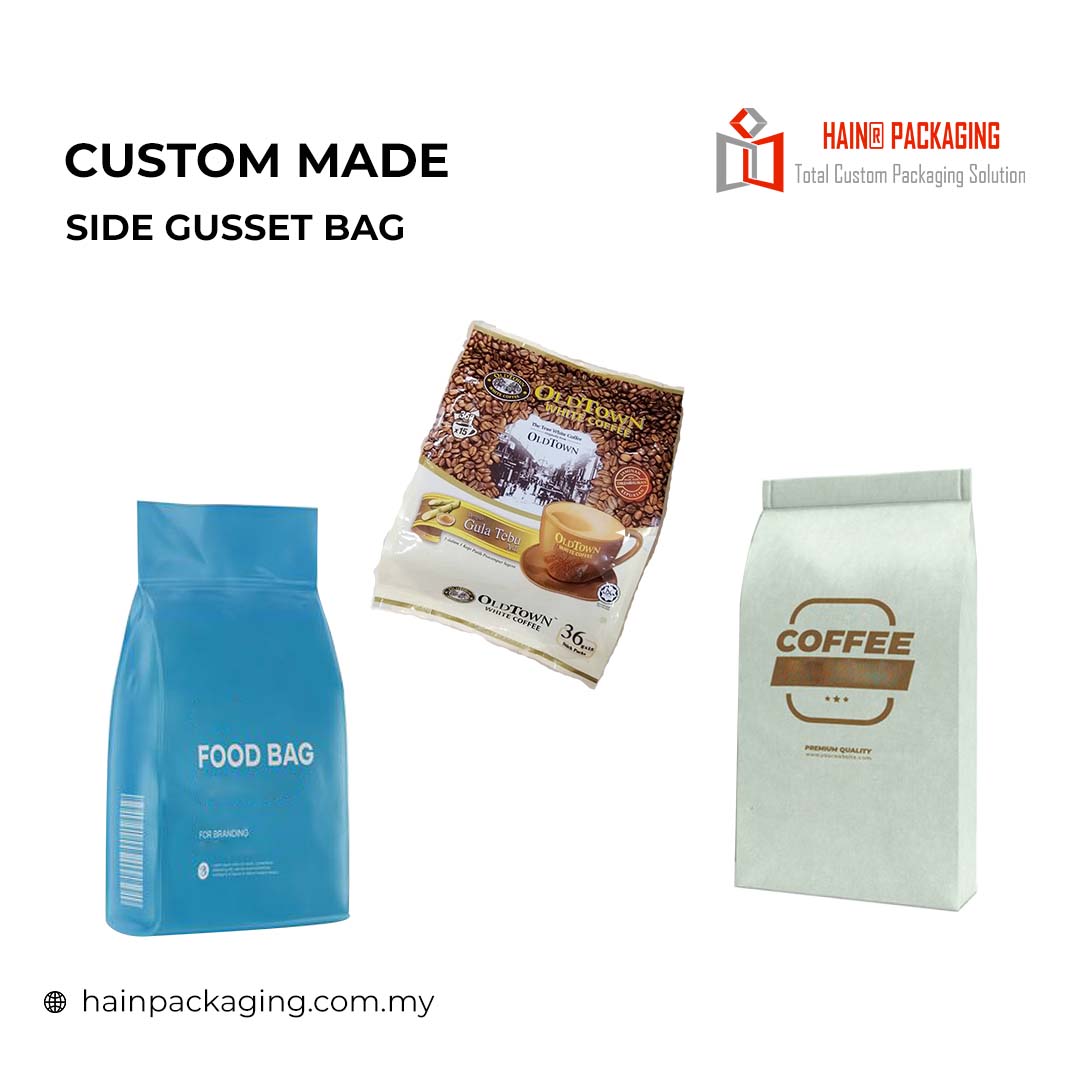
The format exists because someone needed a pack that could hold volume without a wide front panel. Fold the two side panels in and the pouch ships flat. Open them out and the pouch stands on a narrow rectangular base. The front panel stays tall and narrow the whole time, which is exactly what you want when the brand block is a vertical logo or a long product name.
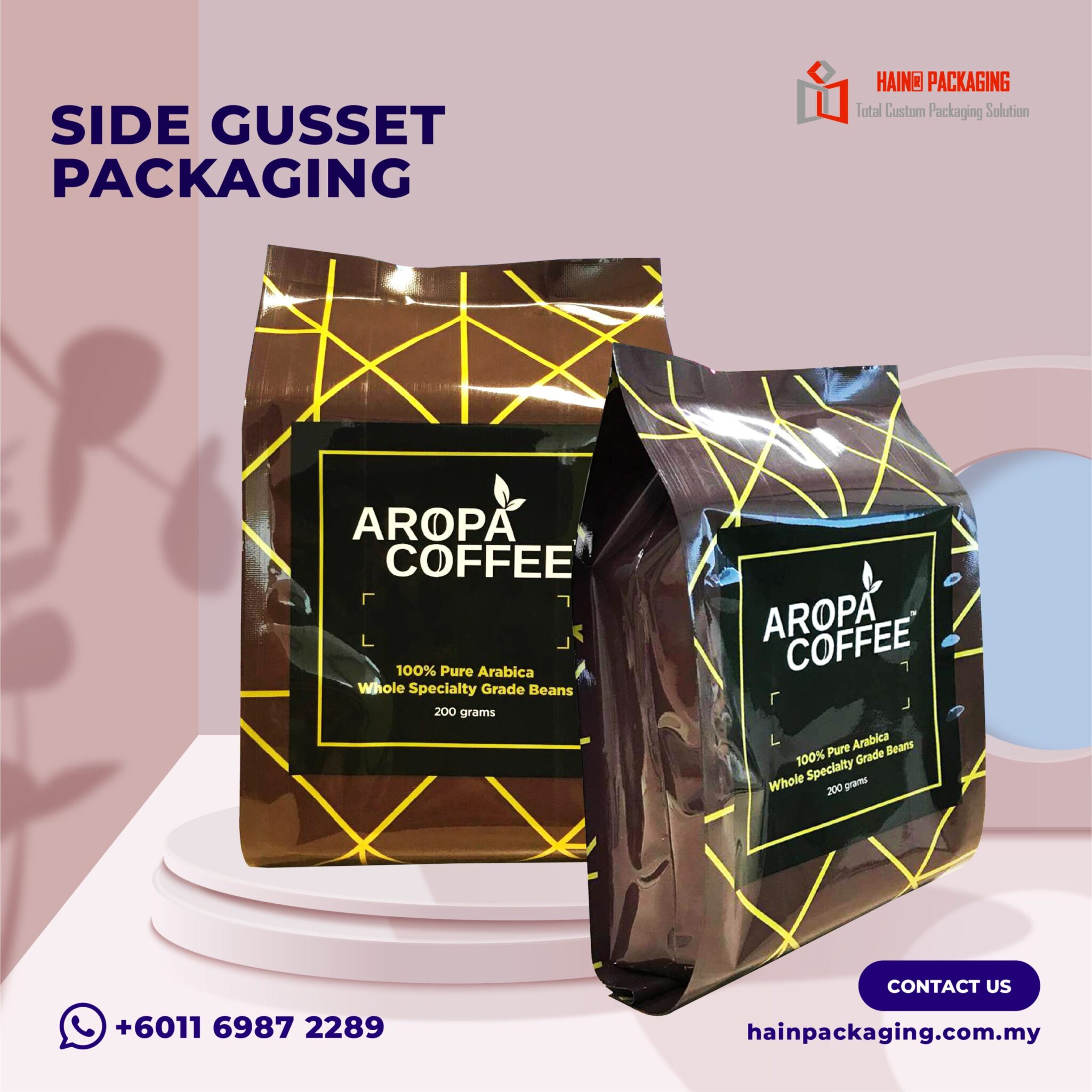
Coffee is the classic case, and for a reason that has nothing to do with tradition. Roasted beans are bulky for their weight, so a side gusset pouch holds a two hundred and fifty gram fill without looking half empty, and the narrow front leaves room for a degassing valve without crowding the brand block. The same logic applies to rice, loose leaf tea, pet treats, detergent powder and any other product where volume matters more than the front face.
The trade is real, though. A gusseted pouch of this type gives you less printable area on the front than a flat bottom pouch of the same volume, and the corners of the base are folded rather than sealed square, so the standing base is less rigid. If your design needs a large horizontal image across the front, you will fight the format from the first mock-up onwards, and no amount of artwork skill will win that fight.
There is a cost reason the format persists as well, and it is worth stating plainly because it is the reason many businesses stay with it long after the shelf argument would push them elsewhere. Converting a flat pouch costs less per unit than converting one with a formed base, and on a repeat order at moderate volume that difference is larger than most of the other considerations on this page put together. It is not a reason to choose the wrong pack, but it is a reason to take the decision seriously rather than assuming the premium format must be better.
Closures and add-ons fit this shape better than most buyers expect. A tin tie folds across the top crimp without changing the panel layout at all. A degassing valve sits on the flat front without fighting the gusset. A press-to-close zipper runs below the crimp and leaves the print area untouched. All three are easier and cheaper to add to this format than to a flat bottom pouch, because there is no formed base to work around, and that is a genuine advantage if you expect the pack design to keep evolving.
There is also a variant worth knowing about, because it appears in quotations under two different names. A quad seal bag has four sealed corners instead of two folded ones, which squares up the base and adds a fourth printable panel while keeping the narrow front. It costs more to convert and it behaves much closer to a flat bottom pouch on the shelf. If you like the look of the gusseted format but need the base to hold its shape under a heavy fill, the quad seal version is the usual answer.
Side Gusset Pouch vs Flat Bottom on the Shelf
Put both packs on a shelf at eye level and the difference is immediate. The flat bottom pouch sits on a wide, sealed rectangular base with four printed panels and a flat top that can carry a label. The side gusset pouch stands on a narrower base with two soft folded corners, and the top is usually crimped, folded over, or closed with a tin tie. The flat bottom pouch looks like a box. The gusseted pouch looks like a bag.
On a crowded retail shelf, looking like a box is an advantage, because the flat bottom pouch presents four vertical faces to the shopper and stays square even when the shelf is overfilled and the packs are pushed together. That is why premium coffee, pet food and most of the snack formats that want a strong front-of-pack image have moved toward flat bottom. Our doypack and stand up pouch comparison covers the softer end of the same question, where the base is round rather than folded.
Information space is the other half of the shelf question, and it is where narrow formats get caught out. Ingredient lists, nutrition panels, barcodes and any statutory marking all have to sit somewhere legible, and a taller narrower front panel gives you fewer layout options for a block of small text. If your product carries a long mandatory declaration, sketch it onto the panel before you commit, because a declaration squeezed onto a folded side panel is unreadable in practice and unusable in a retail audit.
On a wooden crate, in a hamper, in a subscription box or on a market table, looking like a bag is an advantage, because the pack is seen from above and from the side rather than face on, and the softer silhouette reads as craft rather than as commodity. This is where the gusseted format wins, and it wins by a wide margin.
Photography changes the answer too, which matters more than it used to. If your product is sold online and the hero image is shot from directly in front, a narrow tall panel fills the frame better than a wide squat one, and the folded side panels give the pack a visible depth that renders well. If the hero image is shot at a slight angle on a shelf, the four faces of a flat bottom pouch do more of the work. Decide where the photograph will be taken before you decide the shape.
Fill, Seal and Pallet Efficiency: Where the Two Diverge
The shelf question gets all the attention and the filling line question decides the margin. A side gusset pouch arrives flat, opens with a simple jaw or an air blast, and closes on a single top crimp. It is fast, forgiving, and it tolerates a wider range of fill weights than any other standing format. The machinery is cheaper, the changeover between sizes is shorter, and the operator skill needed to run it well is lower. For a business packing by hand or on a semi automatic machine, that tolerance is worth more than print area.
A flat bottom pouch needs the base formed before it will stand, which usually means a more capable machine and a slower cycle if you are filling by hand. In exchange you get a pack that stacks properly. This is the part buyers underestimate. A pallet of flat bottom pouches cubes out neatly and arrives with fewer scuffed corners. A pallet of gusseted pouches has soft corners at the base that will curl if the stretch wrap is tight, and the packs lean rather than sit. If your distribution chain involves a cross-dock and two transfers, that leaning matters more than the print area does.
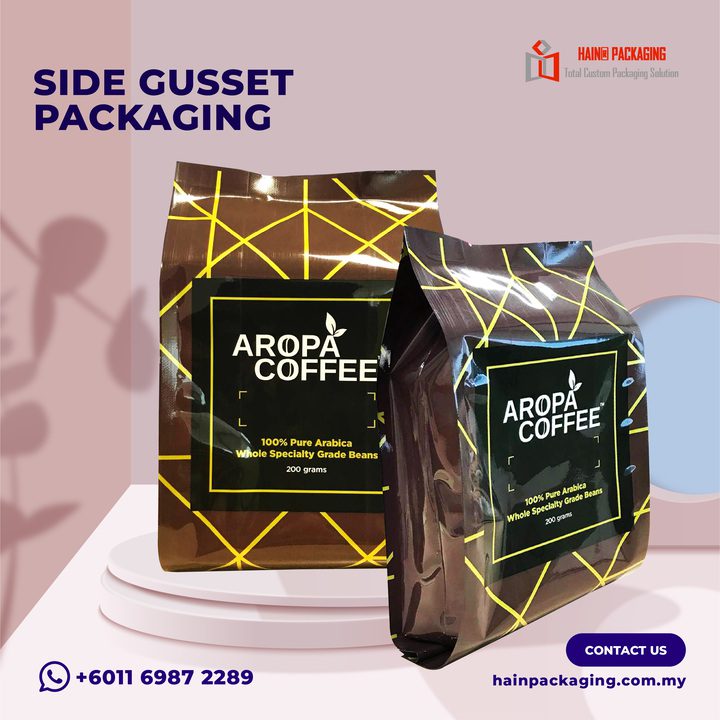
Sealing behaviour differs as well. The gusseted format carries a fin or lap seal running the length of the pack, and that seal is the first place a leak will show. The flat bottom pouch distributes the same load across four base seals, which is more work to get right but more forgiving once it is right. If you are packing anything with free oil or fine powder, ask specifically about the seal geometry rather than assuming the format will handle it.
Waste on the line is the mirror image of that, and it favours the same format. A pouch that opens reliably wastes less product at the filling nozzle, and a single top crimp is easier to inspect visually than four base seals. Over a year of production those two effects are worth more than the difference in material cost between the formats, and they are invisible in a unit price comparison because they never appear on an invoice.
Inbound freight favours the simpler format as well, and it is a line item that is easy to forget. Empty flat pouches of either type ship nested, but a formed flat bottom pouch occupies more volume per thousand units than a folded one, so the same quantity costs more to bring in and takes more warehouse space to hold. If you are importing or holding stock across a long lead time, that difference is real money, and it lands on every order rather than once.
One more line-level point that rarely makes it into a quotation request. Filled gusseted pouches do not stand in a row as neatly as filled flat bottom pouches, so a case packer or a display tray has to be designed around the shape rather than around the fill weight. If you are planning to ship shelf-ready trays, say so early, because the tray is a separate tooling cost and the two formats need different trays.
Change Cost: Artwork, Plates and Minimum Runs
Both formats are printed the same way, so the plate cost is driven by colour count and by how many versions you need rather than by the pouch shape. Where they differ is in what happens when you want to change something. A side gusset pouch is a simpler converting job, so a size change is cheaper and a small rerun is easier to slot into a schedule. A flat bottom pouch carries more tooling, so a change of width or base depth is a bigger conversation, and the minimum quantity that makes economic sense is usually higher.
That matters most at the point where most brands actually are: three variants, a seasonal design, and no certainty about which one will sell. If you expect to reprint in small batches and adjust as you learn, the simpler format gives you more room to be wrong cheaply. If you know the design is locked for two years and you are ordering in volume, the extra print area and the cleaner pallet of the flat bottom pouch will pay for itself.
Sampling is worth planning for at the same time. A physical sample of the actual pouch, printed and converted, tells you more in ten minutes than a digital mock-up tells you in a week, because the things that go wrong are physical: the base does not open cleanly, the gusset creases where you did not expect it, the crimp sits proud of the panel. Ask for one before the run, and ask for it in the final material rather than in a substitute. Sampling is scheduled case by case, so it is confirmed with the quote rather than published as a fixed figure.
One further note on the material side. Both formats can be built from the same laminate, and the barrier question is separate from the shape question. If you need a foil structure for aroma or light protection, our aluminium foil gusset packaging page covers what the foil layer does and what it costs you in recyclability. Choosing a shape and choosing a barrier are two decisions, and conflating them is how buyers end up paying for performance they do not need.
Finally, a word on what to do when the answer is genuinely balanced, which happens more often than any comparison table suggests. If two constraints genuinely pull in opposite directions and neither dominates, run both. Launch the gusseted format through the channel where it wins and the flat bottom format through the channel where it wins, and let six months of sell-through settle it. Two small runs cost more per unit than one large one, and they buy the one thing a specification sheet cannot, which is evidence from your own customers rather than from a supplier’s opinion.
Dimensional and material standards for packaging are published by the Department of Standards Malaysia at jsm.gov.my, and it is worth reading the relevant standard before you commit to a base dimension, because a size that is not a standard size will cost you more every single time you reorder.
Checklist: Choosing a Side Gusset Pouch or a Flat Bottom Pouch
| Your constraint | Choose | Why |
|---|---|---|
| Seen from above, in a crate or hamper | Side gusset pouch | Softer silhouette reads as craft, narrow front suits a vertical logo |
| Eye level supermarket shelf, four faces needed | Flat bottom pouch | Four printed panels and a square base stay upright when packed tight |
| Hand filling or semi automatic line | Side gusset pouch | Opens easily, single top crimp, shorter changeover |
| Two transfers and a cross-dock | Flat bottom pouch | Stacks square, fewer scuffed corners on the pallet |
| Reprinting in small batches while you test | Side gusset pouch | Lower tooling exposure, cheaper to change size |
| Locked design, volume order, premium positioning | Flat bottom pouch | Print area and shelf presence pay back the higher minimum |
| Large horizontal image across the front | Flat bottom pouch | The narrow front of a gusseted pouch will not carry it |
| Volumetric product that looks underfilled in a box shape | Side gusset pouch | The gusset opens to the fill and the pack looks full |
Read that table as conditions rather than as a verdict. If the first constraint on your list is the shelf, a side gusset pouch is the wrong answer and no amount of material upgrade will fix it. If the first constraint is the filling line or the reprint economics, the flat bottom pouch will cost you more than it returns. The format follows the constraint rather than the other way round, and the whole range sits on the products page if you want to see the dimensions side by side.
Where a side gusset pouch wins, it wins on the table rather than the shelf, on the line rather than the shopper, and on the second order rather than the first. That is the honest boundary, and it is the same one we would give you if you called.