Why a Face Mask & Skincare Pouch Dries Out, and What Fixes It
October 7, 2026
How Seed & Veterinary Packaging Holds Up From Filling Line to Final Dose
October 7, 2026Two bags sit side by side on the same pallet. One is a woven sack with an inner liner, the other a multi-layer barrier laminate, and both hold the same twenty-five kilograms of pelleted feed from the same batch. Six weeks later the woven sack has caked at the shoulder while the laminate still pours. Nothing about the product, the mill or the warehouse differed; only the pack did. Choosing animal feed & fish feed packaging is therefore less an exercise in design than in comparison, because there are only three or four realistic constructions and each wins on a different row of the scorecard. This article is built as a comparison matrix. Each construction is scored against moisture, oxygen, strength, closure behaviour, print durability and cost, so that the trade-off is visible before an order is placed rather than after a pallet is written off.
Key Takeaways
- Heavy-gauge polyethylene wins on cost and strength and loses on moisture and oxygen barrier.
- Laminated woven wins on drop and stack performance at larger sizes, with moderate barrier.
- Barrier laminate wins on moisture and oxygen and costs the most per bag.
- Foil-containing structures suit high-fat and marine-ingredient feed where rancidity drives rejection.
- Score the options against your own storage interval, not against a generic data sheet.
Table of Contents
- Before comparing: describe the product
- The four constructions compared
- Comparison row 1 — moisture ingress
- Comparison row 2 — oxygen and rancidity
- Comparison row 3 — drop and stack strength
- Comparison row 4 — closure and reuse
- Comparison row 5 — print and traceability
- Aquaculture feed: salt, sun and buoyancy
- Warehouse, stacking and transport realities
- Sustainability and material choices
- Order planning and cost per tonne
- Sample-to-order checklist
The Four Constructions Compared
Everything below hangs off this table. It is the shortlist most feed producers in Malaysia actually choose between, scored on a simple three-level scale.
| Construction | Moisture barrier | Oxygen barrier | Drop / stack | Relative cost |
|---|---|---|---|---|
| Heavy-gauge PE film | Low | Low | Medium | Lowest |
| Laminated woven sack | Medium | Low | Highest | Medium |
| Multi-layer barrier laminate | High | Medium–high | Medium | Higher |
| Foil-containing laminate | Highest | Highest | Low–medium | Highest |
Why Animal Feed & Fish Feed Packaging Starts With Storage
A feed bag’s job is to hold a product’s quality constant between the mill and the animal. That interval can be weeks at a distributor and months on a farm. During it, the pack is exposed to humidity, temperature swings, stacking pressure, handling damage and pests. Every one of those is a route to loss, and the pack is the only barrier standing in the way.
The consequence for specification is that the questions come in a particular order. Not “what does the bag look like” but “how much water can the product tolerate before it cakes”, “how much oxygen before the fat oxidises”, “how many drops from what height” and “how long will it sit in a stack”. Those answers set the structure; print and finish come afterwards.
It is also worth recognising that feed is low margin per kilogram. A structure that costs slightly more but prevents a single spoiled pallet is normally the cheaper choice overall, because the product inside is worth far more than the difference in pack cost.
Before Comparing: Describe the Product
Feed comes in several physical forms, and each stresses a pack differently. Pellets are hard, angular and abrasive, so they abrade film from the inside and can puncture thin structures at the corners. Mash and meal are fine and dusty, which creates a sealing problem: dust in the seal area prevents a clean fusion and produces slow leaks. Extruded feed is light and bulky, so the pack has to be large for a given weight, which changes the strength requirement. Powdered additives and premixes are the most demanding of all, because they are fine, often hygroscopic and sometimes high in fat.
Write the product description down before talking to a converter: bulk density, particle size distribution, fat content, moisture content at packing, and whether the product is hot or cool when filled. Hot filling is common at mills and can condense moisture inside a pack that was sealed at the wrong moment, so the fill temperature belongs in the specification.
Dust deserves a specific decision. If the product generates fines, ask about seal jaw design, dust extraction at the filler and a seal layer tolerant of contamination. This single issue causes a large share of the seal failures reported in feed packaging.
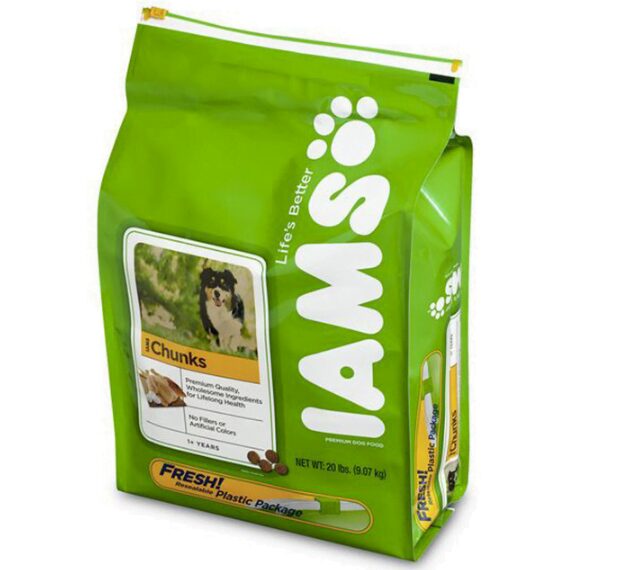
Comparison Row 1 — Moisture Ingress
Animal feed & fish feed packaging is judged on moisture before it is judged on anything else, because caking and mould both begin with water ingress.
Most feed failures trace back to water. Pellets that absorb moisture soften and cake. Mould growth follows, and with it the risk of mycotoxin contamination, which turns a packaging problem into an animal health problem. Even below the mould threshold, moisture drives nutrient loss and changes the way feed flows through equipment.
The pack defends against water in two ways: by slowing vapour transmission through the film, and by keeping the closure sealed. Both matter, and they are frequently specified inconsistently, with a good barrier film combined with a closure that lets humid air in every time the bag is opened on a farm.
| Moisture route | What it looks like | Specification response |
|---|---|---|
| Transmission through film | Gradual caking across the whole bag | Higher barrier laminate, thicker seal layer |
| Closure leakage | Caking near the top of the bag | Resealable closure or properly folded and sewn top |
| Condensation after hot filling | Wet patches inside, local mould | Cool before filling, control headspace |
| Pallet-level humidity | Damage concentrated on outer bags | Stretch wrap, pallet layout, warehouse ventilation |
| Puncture or abrasion | Localised spoilage | Stronger film, reinforced corners |
Water vapour and oxygen behaviour over a long interval is set out in the long shelf life and barrier guide. Ask for transmission figures for the exact structure, and run a simple storage trial: weigh filled bags, store them in a humid environment, and re-weigh at intervals. The numbers make the choice defensible and catch problems before a container ships.
Comparison Row 2 — Oxygen and Rancidity
Animal feed & fish feed packaging carries fat, and fat oxidises. Modern feed rations often carry added oils, and aquaculture feed in particular can be high in lipid. Fat oxidises, and oxidation produces off-odours that animals detect: fish and shrimp may reject feed that has gone rancid even when it is technically safe. That makes oxygen barrier an economic specification, not a cosmetic one.
Fish meal and other marine ingredients raise the same issue more sharply, because they contain highly unsaturated lipids. Where a formulation includes marine ingredients at meaningful levels, an oxygen barrier layer is worth specifying, and a metalised or foil-containing structure is often justified.
Odour retention matters in the other direction too. Fatty feed smells, and smell travels through film. In a container or a shared warehouse, a strongly aromatic feed can taint neighbouring goods. Include odour containment in the trial, not only oxygen figures.
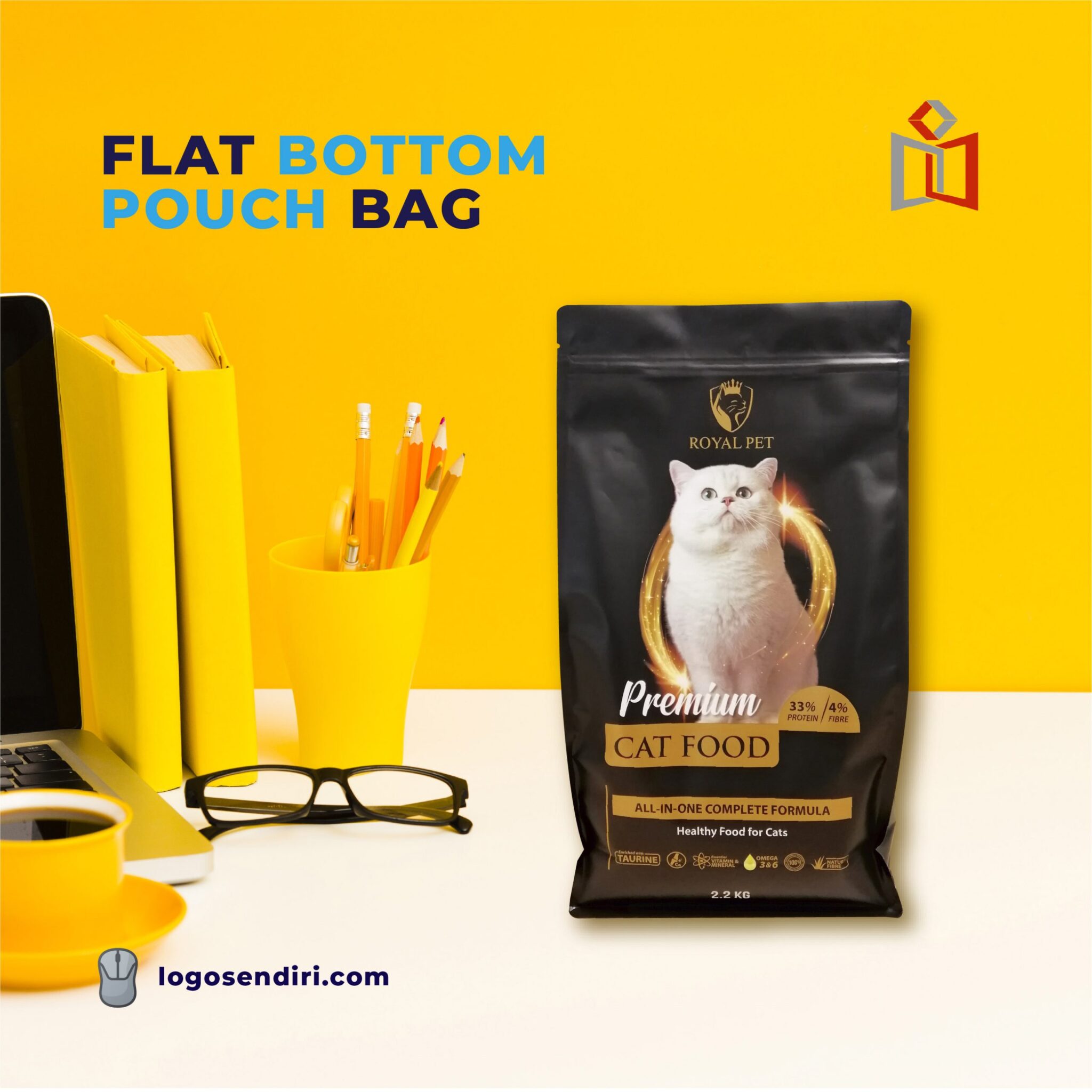
Matching the Construction to the Storage Interval
Feed bags range from simple woven or heavy-gauge polyethylene sacks for commodity product to multi-layer laminates with barrier cores for premium aquafeed. Choosing between them is a matter of matching cost to risk. A commodity ration sold within weeks can often run in a simpler structure; a high-fat shrimp feed exported over several months cannot.
Common options include heavy-gauge polyethylene film for strength and economy; related industrial formats are described in the industrial and agricultural bags guide., laminated woven structures for high-strength large-format bags, and multi-layer laminates with a barrier core where moisture and oxygen both matter. Each has a different sealing behaviour and a different set of compatible closures, so the structure and the closure should be chosen together.
Ask the converter for transmission data, puncture resistance, seal strength and drop-test results for the specific proposed structure. Generic figures from a data sheet are a starting point, not evidence, and the differences between nominally similar films can be large.
Aquaculture Feed: Salt, Sun and Buoyancy
Animal feed & fish feed packaging destined for a farm pond or a hatchery meets conditions a terrestrial shed never produces.
Aquaculture feed adds conditions that terrestrial feed rarely sees. Floating feed must retain buoyancy, which moisture ingress destroys; sinking feed must stay intact long enough to be eaten. Both are packed in environments where salt spray, high humidity and direct sun are normal, and where bags may be stored outdoors under a roof rather than in a warehouse.
Outdoor and semi-outdoor storage argues for ultraviolet resistance in the outer layer, because sunlight degrades both the film and the print. It also argues for a closure that tolerates repeated opening in wet conditions, since farm staff handle feed with wet hands several times a day.
Where feed is decanted into automatic feeders, the pack’s opening behaviour matters operationally. A bag that tears unpredictably wastes product and slows the working day. Ask for an opening feature that behaves consistently, and test it with gloved, wet hands rather than dry ones.
Comparison Row 3 — Drop and Stack Strength
Feed bags are heavy, and heavy bags fail at the worst moment. A twenty or twenty-five kilogram pack dropped from tailgate height imposes a load that no laboratory shelf test predicts. Specify a drop test at realistic heights and orientations, including flat drops onto the base, because the base seal is usually the first point of failure.
Stacking is the other half. Pallets in a feed warehouse are stacked high and sometimes left for months, so the bottom layer carries sustained compressive load. Creep in the film and slow seal movement under that load produce failures that appear long after packing. Ask about stack performance over time, not only immediate compression strength.
Pallet overhang and stretch-wrap tension also matter. Bags that overhang the pallet edge get snagged and torn; over-tensioned wrap can deform the top bags. These are logistics details rather than packaging details, but they are cheaper to fix in the warehouse than in the laminate.
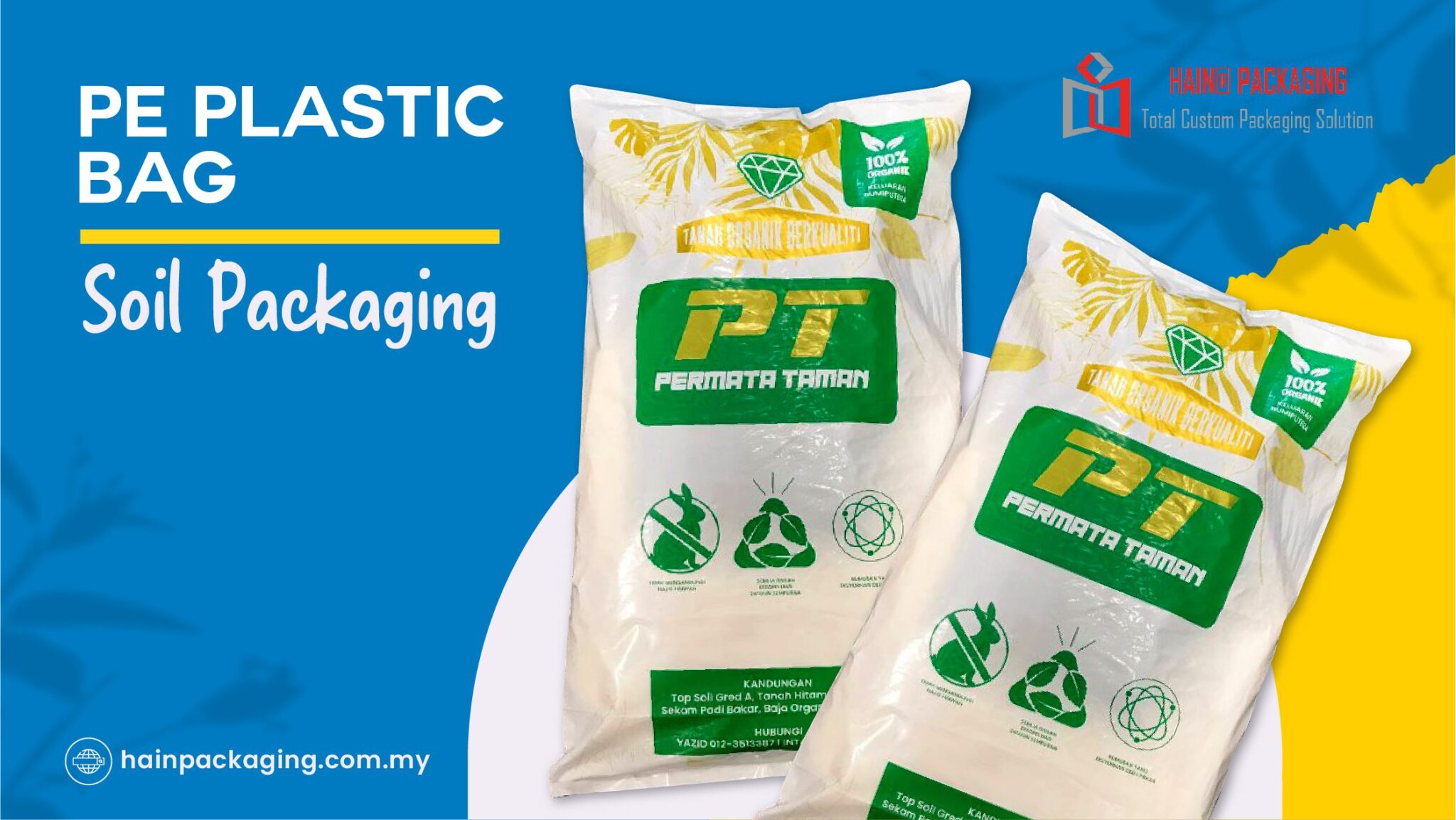
Comparison Row 4 — Closure and Reuse
The closure decision for animal feed & fish feed packaging is made in a working environment, not a retail one. A farm worker may open a bag twenty times, in the rain, with wet hands, while carrying it. A closure that requires clean dry fingers and careful alignment will simply be bypassed, and the bag will be left open.
Resealable zippers and slider closures are worth evaluating for premium feed, particularly where portion control matters. They keep moisture out between uses and preserve the remaining product. For larger commodity bags, a folded and stitched or taped top, combined with a decanting routine, remains the practical norm.
Die-cut handles carry real ergonomic value at twenty kilograms and above. They also concentrate stress in the film, so the handle area needs reinforcement and its own drop testing. A handle that tears on the first lift destroys confidence in the whole pack.
Comparison Row 5 — Print and Traceability
Feed labelling carries functional information that operators rely on, and the same panel discipline applies to the companion formats described in the pet food packaging guide.: species and life stage, feeding instructions, composition, batch number and date. It must stay legible after abrasion, moisture and sun. That is a print durability requirement as much as a design one.
Scuff resistance deserves specific attention, because bags are dragged across concrete and stacked against each other. Ask about rub testing on the actual laminate and finish, and check the printed sample after a simulated handling cycle rather than only at delivery.
Batch traceability is a practical necessity in feed. Reserve a coding area that is flat, unobstructed and away from seals and folds, and confirm that the coding method adheres to the chosen film. A batch code that rubs off a feed bag becomes a problem exactly when someone needs to read it.
Warehouse, Stacking and Transport Realities
The warehouse determines whether a specification succeeds. Ventilation, pallet spacing, stock rotation and protection from direct sun all influence how much the pack has to do. Improving the warehouse is often cheaper than upgrading the laminate, and the two should be evaluated together.
Container shipping adds heat and humidity over an extended period, especially for export. Where feed travels by sea, ask about container conditions, consider desiccant use, and run trials that reflect the actual transit profile rather than a mild local one.
Pest management is the final piece. Rodents and insects attack feed bags, and no laminate fully solves that. Pack integrity helps, but storage hygiene and rotation matter more, and the two should be planned together rather than one expected to compensate for the other.
Sustainability and Material Choices
Feed packaging generates a large volume of material, so the sustainability conversation is legitimate and unavoidable. The most effective lever is usually right-sizing and strength: a bag that does its job at a lower gauge uses less material and fails less often, which avoids the far larger waste of spoiled feed.
Recyclability depends on the structure and on local collection. Multi-layer laminates are engineered for performance, and that construction limits their route into conventional recycling. Where a mono-material structure can meet the barrier and strength requirement, it is worth evaluating. Where it cannot, the honest position is to state what the pack is and avoid implying an end-of-life route that local infrastructure does not support.
General guidance on feed and feed safety is published by the Food and Agriculture Organization, and animal health and veterinary matters in Malaysia fall under the Department of Veterinary Services. Both are useful reference points when writing internal specifications.
Order Planning and Cost per Tonne
Feed packaging is bought in volume, and the way it is bought influences what it costs as much as the structure does. Conventional print carries a plate or cylinder charge that has to be amortised, so a large annual volume split into many small runs costs more per bag than the same volume committed in fewer, larger runs. Planning artwork versions and print runs together is one of the cheapest savings available in animal feed & fish feed packaging.
Lead time deserves equal planning attention. Specialty laminates, custom shapes and reinforced handle tooling all add weeks, while stock structures and standard shapes move faster. A mill that orders only when stock runs low will repeatedly pay for expedited production. A mill that forecasts two quarters ahead can hold a standard specification and order against it.
The most useful way to compare options is cost per tonne of feed delivered in good condition, rather than cost per bag. That figure includes the bag, the rejected product from sealing and handling failures, and any spoilage in the field. A structure that costs slightly more per bag and removes a recurring failure almost always wins on that measure, and it is the measure that matters to a mill’s margin.
Sample-to-Order Checklist
- Record product form, bulk density, fat content, moisture at packing and fill temperature.
- State the target shelf life and the worst realistic storage condition, including outdoor exposure.
- Request water vapour and oxygen transmission data for the exact proposed structure.
- Run a weigh-and-store moisture trial on filled bags in a humid environment.
- Confirm seal integrity with the real product, including dust at the seal area.
- Specify drop testing from realistic heights, including flat base drops and handle loading.
- Evaluate the closure in the actual working environment, with wet or gloved hands.
- Reserve a flat coding area and confirm code adhesion on the chosen film.
- Check print rub resistance after simulated handling, then approve one filled sample.
Frequently Asked Questions
Why does feed cake near the top of the bag first?
Usually because humid air enters through the closure rather than through the film. Caking concentrated at the top points at the closure; caking throughout points at the barrier.
Is a barrier laminate always necessary for animal feed & fish feed packaging?
No. Commodity feed sold quickly in a dry warehouse may run in a simpler structure. High-fat, marine-ingredient or long-export feed usually justifies a barrier layer.
How should drop testing be specified?
At the heights and orientations that occur in real handling, including flat drops onto the base and drops while the bag is held by its handle.
What is the most overlooked specification item?
Dust at the seal area. Fine particles prevent clean sealing and cause slow leaks that appear long after packing.
Picking a Row, Then Picking a Bag
Start by choosing the row that matters. Well-specified animal feed & fish feed packaging protects the product value and avoids the expensive failure mode of a spoiled pallet. If moisture is the threat, the barrier laminate and foil options move to the top of the list. If drop and stack performance dominates, the laminated woven sack wins even though its barrier is only moderate. If the feed turns over quickly in a dry shed, heavy-gauge polyethylene is usually enough and the extra spend is better used elsewhere. Only after that row is chosen does the rest of the specification fall into place. For structures, strengths and quantities, contact HAIN Packaging through WhatsApp, or review barrier behaviour over time in the long shelf life and barrier guide. Information on Malaysia’s manufacturing and investment landscape is available from MIDA.