Small Business Shipping Bags Where Rework Costs Start
October 15, 2026
Singlet Plastic Bags Wholesale Who Bears the Cost
October 18, 2026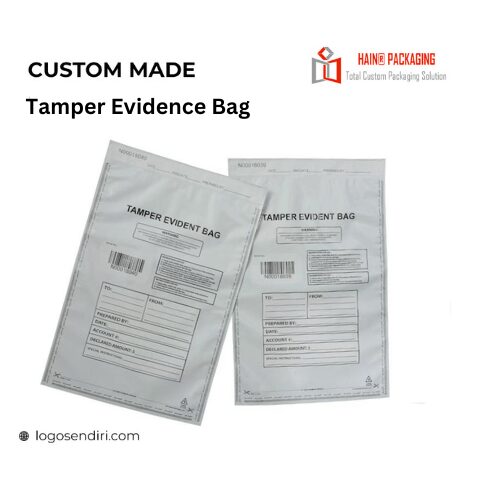
A pharmacy in Ipoh switched to security bags for its scheduled deliveries and felt the problem was solved for about five weeks. A tamper proof mailer had replaced the plain bag, and for a while that was the end of the conversation. Then a driver noticed that one bag in a batch of 200 had been opened and closed again, and nobody could say when it happened. The bags were intact, the serial numbers matched the manifest, and the contents were short by two items.
The bag had not failed. The evidence the bag was supposed to produce had never been created in the first place. A tamper proof mailer is not a promise that nobody can open it, because any sealed plastic envelope can be opened with a blade and resealed with a heat bar by somebody who knows what they are doing. What the mechanism produces is evidence, and evidence is a separate thing from resistance. Five variables decide whether that evidence appears at all, and each one has conditions under which it quietly stops working.
Tear Strips and the Check Nobody Records on a Tamper Proof Mailer
The first variable is the tear strip, a perforated band that lets the recipient open the bag without a tool. It works because the strip is the only designed way in, so a bag that arrives with the strip intact has not been opened the way it was meant to be opened. That is a statement about one entry route, not about all of them.
The strip fails as evidence in two situations. The first is when a bag is opened at the bottom or along a side seal rather than at the strip, which leaves the strip untouched and the bag visually intact. The second is when the perforation is so weak that the strip tears during transit on its own, at which point an unopened bag looks exactly like an opened one.
A third failure is procedural rather than physical. If the recipient opens every parcel at the strip as a matter of routine and never looks at the strip before touching it, then the condition of the strip is never recorded by anyone. The mechanism works, and the evidence is thrown away by the process around it.
Destructive Closure Evidence That Is Not Reversible on a Tamper Proof Mailer
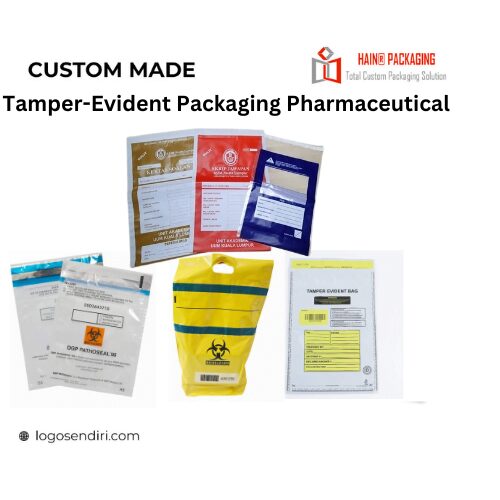
The second variable is a destructive closure, an adhesive that bonds to the film more strongly than the film bonds to itself. Opening the bag tears the film or delaminates the surface, so a closed bag cannot be produced from an opened one. This is the strongest of the five mechanisms because the damage is in the material rather than in an applied feature.
It fails under heat and under time. A warm parcel left in a delivery van raises the adhesive to a temperature where it releases more cleanly, and an aggressive adhesive on a thin film can delaminate at the surface rather than tear, which produces damage that a patient person can partly hide. It also fails when the closure is applied over a contaminated surface, since dust or powder on the film kills the bond before the bag ever leaves the bench.
The condition worth specifying is the surface the closure is applied to. A closure qualified on clean, untreated film will behave differently over a printed area or over a matt coating, and the difference is exactly the kind of gap that turns a destructive seal into an ordinary one.
Where Void Tape and Serial Numbers Part Company
The third variable is tamper-evident tape, which leaves a void or checkerboard pattern in the adhesive layer when it is lifted. The mechanism is entirely in the adhesive, which means the variable that governs it is the surface energy of the film underneath. On a clean, corona-treated polyethylene surface the pattern transfers properly. On a printed, glossy or powdered surface the tape can lift with little residue.
Pressure-sensitive adhesive tapes are characterised by standard test methods rather than by feel, and ASTM D1000 is the family of test methods for pressure-sensitive adhesive-coated tapes. Asking which surface a tape was qualified against is a more useful question than asking how strong it is.
This variable also fails on timing. A void pattern that transfers cleanly after an hour of dwell can transfer weakly after five minutes, because the adhesive has not yet wet out on the film. Any procedure that relies on the pattern should say how long the tape has to sit before the parcel moves.
It fails once more on reapplication, which is the failure mode most often mistaken for tampering. A tape lifted and pressed back down by a careful hand can sometimes re-adhere well enough that the void pattern is only visible at an angle. Training the recipient to look at the tape under a light rather than in a corridor is part of the specification, not an optional extra.
The fourth variable is the record, meaning unique serial numbers, barcodes or a printed void pattern that appears once the seal is broken. The mechanism here is not physical at all, it is administrative. A serial number only produces evidence if somebody wrote it down at dispatch and checked it at receipt, and a void pattern only produces evidence if the recipient knows what an unbroken one looks like.
Failure rates here sit higher than they do anywhere else among the five, and the reason is procedural: the mechanism rests on two people keeping one routine. If the dispatch manifest does not carry the number, or the recipient signs without looking, the best serial-numbered bag in the world produces nothing. It also fails against substitution, since a complete, unopened bag with a different serial number is only caught if the number is checked against the list.
A serial number also fails when it is printed rather than recorded. A number that exists only on the bag tells you the bag is unique, and tells you nothing about which bag was supposed to arrive. The number only becomes evidence when it sits on a manifest that somebody else can read, which is why the administrative half of this variable is the half that actually has to be designed.
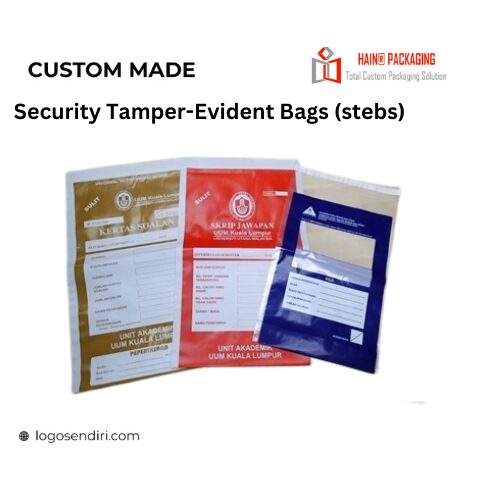
Cold, Heat and Dwell the Band Every Mechanism Is Qualified Over
The fifth variable is the environment the bag travels through, which quietly governs the other four. Cold makes adhesives stiff and brittle, so a destructive seal applied at room temperature behaves differently on a chilled delivery. Heat softens the same adhesive and reduces the residue a void tape leaves behind. Dwell time matters too, since an adhesive that has cured for 24 hours releases very differently from one that was peeled after 20 minutes.
This is the variable most specifications leave out entirely. A tamper-evident mechanism that performs on a bench at 25 degrees Celsius is not a statement about the same mechanism arriving at a distribution centre in the afternoon heat, and the honest specification names the range the mechanism was qualified over. The same reasoning applies to the water resistance claims buyers often read alongside it, which our poly mailer waterproof notes break down by variable rather than by label.

If the parcels carry documents or anything with a chain of custody, the plastic envelope Malaysia specs page lists what to ask before you order. Sampling, expedite and freight from the factory get quoted once the specification, closure method and volume are agreed, and our sales team is the only place that happens. No standing figure exists before that conversation.
Pick one entry route for your tamper proof mailer, then specify the mechanism that answers that route and nothing else.