Doypack vs Stand Up Pouch: 7 Key Differences Malaysia
May 15, 2026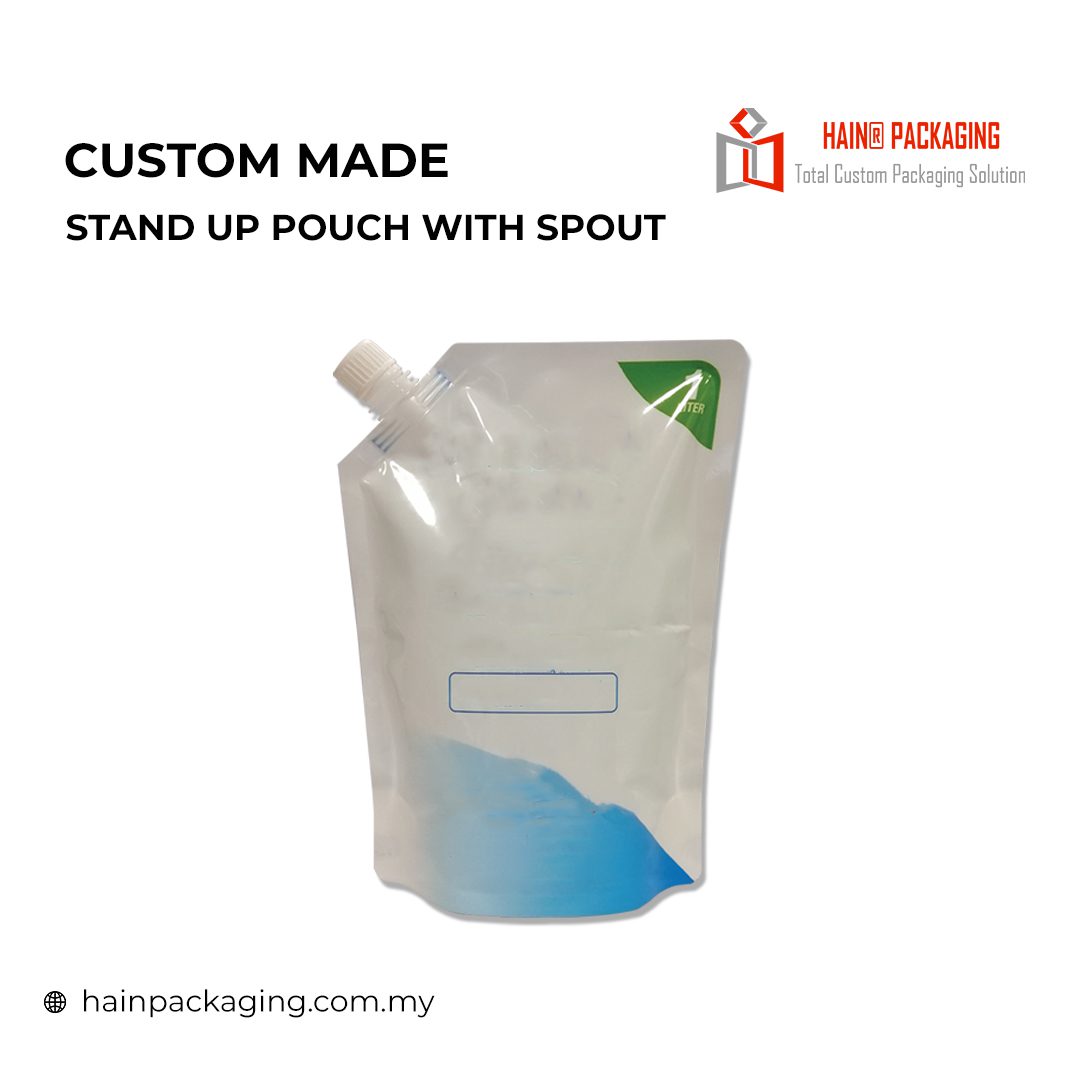
Spout Pouch Malaysia: Complete Guide for F&B Brands
May 22, 2026Spout Stand Up Pouch: Buyer’s Guide for Malaysia Brands
Spout Stand Up Pouch: Complete Guide for Malaysia Brands (2026)
One truckload of flat spout stand up pouches replaces roughly 25 truckloads of empty rigid bottles. That single logistics fact is rewriting packaging budgets across Southeast Asia — and Malaysian brands are paying attention.
If you’ve watched your packaging costs creep upward while warehouse space shrinks, you’re not alone. The ASEAN spout pouch market will reach USD 2,295.9 million by 2036 — up from USD 1,361.8 million in 2025. What’s driving that growth? Brands that refuse to keep shipping air. By the end of this guide, you’ll know exactly which spout diameter, cap type, and material structure your product needs — and have a five-point spec sheet ready to send to a supplier. Let’s start with the basics.
Key Takeaways
– A spout stand up pouch combines the shelf-standing stability of a gusseted pouch with a precision-fit spout and cap — ideal for liquid, semi-liquid, and viscous products.
– Stand-up spout pouches hold 65% of the ASEAN spout pouch market, with food & beverage accounting for 45.3% of total demand.
– Spout diameter should match product viscosity: 8–10 mm for thin liquids, 12–14 mm for sauces, and 16–21 mm+ for thick purees or particulate products.
– One truckload of empty spout pouches replaces ~25 truckloads of empty rigid bottles — a 96% reduction in transport volume.
– Malaysia’s spout pouch market is growing at 4.8% CAGR through 2036, fueled by dairy beverages, food exports, and evolving packaging regulations.
What Is a Spout Stand Up Pouch?
Definition and Anatomy
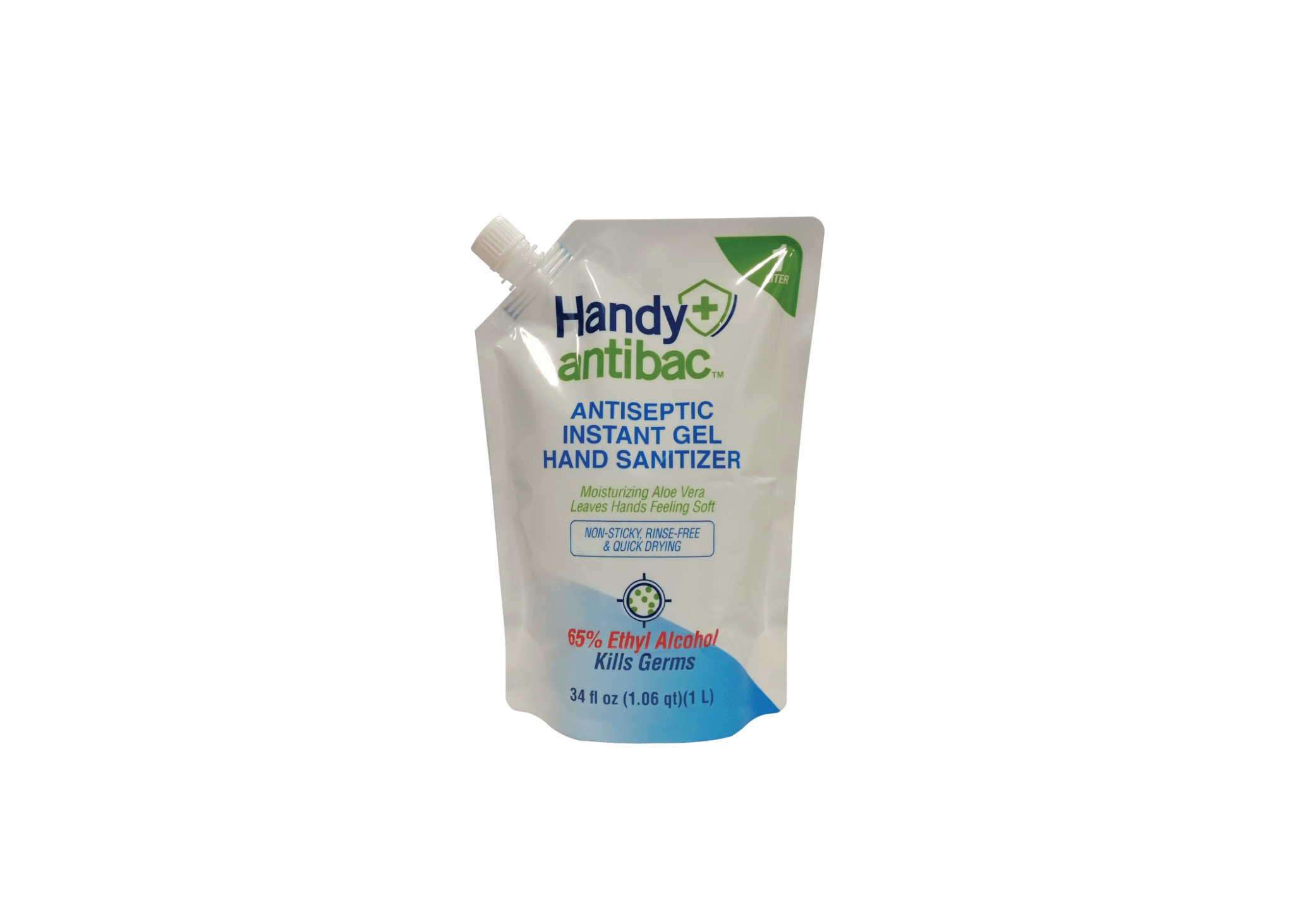
A spout stand up pouch is a flexible, gusset-bottomed pouch fitted with a rigid spout and closure cap. The bottom gusset expands when filled, allowing the pouch to stand upright on retail shelves — a characteristic of the classic doypack format. The spout, typically moulded from polypropylene (PP) or polyethylene (PE), is heat-sealed into a pre-cut hole in the pouch film and serves as both the filling portal and the dispensing mechanism.
Here’s what makes up the anatomy:
- Film Laminate: Multiple barrier layers (PET, PE, EVOH, foil, or metallized film) sealed together to protect contents from oxygen, moisture, and light.
- Spout Fitment: A rigid plastic neck, available in various diameters (8 mm to 21 mm+), welded to the film.
- Cap / Closure: Screws or snaps onto the spout — options include screw caps, flip-tops, tamper-evident rings, and child-resistant closures.
- Bottom Gusset: The fold-out base that provides upright stability when the pouch is filled.
- Top Seal / Side Seals: Fin seals or lap seals that close the pouch body.
When Kedah-based sauce producer Meriah Foods switched from 250 ml glass bottles to the format in 2024, their warehouse footprint for empty packaging dropped by 90%. “We used to dedicate an entire rack to empty bottles,” says operations manager Farid Ismail. “Now the same quantity of pouches fits on a single pallet.” The switch also cut their per-unit packaging cost by 34%.
Spout Stand Up Pouch vs Regular Stand Up Pouch
The difference boils down to one feature: the spout. A stand up pouch with spout differs from a regular stand up pouch in that it replaces the ziplock, tin-tie, or heat-seal closure with a rigid, resealable spout and cap. That works for dry goods, snacks, and powders. But when your product is liquid, viscous, or needs controlled pouring, a ziplock simply won’t hold — and your customer ends up with chilli sauce on the countertop and a one-star review on Shopee.
FeatureSpout Stand Up PouchRegular Stand Up PouchClosure typeRigid spout + capZiplock / tin-tie / heat sealBest forLiquids, semi-liquids, viscous productsDry foods, snacks, powdersPour controlPrecision pouring through spoutSqueeze and pour from topRe-sealabilityScrew or snap cap — airtightZiplock — variable seal qualityFilling methodThrough-spout or top-fillTop-fill onlyTypical productsJuices, sauces, detergents, baby foodCoffee, granola, rice, pet treats
The spout adds cost — typically 15–25% more per unit compared to a ziplock pouch of the same size. But for liquid and semi-liquid products, that premium is offset by fewer leaks, better shelf presence, and a consumer experience that encourages repurchase.
When to Choose a Spout Over a Ziplock Closure
Choose a spout stand up pouch when:
- Your product is liquid or pourable — beverages, oils, liquid supplements
- You need controlled dispensing — a spout lets users pour precisely without spills
- Re-sealability matters — caps provide a more reliable seal than ziplocks, especially for products used over multiple servings
- Hot-fill or retort processing — spouts withstand thermal filling temperatures up to 121 °C
- You’re entering the refill market — consumers prefer refill pouches with spouts over rigid bottles
Stick with a ziplock closure for dry, solid, or granular products where pouring precision isn’t a factor and cost is the primary concern.
Want to explore how these compare in a broader context? See our guide to stand up pouch formats.
Spout Types and Cap Options for Stand Up Pouches
Spout Diameter Guide by Product Viscosity
Pick the wrong spout diameter and you’ll know fast. Too narrow and your product clogs. Too wide and you’ve bought an oversized cap for no reason — plus lost portion control.
Spout DiameterProduct ViscosityTypical ProductsRecommended Cap8–10 mm (Small)Thin / Low viscosityWater, juice, liquid supplements, oilsScrew cap, flip-top12–14 mm (Medium)Medium viscosityKetchup, soy sauce, baby food puree, yogurt drinksScrew cap, flip-top16–21 mm+ (Large)High viscosity / ParticulatesThick sauces, chunky soups, detergent gels, honeyScrew cap, tamper-evident22 mm+ (Extra-Large)Extra-thick / ChunkyGranola with particulates, thick dips, industrial adhesivesWide screw cap
A common mistake Malaysian brands make is specifying a medium spout (14 mm) for a product like honey, which has high viscosity and needs a 16–18 mm opening for comfortable dispensing. Always test your product’s flow rate through the chosen spout diameter before committing to a production run.
Cap Styles: Screw Cap, Flip-Top, Tamper-Evident, Child-Resistant
Your cap choice is a split-second sales pitch on the shelf. A tamper-evident ring tells a parent “this is safe for my baby.” A flip-top tells a commuter “you can open this one-handed at the traffic light.”
- Screw Cap — The industry standard. Reliable, cost-effective, and available in every spout diameter. Best for products that are consumed over multiple uses.
- Flip-Top Cap — One-hand operation. Popular for on-the-go beverages and condiments where convenience drives repeat purchase. Slightly higher unit cost than screw caps.
- Tamper-Evident Cap — Features a breakaway ring that visually confirms the package hasn’t been opened. Essential for baby food, health supplements, and any product where consumer safety is a regulatory concern.
- Child-Resistant Cap — Requires a push-and-turn motion to open. Required for certain household chemicals and pharmaceutical liquids. If you’re packaging cleaning products or health supplements, check Malaysian regulatory requirements before selecting your closure.
For products that need both safety and convenience, some suppliers offer a tamper-evident ring paired with a flip-top cap — the best of both worlds for spout pouch with cap configurations.
Spout Placement: Top-Center vs Corner Mount
Top-center placement is the most common. The spout sits in the middle of the pouch’s top seal, providing symmetrical weight distribution and clean shelf presentation. It’s the default for beverages, sauces, and most consumer products.
Corner-mount placement positions the spout at one corner of the top seal. This is preferred when:
- The pouch design requires maximum front-panel space for branding.
- The product is thick or viscous and users need to squeeze and dispense from the bottom corner.
- You’re designing a refill pouch that needs to fit into a rigid container’s neck.
Corner-mount spouts are gaining traction in the personal care and household refill categories, where squeezing the last drop matters to consumers.
Material Structure and Barrier Performance
The material structure of your spout stand up pouch determines shelf life, product safety, and print quality. These pouches are only as good as their barrier layers. Here are the four most common configurations:
- PET / PE (2-layer) — The entry-level structure. Good for short-shelf-life products and ambient-fill items. Moderate oxygen barrier. Common for dry snacks re-packaged into spout pouches.
- PET / PE / EVOH (3-layer) — The workhorse for food and beverage. EVOH (ethylene vinyl alcohol) provides a high oxygen barrier, extending shelf life from weeks to months. This is the go-to structure for juices, sauces, and dairy products in Malaysia.
- Metallized PET / PE — A cost-effective middle ground between clear and foil structures. The metallized layer blocks light and improves oxygen barrier without the premium price of aluminium foil. Popular for coffee, tea, and products sensitive to UV degradation.
- PET / AL / PE (Foil Laminate) — The premium barrier option. Aluminium foil provides near-total oxygen and moisture blockage, making this structure suitable for retort-processed foods, baby food, and products requiring 12+ month shelf life. Higher cost, but unmatched protection.
Barrier Targets — OTR and WVTR Benchmarks
Your pouch has two enemies: oxygen and moisture. Two metrics tell you whether it can fight them off:
- OTR (Oxygen Transmission Rate) — Measures how much oxygen passes through the film per square metre per 24 hours. Lower is better for oxygen-sensitive products.
- WVTR (Water Vapour Transmission Rate) — Measures moisture transfer. Lower is better for products that must stay dry or maintain consistent moisture content.
Laminate StructureTypical OTR (cc/m²/24hr)Typical WVTR (g/m²/24hr)Best ForPET / PE50–1005–8Short-shelf-life, non-sensitivePET / PE / EVOH1–31–3Juices, sauces, dairyMetallized PET / PE1–50.5–2Coffee, tea, UV-sensitivePET / AL / PE< 1< 0.5Retort, baby food, long shelf life
When requesting a quote from a supplier, always specify your product’s sensitivity to oxygen and moisture. A good supplier will recommend the appropriate laminate and provide OTR/WVTR test certificates.
Thermal Processing Compatibility
Your filling method determines which material structures are viable:
- Ambient fill (< 40 °C) — Any structure works. Common for ready-to-drink juices and liquid supplements.
- Hot fill (85–95 °C) — Requires PET/PE/EVOH or metallized structures. The pouch must withstand the fill temperature without delamination. Most Malaysian sauce and beverage brands use hot-fill processing.
- Retort (up to 121 °C) — Only foil-laminate structures (PET/AL/PE) can survive retort conditions. Essential for shelf-stable baby food and ready-to-eat meals. The spout fitment must also be rated for retort temperatures — not all are.
If you’re unsure about your product’s thermal requirements, ask your liquid packaging solutions provider to run a compatibility test before you commit to a structure.
Sizing Guide: From Single-Serve to Bulk Refill
Selecting the correct size spout stand up pouch for your product matters more than you’d think.
Size CategoryVolume RangeTypical Use CasesCommon Spout SizeSingle-Serve / On-the-Go50–200 mlEnergy gels, baby food, travel-size condiments, supplement shots8–10 mmStandard Retail250 ml – 1 LJuices, sauces, cooking oil, detergent refills12–14 mmBulk Refill1–5 LHousehold cleaner refills, cooking oil, bulk condiments for foodservice16–21 mm+
Choosing the Right Size for Your Product
Size selection isn’t just about volume. It’s about who’s using your product, how much shelf space the retailer gives you, and whether the per-unit maths work.
Think about the consumption occasion. A 100 ml spouted pouch works for a single-serve health drink consumed in one sitting. A 500 ml pouch suits a sauce that lasts a household 2–3 weeks. A 3 L refill pouch targets the eco-conscious consumer who already owns a rigid dispenser bottle.
Consider shelf footprint. Retailers in Malaysia charge for shelf space by the centimetre. A slimmer pouch profile means you can often fit more facings in the same allocation — a direct advantage over cylindrical rigid containers.
Don’t forget the fill weight. A pouch’s stated capacity (e.g., 500 ml) assumes a liquid product with a specific gravity near water. If your product is denser (like honey or detergent), test the actual fill weight to ensure the pouch holds the stated net content without over-stressing the seals.
Need exact dimensions for your product volume? Our stand up pouch specifications → has the numbers.
Applications by Industry
Spout stand up pouches serve diverse industries across Malaysia. Food and beverage accounts for 45.3% of total ASEAN spout pouch demand — and it’s easy to see why. From coconut water to chilli sauce, Malaysian F&B brands are adopting this pouch format faster than any other segment.
Key F&B applications include:
- Fruit juices and coconut water — On-the-go consumption demands a resealable, spill-proof package. A stand up pouch with spout designed for beverages, like a drink pouch, delivers convenience that rigid bottles can’t match at the same price point.
- Sauces and condiments — Ketchup, soy sauce, chilli sauce, and cooking pastes all benefit from precision pouring through a medium-diameter spout.
- Baby food and infant formula — The fastest-growing sub-segment. Parents demand tamper-evident packaging with easy squeeze dispensing.
- Dairy and yogurt drinks — Malaysia’s dairy beverage market is a key driver of the 4.8% CAGR spout pouch growth, with brands shifting from cartons to flexible pouches for cost and shelf-appeal reasons.
When Johor-based coconut water brand Niyu Packaging launched in 2023, they chose a 330 ml spouted pouch over PET bottles. The result: a 22% lower retail price point, 40% less shelf space, and a 15% higher reorder rate from their first retail partner. “The pouch let us compete on price without sacrificing perceived quality,” says founder Siti Aminah. “Customers tell us they love being able to toss it in their bag without worrying about leaks.”
Household and Industrial
Household and industrial products were early adopters of spouted packaging — not for aesthetics, but for economics. For household products, a spouted stand up pouch with a corner-mount spout makes pouring easy and controlled. Laundry detergent, dishwashing liquid, floor cleaner, and car care products all ship in this format.
The refill model is particularly strong here. Once a Malaysian household owns a rigid dispenser, they keep buying the refill pouch — it’s cheaper, and they don’t need another bottle. This shift reduces packaging waste and positions brands as environmentally conscious.
Health and Wellness
Supplement brands have discovered spouted pouches — and they’re not going back. Protein shakes, wellness tonics, and herbal shots all fit the health drink packaging format because consumers want portion-controlled, resealable pouches that fit active lifestyles.
Key considerations for health and wellness products:
- Tamper-evident caps are essential for consumer confidence in supplement products.
- Light barrier matters for products containing vitamins or herbal extracts sensitive to UV degradation — metallized PET structures are recommended.
- Portion control — Single-serve 50–100 ml pouches are ideal for supplement shots and wellness tonics consumed in one sitting.
Personal Care and Cosmetics
Shampoo, body wash, lotion, and hand sanitiser refill pouches are one of the fastest-growing categories in the spout pouch Malaysia market. The trend mirrors the household refill model: consumers buy a premium rigid bottle once, then purchase economical refill pouches.
Corner-mount spouts dominate this category because consumers squeeze personal care products from the bottom up. A corner spout allows complete product evacuation — no wasted product, no frustrated customers.
Benefits of Spout Stand Up Pouches vs Rigid Packaging
Cost and Logistics Savings
Here’s where the numbers get hard to ignore. One truckload of empty pouches replaces approximately 25 truckloads of empty rigid bottles. That’s a 96% reduction in transport volume for empty packaging. For Malaysian brands shipping from packaging suppliers to filling facilities — sometimes across state lines — this translates to real savings in freight, fuel, and warehousing.
Beyond logistics:
- Material cost — Flexible pouches use 60–70% less material than rigid bottles of equivalent volume.
- Shipping filled product — Pouches are lighter, reducing per-unit shipping weight by 30–50% compared to glass and 10–20% compared to PET bottles.
- Warehousing — Flat pouches stack efficiently. No pallet gaps between cylindrical bottles.
Shelf Appeal and Brand Visibility
A spouted stand up pouch offers a billboard-sized front panel for branding — significantly more real estate than a curved bottle label. Rotogravure and digital printing deliver photographic-quality graphics on flexible film. Vibrant, shelf-differentiating designs that rigid packaging can’t match without expensive moulded-in features become accessible to brands of every size.
The stand-up format also provides stable, forward-facing presentation. Unlike bottles that roll or lean, a well-designed pouch stands upright and faces the consumer directly.
Not sure the shelf impact justifies the switch? Order 500 digital-printed pouches first. Test. Then scale.
Sustainability Advantages
Sustainability isn’t just about recyclability — though that matters. The broader picture includes:
- Less material at source — Using 60–70% less packaging material per unit is the most impactful sustainability metric.
- Lower transport emissions — 96% fewer truckloads of empty packaging means proportionally lower carbon emissions from logistics.
- Refill model enablement — Spout pouches make the refill model viable, encouraging consumers to reuse rigid containers.
- Recyclable stand up pouch options — Mono-material PE and PP structures are now available from Malaysian converters, which means curbside recycling is no longer hypothetical.
- Biodegradable alternatives — Bio-based and compostable films give brands a story beyond recyclability — though availability and cost still vary in Malaysia.
When sustainability metrics are measured holistically — from raw material through end-of-life — flexible packaging consistently outperforms rigid packaging on a per-unit carbon footprint basis.
Sustainability: Recyclable and Eco-Friendly Options
Mono-Material PE/PP Structures
Traditional spouted pouches are multi-material laminates (e.g., PET/AL/PE), which makes recycling difficult — the layers can’t be separated in standard recycling streams. Mono-material structures solve this by using a single polymer family throughout.
PE mono-material pouches use layers of different PE grades (LDPE, LLDPE, HDPE) to achieve the required barrier and sealing performance while remaining recyclable in PE streams. The trade-off: barrier performance is lower than multi-material laminates, making mono-PE suitable for shorter-shelf-life products.
PP mono-material pouches handle heat better than PE — a practical advantage for hot-fill applications that’s starting to show up in supplier catalogues. Malaysia’s recycling infrastructure is more accustomed to PE, but PP recyclability is improving.
A biodegradable stand up pouch offers another path — bio-based films that break down under industrial composting conditions. These are ideal for brands targeting environmentally conscious consumers, though cost and availability remain considerations in the Malaysian market.
The Refill Model
The refill model may be the single most impactful sustainability play in flexible packaging. Here’s how it works:
- Consumer purchases a product in a rigid dispenser bottle (first purchase).
- Subsequent purchases are refill pouches at a lower price point.
- The consumer pours the refill into the existing bottle — zero new rigid packaging enters the waste stream.
In January 2023, SABIC partnered with Scientex Berhad to launch instant noodles in flexible packaging containing 30% post-consumer recycled (PCR) plastic — a Malaysia-specific example of how major players are committing to circular packaging models. The refill pouch model extends this principle across household, personal care, and even food categories.
Recycling Infrastructure in Malaysia
Malaysia’s municipal recycling isn’t set up for multi-material pouches yet. Most programmes accept PET and HDPE bottles but turn away flexible laminates. This creates a gap: the pouches that offer the best product protection are the hardest to recycle.
However, the landscape is shifting:
- Extended Producer Responsibility (EPR) discussions are advancing in Malaysian policy circles, which will incentivise brands to adopt recyclable formats.
- Mono-material adoption is accelerating as converters develop PE and PP structures that meet barrier requirements.
- Collection programmes run by industry associations are creating pilot recycling streams for flexible packaging.
For brands seeking a recyclable stand up pouch Malaysia solution, the practical path today is to specify mono-material structures where barrier requirements allow, and to invest in on-pack recycling instructions that educate consumers on proper disposal.
Spout Stand Up Pouch Market in Malaysia

Malaysia’s spout pouch market isn’t growing — it’s compounding. At 4.8% CAGR through 2036, the brands entering now will own the shelf space while late movers pay premium rates for the same pouches. The spout pouch Malaysia market sits within a broader ASEAN expansion that shows no signs of slowing.
- ASEAN spout pouch market: USD 1,361.8 million (2025) → USD 2,295.9 million (2036), growing at 5.2% CAGR (Source: Future Market Insights, 2026).
- Malaysia spout pouch CAGR: 4.8% through 2036, slightly below the ASEAN average but quality-driven by higher-value segments (Source: FMI / EIN Presswire, Feb 2026).
- Stand-up format dominance: Stand-up spout pouches hold 65% of the ASEAN spout pouch market — the format is the clear market leader (Source: FMI).
- F&B leads: Food & beverage accounts for 45.3% of total ASEAN spout pouch demand (Source: FMI).
- Broader flexible packaging: Malaysia’s flexible packaging market will grow from USD 503.3 million (2023) to USD 723.2 million by 2030, at 5.3% CAGR (Source: Grand View Research).
- Global context: The global spout pouch market is valued at USD 3.9 billion (2025) and is expected to reach USD 5.8 billion by 2034, at 4.5% CAGR (Source: USD Analytics, Nov 2025).
What’s driving Malaysia’s growth specifically?
- Dairy beverage conversion — Malaysian dairy brands are shifting from cartons and bottles to spout pouches, attracted by lower costs and better shelf presence.
- Food export growth — Malaysian sauce and condiment exporters need packaging that meets international food safety standards while keeping shipping costs competitive.
- Stricter packaging regulations — Evolving food contact safety requirements and EPR discussions are pushing brands toward more sustainable formats.
- Recyclable adoption — As mono-material structures become available, brands that previously avoided flexible packaging due to recycling concerns are entering the market.
This is a market shift with a deadline. Regulations are tightening. Dairy brands are converting. Export requirements are evolving. The window for ‘wait and see’ is closing.
How to Order Spout Stand Up Pouches in Malaysia
MOQ, Lead Times, and Pricing Ranges
Three numbers separate a smooth first order from a six-week headache: MOQ, lead time, and unit price. Get them wrong and you’re either over-committed or under-stocked.
SpecificationTypical RangeNotesMOQ (custom printed)5,000 – 30,000 pcsVaries by supplier and print method; digital printing enables lower MOQsMOQ (stock/unprinted)1,000 – 5,000 pcsLower barrier to entry for testingLead time (custom)3–6 weeksIncludes printing, lamination, spout insertionLead time (stock)1–2 weeksReady-made pouches with no custom printingUnit price (custom, 500 ml)RM 0.45 – RM 1.20Depends on material, print method, and volumeUnit price (stock, 500 ml)RM 0.25 – RM 0.60No custom printing
Prices are indicative and depend heavily on material structure, spout type, cap style, and order volume. Always request a formal quotation.
Filling Methods
When filling a stand up pouch with spout, there are two primary methods:
- Through-spout filling — The product is injected through the spout opening, and the cap is applied afterward. This is the most common method for liquid products because it creates a clean, sealed pouch with no risk of product contamination on the seal area. Requires specialised filling equipment.
- Top-opening filling — The pouch is filled through the top opening (like a regular stand up pouch), then the top seal is closed, and the cap is pre-applied to the spout. This method works for semi-liquid and viscous products and uses more widely available filling machinery.
Your filling method affects pouch design, particularly spout placement and seal configuration. Discuss this with your supplier early in the specification process.
Custom Printing
For brands seeking a custom printed spout stand up pouch, three print methods dominate the market:
Print MethodBest ForMOQColour CapabilityCost Per UnitRotogravureLarge-volume runs20,000+ pcsUp to 10 colours, photographic qualityLowest at high volumeFlexographicMedium runs10,000+ pcsUp to 8 coloursModerateDigitalSmall runs, test batches500+ pcsFull colour, variable dataHighest per unit, lowest setup cost
For Malaysian brands testing a new product or entering the market for the first time, digital printing offers the lowest risk: you can order as few as 500 custom-printed pouches to validate market response before committing to a large gravure print run.
What to Prepare When Requesting a Quote
When you contact a supplier for a pouch quotation, have the following information ready:
- Product details — What are you packaging? (Product name, viscosity, pH, fill temperature.)
- Volume and dimensions — Target fill volume (ml) and any dimension constraints.
- Material requirements — Shelf life target, oxygen/moisture sensitivity, thermal processing method.
- Spout and cap specifications — Preferred spout diameter, cap style, and spout placement.
- Order quantity and timeline — Estimated annual volume, initial order quantity, and required delivery date.
Having these five items prepared before you request a custom spout pouch quote will accelerate the quotation process by days and reduce back-and-forth with the supplier.
When Penang health supplement brand VitaTropics first contacted a pouch supplier in 2025, they had none of these details ready. The quotation process took three weeks. Their second order — with full specifications — was quoted in two days. “Lesson learned,” says co-founder Daniel Tan. “Suppliers can move fast, but only if you give them the right inputs.”
If you’re ready to spec out pouches for your product, HAIN Packaging handles custom spout pouch orders from 500 to 500,000+ units — and they know the Malaysian market.
Frequently Asked Questions
What products are best suited for spout stand up pouches?
Any liquid, semi-liquid, or viscous product that requires controlled pouring and resealability is a strong candidate. This includes juices, sauces, baby food, cooking oil, detergents, health drinks, shampoo, and lotion. Dry products like coffee and snacks are better served by ziplock or tin-tie stand up pouches.
What spout size do I need for my product?
Match your spout diameter to product viscosity. Thin liquids (water, juice) work well with 8–10 mm spouts. Medium-viscosity products (sauces, yogurt drinks) need 12–14 mm. Thick or particulate products (honey, chunky soups, detergent gels) require 16–21 mm or larger. Always conduct a flow test before finalising your specification.
Can spout stand up pouches be used for hot-fill products?
Yes — with the right material structure. PET/PE/EVOH laminates handle hot-fill temperatures of 85–95 °C. For retort processing at up to 121 °C, a foil laminate (PET/AL/PE) is required. Ensure your spout fitment is also rated for the fill temperature.
Are spout stand up pouches recyclable in Malaysia?
Multi-material laminates (PET/AL/PE) are not currently recyclable through standard Malaysian municipal streams. However, mono-material PE and PP structures are recyclable and increasingly available. The recycling infrastructure for flexible packaging is developing, with industry collection programmes and EPR policy discussions advancing.
What is the minimum order quantity for custom spout pouches?
Most Malaysian suppliers set custom-printed MOQs between 5,000 and 30,000 pieces, depending on the print method. Digital printing enables MOQs as low as 500 pieces for test runs. Stock (unprinted) pouches are available from 1,000 pieces.
How do spout stand up pouches compare in cost to rigid bottles?
On a per-unit basis, they typically cost 30–50% less than equivalent rigid bottles when factoring in material, shipping, and warehousing. The logistics savings are even more dramatic: one truckload of empty pouches replaces roughly 25 truckloads of empty bottles.
Can I get child-resistant caps on spout pouches?
Yes. Child-resistant caps with push-and-turn mechanisms are available for spout diameters of 14 mm and above. These are recommended for household chemicals, pharmaceutical liquids, and any product where child safety is a regulatory requirement.
What is the typical lead time for custom spout stand up pouches in Malaysia?
Custom-printed versions typically require 3–6 weeks from approved artwork to delivery, depending on complexity and print method. Stock pouches can be shipped within 1–2 weeks. Plan your ordering timeline accordingly, especially for seasonal product launches.
Conclusion
A Kedah sauce maker saved 34% per unit. A Johor coconut water brand cut retail prices by 22%. A Penang supplement company went from a three-week quote process to two days. These aren’t outliers — they’re the new normal for Malaysian brands that stopped shipping air and started specifying spout stand up pouches. The market is growing at 4.8% annually. Your competitors have already done the math. The only question is whether you’ll make the switch on your terms — or react to theirs.
HAIN Packaging supplies custom spout stand up pouches to Malaysian brands — from first sample to production runs. Get a quote →
For related products, explore our ziplock stand up pouch options.