
Printed Poly Mailer Bag Flexo or Gravure Four Dimensions
October 15, 2026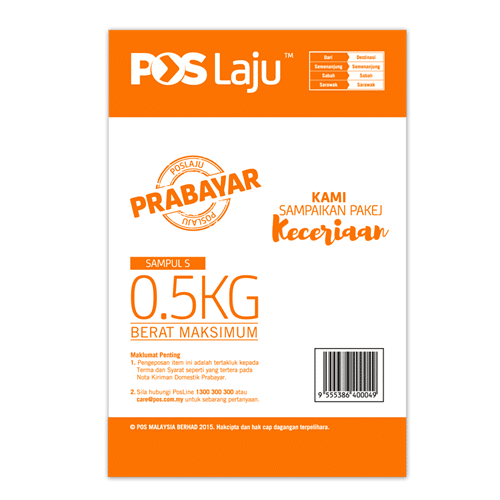
Shipping Pouch Malaysia Who Supplies Each Number
October 15, 2026
The shipment went out on a Tuesday and the complaints started on Thursday. A skincare seller in Petaling Jaya had ordered 10,000 pieces of a shipping bag with logo, received them on time, and packed 600 orders before the first message arrived. The logo was fine. The size was not. Every 250 mm by 350 mm bag held a 180 mm box with roughly 60 mm of slack folded over at the top, and the fold took the printed logo with it. Nobody had checked what the artwork would look like after the flap closed.
That failure is a numbers problem, not a design problem, and the numbers sit on three separate axes. A shipping bag with logo is quoted from millimetres, microns and grams, and each axis answers a different question. Work them in order and the minimum order quantity and the production schedule stop being surprises. Skip one and you end up paying twice for the same bag.
Width, Depth and Lip Where a Shipping Bag With Logo Starts
Length and width come first because everything else hangs off them. Take the largest product you ship, add the void fill or bubble wrap it travels in, add 10 mm of working clearance at the opening so the packer is not fighting the film, and you have the internal dimension. External dimensions are that plus the bottom gusset and the flap. A 250 mm by 350 mm bag with a 50 mm flap does not give you 350 mm of usable height once the flap folds and seals.
Print area is the second millimetre decision. Artwork has to survive three things, which are the fold line, the seal line and the curl of the film when the bag is full. A logo placed within 15 mm of the seal line will print perfectly flat and arrive looking distorted. Keeping the mark 25 mm clear of both lines costs nothing and removes the most common complaint.
The third millimetre decision is the lip, the unprinted strip above the adhesive. Make it too narrow and the packer cannot grip the release liner with gloves on. Make it too wide and the bag wastes 20 mm of film per unit, which is a real number once you multiply it by ten thousand. A 40 mm lip is usually enough for a gloved hand and is rarely worth exceeding.
The Micron Measurement Behind Ink Holdout on a Shipping Bag With Logo
Thickness is quoted in micron, and courier film in Malaysia commonly runs between 50 and 90 micron per side depending on what the bag has to survive. Thicker film resists puncture and holds a printed image flatter, because the surface moves less under the doctor blade and during cooling. Thinner film costs less per bag and seals faster on a heat bar.
Ink holdout is where microns and printing meet. On a thin film, heavy solid coverage can show through to the inside of the bag and can curl the film as the solvent or water leaves the surface. A two-colour logo on 60 micron film behaves very differently from the same logo at 90 micron, and that gap only shows up on the finished parcel rather than on the proof.
Opacity is the related variable. A white pigmented film hides the contents, which matters when the bag carries a return address and the parcel contains something a customer does not want visible through it. Opaque film also gives printed colour a neutral base, so a brand red on white reads the way it reads on screen instead of turning grey against a dark product.
Print density interacts with gauge as well. A heavy solid block on thin film holds more solvent or water in one area than the surrounding film, and the uneven drying pulls the surface into a slight curl that shows along the seal. Breaking the same artwork into two smaller blocks usually removes the curl without changing the design in any way a customer would notice.
Where Weight Turns Into Shipping Cost
Grams matter twice. The first time is at the courier, where a parcel is billed on the larger of actual and volumetric weight. A bag that is 30 mm too long pushes a parcel into the next volumetric bracket, and the difference is charged on every shipment for the life of the order. A 5 g reduction in film weight per bag is worth far less than staying inside one bracket.
The second time grams matter is in your own packing line. Lighter film feeds faster and seals at a lower temperature, which shortens the dwell time on the heat sealer. Over a shift packing 800 parcels, that shows up as finished pallets rather than as a specification on a datasheet.
Pos Malaysia runs nationwide courier delivery with same-day and next-day services, and its published service pages are the reference most Malaysian sellers check when they work out what a parcel size actually costs to move. Our custom shipping bag guide walks through the same measurement from the bag side.
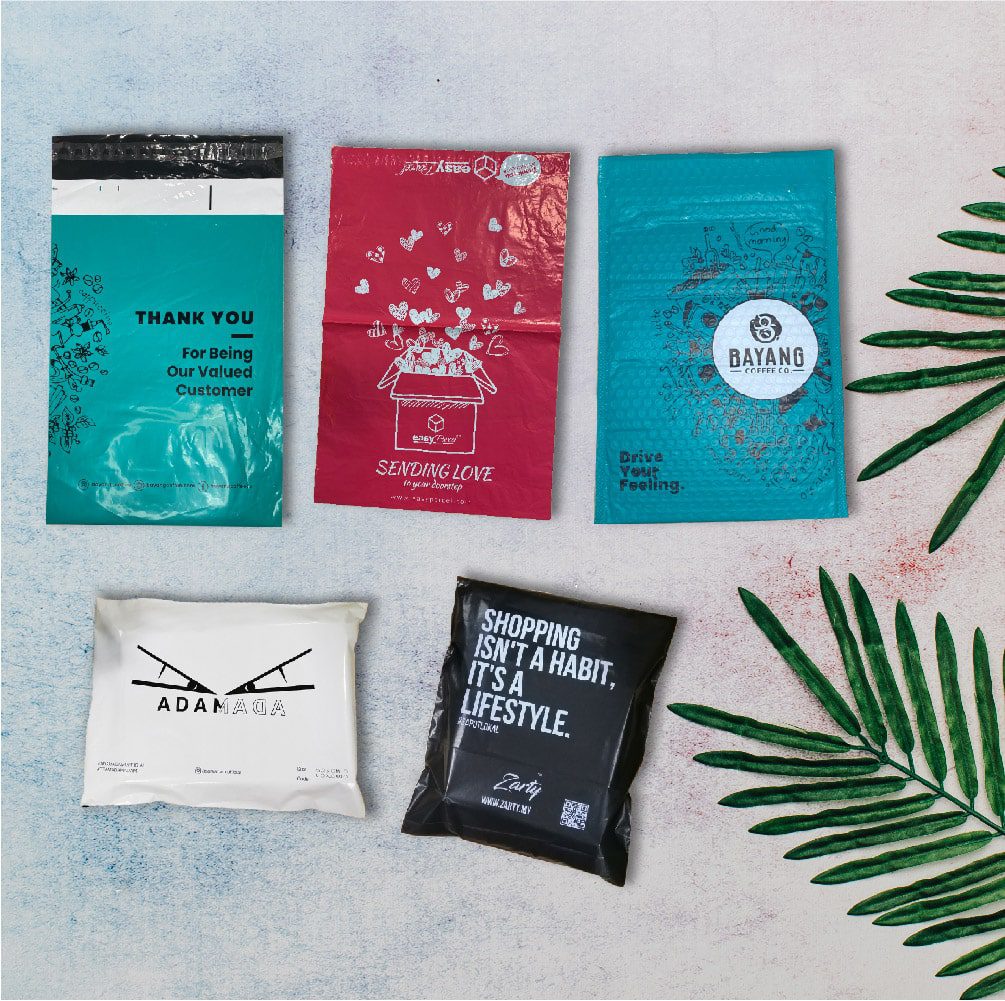
Where Colour Count Sits in the Press Sequence
Every extra spot colour is another plate, another wash-up and another run of start-up scrap. A one-colour logo runs as a single pass, while a three-colour logo carries three changeovers per order and three chances for registration drift on a small mark. The cost of that is not the ink, it is the machine time and the scrap metres.
This is the point where the logo starts to move the schedule rather than just the artwork. More colours mean more plates to cut and more setup before the run can start, and on a busy press that queue is measured in production slots rather than in hours. The number of colours is the single most controllable variable a buyer holds.
A useful way to test the decision is to price the same bag at one, two and three colours and read the difference as a per-bag figure rather than a total. If the third colour adds less than the cost of one returned parcel per thousand orders, it is worth having. If it adds more, the money is better spent on film thickness.
There is a second cost attached to colour count that rarely appears on a quote, which is what happens when one colour runs short. A four-colour job interrupted for a single ink means the whole set waits, and the restart carries another full setup. A one-colour job has one failure point instead of four, and on a tight schedule that difference is worth more than the extra colour looks like on a proof.
The Numbers to Check Before MOQ Settles
Minimum order quantity is not an arbitrary number a supplier invents. It is the quantity at which the setup waste, the plate or cylinder amortisation and the press time per colour stop dominating the unit price. Push the colour count higher and the amortisation base has to grow with it, which is why the MOQ moves when the artwork moves.
Scheduling follows the same logic. A repeat order with unchanged artwork reuses the plates and skips artwork review, so it enters the queue faster than a first order with the same quantity. Most buyers discover this only after their second order, when the same bag turns up sooner than the first one did.
Sampling, freight and any expedite option are priced off bag size, print method and order quantity. None of them carries a standing figure, and our sales team is where all three get turned into dates and amounts. The packaging MOQ page explains how the minimum is built up from those same variables.
If your first constraint is cash flow and the artwork is still moving, run a shipping bag with logo at one colour on the smallest size that fits, then add colours later. If the brand colour cannot move and the artwork is frozen, commit to the larger quantity and spread the setup across it.