
Plastic Envelope Malaysia Specs and Who Supplies Them
October 13, 2026
Shipping Bag With Logo How Three Units Drive MOQ
October 15, 2026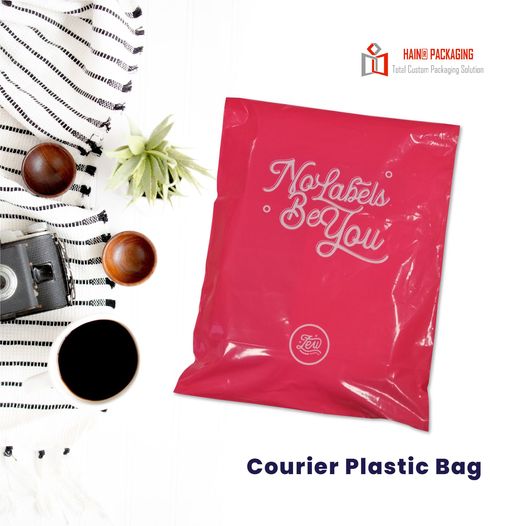
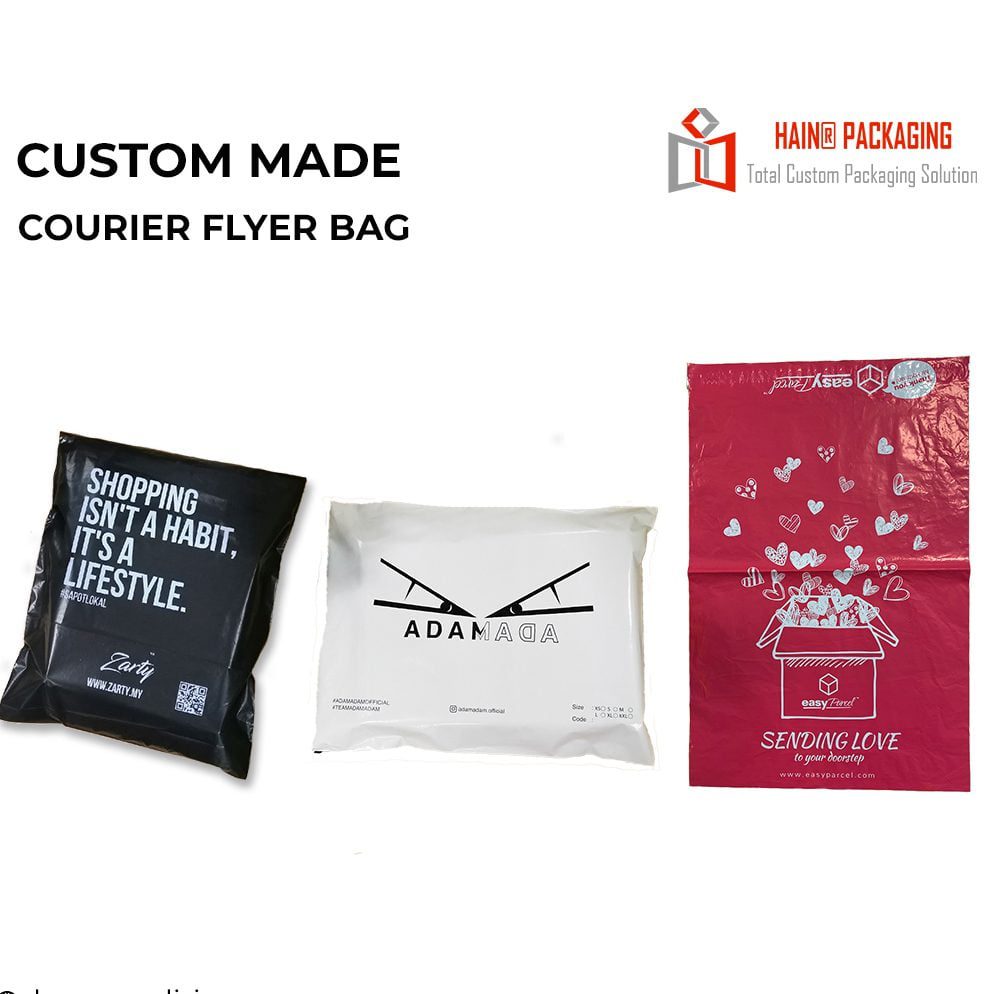
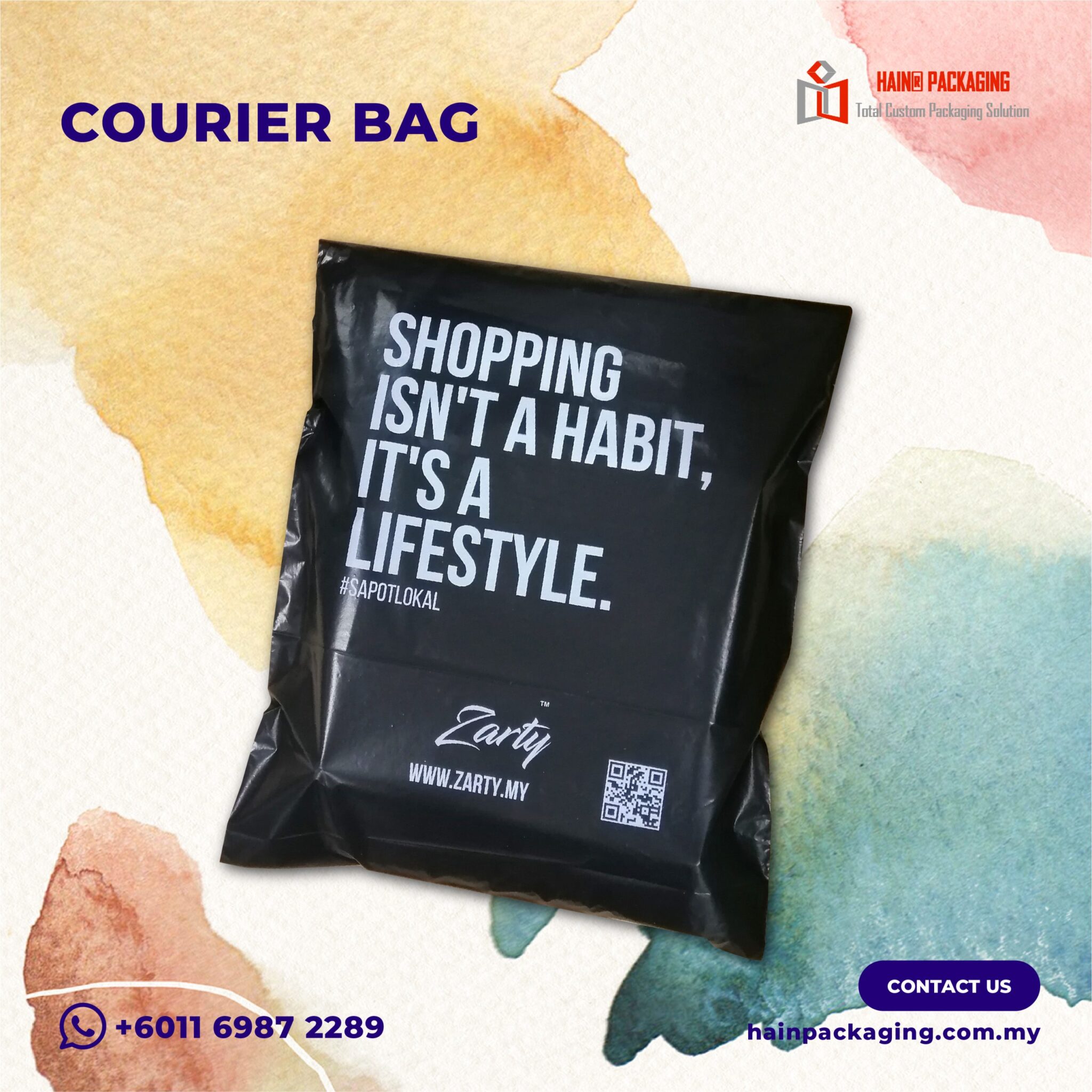
The packing bench is 1.8 m of laminated board against the back wall of a Shah Alam terrace unit. On the left sits an open carton of folded bags. In the middle, a tape gun, a handheld scanner and a 5 kg bench scale. On the right, a stack of finished parcels waiting for the 4 pm pickup. Everybody who walks past looks at the stack. Almost nobody looks at the bag underneath it, which is the part that decides whether the stack reads as a brand or as a counter queue. A printed poly mailer bag carries the logo, the brand colour and the return address, and it makes the whole trip from bench to doorstep without anybody handling it again.
Two print methods can put that logo onto polyethylene film. Flexography presses a flexible relief plate against the surface, one plate per colour. Gravure cuts the image into an engraved cylinder that holds ink in cells and transfers it under pressure. Both produce a bag that looks finished on the bench. They separate sharply once artwork, colour count and quantity start moving, and the separation shows up across four dimensions. On each dimension below, one method wins outright, and the other wins only under a specific condition.
Where the Setup Cost Starts on a Printed Poly Mailer Bag
Dimension one is the money spent before the first bag runs. Flexo plates are photopolymer sheets, exposed, washed and mounted on a sleeve, one plate per colour. A two-colour job is two plates and a four-colour job is four. Gravure needs an engraved cylinder per colour, and the cylinder is the single most expensive object in the job. At a first order of 5,000 bags in two colours, flexo wins on setup, and the gap is wide enough that most small brands never even see the gravure option.
Gravure takes this dimension back at the other end of the quantity range. Plates wear, compress and slowly lose edge definition, while cylinders hold their geometry across far longer runs. When the same two-colour artwork repeats every quarter at volume, the cylinder cost spread over each bag falls below the accumulated cost of replacing plate sets. Where exactly that crossover sits is not a figure you can look up in a table.
Plates Versus Cylinders the Storage Stage Nobody Prices In
There is a storage dimension underneath this one that buyers rarely price in. Plates are light, cheap to keep and cheap to remake, so a brand can hold three artwork versions without thinking about it. Cylinders are heavy, need racking, and are usually billed out or written off after a defined idle period, which quietly penalises the brand that changes artwork often and rewards the one that does not.
Plate cutting, sampling and the press slot follow from three inputs, which are the specification, the print method and the order quantity. Bring all three to our sales team while the artwork is still open for revision, and you get timing rather than a guess.
Colour Consistency Checks Across a Long Run
Dimension two is colour consistency across the run. Gravure meters ink out of engraved cells of fixed volume, so the density of a brand red at bag 500 and at bag 50,000 stays close. Flexo depends on anilox volume, ink viscosity and plate pressure, and all three drift over a long run. If your brand colour gets compared against a website, a shelf or a printed catalogue, gravure wins on consistency.
Flexo wins the same dimension when the run is short or interrupted. A plate change takes minutes, while a cylinder change means pulling the cylinder, storing it and re-engraving it the moment the artwork moves. An order of 5,000 bags that changes campaign artwork every eight weeks never gives gravure enough metres to pay back its own setup.
Colour arguments settle faster when they are measured rather than described. ASTM D2244 sets out how colour tolerances and colour differences are calculated from instrumentally measured coordinates, and any printer quoting a brand colour should be able to answer in those terms instead of in adjectives. When two people disagree about whether a red is right, the measured difference ends the argument.
If you are still weighing the two, the checks that matter before an order goes in are set out on our custom poly mailer Malaysia page, listed in the order they actually get checked.
The Measurement Behind Registration on a Printed Poly Mailer Bag
Dimension three is what the method does to fine artwork. Gravure holds a thin stroke and a clean gradient, so a photographic panel on a courier bag is a gravure job in most plants. Modern flexo plates hold far finer screens than they did ten years ago, but there is still a floor, and below it a thin reverse-out line fills in and disappears.
Flexo wins this dimension on bold artwork. A solid wordmark, a two-colour logo, a QR code printed at 20 mm or larger, all of these are flexo territory and print clean on film. The failure mode here is registration. Every colour is a separate plate, and a mis-registration of 0.5 mm between two colours shows immediately as a halo around a small mark. A 40 mm logo absorbs that drift without complaint, while a 6 mm wordmark does not.
The fix is usually in the artwork rather than on the press. Widening the gap between two colours, or dropping a colour that only appears inside a 3 mm detail, removes the registration risk before plate cutting starts. Our custom courier packaging notes cover how artwork gets reviewed before it reaches the plate room.
How Each Method Absorbs a Mid Run Artwork Change
Dimension four is how the job behaves when something moves. Flexo wins, because a plate is re-cut in hours, a colour is added without disturbing the rest of the set, and a corrected artwork goes on press inside the week. Gravure wins when nothing moves at all, since a stored cylinder is re-mounted and run again, and the repeat matches the original closely enough that a warehouse can mix batches without anybody noticing.
The practical difference shows up as changeover count. Four spot colours mean four plates or four cylinders, four wash-ups and four stretches of start-up scrap. Reducing a four-colour design to three usually saves more in changeover minutes than the extra ink coverage is worth, which is why artwork review happens before plates are cut rather than after.
How the Plant You Named Decides the Quote
Ask what happens to the first 200 m of every run. That figure is where the difference between a well-planned job and a rushed one actually lands, and it is the number most often missing from a quote.
None of the four is decided by the method alone. A printed poly mailer bag carrying a two-colour solid logo at moderate quantity is a flexo job and should stay one. The same bag with a photographic panel, a brand colour that has to survive a shelf comparison, and a quarterly repeat is a gravure conversation, and the honest answer may be that the first run is flexo and the repeat converts later once the artwork stops moving.
Write down four numbers before you ask for a price, which are colour count, run length, artwork type, and how often the artwork will change. Those four tell a printer which method wins, and they are the same four that drive the plate or cylinder cost. Anything you leave vague at this stage comes back as a changeover later.
One question settles most of the rest. Ask the printer which method their plant runs at the quantity you named, rather than which method they prefer in general. A plant that runs mostly flexo will quote flexo well and gravure badly, and that difference in quoting quality is often larger than the technical difference between the two methods.
Most buyers reading a printed poly mailer bag quote are at step two, with artwork in hand and quantity still a guess. The next move is to write down the colour count and the monthly bag volume, because those two numbers decide the method before anything else does.