Quality Cosmetic Packaging Supplier Malaysia | HAIN® Packaging
October 7, 2022
Trusted Dry Food Packaging Company for Quality Solutions
October 12, 2022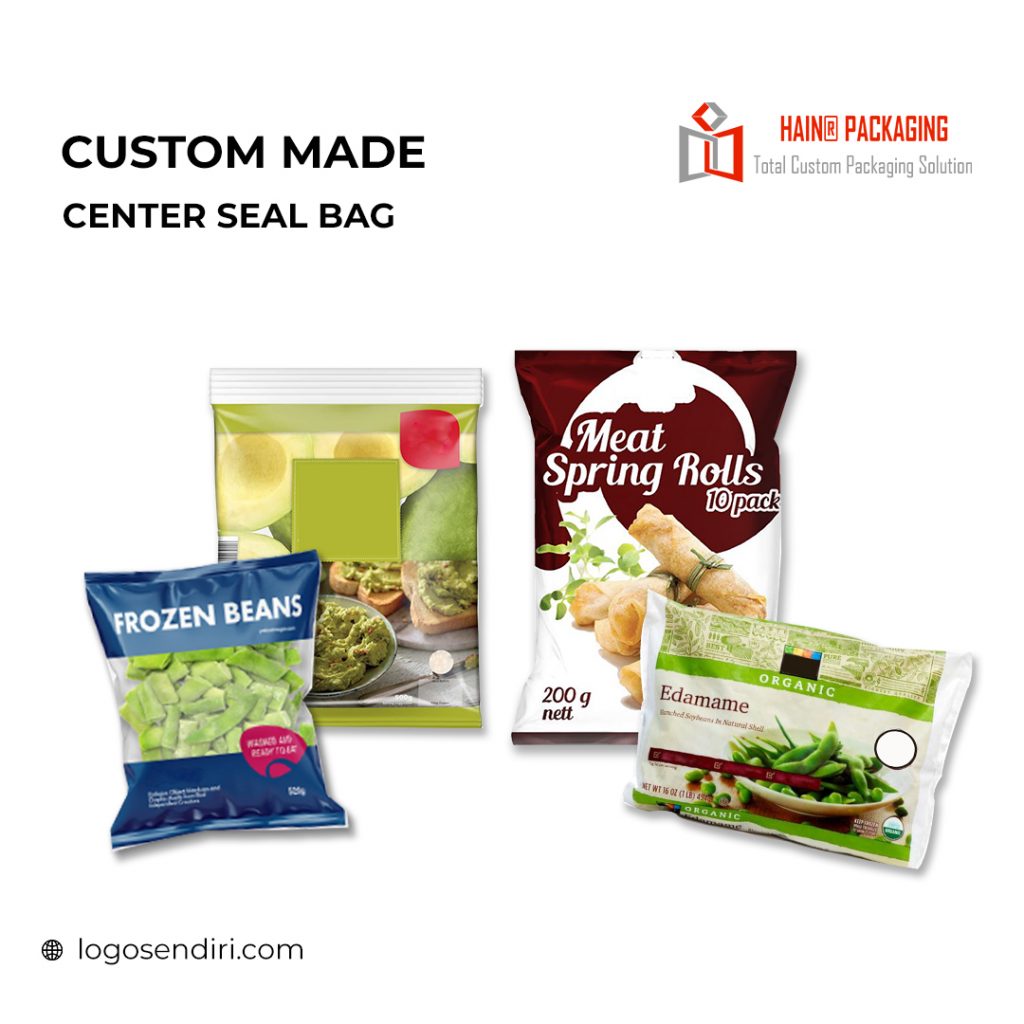
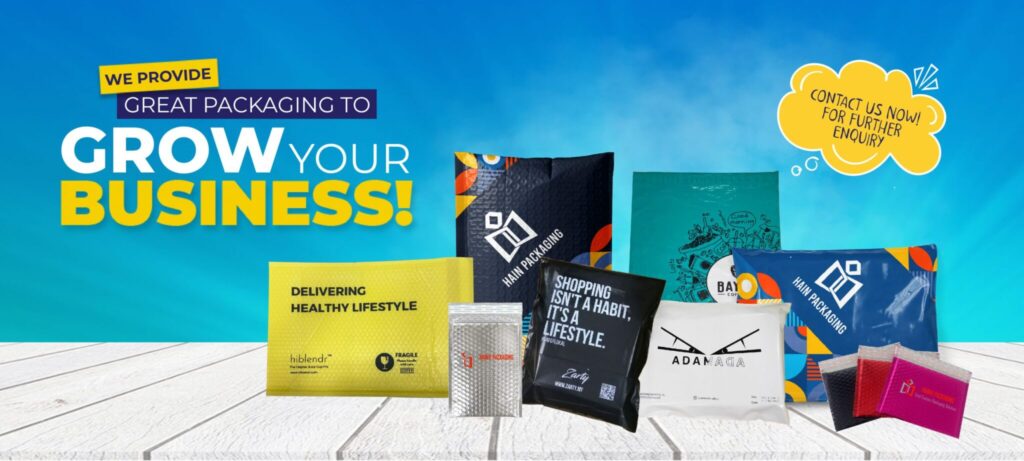
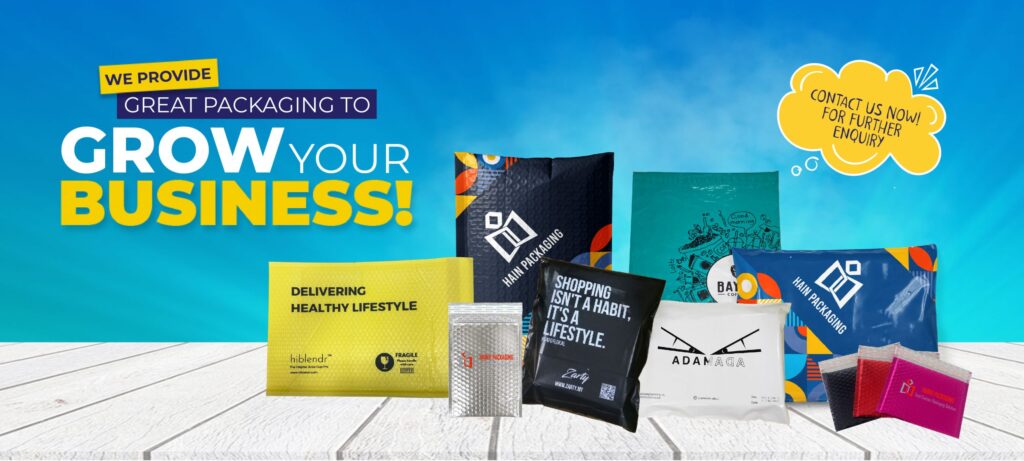
HAIN® Packaging makes customised bags and custom packaging in Malaysia. Every order is built from your specification — material, size, thickness, closure, handle and print — rather than picked from a stock range. We produce HDPE and LDPE carrier bags, courier bags, vacuum and nylon bags, aluminium foil bags, frozen food bags and food pouches, printed in flexographic or rotogravure, and we can supply printed film on the roll where the customer fills and seals on their own line. Paper bags are supplied alongside the plastic range rather than made on our own lines, and are specified by paper grade, gsm and grease resistance.
“Customised” in packaging is often used loosely. What it actually means here is that nothing is fixed except the material family and the print process. A bag can be re-proportioned, re-gauged, given a different closure, fitted with a different handle and printed with a different number of colours, and the price moves accordingly. This page explains the dimensions you can change, the formats we build, and what an order looks like from artwork to delivery.
What You Can Customise
Customisation in flexible packaging runs across six variables. Changing any one of them changes tooling, minimum quantity or unit price — which is why we quote per specification rather than per product.
1. Material. LDPE, HDPE, PP, OPP/BOPP, PET, CPP, nylon, aluminium-laminate and metallised film. The choice is driven by what the bag has to protect against — moisture, oxygen, light, puncturing or grease.
2. Size. Width, height, gusset depth and bottom gusset are all set to your dimensions. A bag that is 5mm too narrow will not run on your filling line; this is the single most common reason a customised order has to be re-made.
3. Thickness. Specified in micron. Thicker is not automatically better — it costs more and can seal poorly if the seal parameters are not adjusted with it.
4. Closure. Press-to-close zipper, slider zipper, spout, valve, lip-and-tape, or plain heat seal. Spout and valve fitments are both available; because a fitment is a separate component with its own insertion and sealing step, spouted pouches normally start at 10,000 pieces.
5. Handle and openings. Die-cut handle, patch handle, rope handle, euro slot, hang hole, tear notch, or no handle.
6. Printing. Number of colours, print process, and finish.
Bag Formats We Customise
HDPE & LDPE Carrier Bags
HDPE for retail and shopping bags where stiffness and tensile strength matter; LDPE for softer bags with better seal strength and a smoother hand feel. Both can be printed flexographically and are the standard format for retail, grocery and general merchandise. Handle options include die-cut, patch and rope. Shopping bags normally start at 5,000 pieces.
Courier & Mailing Bags
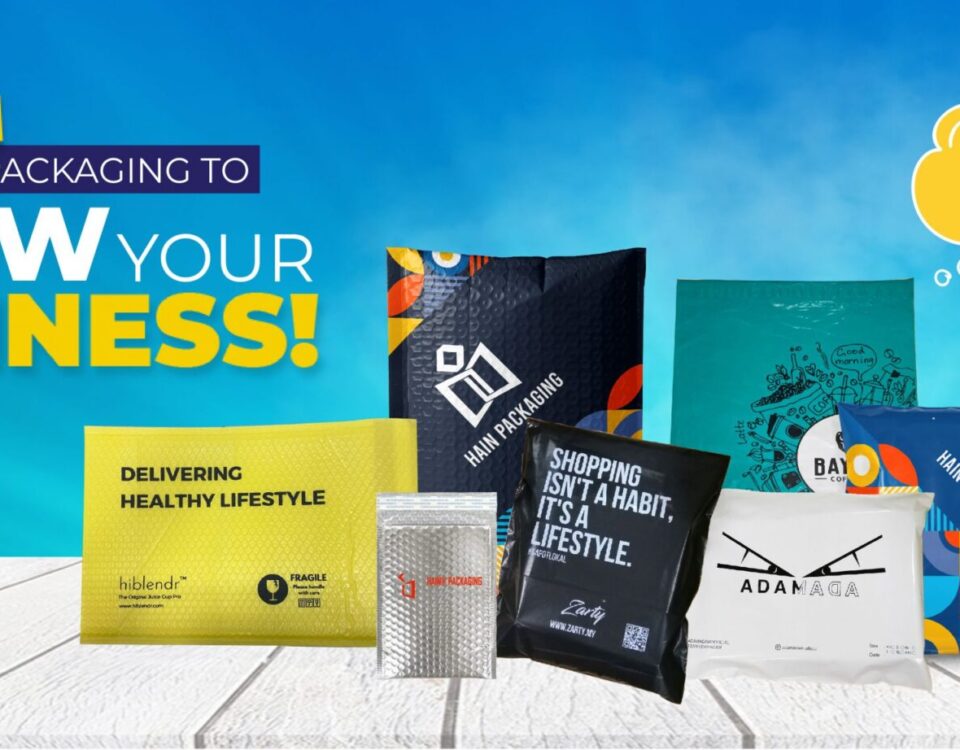
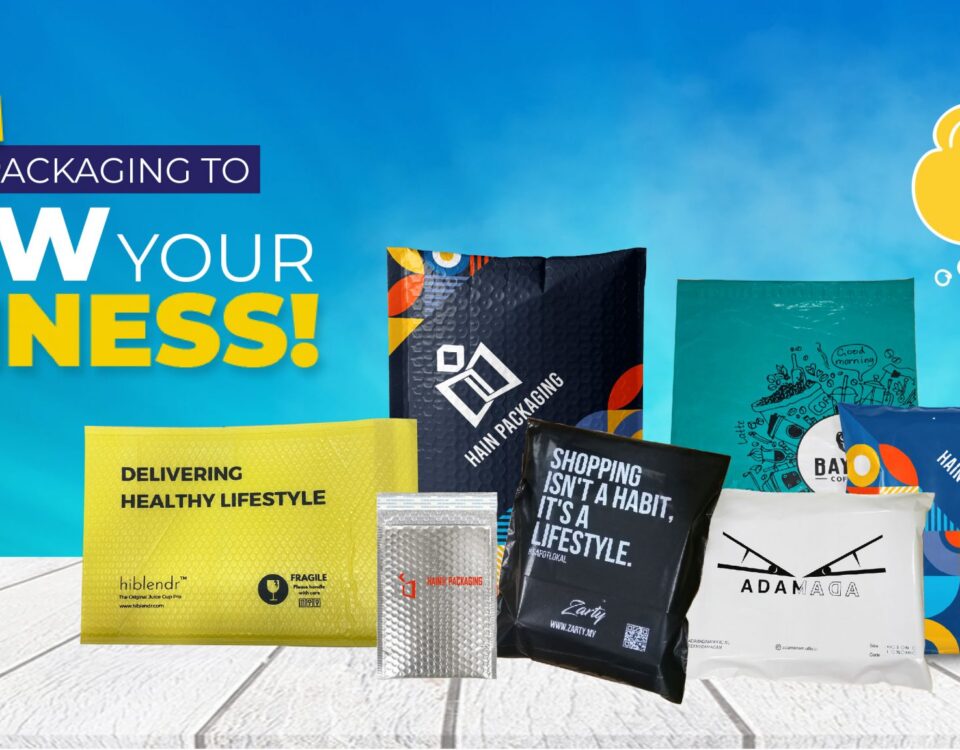
Courier bags with self-sealing lip-and-tape closure, opaque interior for privacy, and optional outer pocket for documents. Pocketed courier bags are used by e-commerce sellers who need the airway bill and packing list visible without opening the parcel.
Vacuum & Nylon Bags
Vacuum bags and nylon (PA) bags for meat, seafood, cheese and sous-vide. Nylon gives puncture resistance and stays flexible at low temperature, which is why it appears in both vacuum and frozen applications.
Aluminium Foil Bags
Aluminium-laminated bags for coffee, tea, nuts, dried fruit, powdered drinks and any product needing light and oxygen barrier. Available as flat bags, stand-up pouches, three-side-seal and with or without valve. Foil thickness and laminate structure determine how much protection the pack gives.
Metallised film sits below foil in barrier performance and below it in cost, which makes it the right choice for dry goods with a shorter shelf life. The decision between the two is usually made on what the product is actually sensitive to, not on which sounds stronger.
Frozen Food Bags
Bags for frozen product that stay flexible below zero and resist ice-crystal puncture. Material choice depends on whether the pack goes into blast freezing or only into chilled display.
Food Pouches
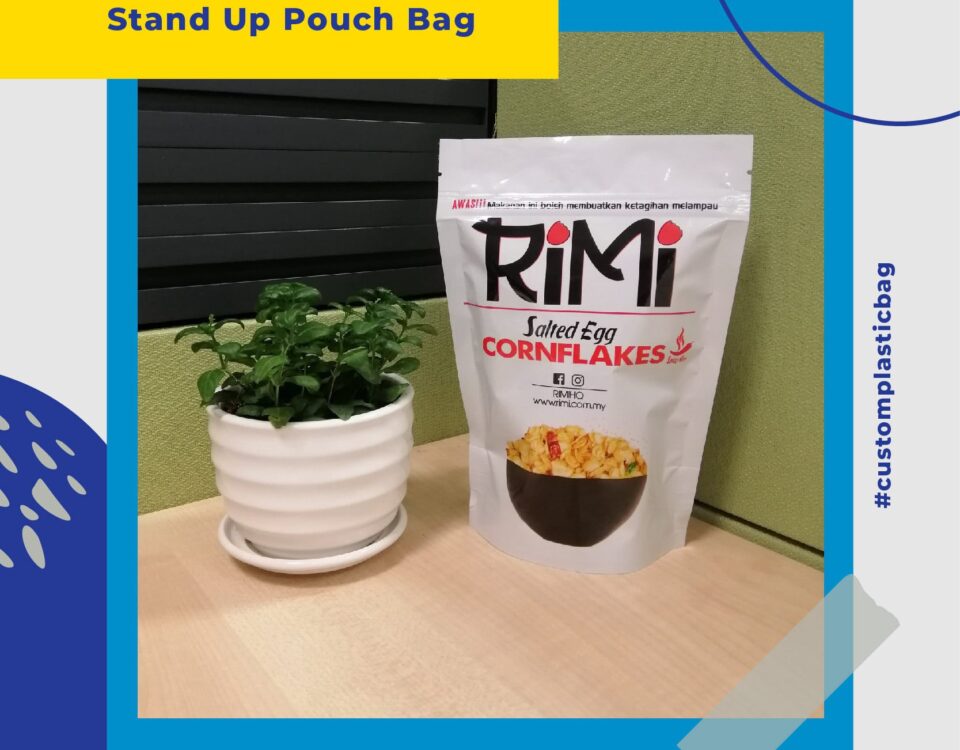
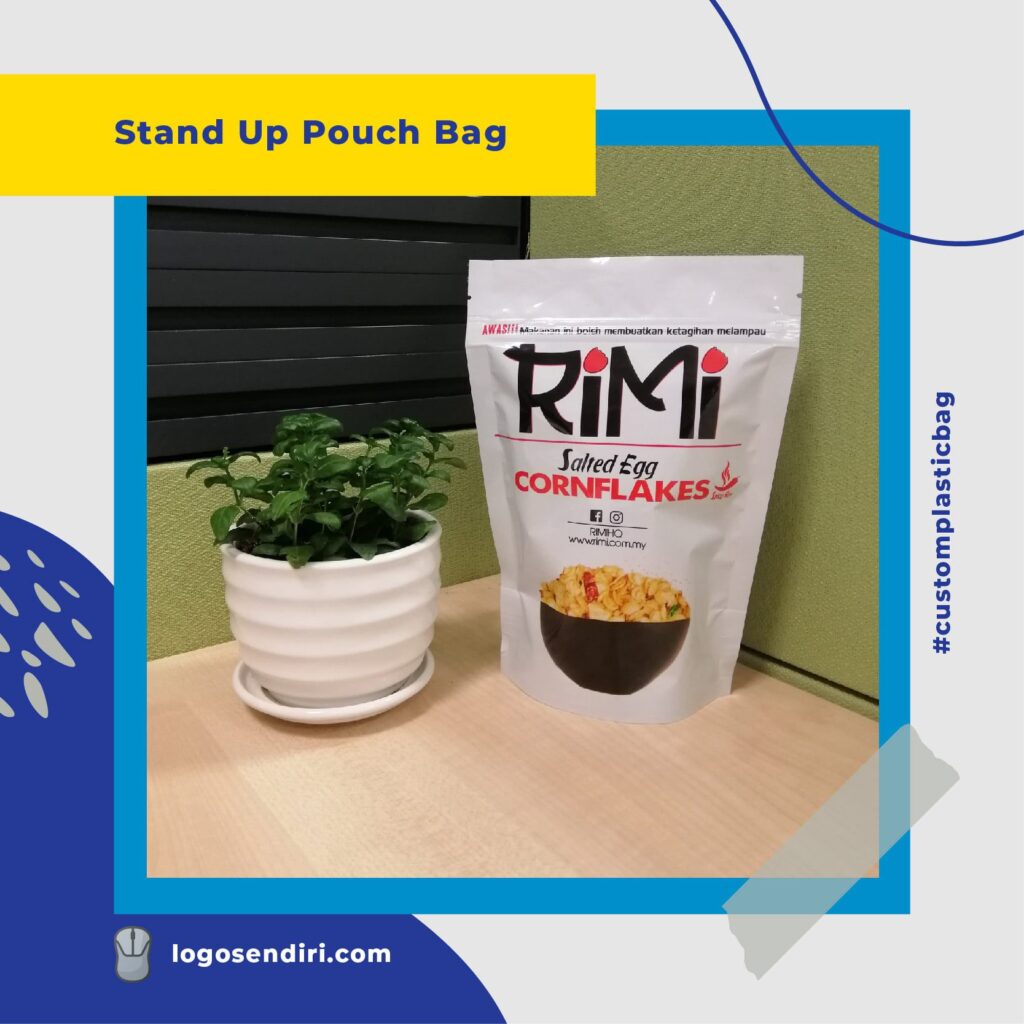
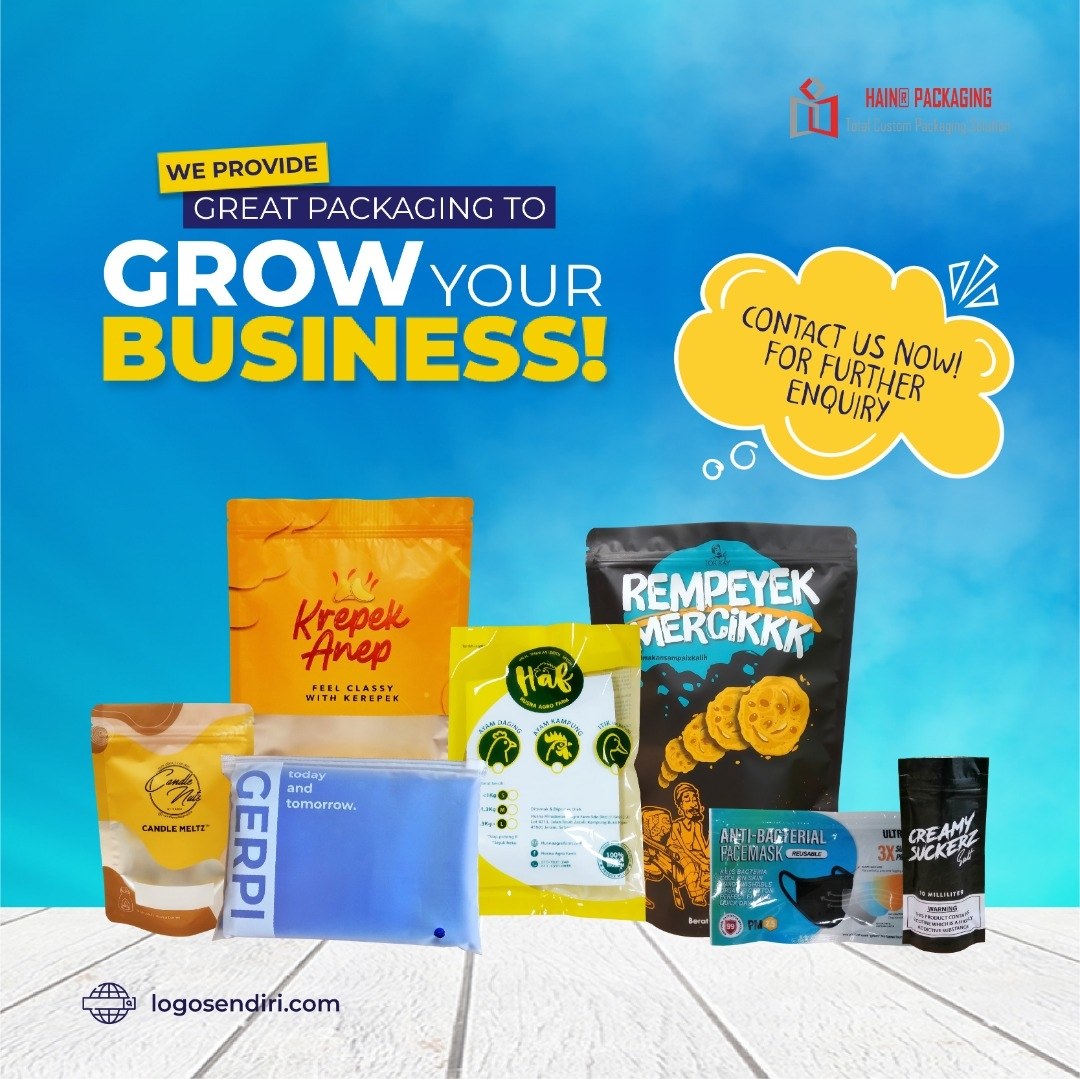
Stand-up pouches, flat-bottom pouches, three-side-seal and centre-seal pouches. Every stand-up pouch we make uses a bottom gusset. For the full pouch and ziplock range see our food packaging page.
Malaysia packaging supplier — full food packaging, ziplock and pouch range
Paper & Recyclable Bags
Paper food bags and resealable paper food bags are supplied alongside our plastic range, for buyers moving away from plastic. Paper is specified by grade, gsm and grease resistance, and the format — flat, gusseted or with a window — is confirmed against what the sheet can hold without cracking at the fold.
Printed Film on the Roll
For customers running form-fill-seal or vertical packing machines, we supply printed film on the roll rather than finished bags. Roll supply is quoted by width, total metreage and repeat length, and the specification has to carry the core diameter and the direction of print — a roll wound the wrong way will not run regardless of how correct the film itself is.
Printing on Customised Bags
- Flexographic — spot-colour work, lower plate cost, economical at mid volumes
- Rotogravure — full-colour and photographic work, higher plate cost, economical at high volumes
- Colours — up to 10 colours on rotogravure
- Finish — gloss, matte, or matte with spot gloss
- Artwork — AI or PDF, vector, fonts outlined
Matte with spot gloss is a finish we run: the body of the bag prints matte and a defined area — usually the logo or a product name — carries a gloss varnish so it catches light against the dull background. It reads as premium without a foil stamp, and it adds one pass to the print run, so it belongs in the quotation from the start rather than being added after the price is agreed.
MOQ, Lead Time & Price
MOQ. It depends on the bag type, because tooling and set-up differ from one format to the next. Food packaging — pouches, ziplock bags and food bags — normally starts at 10,000 pieces. Shopping bags normally start at 5,000 pieces. From 500 pieces we can run hand silk-screen printing for a simple logo.
These are the usual levels, not hard floors. A bag type that shares tooling with something we already run can go lower, and a format with a new cylinder or a new fitment can go higher. Send the specification, or ask our sales team on WhatsApp with the bag type and quantity you have in mind, and we will give you the exact figure for your format.
Lead time. Two schedules apply, and which one you get is a decision rather than a queue position. Rush orders run 13–16 working days from artwork approval. Normal orders run 5–7 weeks, because they are scheduled into production rather than pushed through it. Neither figure includes shipping; sea freight to overseas destinations adds roughly 3–4 weeks on top.
Price. Every job is quoted individually. Custom-made packaging has no single rate, because material, thickness, size, print method, colour count, closure and quantity all move the number independently — the same footprint can differ several-fold between a two-colour flexo LDPE bag and a ten-colour rotogravure foil laminate. We do not publish price anchors, because a published figure would be wrong for most enquiries. Send dimensions, target quantity, artwork status and your required date, and we will quote against a fixed specification.
Where We Supply
We supply from Malaysia to customers in Kuala Lumpur, Selangor, Penang, Ipoh, Johor and Kota Kinabalu, and to export customers including Singapore.
Delivery to East Malaysia and to Singapore is quoted separately, because freight and transit time differ from Peninsular Malaysia. Ask your sales representative for the current schedule to your address — the figure depends on volume, destination and mode, and it is calculated per order rather than read from a fixed table.
How a Customised Order Runs
- Enquiry — bag format, size, quantity, product to be packed
- Specification — material, thickness, closure, handle, print method proposed
- Quotation — per specification
- Artwork — send your artwork; we advise on print-ready files and colour separation
- Visual confirmation — a digital preview image of the finished bag for your sign-off
- Production — 13–16 working days for a rush order, 5–7 weeks for a normal order
- Delivery — local delivery or export packing
Design and Artwork
Simple design work and simple artwork edits we handle — placing a logo, adjusting a layout to fit the bag proportions, correcting colour separations, and checking that the file will actually print. Complex design work is the customer’s to supply: if the artwork needs to be created from scratch or rebuilt around a new structure, that belongs with your designer or agency, and we will tell you what the file needs to contain before it reaches us.
Files can be supplied as AI or PDF. Vector artwork with fonts outlined and colour references specified is what we need; the rest is confirmed against the specification once the bag shape and print method are fixed.
Physical samples. We do not produce a printed physical sample for sign-off. What we can do is show you a physical sample from a previous customer’s run, so you can handle the material and check the quality, size and thickness for yourself. That sample will not carry your logo. Printing your logo requires a production run, so the artwork is approved from the digital preview image before the cylinders or plates are made.
The reason is practical: making a single printed bag means making the plate or cylinder first, and that is most of the set-up cost of the whole job. Approving from a rendered preview avoids charging you for a tool you would only use once.
Flexo or Rotogravure: Choosing the Print Process
The print process is not a quality tier — it is a matching exercise between artwork, quantity and budget.
Flexographic printing uses a plate per colour. Plate cost is relatively low, so it suits short and mid runs and artwork built from flat colours, line work and simple solid blocks. It does not reproduce photographic gradients or fine tonal work well.
Rotogravure engraves each colour onto a cylinder. Cylinder cost is high, so it only becomes economical at volume, but it holds fine detail and photographic images across long runs without drift.
The practical decision is usually forced by the artwork. If the design is a logo and two or three solid colours, flexo is the correct answer regardless of quantity. If the design carries a photograph, a gradient background or more than a handful of colours, rotogravure is the only process that will reproduce it faithfully.
There is a second consideration buyers rarely raise: repeatability. Flexo plates wear across very long runs and print density can drift; gravure cylinders hold density across millions of impressions. For a brand that must look identical on every shelf for years, that stability has a value that does not show up in the unit price.
Why Seal Failure Is Almost Always a Specification Problem
When a bag leaks, splits at the seal or opens in transit, the instinct is to blame the material. In practice the cause is usually one of four specification errors, all of which are avoidable before the run starts.
Seal parameters set for the wrong film. Every structure has its own window of temperature, pressure and dwell. Running a laminated film on settings developed for a mono-layer film produces a seal that looks closed but has a fraction of its intended strength.
Contamination in the seal area. Powder, oil or product residue inside the seal zone prevents the two surfaces from bonding. This is a filling-line problem, but it is solved at specification stage by choosing a film tolerant of the product, or by leaving a wider seal.
Gauge too thin for the fill weight. A bag that carries more than its gauge supports will fail at the seal, because that is the weakest point of the structure.
Gusset and fold geometry that puts stress on the seal corners. Corner seals concentrate stress. Where the pack is filled tight, the corners should be reinforced or the fold geometry changed rather than the material thickened.
None of these can be fixed by ordering thicker film. They are decided when the specification is written.
What Drives the Cost of a Customised Bag
Buyers often assume a lower quotation means a better deal on the same bag. It rarely does. Cost in flexible packaging is driven by five inputs, and a quotation that is dramatically lower usually means one of them has been reduced.
Material. A barrier laminate can cost several times a plain polyethene of the same size. Aluminium foil and nylon structures carry the highest material cost and exist only where the product genuinely needs the barrier.
Gauge. Cost scales roughly with material weight, so thickness is a direct cost lever.
Print. Each colour is a plate or a cylinder, plus ink and set-up time. Print cost per piece falls sharply as quantity rises, which is the main reason MOQ exists.
Closure and fittings. A slider zipper costs more than a press-to-close track; a spout or valve adds both component and installation cost.
Quantity and scheduling. Set-up cost is fixed and spread across the run, which is why doubling the quantity rarely doubles the price. Scheduling matters as well: a normal order placed into the production queue is cheaper than the same order pulled forward as a rush job.
Reordering and Print Consistency
The second order is where customised packaging usually goes wrong. The first run is checked and approved; the second is produced months later, sometimes on different equipment, and the colour is slightly off or the bag feels different in the hand.
Three things prevent this. The specification is written down and stored against the customer, not held in a salesperson’s memory. The plates or cylinders are retained rather than discarded. And the film structure is recorded by layer and gauge, not just by trade name — “LDPE” alone does not define a reorder.
When enquiring about a reorder, quote the original specification or the original order reference. It is the fastest way to get an identical bag rather than a similar one.
Who We Supply
Food and beverage brands, coffee and tea packers, snack and confectionery producers, pet food companies, e-commerce and courier operations, apparel and accessories sellers, pharmacies and clinics, and industrial buyers needing heavy-duty bags.
Frequently Asked Questions (FAQ)
What is the minimum order for a customised bag?
Food packaging such as pouches, ziplock bags and food bags normally starts at 10,000 pieces. Shopping bags normally start at 5,000 pieces. Simple logos can be hand silk-screened from 500 pieces. The exact figure depends on the bag type.
Can I customise the size and thickness?
Yes. Size, gusset, thickness and closure are all set to your specification.
What materials are available?
LDPE, HDPE, PP, OPP/BOPP, PET, CPP, nylon, aluminium-laminate and metallised film.
Can bags be printed with my logo?
Yes — flexographic for spot colours, rotogravure for full colour, up to 10 colours.
Do you supply film on the roll as well as bags?
Yes. Printed film on the roll is supplied for customers who fill and seal on their own lines.
How long does production take?
Rush orders run 13–16 working days from artwork approval. Normal orders run 5–7 weeks. Sea freight adds roughly 3–4 weeks.
Can I get a sample first?
We do not produce a printed sample with your logo — printing requires a production run. You can see a physical sample from a previous customer’s run to check material quality, size and thickness, and the artwork is approved from a digital preview image before production starts.
Can you design the artwork for me?
Simple design work and simple edits we can handle. Complex design work needs to come from your side.
What file format should artwork be in?
AI or PDF, vector, with fonts outlined and colour references specified.
Do you supply outside Malaysia?
Yes, with export packing and freight documentation, including to Singapore.
Need help specifying this?
Send us your container drawing, film type and filling-line conditions. Our team will come back with a specification you can hand straight to a printer.