
Plastic Bag Supplier Johor Bahru: Reliable Manufacturer Supply
September 29, 2026
Low Minimum Order Packaging Malaysia: How to Start Small
September 30, 2026
Melaka’s economy runs on tourism, food, and light manufacturing — three sectors with very different packaging rhythms. A plastic bag supplier Melaka business depends on has to serve them all, from a Jonker Street souvenir shop that needs stock before the weekend rush to a sambal producer upgrading to retail shelves.

Custom-printed bags like this pharmacy example show how a single colour on a clean carrier can carry a professional brand identity without a full-colour budget — a lesson that applies to souvenir shops and food producers alike as they brand their way onto shelves.
For souvenir shops, the weekly stock check protects the weekend; for food producers, the staged upgrade protects the brand. In both cases the discipline is the same: know your usage, set your re-order point, and plan the lead time — published at 3–5 days to Melaka — into the calendar. The businesses that run this rhythm keep their shelves full while competitors scramble before every holiday.
For souvenir retailers selling in volume, printing the shop name on singlet bags turns every customer’s trip home into free advertising — at published pricing of roughly RM150–300 per 1,000 pieces for single-colour print, it is one of the cheapest marketing assets a Melaka shop can own.
For producers, the retail step does not have to be expensive if it is staged — and the supplier that supports staging, with small orders today and volume tomorrow, makes the climb possible without stretching cash flow.
Scenario 1 & 2: Tourist Retail and the Food Producer’s Shelf Upgrade
Souvenir shops live on weekend spikes, so the packaging pattern is a weekly stock check with re-order points set at two weeks of usage; printed singlet and carrier bags turn every purchase into walking advertising along the busiest streets. Food producers making the step from pasar malam to retail shelves follow a deliberate path: printed stand-up pouches for the bestseller first, food-grade film with documentation next, then branding extended across the range. Retail buyers request documentation — food-grade compliance is part of the product.

For hospitality, a short-run printed carrier with the establishment’s name is one of the cheapest branding touches available — every takeaway order carries the brand onto the street, and digital print keeps the minimum genuinely small. For e-commerce, the printed mailer does the same job at the doorstep: lightweight in freight, heavy on brand, and easy to re-order in monthly batches. Both are scenarios where a small, well-executed branded run outperforms a generic alternative at almost the same cost.
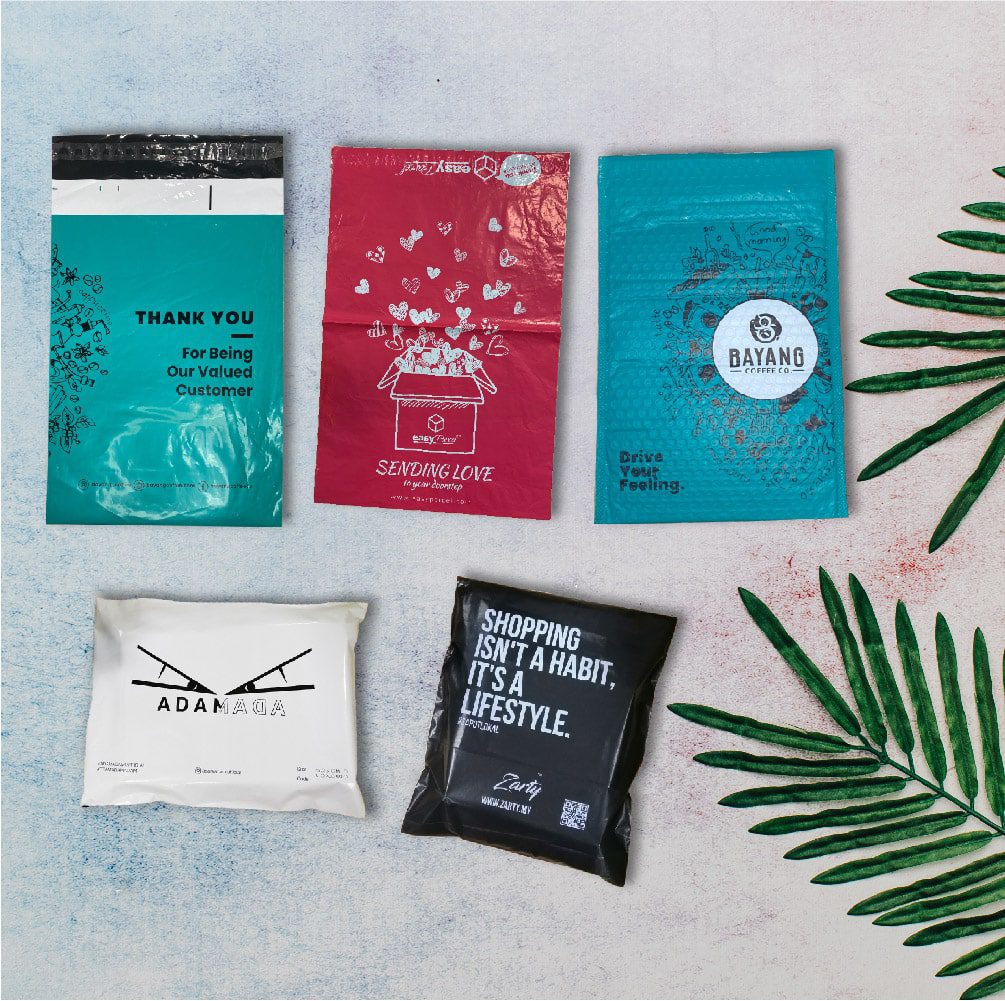
Printed poly mailers are the backbone of Melaka’s e-commerce stack — lightweight in freight, heavy on brand, and easy to re-order in monthly batches. At published pricing of roughly RM200–400 per 1,000 pieces plain and RM400–800 printed, they are also one of the cheapest branded formats available.
For e-commerce sellers the printed mailer is the cheapest full-surface advertising available: at published pricing of roughly RM200–400 per 1,000 pieces plain and RM400–800 printed, a small monthly batch costs little and reaches every doorstep your parcels travel. Combined with tissue and a thank-you card, the unboxing becomes a photographed moment — which is marketing you do not pay for twice.
Scenario 3 & 4: Hospitality Branding and E-Commerce
Hotels, cafes, and caterers use packaging as a branding channel: custom takeaway bags, printed carriers for hampers, and amenities in branded pouches. Volumes are modest, which is where short-run digital print matters. E-commerce sellers, meanwhile, run the lightweight stack — printed poly mailers, bubble-lined mailers, and ziplock bags — consolidated into one monthly order to keep postage and per-unit cost predictable.
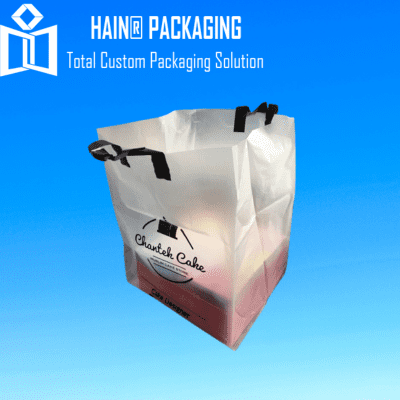
Functional packaging in Melaka’s manufacturing and agricultural sector rarely changes month to month, which is exactly why it rewards a fixed rhythm: standard specifications, a standing monthly order, scheduled delivery, and pricing that holds because the spec holds. When the specification does change, approve it in writing and re-proof the print — that discipline keeps the quiet lines running quietly.
A practical note for steady-volume buyers: when a specification does change, approve it in writing and re-proof the print before production. The quiet efficiency of standard formats depends on that discipline — specifications that stay stable, pricing that holds, and delivery that arrives on the schedule you planned.
When the specification does change, approve it in writing and re-proof the print before production; that discipline keeps the quiet lines running quietly, and it is the same discipline that protects the busier seasonal lines during the peaks.
The discipline that protects the quiet lines is the same discipline that carries the busiest tourist weekend — plan the stock, hold the window, keep the documentation ready.
Scenario 5: Manufacturing and Agricultural Packaging
Outside the city, Melaka’s light manufacturing and agriculture use functional formats: heavy-gauge flat bags, industrial LDPE, and component bags. These orders are steady rather than seasonal, which rewards a fixed monthly rhythm — predictable specifications, predictable pricing, scheduled delivery. See our manufacturer guide for what to verify with any industrial supplier.
Build a twelve-month calendar around Melaka’s economy: mark tourist peaks, festive food seasons, and quiet months; schedule stock orders around them; and use the quiet months for design refreshes and supplier negotiations. Suppliers who plan with you rather than react to the calendar turn seasonality from a stress into a rhythm — and the businesses that plan the peaks keep their shelves full while competitors scramble.
When the retail listing arrives, go through the checklist calmly: food-grade film with documentation, a label that survives shelf life, print matching the approved proof, and a pack size that fits the retailer’s plan. Retail buyers audit these things — arriving prepared is what turns a listing into a re-order, and the staging habit built in earlier stages makes that preparation routine rather than a scramble.
- Peak planning — order festive stock two to three weeks ahead.
- Buffer order — keep one extra batch of the fastest-selling format.
- Retail checklist — food-grade film, documentation, proof-matched print.
Specifications, Peak Seasons, and the Retail Shelf Checklist
Tourist peaks — school holidays, festive weekends, the year-end run — can push packaging demand 30–50 percent above baseline. The fix is planning: order festive stock two to three weeks ahead and keep one buffer order for the fastest-selling format. For producers moving onto shelves, run the checklist before the first listing: food-grade film with documentation, a label that survives shelf life, print matching the approved proof, and a pack size that fits the retailer’s plan. Published delivery to Melaka is 3–5 days, delivery only — so plan the peaks against the window.
Frequently Asked Questions
What is delivery time to Melaka? Published delivery is 3–5 days, delivery only.
Can you supply food-grade pouches for producers? Yes — with documentation on request; we guide producers through the retail shelf upgrade step by step.
Do you support small branded runs? Yes — short-run printing keeps trial orders genuinely small for hospitality and retail brands.
How should I plan for tourist peaks? Order festive stock two to three weeks ahead and keep a buffer order for the format that sells fastest.
For the wider demand picture feeding Melaka’s tourist and food economy, Mordor Intelligence’s Malaysia report tracks the same growth.
Ready to set up your packaging properly? Contact HAIN® Packaging via WhatsApp or [email protected] for a quotation. For the full product range, see the HAIN® Packaging brand site.
Melaka’s packaging story is one of rhythms — tourist weekends, festive seasons, retail listings — and the businesses that plan them run smoothly while others scramble.
And when the retail listing arrives, go through the checklist calmly: food-grade film with documentation, a label that survives shelf life, print matching the approved proof, and a pack size that fits the retailer’s plan. Retail buyers audit these things — arriving prepared is what turns a listing into a re-order, and the staging habit built in earlier stages makes that preparation routine rather than a scramble.