custom pouch price malaysia: 3 Cost Levers | Logos Sendiri
November 24, 2026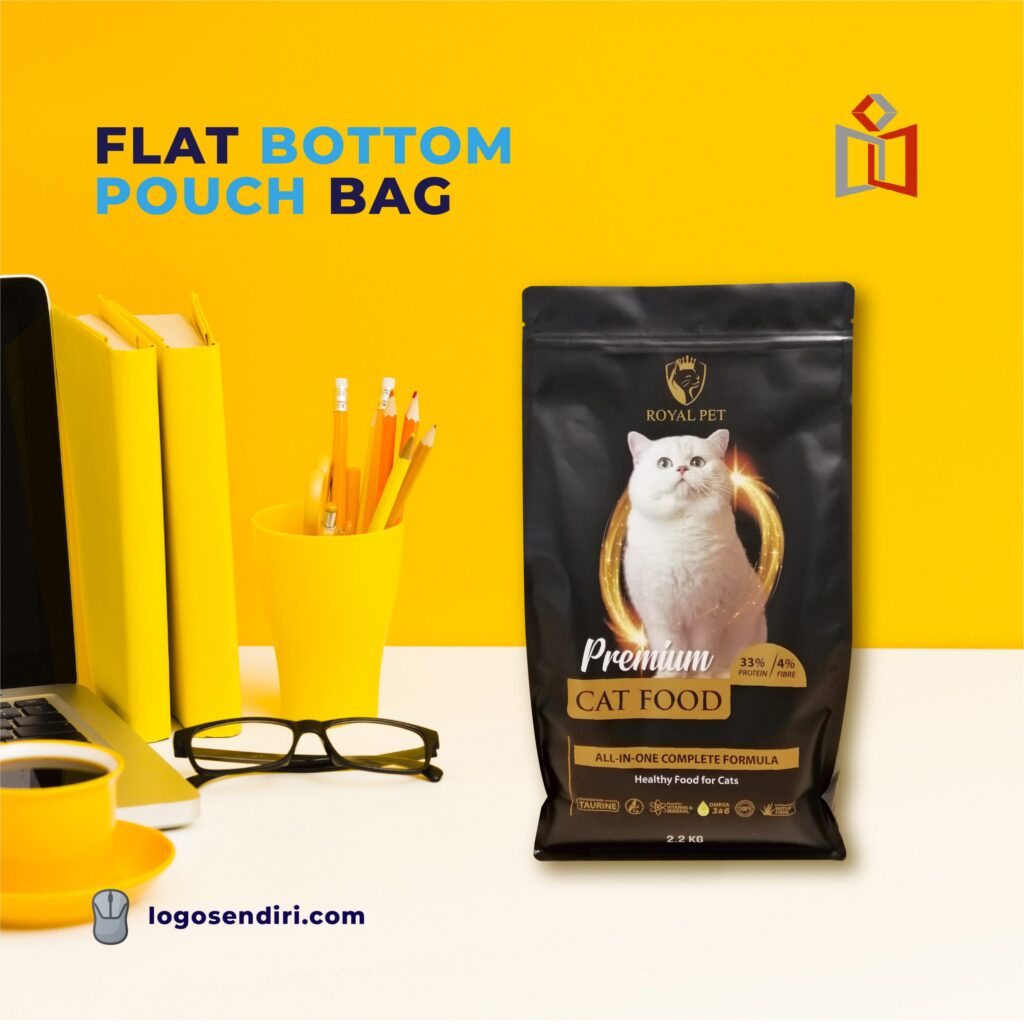
Choosing a pet food pouch malaysia format becomes far simpler when you stop asking which bag is best and start asking who is buying it. Four buyers are not choosing between the same set of options.
A home baker sells small packs of treats at weekend markets; a kibble brand is moving off sack stock; a wet food maker is fighting oil at the seal; and a private-label buyer is working to a retailer’s art deadline. They are solving four different problems that happen to be filled with pet food. The film, the gusset and the closure are downstream decisions; the buyer profile comes first.
Get that order wrong and the consequences are practical rather than theoretical. You pay for a high-barrier structure a dry kibble buyer never uses, or you approve a stand-up format for a wet recipe whose seal cannot live with fat and residue. This guide is organised around four buyer profiles, labelled A to D.
For each one I describe the failure that matters most, the format that usually answers it, and the questions to put into a written brief. I also cover what tends to change at the first reorder, because the profile that got you launched is not always the profile you are still serving a year later.
Key takeaways
- Start with the buyer profile, not the film name; the same pouch can be right for one pet food business and wrong for another.
- Dry kibble, treats, wet food and private-label runs stress different parts of the pack — seal, gusset, closure and artwork each move with the profile.
- Treat any barrier or transmission figure as a comparison, not a shelf-life outcome; confirm behaviour on your own pack and in your own storage conditions.
- Bring artwork timing and order volume into the first conversation, since both can decide whether an otherwise sensible format is practical.
- Settle a compact written brief first; that way each supplier quotes against one fixed set of requirements instead of their own reading.
Why pet food pouch malaysia starts with the buyer, not the bag
Ask a converter which pouch suits pet food and you will often get a material name in return — metallised film, foil, high-barrier laminate — as though the material itself decided the outcome. It rarely does. A structure is an answer to a specific problem, and the problem belongs to the buyer.
If you cannot say in one sentence who is buying, how the product is filled and where the pack is likely to fail, you cannot judge whether a proposal is clever or merely expensive.
Consider a small treat maker who packed dried meat strips in a glossy stand-up pouch because it photographed well for an online store. The pack looked excellent on a shelf and the first orders went out happily. Then customers began to complain that the strips arrived soft and that the resealable top no longer closed properly. The instinct was to add another barrier layer.
The real issue was that the format had been chosen for the photograph, not for a product that was oily, aromatic and handled many times before it was finished. Once the brief began with “small oily treats, sold in small packs, reopened repeatedly”, the converter could discuss a seal area that tolerated residue and a closure that survived repeated use.
That shift gave the converter something concrete to discuss.
That story repeats across the pet food pouch malaysia market in different forms. Start with the buyer rather than the film. Three parts of the brief then get sharper at the same time. You stop paying for protection the product never uses, you shorten the trial loop because you are testing the thing that actually fails, and you hand the supplier something measurable to quote against.
A useful habit is to write the buyer sentence at the top of the brief before any format is mentioned: “home-based treat maker, small packs, direct to customers, pack reopened several times.” Use that sentence as a yardstick for each later choice, and drop any element that cannot be traced back to it.
Any layer, gusset or finish that cannot be tied to that sentence is decorative detail, not a specification. This habit shortens supplier calls: both parties discuss the same failure instead of trading material names.
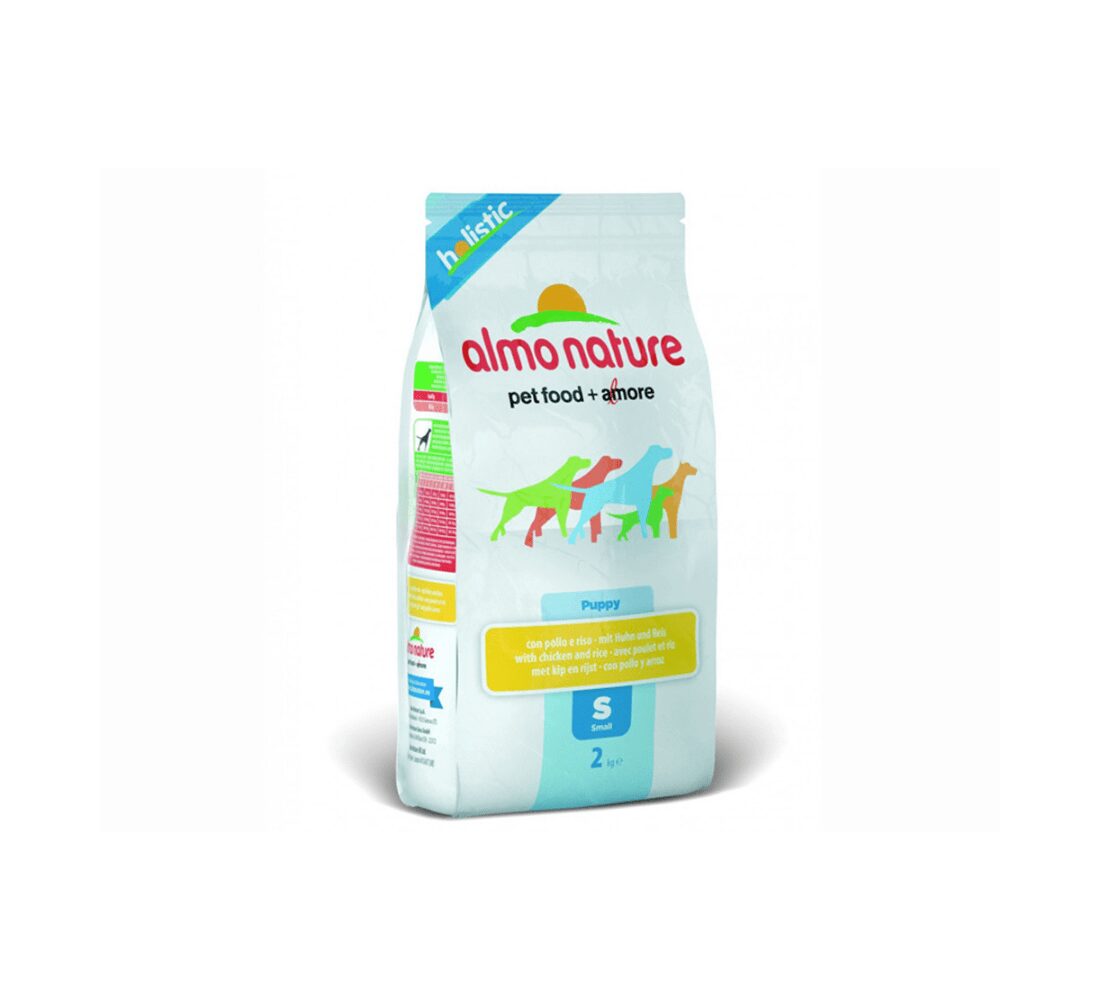
The printed puppy food bag above shows why the buyer question matters before the artwork question. A bright, friendly pack is exactly right for a family pet brand and entirely wrong for a plain private-label line that a retailer wants to brand itself.
The photograph can tell you the print is lively; it cannot tell you how the seal behaved on the filling line, whether the base stayed upright once filled, or what happened after the pack was opened. Those are specification questions, and they are answered by the buyer profile rather than by the picture.
Profile A: small home treat makers selling by the pack
The first profile is the home-based producer. This buyer makes biscuits, jerky or mixed treats in small batches and sells them by the pack at markets, through social media or to a handful of local shops. Volume is modest, cash flow is tight, and the buyer often fills and seals by hand or on a small bench machine. The pack is part of the product story because there is no large advertising budget behind it.
The failure that matters here is usually the closure, not the barrier. Treats are opened and reopened, and crumbs or oil find their way into the seal area. A pack that looks fine when it leaves the kitchen can arrive at a customer with a top that no longer closes, which reads as poor quality even when the food itself is good.
The practical answer is a simple format with a forgiving seal and a closure that a customer can use repeatedly without effort. A small stand-up pouch or a flat pouch with a clear panel often does the job, provided the closure is tested with the real crumb and oil load rather than with an empty sample.
Print expectations need attention at this stage. Home producers frequently supply artwork that is beautiful on screen but too low in resolution for a printed surface, or they change the design between batches because a promotion was added. Agree the artwork file requirements early, and decide whether the closure area will be printed over.
Shifting a heavy ink panel onto the sealing band alters performance on the line, even when the same film is used throughout. Our notes on pet treats packaging describe how treat producers handle format and finish choices when batches are small and designs change often.
What this buyer should not do is over-specify. A high-barrier laminate with a foil core is seldom necessary for a short run of dry biscuits sold locally, and it can narrow the seal window while adding cost per pack. Rank the problems honestly: if the pack is reopened often, spend the effort on the closure; if the product is oily, spend it on the seal area. Leave the exotic structures for a buyer who genuinely needs them.
Profile B: growing kibble brands moving from sacks to pouches
The second profile is the established brand leaving sacks behind. Dry kibble has traditionally shipped in heavy woven or paper sacks, which are efficient to fill but awkward on a modern retail shelf and unfriendly to a household that wants to reseal the pack. Moving to a pouch changes the economics of the whole line: the pack stands on a shelf, carries a full-colour brand message and gives the buyer a reason to choose one bag over another.
Here the failure is between format, fill and shelf presence. A gusseted stand-up pouch gives a kibble brand a broad front panel and a base that holds it upright, but the gusset introduces folds, and folds in a stiff laminate can become weak points. The fill line also matters.
Kibble is dusty, and fines migrate into the seal area on a fast line; a structure that seals beautifully in a laboratory can behave differently when powder is present. The answer is rarely more barrier. It is a seal-friendly inner layer, sensible dust control at the fill point, and a gusset style that the converter has run successfully on similar equipment.
Kibble buyers at this stage often ask for the largest possible panel. That is reasonable, but it should be weighed against the shelf space actually allocated by the retailer and the weight the filled pack must carry. A wider base can improve stability, yet it can also increase the stress at the side seams when the pack is lifted by the top.
Ask the supplier to show how the proposed format performed on a comparable fill, and confirm the seal window on your own equipment rather than accepting a figure from a data sheet. More background on how these formats are specified appears in our overview of pet food packaging in Malaysia.
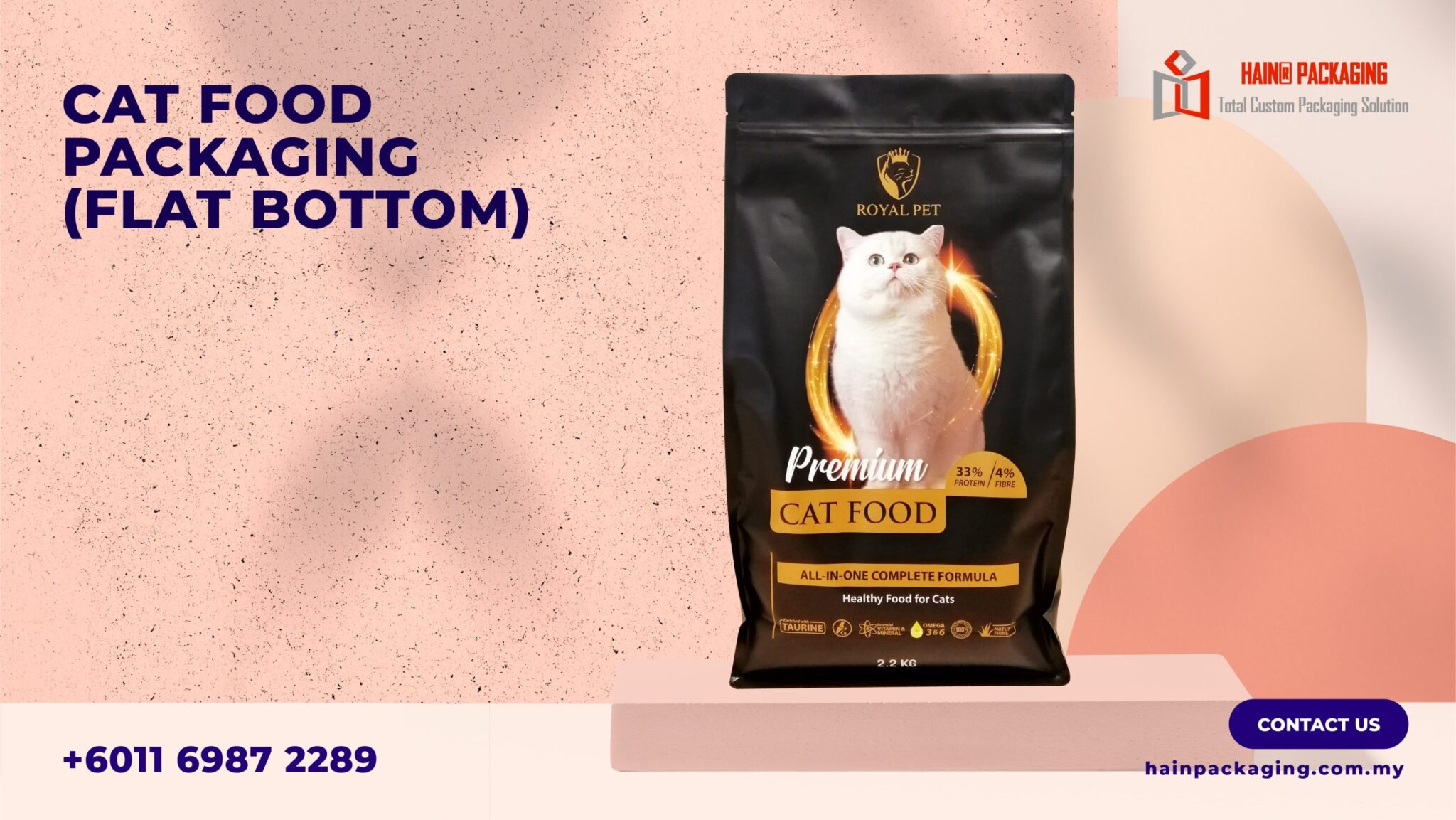
The resealable cat food pouch shown above is a good illustration of the Profile B trade-off. The flat base and strong front panel do the merchandising job, while the reclosable top gives the household a reason to keep the pack instead of decanting it.
What the photograph cannot show is how the closure was set into the film, whether the side seams carried the filled weight, and how the seal coped with fines from the kibble. Those points belong in the brief, and they are confirmed on a production-intent sample rather than a hand-made mock-up.
Profile C: wet food and high-fat recipes that stress the seal
The third profile is the most technically demanding. Wet food, gravy products and high-fat recipes put liquid, oil and residue exactly where a pouch is least able to cope: the seal. A stand-up format filled with a wet recipe must also carry weight while its base stays flat on a shelf, which adds a second problem to the first.
Buyers in this group often arrive convinced they need a stronger barrier, when the more urgent question is whether the seal and the base survive the real product.
The table below is a starting map rather than a finished specification. It shows the trait to look for, what it tends to do at the seal, the format response worth discussing, and the check that should close the question. For a pet food pouch malaysia buyer in this profile, treat the middle columns as conversation openers with your converter, not as a set of answers.
Independent background on how fat, moisture and packaging interact is published by the Food Packaging Forum, which helps frame the question before you write any figure into the brief.
| Recipe or product trait | What it does at the seal | Format response to discuss | How to confirm it |
|---|---|---|---|
| Recipe high in fat or oil | Grease works into the sealing strip and may weaken the inner film there | Broader seal area, a sealant that tolerates grease, flat-bottom base | Fill a trial batch, then examine the seal once the packs have been stored |
| Wet food or gravy | Liquid and residue reach the seal; a base must carry the weight | Reclosable flat-bottom or a structure matched to the recipe | Verify on production tooling with the real recipe |
| Dry kibble with dust and fines | Powder sits in the seal and interrupts the bond | Seal-friendly inner layer and dust control at the fill point | Check seal continuity across the whole run |
| Aromatic treats and added oils | Aroma escapes through a poor seal and outside odours enter | Barrier core plus a closure that recloses cleanly | Use a simple sensory check alongside any instrument reading |
| Chunks in sauce or layered recipes | Product can wick up the side seam | Strong side seam and a base that distributes weight | Inspect filled packs after a period in realistic storage |
This table lays the compromises out in the open, so you can see what each choice costs. Each added layer trades one benefit against another, so a tougher laminate can reduce the tolerance of the seal. If your dominant problem is oil at the seal, a barrier improvement elsewhere will not rescue the pack. Name the trait first, then let the supplier propose a structure that answers it.
For wet recipes, ask specifically how the base behaves when the pack is filled and stood on a shelf. A flat-bottom pouch distributes weight more evenly than a conventional stand-up base, but the format still needs to be checked with the actual fill weight and recipe.
Any statement about how long the product stays acceptable in that pack should be treated as a question for testing, not as a claim printed on a data sheet. Capture the trial in a few lines: the result that held, the part that shifted, and the adjustment for the next run.
Profile D: private-label runs with a short artwork window
The fourth profile is the private-label buyer. This may be a retailer commissioning its own brand, a distributor adding a house line, or an established company trialling a new range under a customer’s name. The product format is often already decided by the brief, the artwork arrives late, and the approval chain involves people who have never seen a filling line. The pressure is on the schedule rather than on the film.
The failure here is sequencing. Artwork is finalised before the seal area or gusset is reviewed, a dark ink block lands over the seal, or a change is made after materials have been prepared. Because several people approve the design, the buyer can also discover late that two versions of the same pack are in circulation.
The answer is not a more exotic structure; it is a written approval path and an early conversation about what can realistically change after a run begins.
Keep the first private-label format simple and widely available so that the artwork cycle has room to move. A straightforward stand-up or flat-bottom pouch with a standard closure will usually serve a short run better than a custom shape, and it leaves the brand message to do the work.
If the retailer later wants a distinctive finish, that can be introduced once the artwork and the approval steps have settled. Our overview of stand-up food pouches explains how format choices interact with print and finish once the basic pack is agreed.
Timing deserves a plain answer rather than an invented number. How long an order takes is tied to the exact build and the quantity involved; agree the timing with sales before you fix any launch plan. Raise the approval steps and the artwork file requirements in the first conversation, not after the design has been signed off by everyone. A private-label run that misses its window is usually a planning failure, not a packaging failure.
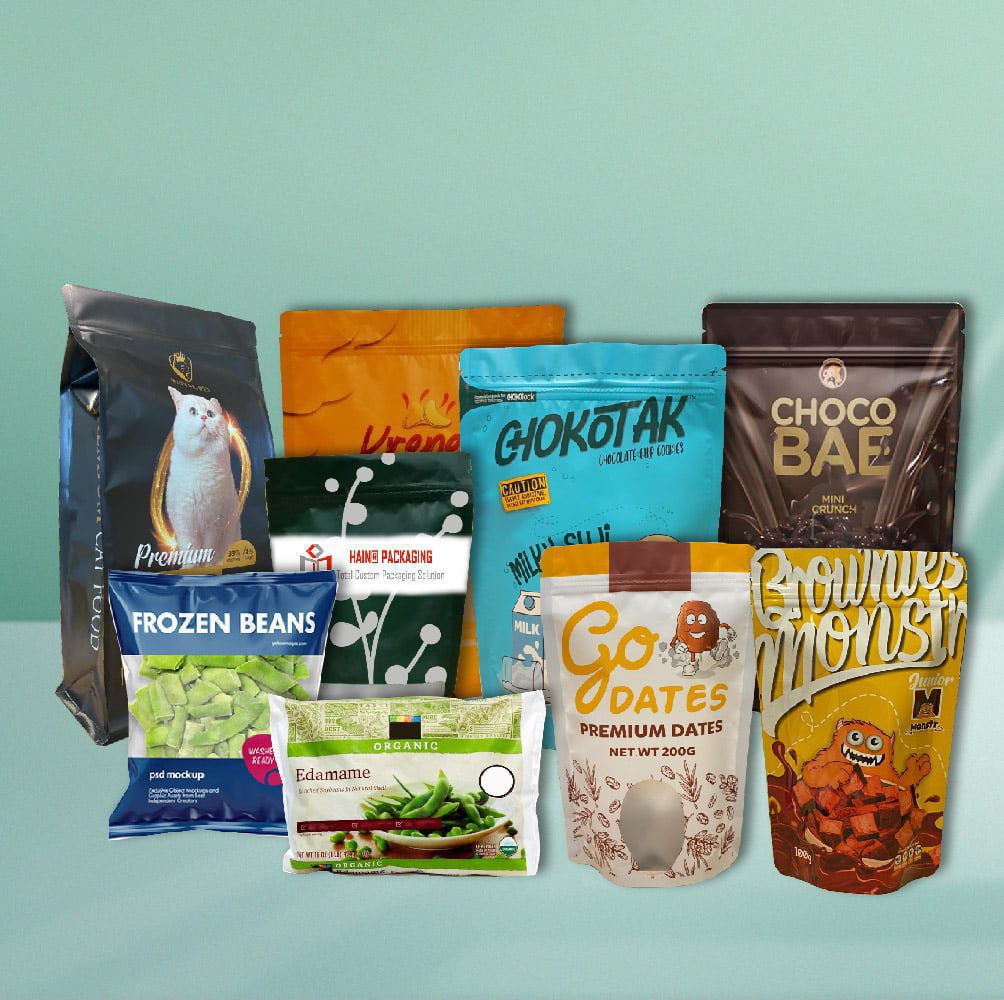
The assortment shown above makes the private-label point neatly: the same shelf can hold pet food, frozen vegetables, cookies and confectionery, each in a format chosen for its own product. A buyer entering pet food for the first time should resist the temptation to copy a format from a neighbouring category.
The fact that a brownie pouch works on the next shelf says very little about a greasy treat or a wet recipe. Choose from the buyer profile, then use the shelf as a check on legibility rather than as the reason for the choice.
Match each pet food pouch malaysia profile to a format
Once the four profiles are on the table, the format conversation becomes much shorter. You are no longer asking for the best pouch in the abstract; you are asking which structure, closure and base answer the problem that a particular buyer actually has. The table below turns each profile into a starting format and a growth path, together with the items the brief must pin down before a quote is meaningful.
| Buyer profile | Format that usually fits first | Format to grow into | What the brief must pin down |
|---|---|---|---|
| A — home treat makers | Small stand-up or flat pouch with a simple closure | Printed stand-up pouch with a reclosable top | Fill weight, closure preference and artwork file quality |
| B — growing kibble brands | Gusseted stand-up pouch | Larger gusseted format with a slider or zipper | Fill line, shelf footprint and print surface |
| C — wet and high-fat recipes | Flat-bottom pouch with a robust sealant | Reclosable flat-bottom or a recipe-matched structure | Seal area, residue behaviour and base stability |
| D — private-label runs | Simple, widely available format | Refined finish once the artwork cycle settles | Artwork deadline, approval steps and order volume |
Notice that the first-column profiles are not ranked by sophistication. A home treat maker is not a smaller version of a kibble brand, and a private-label run is not a cheaper version of a wet food line. Each has a different failure that arrives first.
When a supplier proposes a format, test it against that failure: does the closure survive repeated opening, does the gusset tolerate the fill, does the seal cope with the recipe, or does the artwork window survive the approval chain?
A pet food pouch malaysia buyer who keeps the profile at the centre of the discussion will also find that quotes become comparable. Two converters pricing the same brief are answering the same question. Two converters pricing “a good pouch for pet food” are answering different questions, and the cheaper quote is often the one that quietly removed the feature you needed.
If you want to see how format, print and finish interact at a practical level, the cat food pouch formats reference collection is a useful visual check before you write the final line of the brief.
What changes when the buyer profile changes at reorder
The first order and the first reorder are rarely the same conversation. A business that began as Profile A often grows into something resembling Profile B: volumes rise, a bench fill becomes a line, and a design that was changed by hand between batches must be frozen. The reverse also happens. A brand that launched with a wide retail range may find that a small, focused line sells best, which brings the flexibility questions back.
At reorder, four things are worth revisiting. First, the seal window. A different fill speed or a slightly different recipe can change how the pack behaves even when the drawing is identical. Second, the format dimensions.
A shelf that looked generous at launch may be crowded once a competitor arrives, and a slimmer pack can sell better than a wider one. Third, the artwork. Promotions, ingredient updates and retailer requirements accumulate, and it is easy to lose track of which version is currently approved. Fourth, the quantity.
A structure that was practical at the first volume may not be available at the second, and the reverse is also true.
Buyers who track format trends often find that the industry press is a useful early signal. Packaging World reports on developments in flexible formats and converting, which helps you frame a question even though it does not replace a trial on your own pack. Treat the trend as a prompt to ask, not as an instruction to change.
Keep a single written record of what was approved at the first order: the layer order, the seal window, the closure, the gusset, the artwork version and the fill conditions. At reorder, compare against that record instead of against memory. If something has changed in the product or the line, say so explicitly and ask for confirmation rather than assuming the old setting still applies.
The same rule applies on every repeat order: the build and the quantity set the schedule, so clear the timing with sales before you lock a date in. The discipline is dull, but it is what keeps a successful pet food pouch malaysia order successful the second time around.
FAQ
Which pet food pouch format suits a first small batch?
For a first small batch, choose the simplest format that answers the product’s dominant problem. Dry treats and kibble usually start well in a small stand-up or flat pouch with a straightforward closure; oily or wet recipes generally need a flat-bottom base and a seal area designed to tolerate residue.
Keep the artwork simple and the approval chain short, then run a modest trial with the real product. A pet food pouch malaysia supplier can recommend a starting structure once you share the recipe, the fill method and how the pack will be sold.
Do dry kibble and wet food need the same closure?
No. Dry kibble is dusty and is usually filled on a faster line, so the priority is a seal that tolerates fines and a gusset that survives handling. Wet food and high-fat recipes put liquid and oil near the seal, so the priority is a robust sealant and a base that carries weight; the closure must also survive a customer opening it with messy hands.
Both can be reclosable, but the reason for choosing the closure is different. Confirm behaviour with the actual recipe rather than assuming that a closure which worked for one product will work for the other.
How should a private-label brief differ from a house brand?
A private-label brief needs a firm approval path and a clear artwork deadline, because several people outside your business may sign off the design. It should also state which elements can change after materials are prepared and which cannot. A house brand brief can spend more space on finish, distinctive shape and long-term format development.
Both need the same basic facts — product, fill method, storage conditions and order volume — but the private-label version must make the schedule explicit, since that is where the project most often slips.
Conclusion: name the pet food pouch malaysia buyer profile first
A sound pet food pouch malaysia brief is short, testable and written from the buyer outwards. Say who is buying, describe how the product fails, choose the simplest format that answers that failure, check the seal and closure against it, and confirm the whole thing with a modest trial on production-intent materials. A pet food pouch malaysia enquiry written to this pattern puts converters on equal footing, so their quotes can be weighed against one another.
The four profiles in this guide are a working tool, not a set of boxes. Real businesses move between them as they grow, and a single company may run two profiles at once. Let the buyer’s needs lead the brief instead of a preferred film, hold every sign-off in writing, and the spec stays intact from first sample through repeat orders.
Talk to Logos Sendiri about your pet food pouch malaysia format
If you want an independent read on a draft brief, the Logos Sendiri team can review format, seal and closure options against your product, your filling process and the quantity you plan to order. Tell us which of the four profiles fits, what has gone wrong up to now and which options you have tested; we will shape those details into a brief that any converter can price with confidence. Tell us about your pet food pouch project and start the conversation.