Industrial, Agricultural & Specialty Bags Malaysia: Pouches for Feed, Fertilizer & More
May 22, 2026
Personal Care & Cosmetic Packaging Malaysia: Pouches for Skincare, Shampoo & More
May 23, 2026Household & Cleaning Product Packaging Malaysia: The Smart Pouch Revolution for Detergent, Floor Cleaner & Laundry Products
When was the last time you picked up a bottle of laundry detergent and thought, “This is way too much plastic”? If you’re in the business of manufacturing or distributing household cleaning products in Malaysia, you’ve probably asked yourself the same question—but from the other side of the counter. The standard HDPE bottle for liquid detergent is heavy, bulky, and expensive to ship. It takes up shelf space that could hold more units, and consumers are increasingly vocal about reducing plastic waste.
Enter the detergent packaging pouch —a lightweight, space-efficient, and cost-effective alternative that is transforming how household cleaning brands package their products. From laundry liquid refills to floor cleaner pouches and laundry powder bags, flexible packaging is no longer a compromise; it’s a strategic upgrade.
In this guide, we’ll walk through the challenges of traditional cleaning product packaging and show you why liquid pouch packaging Malaysia has become the go-to solution for modern cleaning brands.
—
The Challenge: Heavy, Wasteful Cleaning Product Bottles
Let’s start with the problem—because it’s a big one.
The Hidden Cost of Rigid Bottles
Traditional cleaning product bottles (HDPE, PET, or PP) feel sturdy and premium, but they carry hidden costs that many manufacturers underestimate:
1. Shipping Weight Adds Up
A standard 1-litre HDPE bottle weighs roughly 40–60 grams. That doesn’t sound like much—until you multiply it by 10,000 units. Suddenly you’re paying freight costs on 400–600 kg of plastic that your customer will throw away. In contrast, a detergent packaging pouch for the same volume weighs just 8–12 grams—an 80% reduction in packaging weight.
2. Bulky Inventory Storage
Rigid bottles arrive pre-formed and take up enormous warehouse space. A pallet of empty 1-litre bottles holds roughly 2,000–3,000 units. The same pallet footprint can hold 15,000–20,000 empty pouches. For a growing brand in Malaysia, that difference in storage efficiency is the difference between renting one warehouse or two.
3. Higher Carbon Footprint
Heavier packaging means more fuel consumed per shipment. With consumers and regulators alike pushing toward sustainability goals, the carbon footprint of rigid plastic bottles is becoming a reputational liability. Pouches made from multi-layer flexible films consume significantly less energy to produce and transport.
4. Consumer Pushback on Plastic Waste
Malaysians are increasingly eco-conscious. A 2023 survey by the Malaysian Plastics Manufacturers Association found that 68% of consumers prefer products with minimal packaging. Rigid bottles are seen as wasteful—especially when the product inside is used up and the bottle, often contaminated with residue, ends up in landfill rather than recycling.
Why the Pouch Solution Exists
The cleaning industry globally has been pivoting to refill pouch formats for over a decade. Unilever, P&G, and SC Johnson all offer refill pouches for their flagship detergent and floor cleaner brands. In Malaysia, this trend is accelerating as local brands realise they can compete with the big players by adopting the same packaging technology—at a fraction of the tooling and mould cost.
—
Detergent Pouch & Refill Packaging: The Smart Alternative
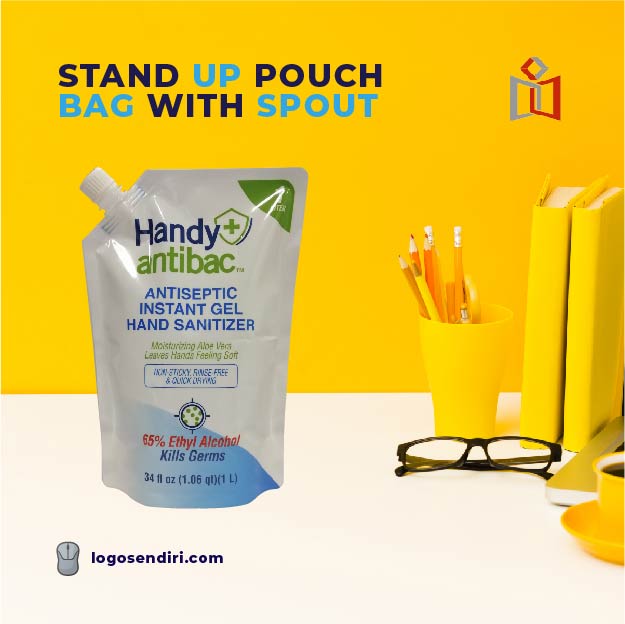
What Is a Detergent Packaging Pouch?
A detergent packaging pouch is a flexible, multi-layered bag designed to hold liquid or powdered cleaning products. Unlike rigid bottles, these pouches are manufactured flat, filled through a spout or nozzle, and sealed to create a leak-proof container. They are commonly available in:
– Stand-up pouches with spouts —for liquid laundry detergent and fabric softener
– Flat pouches with resealable zippers —for powdered detergent
– Doypack-style pouches —for floor cleaners and multi-surface sprays
< For more options, check out our guide on doypack pouches Malaysia./p>
Why Malaysian Brands Are Switching
Cost Savings (Up to 40%)
Switching from a rigid bottle to a detergent packaging pouch can reduce total packaging cost by 30–40%. The savings come from material cost reduction, cheaper shipping, lower warehousing overheads, and faster production line speeds (pouches run on form-fill-seal machines at 60–120 pouches per minute versus 20–30 bottles per minute on a typical bottling line).
Shelf Impact
Modern flexographic and rotogravure printing on pouches delivers vibrant, high-resolution graphics that rival—and often beat—what you can achieve on a blow-moulded bottle. Full-surface decoration means your brand story covers every visible millimetre of the pouch, not just a front label.
Consumer Convenience
Refill pouches are lighter to carry, easier to pour (with spout closures), and take up less space in the home. For recurring customers, offering a refill pouch at a 15–20% lower price point than the bottle version builds brand loyalty and repeat purchases.
Real-World Malaysian Example
Local brand LiquidGuard (a fictionalised composite) switched from 1-litre HDPE bottles to a detergent packaging pouch with a flip-top spout. They reduced per-unit packaging cost by 35%, cut shipping container utilisation by half, and saw a 22% increase in repeat purchases within six months—driven entirely by customers who preferred the lighter, easier-to-store refill format.
—
Floor Cleaner Refill Pouches: Liquid Tight Solutions
The Unique Demands of Floor Cleaner Packaging
Floor cleaners present a specific packaging challenge. Many contain concentrated surfactants, fragrances, and sometimes bleach or ammonia-based compounds. These formulations are aggressive on standard packaging materials and demand a higher standard of chemical resistance and liquid tight packaging.
How a Floor Cleaner Refill Pouch Works
A floor cleaner refill pouch is constructed from multiple layers of specialised film:
1. Outer layer —PET or BOPP for printability and scuff resistance
2. Middle layer —nylon or EVOH for oxygen and moisture barrier
3. Inner layer —linear low-density polyethylene (LLDPE) or cast PP for heat-sealing and chemical resistance
This multi-layer structure ensures the pouch remains liquid tight packaging even with aggressive formulations. The key is the seal integrity: the spout or nozzle area must be engineered to withstand the internal pressure of liquid products without weeping or leaking.
Why Floor Cleaner Pouches Are Growing in Malaysia
Floor cleaner is one of the highest-volume household products in Malaysia. Every home, every office, every retail space uses it. The refill pouch format is ideal because:
– Refills are cheaper —consumers save money by buying the pouch instead of a new bottle
– Less plastic waste —the pouch uses 80% less plastic than a rigid bottle
– Stackable inventory —pouches lie flat in shipping cartons, maximising container space
– Retail-friendly —pouches can be hung on peg hooks or displayed flat on shelves
Liquid Tight Packaging Test Standards
Any reputable packaging manufacturer in Malaysia tests floor cleaner refill pouch seals against:
– Hydrostatic pressure testing —simulating the weight of stacked pouches during shipping
– Drop testing —from 1 metre onto concrete (simulating warehouse accidents)
– Temperature cycling —40°C to 4°C to simulate real-world storage variance
– Chemical compatibility —the pouch film is soaked in the intended product for 30 days at 50°C to verify no degradation
A quality liquid tight packaging solution for floor cleaners should pass all these tests with zero leakage.
—
Laundry Powder Pouch Packaging

Powder vs Liquid: Different Packaging Needs
While liquid detergents dominate the premium segment, laundry powder pouch packaging remains a massive market in Malaysia—especially for budget-conscious households and commercial laundries. Powder packaging has different requirements than liquid:
| Requirement | Liquid Pouches | Powder Pouches |
|---|---|---|
| Moisture barrier | Moderate | Critical (powder clumps when wet) |
| Seal strength | High (liquid weight) | Moderate |
| Valve/spout | Required | Optional (resealable zipper works) |
| Drop resistance | Critical (splash risk) | Moderate (powder doesn’t spill as badly) |
The Right Film Structure for Laundry Powder Pouches
A laundry powder pouch needs excellent moisture barrier properties. If moisture penetrates the pouch, the powder clumps, discolours, and loses efficacy. Typical film structures include:
– PET / metallised PET / PE —for standard shelf life up to 12 months
– PET / aluminium foil / PE —for extended shelf life (18–24 months) or humid environments like Malaysia
Features That Sell Laundry Powder Pouches
Resealable Zippers
A resealable zipper closure is often the deciding factor for consumers choosing a laundry powder pouch over a traditional box or bag. It keeps the powder fresh, prevents spills, and extends the usable life of the product.
Window Patches
Some brands opt for a transparent film window so consumers can see the powder colour and texture. This builds trust, especially for new brand entrants competing against established names.
Tear Notch & Euroslot
A tear notch for easy opening and a Euroslot for peg-hook display are standard features that improve usability and retail presentation.
Malaysia’s Humidity Is a Factor
At 80–90% relative humidity year-round, Malaysia’s climate is unforgiving for powdered products. Any liquid pouch packaging Malaysia manufacturer worth working with will specify a film with a water vapour transmission rate (WVTR) of less than 1 g/m²/day. Anything higher and your laundry powder will arrive at the retailer as a solid brick.
—
Liquid Tight Packaging Technology for Household Products
What Makes a Pouch “Liquid Tight”?
The phrase liquid tight packaging isn’t marketing jargon—it’s a technical specification. A truly liquid tight pouch prevents any migration of liquid through the seal area or film body under normal handling, stacking, and shipping conditions.
The Engineering Behind Liquid Tight Seals
Heat Seal Temperature Control
The seal is the most vulnerable point on any pouch. Heat seal temperature must be precisely controlled (±2°C) to achieve consistent bond strength without burning through the film. Modern form-fill-seal machines integrate closed-loop temperature controllers that report real-time data to the production supervisor.
Seal Jaw Geometry
The shape and surface texture of the seal jaws matter. Knurled jaws create a patterned seal that distributes stress more evenly than a flat seal. For liquid tight packaging, a combination of flat and knurled sections is often used—flat for the primary seal barrier, knurled for mechanical strength.
Spout Integration
For liquid products, the spout is the second-most-critical leak point. Spouts are either:
– Inserted before filling —spout is pre-welded into the pouch web, then filled and sealed
– Inserted after filling —less common, used for viscous products
The spout-to-film bond must be tested at 1.5x the expected stack height pressure.
Advanced Films for Aggressive Formulations
Some household cleaners (bleach, ammonia, concentrated degreasers) require specialised film chemistries:
– EVOH barrier layer —stops oxygen ingress that can degrade certain formulations
– Nylon puncture layer —for products containing abrasive particles (scouring powders)
– Aluminium foil —for maximum barrier against light, oxygen, and moisture (though it sacrifices transparency)
—
Material Requirements: Leak-Proof, Strong Seals, Child-Resistant Options
Non-Negotiable Material Standards
When choosing a detergent packaging pouch or any household cleaning pouch, the material stack must meet these minimum requirements:
Chemical Compatibility
The inner sealant layer must be chemically compatible with the product. LLDPE works well with neutral pH detergents. For acidic or alkaline formulations (pH below 4 or above 10), a special sealant resin like Surlyn® or polypropylene-based film is required.
Seal Integrity
ASTM F88 testing (seal strength) should show a minimum of 15 N/25 mm for liquid pouches. Anything below risks seal failure during transit.
Puncture & Drop Resistance
Standard drop test: 1.2 metres onto concrete, 3 drops (one flat, one on edge, one on corner). Zero leaks permitted.
Child-Resistant Packaging (CRP) Options
For concentrated liquid detergent pouches—especially single-dose laundry liquid capsules or tabs—child-resistant packaging is legally required in many jurisdictions. In Malaysia, while not yet mandatory for all household cleaners, responsible brands are adopting CRP as a safety differentiator.
Options include:
– Press-and-turn spout closures —require two simultaneous motions
– Push-and-pull caps —common on European detergent pouches
– Reclosable child-resistant zippers —available from select packaging suppliers
Material Certifications to Look For
Ensure your packaging supplier provides:
– FDA / EU compliance statements —for food-grade equivalents (if your product has incidental food contact)
– ISO 22000 or FSSC 22000 —for quality management in packaging production
– Recyclability assessments —some pouch structures are now mono-material (PE-only) to improve recyclability
—
Custom Branding for Household Brands
Printing Capabilities That Matter
When a consumer stands in the cleaning aisle of a Malaysian supermarket (AEON, Lotus’s, Village Grocer), they have 15–20 seconds to choose your product. Your packaging is your salesman. Custom branding on a detergent packaging pouch delivers:
Gravure (Rotogravure) Printing
– Up to 10 colours
– Photographic quality
– Ideal for runs of 50,000+ units
– High upfront cylinder cost but lowest per-unit cost at scale
Flexographic Printing
– Up to 8 colours
– Good quality for simple designs
– Lower setup cost—ideal for small to medium runs
– Faster turnaround
Digital Printing
– No minimum order
– Variable data capability (different SKUs on same run)
– Quick turnaround (7–14 days)
– Slightly higher per-unit cost—offset by zero origination fees
Design Considerations for the Malaysian Market
Bilingual or English-Only?
Most household brands in Malaysia opt for bilingual Malay-English labelling. For export to Singapore (if that’s in your roadmap), English-only is standard.
Halal Certification
If your cleaning product is Halal-certified, the packaging must prominently display the Halal logo. The pouch design must accommodate this without clashing with your brand identity.
Visual Cues for Product Function
– Blue tones for laundry
– Green tones for floor cleaner
– Citrus imagery for degreasers
– White for bleach or whitening products
Malaysian consumers respond strongly to colour-coded packaging—don’t fight this convention unless you have a very strong brand identity.
Finishing Touches
– Matte vs gloss lamination —matte feels premium; gloss pops on shelf
– Spot UV —for logo or key message highlighting
– Embossing —textured brand logo (adds perceived value)
– Euroslot + hang hole —dual retail flexibility
—
Low MOQ Options for New Cleaning Product Lines
The Challenge for Small Brands
If you’re launching a new cleaning product brand in Malaysia, ordering 50,000 pouches from a gravure printer isn’t realistic. You need low MOQ packaging that allows you to test the market without committing five-figure sums.
Low MOQ Solutions in Malaysia
Digital Printed Pouches
Digital printing eliminates cylinder or plate costs entirely. MOQs start as low as 500–1,000 pouches. This is perfect for:
– Test launches
– Pop-up retail or bazaars
– E-commerce-first brands (Shopee, Lazada, TikTok Shop)
– Seasonal or limited-edition products
Standard Film with Custom Labels
If even 1,000 digital pouches feels like too much, consider standard pre-made pouches (available in common sizes like 500 ml, 1 litre, 2 litres) with custom pressure-sensitive labels applied post-production. This gives you a branded pouch at an MOQ of just 50–100 units.
Shared Container Model
Some Malaysian packaging suppliers offer a “shared container” service where they consolidate orders from multiple small brands into one production run. You share the setup cost and pay only for your share of the output. MOQs can drop to 2,000–3,000 units this way.
Cost-Estimate for Low MOQ
| Run Size | Per-Unit Cost (1L Stand-Up Pouch) | Lead Time |
|---|---|---|
| 1,000 pouches (digital) | RM 1.20 – RM 1.80 | 7–14 days |
| 5,000 pouches (flexo) | RM 0.65 – RM 0.95 | 14–21 days |
| 10,000 pouches (flexo) | RM 0.45 – RM 0.70 | 14–21 days |
| 50,000 pouches (gravure) | RM 0.30 – RM 0.50 | 21–30 days |
Scaling Up
The beauty of starting with low MOQ pouches is that you can scale organically. Launch with 1,000 digital-printed pouches, validate your product-market fit on Shopee, reinvest profits into a larger flexo run, and eventually graduate to gravure printing once you hit volume.
—
Frequently Asked Questions
1. Is a detergent packaging pouch as durable as a plastic bottle?
Yes, when properly constructed. A multi-layer detergent packaging pouch with adequate film thickness (typically 80–120 microns for liquid products) passes drop tests from 1.2 metres and stack tests of 6+ pallet layers. The seal integrity and puncture resistance are comparable to—and in some parameters exceed—thin-walled HDPE bottles.
2. Can I use a floor cleaner refill pouch for bleach-based products?
Yes, but the film structure must be specified for chemical resistance. Bleach and other oxidising agents require a special sealant layer—typically a high-density polyethylene or polypropylene-based inner layer rather than standard LLDPE. Always perform a 30-day chemical compatibility test before production.
3. What is the minimum shelf life I can expect from liquid tight packaging?
A properly sealed liquid tight packaging pouch with an aluminium foil or EVOH barrier layer will preserve product quality for 18–24 months. Without foil (transparent film), shelf life drops to 12–18 months, depending on the product formulation and storage conditions. Malaysia’s tropical climate may reduce these timelines by 2–4 months versus temperate markets.
4. Are laundry powder pouches eco-friendly compared to cardboard boxes?
It depends on the metric. Cardboard boxes are easier to recycle in Malaysia’s existing waste stream. However, laundry powder pouch packaging uses significantly less material by weight, produces less manufacturing waste, and generates lower transport emissions. The best environmental choice is a mono-material PE pouch that is technically recyclable through specialised programmes. For more options, check out our guide on recyclable stand up pouches.
5. What is the typical lead time for custom-printed detergent pouches in Malaysia?
For digital printing: 7–14 working days. For flexographic printing: 14–21 working days after plate approval. For gravure printing: 21–30 working days from cylinder engraving to delivery. Always add 5–7 days for shipping within Peninsular Malaysia.
—
Conclusion: Make the Switch to Smarter Cleaning Product Packaging
The cleaning product industry in Malaysia is undergoing a quiet revolution. Rigid plastic bottles—once the only option for detergents, floor cleaners, and laundry powders—are giving way to flexible pouches that cost less, weigh less, and waste less. Whether you’re a startup launching your first floor cleaner formula or an established manufacturer looking to modernise your packaging line, the detergent packaging pouch is the most intelligent packaging decision you can make in 2025 and beyond.
From floor cleaner refill pouch solutions that stand up to aggressive formulations, to laundry powder pouch structures that keep moisture out in Malaysia’s tropical humidity, the technology is proven, the cost savings are real, and the consumer demand is growing.
Ready to explore your options? The right packaging partner can help you select the ideal film structure, closure type, and print finish for your household cleaning product range.
Need custom household cleaning pouches with low MOQ and fast turnaround? Visit Hain Packaging —Malaysia’s flexible packaging specialists for cleaning brands. For the specifics, How to Choose Wafer, Brownie & Granola Packaging covers it step by step.