
Aluminium Foil Bag Malaysia: Complete Buyer Guide
May 22, 2026
Courier Bag Malaysia: Complete E-commerce Guide
May 22, 2026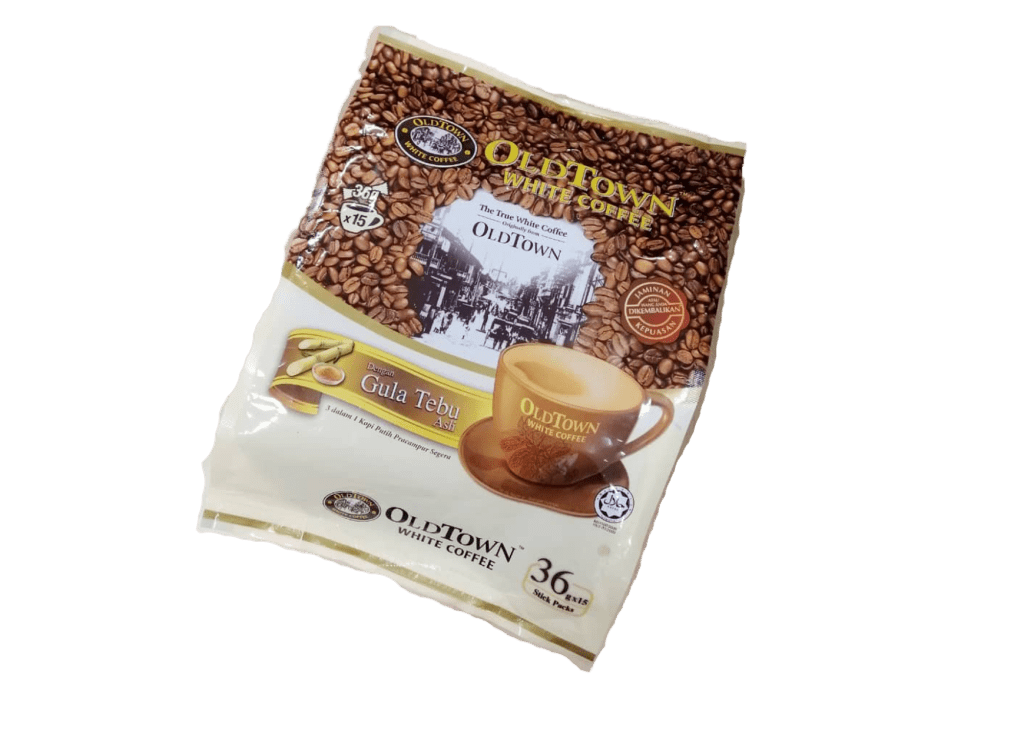
Why Coffee & Beverage Matters for Malaysian Businesses
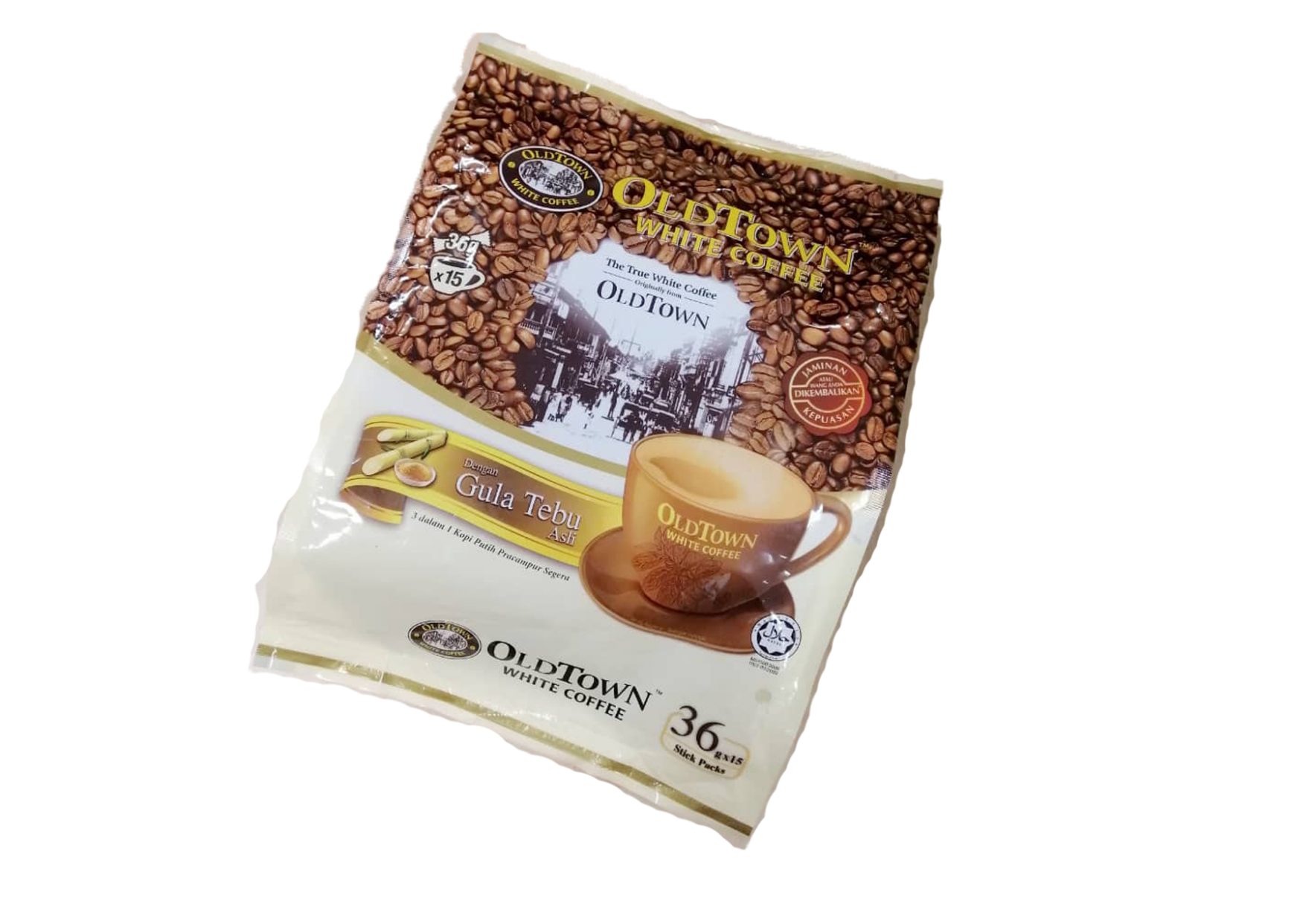
Coffee Packaging Materials Malaysia — In Malaysia’s competitive F&B and retail market, packaging is more than just a container — it’s a branding tool, a compliance requirement, and a shelf-life protector. Coffee packaging from HAIN Packaging gives your product the professional edge it needs to stand out on every shelf.
Malaysia’s coffee culture is booming. The national retail coffee market surpassed RM 1.2 billion in 2025, with specialty coffee growing at 15% annually. From traditional kopitiam blends to third-wave single-origin roasters, Malaysian coffee brands are expanding rapidly across retail, e-commerce, and foodservice channels. Each channel demands specific packaging characteristics that preserve freshness, communicate brand values, and comply with food safety regulations. Whether you need coffee packaging materials malaysia, choosing the right packaging partner is key to your success.
Coffee Packaging Materials Malaysia — The Malaysian packaging market is projected to grow at a CAGR of 3.86% through 2031, driven by e-commerce expansion and processed food demand (Mordor Intelligence). For businesses seeking reliable packaging, HAIN® Packaging Coffee & Beverage offers manufacturing expertise backed by SIRIM certification and food-grade compliance.
Coffee Packaging Materials: Everything Malaysian Brands Need to Know
Coffee is Malaysia’s fastest-growing packaged beverage category. The right packaging material directly impacts freshness retention, shelf stability, and brand perception — three factors that determine whether your coffee sells or spoils.
This guide covers every material type, format option, valve technology, and specification you need to make an informed decision for your coffee brand.
HAIN® Packaging Coffee & Beverage supplies coffee-specific packaging materials with one-way degassing valves, aluminium foil barriers, and custom print options designed for the Malaysian market.
Coffee Packaging Material Types in Detail
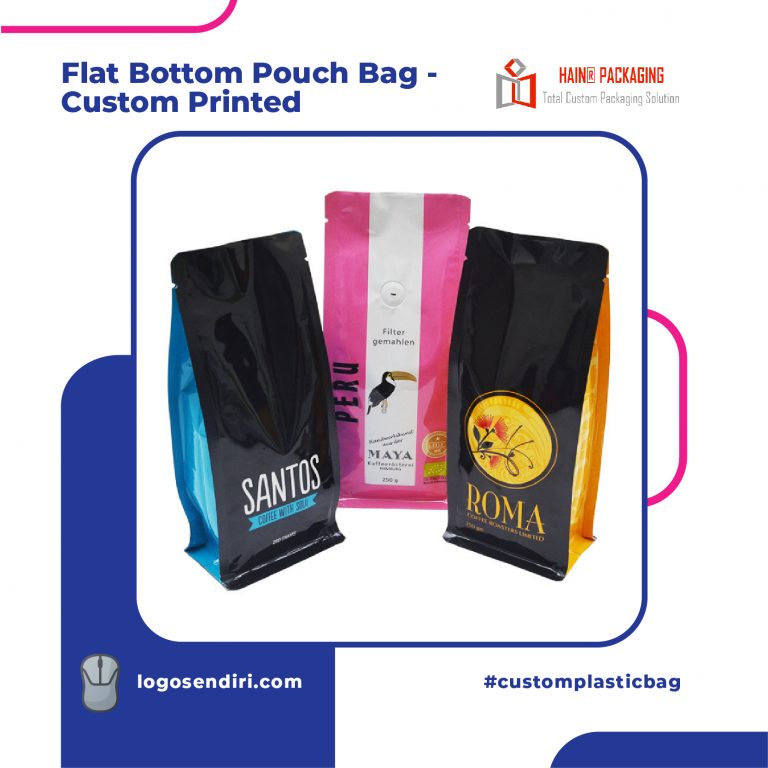
The choice of packaging material is the single most important decision for coffee freshness. Here’s a detailed breakdown of each material type available for Malaysian coffee brands:
PET/AL/PE + Valve (Ultra-High Barrier)
This is the gold standard for fresh roast coffee. The three-layer laminate combines:
- PET (Polyester) — Outer layer providing print surface, scuff resistance, and structural strength. Available in gloss or matte finish.
- AL (Aluminium Foil) — Middle layer providing the ultimate oxygen and moisture barrier. Aluminium blocks 100% of oxygen, light, and moisture when properly laminated — the only material that can guarantee true long-term freshness.
- PE (Polyethylene) — Inner heat-seal layer. Provides seal integrity and food-contact safety. FDA-compliant PE grades available.
With a one-way degassing valve, this structure preserves fresh roast coffee for 12–18 months. Best for specialty roasters, premium retail brands, and export-oriented products where long shelf life is critical.
Matte PET/AL/PE (Premium Ultra-High Barrier)
Identical barrier performance to standard PET/AL/PE but with a matte outer finish that communicates premium quality. The matte surface reduces glare on retail shelves and provides a soft-touch feel that consumers associate with specialty products. Increasingly popular among Malaysian artisan roasters who want packaging that reflects their craft positioning.
OPP/AL/PE (High Barrier, Economy Option)
Oriented Polypropylene (OPP) replaces PET in the outer layer, reducing material cost while maintaining good print quality and barrier performance. Suitable for commercial roast coffee brands where cost competitiveness matters more than premium appearance. Shelf life: 6–12 months with valve.
Kraft Paper/Al/PE (Natural Look)
Kraft paper outer layer gives an artisanal, natural aesthetic increasingly popular among specialty coffee brands. The aluminium foil and PE inner layers maintain barrier integrity. Kraft finishes work exceptionally well for organic, single-origin, and farm-direct marketing narratives — common positioning among Malaysia’s third-wave coffee roasters.
PET/PE (Moderate Barrier, No Aluminium)
Without an aluminium layer, this structure provides moderate oxygen and moisture barrier. Suitable only for products with shorter shelf life requirements: instant coffee sachets, 3-in-1 mixes, and coffee-flavoured confectionery. Shelf life: 3–6 months.
Material Comparison Table
| Material | Barrier Level | Valve Option | Best Coffee Type | Shelf Life | Cost Index |
|---|---|---|---|---|---|
| PET/AL/PE + Valve | Ultra High | One-way degassing | Fresh roast, specialty | 12–18 months | 1.0 (baseline) |
| MATTE PET/AL/PE | Ultra High + premium | One-way degassing | Premium brand, gift | 12–18 months | 1.10–1.15 |
| Kraft/AL/PE | Ultra High | One-way degassing | Artisan, organic | 12–18 months | 1.05–1.10 |
| OPP/AL/PE | High | Optional | Commercial roast | 6–12 months | 0.80–0.90 |
| PET/PE (no AL) | Moderate | Not applicable | Instant coffee sachet | 3–6 months | 0.50–0.60 |
One-Way Degassing Valve: Why It’s Essential
Fresh roasted coffee releases CO₂ for 7–14 days after roasting. Without a degassing valve, this gas builds up inside the pouch, causing:
- Pouch swelling and potential seal rupture
- Oxygen ingress when seal fails (rapid flavour degradation)
- Customer perception of “bloated” packaging as defective
The one-way valve allows CO₂ to escape while preventing oxygen from entering — the single most important feature for fresh roast coffee packaging.
How Degassing Valves Work
The valve consists of a plastic housing with a silicone membrane that acts as a one-way gate. When internal pressure exceeds 0.5–1.5 psi (triggered by CO₂ build-up), the membrane lifts and gas escapes. When external pressure is higher (normal atmospheric conditions), the membrane seals tight against the housing, blocking oxygen ingress.
Standard flow rates range from 10–30 cc/min — sufficient for degassing a typical 250g bag of freshly roasted beans over 7–10 days. For larger formats (1kg+), higher flow valves may be specified. Valve quality varies significantly between manufacturers; reputable suppliers use food-grade silicone membranes tested for consistent activation pressure across temperature and humidity ranges — a critical consideration for Malaysia’s tropical climate where warehouse temperatures can reach 35°C+.
Valve Placement Options
Valves are typically placed on the back panel of the pouch, away from the primary print focal point. Standard positions:
- “Classic” position — Upper back panel, 50–70mm from top edge
- “Low-profile” position — Lower back panel, 30–50mm from bottom
- “Under-laminate” — Valve concealed beneath the outer film layer for sleeker appearance (requires modified lamination process)
For brands in Malaysia using stand up pouch (doypack) formats, valve placement should be coordinated with the gusset and zipper line to avoid interference.
Coffee Packaging Formats
Stand Up Pouch (100g–1kg)
The dominant format for retail coffee, accounting for approximately 60% of the market. Stand up pouches with valve and AL barrier provide full shelf presence and freshness protection. Available with:
- Zipper closure for resealability — critical for consumer convenience and extended freshness after opening
- Notch tear for easy opening
- Euroslot for peg display
- Gusseted bottom for stability on shelf
Best for: Specialty, artisan, and premium retail brands targeting supermarkets, speciality stores, and e-commerce channels.
Flat Bottom Bag (Box Pouch) (200g–500g)
Premium format with 8-side seal creating a box-like shelf presence. Higher perceived value for specialty and artisan brands. The flat bottom provides excellent stability for display stacking and conveys a premium, established brand impression. Market share: approximately 25% and growing as more premium coffee brands enter the market.
Best for: Premium specialty, gift packaging, and limited edition roasts.
Side Gusset Bag (500g–5kg)
Wholesale format for café and restaurant supply. Economical with large branding area. Side gussets allow the bag to expand when filled, providing good volume capacity with a simple, cost-effective structure. Market share: approximately 10%.
Best for: Foodservice supply, wholesale distribution, and economy brand lines.
Sachet / Stick Pack (3g–25g)
3-in-1 instant coffee format and single-serve specialty packs. Available as pillow pouch or stick pack for single-serve convenience. Sachets are typically produced on high-speed form-fill-seal (FFS) machines and use lower-cost film structures since shelf life requirements are shorter (6–12 months).
Best for: Instant coffee, 3-in-1 mixes, hotel amenities, and promotional sampling.
Coffee Types and Their Packaging Requirements
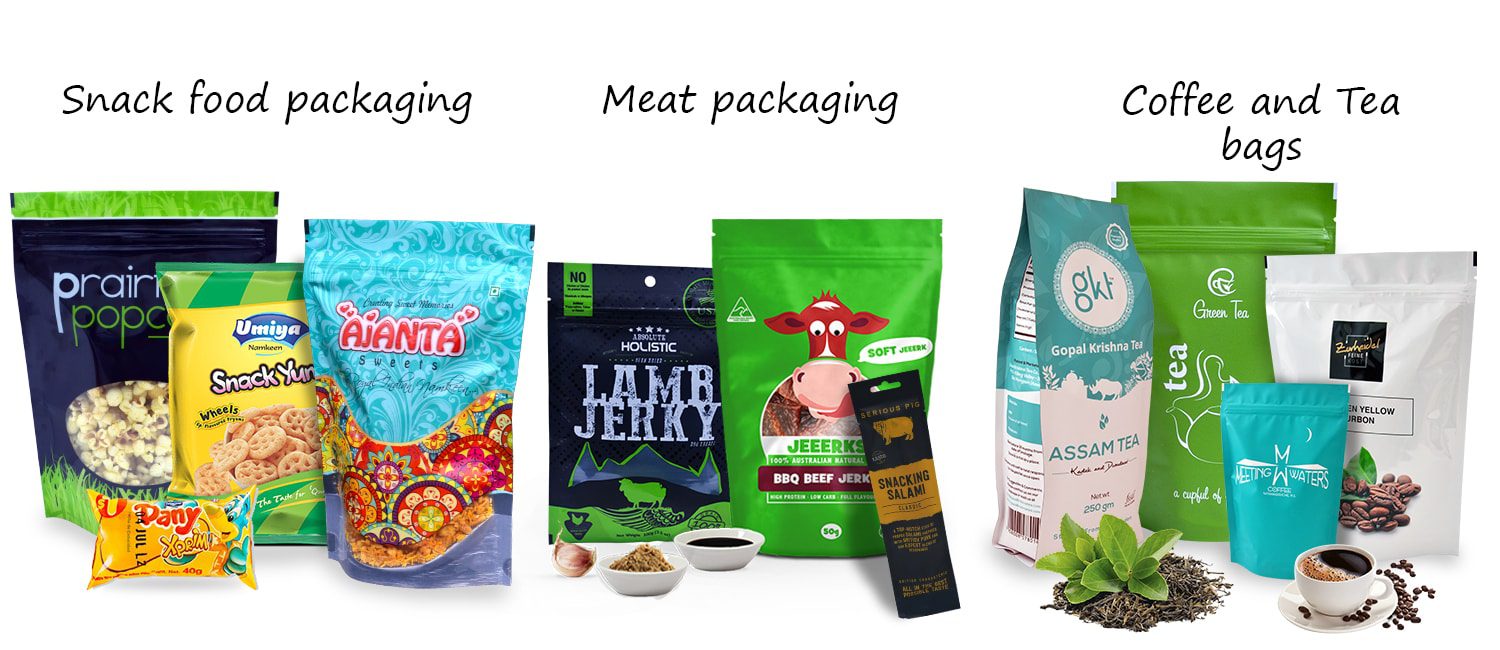
Different coffee formats impose different demands on packaging materials:
Whole Bean Coffee
Whole beans retain flavour longer than ground coffee because less surface area is exposed to oxygen. However, they continue to degas (emit CO₂) for weeks after roasting. Packaging requirements:
- One-way degassing valve is mandatory
- Ultra-high barrier (PET/AL/PE) to prevent staling
- Resealable zipper for consumer convenience
- Burst strength sufficient to withstand CO₂ expansion
Ground Coffee
Ground coffee has 10–20× more surface area exposed to oxygen, making it more vulnerable to staling. Oxidation begins immediately after grinding. Requirements:
- Aluminium barrier is essential — no compromise
- Degassing valve needed (freshness retained best when packaged immediately after grinding)
- Nitrogen flushing during packaging extends shelf life significantly
- Valve + nitrogen flushing combination can extend freshness from 6 to 12+ months
Instant Coffee & 3-in-1 Mixes
Instant coffee has minimal degassing requirements since the soluble solids have already stabilised. Requirements:
- Moderate barrier sufficient (PET/PE or metallised PET/PE)
- No valve required
- Moisture barrier critical — instant coffee is hygroscopic and clumps when exposed to humidity
- Sachet formats require strong seal integrity for single-serve convenience
- Malaysia’s high humidity environment (80–90% RH) makes moisture barrier especially important for 3-in-1 sachets sold in bulk or open-display conditions
Coffee Freshness Science
Understanding coffee degradation helps brands select optimal packaging.
Coffee Staling Mechanisms
| Factor | Effect | Packaging Solution |
|---|---|---|
| Oxygen exposure | Oxidation of lipids, flavour loss | AL barrier layer, one-way valve |
| Moisture absorption | Hydrolysis, mould growth | High WVTR barrier film |
| Light exposure | Photodegradation of chlorogenic acids | AL layer or opaque material |
| CO₂ release | Package swelling, seal stress | One-way degassing valve |
| Aroma loss | Volatiles escape through film | High barrier film, minimal headspace |
Degassing Valve Technology
One-way valves are critical for fresh roast coffee:
- Working principle — Internal pressure opens valve, external pressure seals it
- Activation pressure — Typically 0.5–1.5 psi
- Flow rate — 10–30 cc/min for standard valves (20–50 cc/min for bulk formats)
- Placement — Usually on back panel, away from print focal point
- Material — Food-grade silicone membrane in polyethylene housing
Coffee Packaging Formats Compared
Stand Up Pouch
- Market share — 60% of retail coffee packaging
- Advantages — Shelf presence, large branding area, zipper option
- Size range — 100g to 1kg
- Best for — Specialty, artisan, premium brands
Flat Bottom Bag (Box Pouch)
- Market share — 25% and growing
- Advantages — Premium appearance, stable on shelf, large branding
- Size range — 200g to 500g
- Best for — Premium specialty, gift packaging, limited editions
Side Gusset Bag
- Market share — 10%, declining
- Advantages — Economical, large volume capacity
- Size range — 500g to 5kg
- Best for — Foodservice, wholesale, economy brands
Sachet / Stick Pack
- Market share — 5% (growing in single-serve segment)
- Advantages — Portable, convenient, low unit cost
- Size range — 3g to 25g
- Best for — 3-in-1 mixes, instant coffee, travel packs
Coffee Packaging Trends in Malaysia
Specialty Coffee Growth
Malaysia’s specialty coffee market is growing 15% annually, driving demand for premium packaging features:
- Origin story and roast date prominently displayed on pack
- Matte and soft-touch finishes for premium tactile experience
- Transparent windows to show bean quality and roast level
- Resealable zippers for consumer convenience
- QR codes linking to brew guides, origin stories, and loyalty programmes
Sustainability Demands
Malaysian consumers rank sustainability as a top-3 factor in coffee purchasing decisions. Packaging trends include:
- PCR content — Post-consumer recycled material in the outer film layer, reducing virgin plastic usage by 30–50%
- Recyclable mono-materials — PE-only or PP-only structures compatible with existing recycling streams. HAIN Packaging offers recyclable stand up pouch solutions with barrier performance suitable for coffee.
- Reduced material gauge — Downgauging films while maintaining barrier (10–20% plastic weight reduction)
- Carbon footprint labelling — Increasingly requested by export buyers and environmentally conscious retailers
E-Commerce Packaging Considerations
The rapid growth of online coffee sales in Malaysia, accelerated by platforms like Shopee, Lazada, and direct-to-consumer websites, introduces specific packaging requirements. Coffee bags shipped for e-commerce must withstand compression during transit when stacked in delivery bags or boxes alongside heavier items. Temperature variation is a factor, as delivery vans in Malaysia can reach 40°C+, so seal integrity must hold across a wide temperature range. Drop impact from 1–1.5m during sorting requires gusseted or flat bottom designs that offer better impact resistance than stand up pouches. Moisture exposure during last-mile delivery in Malaysia’s tropical climate means secondary packaging with water-resistant outer layers is recommended. Resealable zipper closures add consumer convenience that drives repeat purchases, and brand-specific packaging inserts or QR codes for reordering are increasingly common differentiators for subscription-based coffee brands.
Coffee Packaging Trends in Malaysia 2026: What’s Next
Looking ahead to the remainder of 2026, several packaging trends are reshaping Malaysia’s coffee landscape. These developments are driven by evolving consumer preferences, regulatory changes, and innovations in packaging material science.
Single-Origin Branding Goes Mainstream: Malaysia’s specialty coffee roasters are increasingly using packaging as a storytelling medium for single-origin beans. Instead of generic “premium coffee” labels, roasters now feature specific origin details (e.g., “Ethiopia Yirgacheffe, Grade 1, Washed Process”), roast dates, flavour wheel profiles, and farmer cooperative information directly on the pack. This trend drives demand for high-quality rotogravure printing with fine detail reproduction — HAIN’s 10-colour printing capability with PMS matching is well-suited for these detailed designs. The preferred format for single-origin is the flat bottom bag (box pouch) with matte finish and transparent window, allowing consumers to see the bean quality while reading the origin story.
Sustainable Coffee Packaging Becomes Standard, Not Optional: In 2025, a major Malaysian retailer began requiring all private-label coffee brands to use recyclable packaging by 2026. This signals a market-wide shift. HAIN’s recyclable stand up pouch solutions use mono-material PE structures that maintain sufficient barrier for coffee while being compatible with existing recycling streams. PCR content is also becoming a baseline expectation rather than a differentiator — brands that do not offer sustainable packaging options risk being excluded from retail shelf space.
Smart Packaging Integration: QR codes have evolved from simple website links to sophisticated consumer engagement tools. In 2026, expect Malaysian coffee brands to integrate QR codes that link to: blockchain-verified origin traceability (proving fair trade and direct farm relationships), personalised brew guides based on roast date (recommending optimal brew parameters as the coffee ages), subscription reordering with one-click purchase, and augmented reality experiences showing the farm-to-cup journey. HAIN can integrate QR code panels into rotogravure cylinder artwork with precision registration to ensure scannability.
Cold Brew and RTD (Ready-to-Drink) Coffee Growth: The ready-to-drink coffee segment in Malaysia is growing at 18% annually, driven by convenience-seeking younger consumers. This segment demands spout pouches and stand up pouches with liquid-tight seals, degassing capability for nitrogen-flushed cold brew concentrates, and UV-barrier layers to preserve sensitive volatile compounds in liquid coffee. HAIN supplies PET/AL/PE stand up pouches with spout fitment specifically for the RTD coffee market, offering 200ml–1L formats with tamper-evident closures.
E-Commerce-Specific Coffee Packaging Matures: As online coffee sales now account for 25–30% of total coffee retail, packaging designed specifically for e-commerce shipping is becoming standard. This includes double-layered packaging (inner high-barrier pouch + outer protective mailer), reduced headspace to minimise internal product movement during transit, water-resistant outer packaging for Malaysia’s rainy-season last-mile delivery, and easy-return design for subscription services (resealable pouches that can be resealed if a customer wants to return or exchange).
Custom Printing for Coffee Packaging
The print quality of your coffee packaging directly influences purchase decisions on retail shelves. For Malaysian coffee brands, HAIN Packaging offers both rotogravure and flexographic printing methods to suit different volumes and budgets. Detailed guidance on printing methods is available in our doypack printing comparison guide.
Key considerations for coffee packaging print design:
- Use high-contrast imagery that communicates roast depth and origin
- Include flavour notes, brew methods, and roast date prominently
- Ensure barcode and nutritional information are clearly legible
- Consider spot UV or embossed effects for premium positioning
Frequently Asked Questions
Do I need a degassing valve for coffee packaging?
Yes, for fresh roasted coffee. The valve allows CO₂ to escape without letting oxygen in. This is essential for maintaining freshness and preventing pouch swelling. Without a valve, CO₂ pressure can rupture seals or create a bloated appearance that consumers perceive as defective.
What MOQ for custom printed coffee bags?
10,000 pieces for flexographic printing, 20,000 pieces for rotogravure. HAIN Packaging offers competitive MOQ structures for growing coffee brands. For start-up roasters, consider standard-sized stock coffee bags with custom labels as a lower-cost alternative while building your volume.
What coffee bag formats are available?
Stand up pouch (100g–1kg), flat bottom bag (200g–500g), side gusset bag (500g–5kg), and sachet/stick pack (3g–25g). Each format suits different product types, distribution channels, and brand positioning strategies.
Can I get matte finish coffee bags?
Yes. MATTE PET/AL/PE provides premium matte appearance with full AL barrier performance. The matte finish reduces glare on shelf and communicates premium quality — particularly popular among Malaysia’s specialty coffee segment.
How long do coffee bags preserve freshness?
PET/AL/PE with valve: 12–18 months. OPP/AL/PE: 6–12 months. Without AL barrier: 3–6 months only. Actual shelf life depends on storage conditions — ambient temperature below 30°C and humidity under 65% RH optimise freshness retention. Malaysia’s tropical climate makes high-barrier packaging particularly important.
Can I use kraft paper for coffee packaging?
Yes. Kraft/AL/PE structures offer the natural kraft aesthetic with full aluminium barrier protection. Ideal for artisan and organic coffee brands communicating a natural, handcrafted image.
What is the difference between nitrogen flushing and degassing valves?
Nitrogen flushing replaces oxygen inside the pouch with inert nitrogen gas before sealing, removing oxygen from the package immediately. Degassing valves allow CO₂ to escape after sealing. For fresh roast coffee, both technologies complement each other: nitrogen flushing at the time of packaging removes oxygen, and the valve handles ongoing CO₂ release. Ground coffee benefits most from nitrogen flushing since it cannot degas effectively.
Are sustainable coffee packaging options available in Malaysia?
Yes. HAIN Packaging offers recyclable mono-material pouches and structures with PCR content. See our eco-friendly packaging options. Fully compostable coffee packaging is still under development for high-barrier applications, but mono-material recyclable solutions are commercially available now.
Can I get windows on coffee packaging to show the beans?
Yes. Clear PET windows can be incorporated into the bag design at strategic locations, typically on the front panel or gusset area. The window area is usually kept to 15–25% of the panel to maintain barrier integrity while allowing visual inspection of bean quality and roast colour.
What is the recommended lead time for custom coffee bag production?
Standard lead time for custom printed coffee bags is 3–5 weeks from artwork approval. Flexographic: 2–3 weeks. Rotogravure: 3–5 weeks including cylinder engraving. Rush options may be available with a premium surcharge of 15–25%. Factor in 1–2 weeks for design proofing and sample approval before production begins.
What are the emerging coffee packaging trends in Malaysia for 2026?
Key trends include single-origin branding with detailed origin storytelling on pack, mandatory sustainable/recyclable packaging requirements from major retailers, smart packaging with QR codes for traceability and consumer engagement, rapid growth in RTD cold brew coffee requiring spout pouches, and e-commerce-optimised packaging designs with double-layer protection and water-resistant outer materials. See our coffee trends section above for detailed analysis.
Is your coffee packaging suitable for e-commerce shipping to customers?
Yes. For e-commerce, we recommend our PET/AL/PE stand up pouches with degassing valve combined with secondary packaging protection. Coffee shipped via e-commerce should use pouches with reduced headspace to minimise bean movement during transit, reinforced seals to withstand compression in delivery bags, and outer water-resistant packaging for protection during rainy-season last-mile delivery in Malaysia’s tropical climate. Our technical team can assist with e-commerce packaging optimisation for your specific coffee product.
Ready to Order Coffee & Beverage from HAIN® Packaging?
Don’t compromise on your packaging. Choose HAIN® Packaging as your trusted coffee & beverage supplier in Malaysia for quality, customisation, and competitive pricing.
Contact us today via WhatsApp or email [email protected] for a free consultation and quotation.
If you’re looking for a reliable packaging supplier, we at HAIN® Packaging are ready to help. Reach out to our sales representative for a consultation, or share your branding ideas with us. For businesses exploring coffee packaging materials malaysia, finding the right packaging partner is essential.
You can reach us on WhatsApp, or find us on Facebook, Instagram, and Telegram!. For businesses exploring coffee packaging materials malaysia, finding the right packaging partner is essential.

HAIN® Packaging
No. B-6-3A, Streetmall, One South, Jalan OS, Taman Serdang Perdana, Section 6 Seri Kembangan, 43300 Selangor Darul Elan
Phone: +60 11-6987 2289
Email: [email protected]
For detailed product specifications and custom coffee packaging solutions, visit HAIN® Packaging Food & Beverage Solutions. For the specifics, Confectionery, Nut & Trail Mix Packaging: 6 Buying Checks covers it step by step.