Custom Medical Disposable Zipper Bag | HAIN Packaging
June 22, 2022
Grow with the Best Stand Pouch Bag Supplier Malaysia
June 30, 2022
HAIN® Packaging is a Malaysia packaging supplier and manufacturer producing custom food packaging, ziplock bags, pouches and printed rolls for FMCG, food service, retail and industrial buyers. We print on LDPE, HDPE, PP, OPP/BOPP, PET, CPP, nylon, aluminium-laminated and metallised film, and we make bags, pouches and film to your size rather than selling from a fixed catalogue.
As a packaging manufacturer based in Malaysia, we quote each job against a fixed specification rather than a published rate card. As a packaging company supplying both local and export customers, we hold artwork, specification, production and freight documentation under one contact.
Most of our customers arrive with one of two problems: they have outgrown stock packaging, or their current supplier cannot hold consistent print quality across repeat orders. Both are solved the same way — by fixing the material, thickness, bag construction and print method once, then producing to that specification on every run. This page sets out what we supply, what we print on, and how an order moves from enquiry to delivery.
What We Supply
Food Packaging Bags
Flat bags, gusseted bags and side-seal bags for dry food, frozen food, takeaway and ingredient packing. Common constructions are LDPE or HDPE for short-life items and laminated film where a barrier is needed. Clear, frosted, white and metallised finishes are all available, with printing on one or both faces.
Ziplock & Resealable Bags
This is the largest part of our food packaging range and the reason many buyers contact us first. We supply:
- Standard ziplock bags — press-to-close track, LDPE or HDPE, for food, hardware and general retail
- Slider top ziplock bags — rigid slider closure, easier for consumers to reseal repeatedly
- Frosted ziplock bags — semi-transparent finish used widely for apparel and accessories
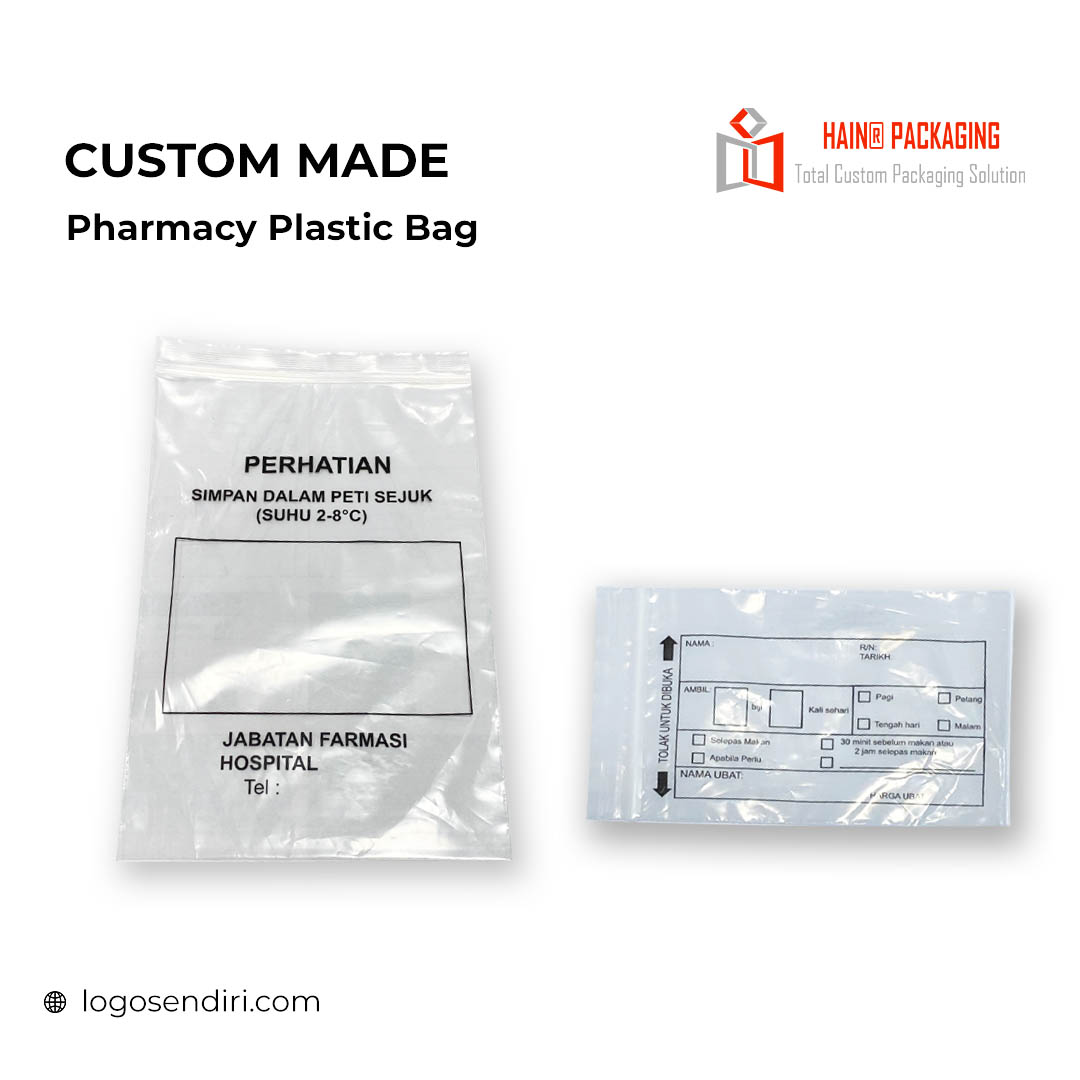
- Pharmacy ziplock bags — printed with dosage or handling information for clinic and pharmacy use
- Heavy-duty industrial ziplock bags — thicker gauge for parts, tools and components
- Writing-panel bags — a matte block on one face for batch, date or dosage marking
Stand-Up & Zipper Pouches
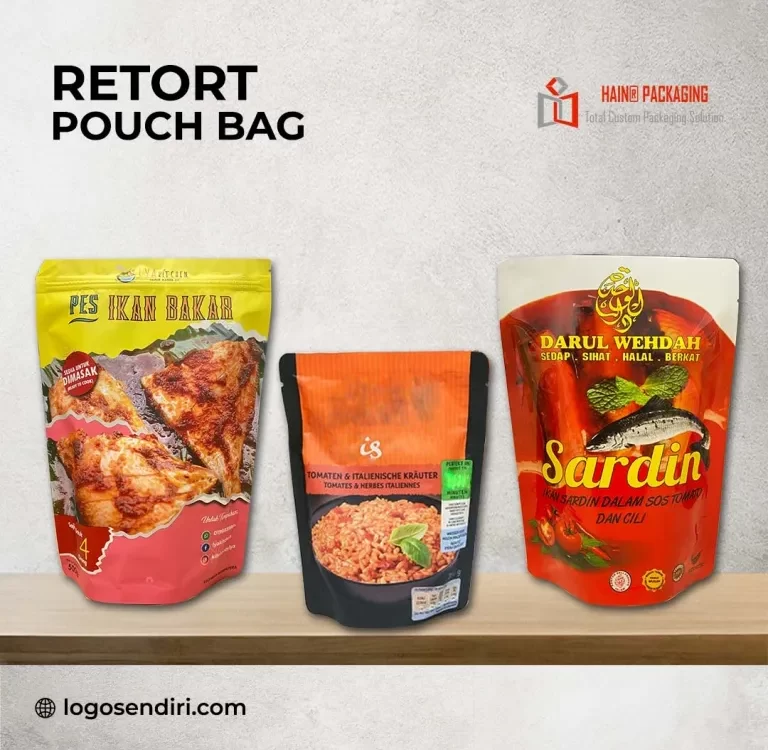
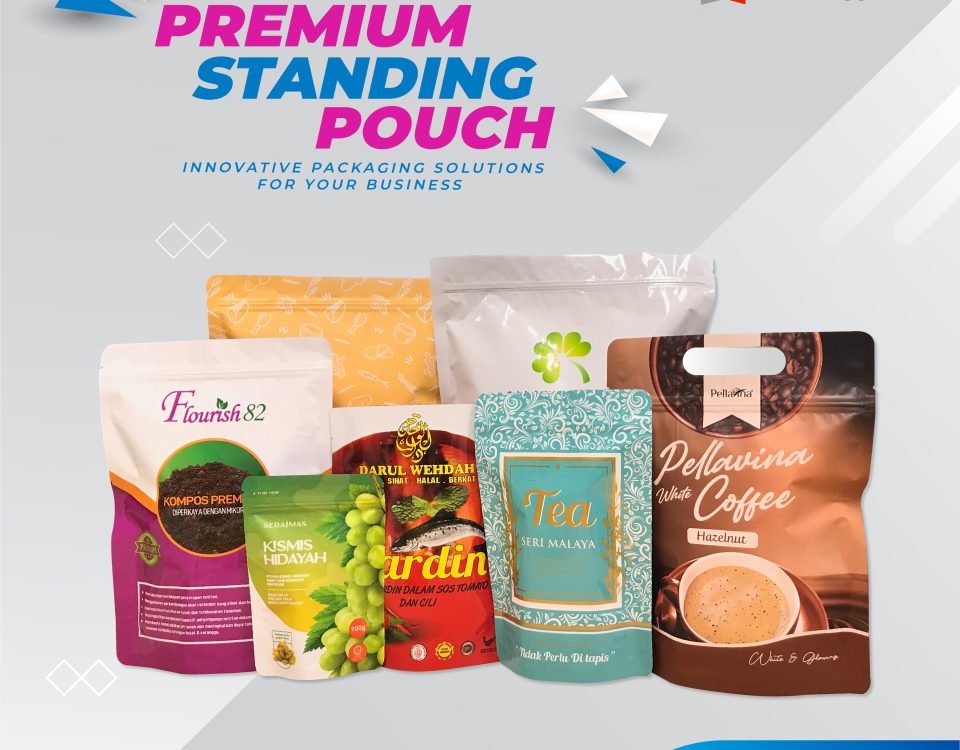
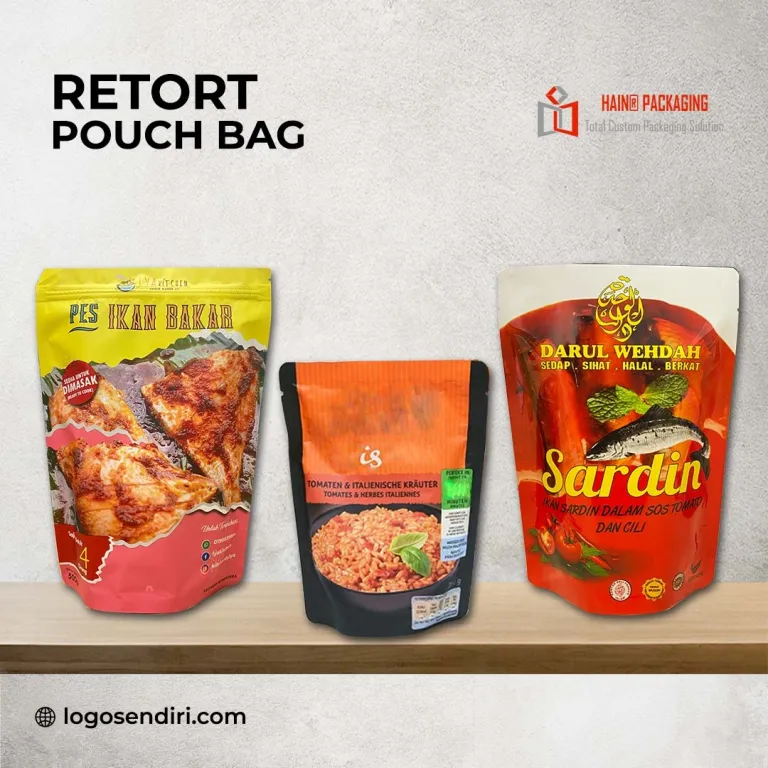
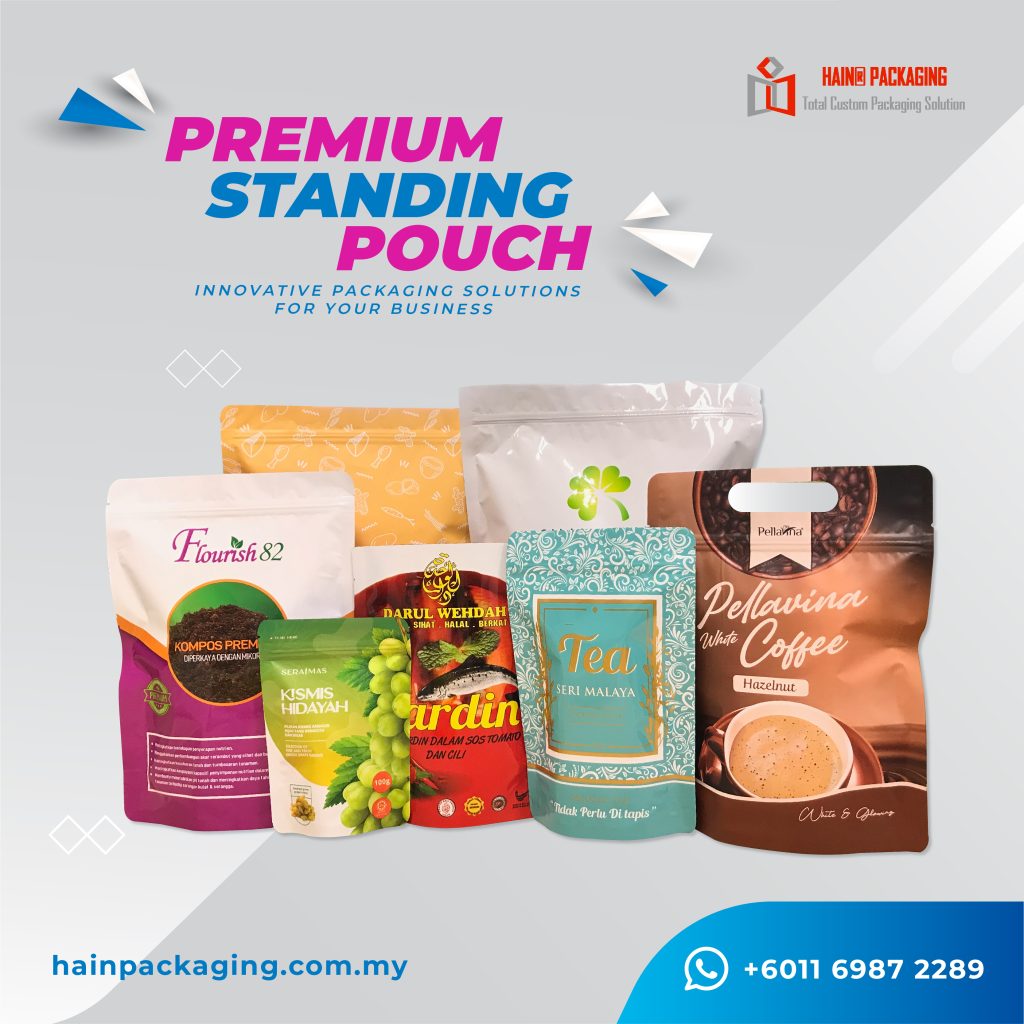
Stand-up pouches, flat-bottom pouches, three-side-seal pouches and centre-seal pouches. Closure options include press-to-close zipper, slider zipper, spout and valve.
Spout and valve fitments are both available. A spouted pouch normally starts at 10,000 pieces, because the fitment is a separate component that has to be inserted and sealed in its own step rather than printed and cut with the bag.
Frozen Food Packaging
Bags and film for frozen product, using materials that stay flexible at low temperature and resist moisture. See our frozen food packaging range for material and thickness guidance.
Laminated & Barrier Films, and Film on the Roll
Two- and three-layer laminates combining PET, NY, AL and CPP for products that need oxygen, moisture or light protection. Used for coffee, nuts, dried fruit, powdered drinks, sauces and ready-to-eat items.
We also supply film on the roll, both laminated and metallised, for customers who fill and seal on their own lines. Roll supply is quoted by width, total metreage and repeat length, so the specification has to include the core diameter and the direction of print — a roll wound the wrong way will not run on the customer’s machine regardless of how correct the film itself is.
Packaging Rolls for Automatic Lines
Printed roll stock for form-fill-seal and vertical packing machines. Supplying rolls rather than finished bags moves the sealing step to the customer’s line, which lowers unit cost at volume but puts the seal parameters in the customer’s hands. We specify the film structure and the seal window against the machine, and the customer’s line has to be able to reach that window.
Materials We Print On
| Material | Typical use | Notes |
|---|---|---|
| LDPE | Soft bags, ziplock bags, food bags | Flexible, good seal strength, lower clarity |
| HDPE | Retail bags, shopping bags, thin food bags | Stiffer, higher tensile, milky appearance |
| PP | Clear bags, wrappers | Good clarity and heat resistance |
| OPP / BOPP | Printed wrappers, box wrap, label film | High clarity, needs heat-seal layer |
| PET | Laminate outer layer | Printability and strength |
| CPP | Laminate inner layer | Heat-sealable, food contact layer |
| Nylon (NY) | Vacuum and frozen packs | Puncture resistance |
| Aluminium (AL) | High-barrier laminates, foil bags | Light, oxygen and moisture barrier |
| Metallised film | Mid-barrier laminates, snack and dry goods | Barrier at lower cost than foil |
| Kraft / paper | Retail food bags | Non-plastic alternative |
Customisation Options
- Size — made to your dimensions, not chosen from a stock list
- Thickness — specified in micron; we will advise a gauge based on product weight and handling
- Printing — flexographic for spot-colour work, rotogravure for photographic-quality full-colour work
- Colours — up to 10 colours on rotogravure
- Finish — gloss, matte, or matte with spot gloss
- Closure — press-to-close zipper, slider zipper, spout, valve, lip-and-tape, heat seal
- Handle — die-cut, patch, rope, or none
- Supply form — finished bags, or printed film on the roll
- Other features — hang hole, euro slot, tear notch, degassing valve, writing panel
MOQ, Lead Time & Pricing
Minimum order quantity. It depends on the bag type, because tooling and set-up differ from one format to the next. Food packaging — pouches, ziplock bags and food bags — normally starts at 10,000 pieces. Shopping bags normally start at 5,000 pieces. From 500 pieces we can run hand silk-screen printing for a simple logo.
These are the usual levels, not hard floors. A bag type that shares tooling with something we already run can go lower, and a format with a new cylinder or a new fitment can go higher. The fastest way to get an exact figure for your format is to send the specification, or to ask our sales team on WhatsApp with the bag type and quantity you have in mind.
Lead time. Two schedules apply, and which one you get is a decision rather than a queue position. Rush orders run 13–16 working days from artwork approval. Normal orders run 5–7 weeks, because they are scheduled into production rather than pushed through it. Neither figure includes shipping; sea freight to overseas destinations adds roughly 3–4 weeks on top.
Pricing. Every job is quoted individually. Custom-made packaging has no single rate, because material, thickness, size, print method, colour count and quantity all move the number independently — the same footprint can differ several-fold between a two-colour flexo LDPE bag and a ten-colour rotogravure foil laminate. We do not publish price anchors for that reason, and a published anchor would be misleading for most enquiries. Send dimensions, target quantity, artwork status and your required date, and we will quote against a fixed specification.
How Ordering Works
- Enquiry — send bag type, size, estimated quantity and intended use
- Specification — we propose material, thickness, closure and print method
- Quotation — priced against that fixed specification
- Artwork — send your artwork; we advise on print-ready files and colour separation
- Visual confirmation — a digital preview image of the finished bag for your sign-off
- Production — 13–16 working days for a rush order, 5–7 weeks for a normal order
- Delivery — local delivery or export packing, documented for freight
Design and Artwork
Simple design work and simple artwork edits we handle — placing a logo, adjusting a layout to fit the bag proportions, correcting colour separations, and checking that the file will actually print. Complex design work is the customer’s to supply: if the artwork needs to be created from scratch or rebuilt around a new structure, that belongs with your designer or agency, and we will tell you what the file needs to contain before it reaches us.
Files can be supplied as AI or PDF. Vector artwork with fonts outlined and colour references specified is what we need; we will confirm the rest against the specification once the bag shape and print method are fixed.
Physical samples. We do not produce a printed physical sample for sign-off. What we can do is show you a physical sample from a previous customer’s run, so you can handle the material and check the quality, size and thickness for yourself. That sample will not carry your logo. Printing your logo requires a production run, so the artwork is approved from the digital preview image before the cylinders or plates are made.
The reason for this is practical: making a single printed bag means making the plate or cylinder first, and that is most of the set-up cost of the whole job. Approving from a rendered preview avoids charging you for a tool you would only use once.
How to Compare Packaging Suppliers in Malaysia
Buyers usually compare packaging suppliers on price per piece. That is the wrong unit. A bag quoted at a lower piece price but with a thinner gauge, fewer print colours and a shorter zipper will fail in use, and the cost of a failed run — refilling, repacking, delayed shipment — lands on the buyer, not the supplier. The comparison that matters is cost per successfully packed unit.
Four things separate a packaging manufacturer worth keeping from one that will cause problems on the second order.
Whether the specification is written down. A supplier who quotes “5,000 bags, LDPE, printed” has not quoted a specification. Material, gauge in micron, flat width, height, gusset, seal type and print colours should all appear on the quotation. If they are not on paper, they cannot be held to on the next run.
Whether plates are kept. Printing requires plates. When a supplier discards plates after a run, every reorder starts from zero and the second print will not match the first. Ask whether plates are retained and for how long.
Whether the artwork is confirmed against the actual bag, not just a file. A preview image is worth little if it is not built on the right bag proportions, because the print position shifts once the bag is formed.
Whether the same person handles the enquiry, the artwork and the delivery. Handoffs are where specifications drift. A single contact who owns the spec from enquiry through to shipment is worth more than a lower unit price, and it is how we run every account.
Common Specification Mistakes
These are the problems we see most often when a customised order has to be re-made.
Gauge chosen by feel rather than by load. A bag’s thickness should follow the weight it carries and how it is handled, not habit. Too thin fails at the seal; too thick costs more and can seal poorly if seal temperature and dwell are not adjusted to match.
Gusset measured on the finished bag instead of the flat. The finished width and the flat width differ, and quoting from the wrong one produces a bag that does not fit the product.
Print colours counted as “full colour”. Full colour in flexographic printing is still a fixed number of plates. Artwork with photographic gradients needs rotogravure, and moving to rotogravure after the artwork is set usually means re-preparing it.
Closure underspecified. A press-to-close zipper, a slider zipper and a lip-and-tape closure are not interchangeable — they differ in cost, in consumer experience and in whether the bag can be resealed repeatedly.
Barrier requirement discovered late. If a product needs protection from oxygen, light or moisture, that decision belongs at the material stage. Specifying a plain laminate first and adding a barrier layer later changes both structure and price.
Understanding Bag Sizing and Gauge
Bag dimensions are quoted as flat width, height, and gusset, and for stand-up formats a bottom gusset as well. Every stand-up pouch we make is built with a bottom gusset; all of them are measured on the flat bag before filling. A bag that measures correctly on the table but will not stand once filled usually has too shallow a bottom gusset or film that is too soft for the fill weight.
Gauge is quoted in micron, and the same gauge in different materials does not give the same strength. A micron of nylon and a micron of LDPE behave differently under puncture and under cold. This is why gauge cannot be compared across material families — a thinner nylon structure can outperform a thicker polyethylene one for a frozen or vacuum application.
When specifying, start from what the pack must survive: fill weight, drop height, freezer or ambient, sharp edges, and how long it must protect the product. Material and gauge follow from that.
Who We Supply
Food and beverage manufacturers, FMCG brands, coffee and tea packers, snack producers, bakeries and confectioners, pet food companies, frozen food processors, food service and delivery operators, pharmacies and clinics, and industrial buyers needing heavy-duty bags.
Why Buyers Switch to Us
- Made to spec, not to a catalogue — size, thickness and construction set once and repeated
- Print consistency across reorders — same plates, same ink sequence, same substrate
- Flexo and rotogravure both available — the process matched to the artwork, not one process for everything
- Ziplock and pouch engineering — closure and seal are the parts that fail first, so they get specified properly
- Bags, pouches and film on the roll — supply form chosen to suit your filling line
- Malaysian production, export documentation — local lead times with export packing when needed
- One contact per account — the same person from enquiry through delivery
For bag-level customisation detail — formats, closures, handle options and print finishes — see our guide to custom packaging.
Frequently Asked Questions (FAQ)
What is the minimum order quantity?
Food packaging such as pouches, ziplock bags and food bags normally starts at 10,000 pieces. Shopping bags normally start at 5,000 pieces. Simple logos can be hand silk-screened from 500 pieces. The exact figure depends on the bag type — send us the specification or ask our sales team on WhatsApp.
Can bags be printed with my logo?
Yes. Flexographic printing for spot colours, rotogravure for full-colour artwork, up to 10 colours.
What materials can you supply?
LDPE, HDPE, PP, OPP/BOPP, PET, CPP, nylon, aluminium-laminate and metallised film. Ask for the material that matches your product’s barrier requirement.
Do you supply film on the roll, or only finished bags?
Both. Rolls are supplied in laminated and metallised film for customers who fill and seal on their own lines.
How long is production?
Rush orders run 13–16 working days from artwork approval. Normal orders run 5–7 weeks. Sea freight adds roughly 3–4 weeks.
Can I get a sample before ordering?
We do not produce a printed sample with your logo — printing requires a production run. You can see a physical sample from a previous customer’s run to check material quality, size and thickness, and the artwork is approved from a digital preview image before production starts.
Can you design the artwork for me?
Simple design work and simple edits we can handle. Complex design work needs to come from your side; we will tell you what the file must contain.
What file format should artwork be in?
AI or PDF, vector, with fonts outlined and colour references specified.
Do you supply outside Malaysia?
Yes, with export packing and freight documentation.
Need help specifying this?
Send us your container drawing, film type and filling-line conditions. Our team will come back with a specification you can hand straight to a printer.