
Die Cut Bag Malaysia: HDPE & Retail Branding Guide
May 25, 2026Custom Ziplock Bags Malaysia: Pharmacy & Medical Guide
May 26, 2026
Retort Pouch Malaysia: Sterilisation & Shelf Life
For food manufacturers seeking extended shelf life without refrigeration, retort packaging is the gold standard for shelf-stable ready-to-eat meals in Malaysia. From rendang in Kuala Lumpur to kari packs in Kota Kinabalu, retort pouches enable Malaysian food brands to sell traditional dishes at ambient temperature with 12-24 month shelf life — no refrigeration needed.
This guide covers the science, materials, processes, and regulations behind retort pouch packaging in Malaysia.
Table of Contents
- Retort Sterilisation Science
- Retort Laminate Structures
- Sterilisation Process Parameters
- Ready-to-Eat Applications
- Malaysian Dish-Specific Packaging
- Shelf Life Validation
- Filling, Sealing & Retort Processing
- Quality Testing & Inspection
- Regulatory Compliance
- Cost Analysis
- Supplier Selection
- Frequently Asked Questions
1. Retort Sterilisation Science
1.1 What Is Commercial Sterility?
Commercial sterility means the product is free from microorganisms capable of growing under normal storage conditions. The key target is destruction of Clostridium botulinum spores — the most heat-resistant pathogen. This is achieved with a minimum F₀ value of 3.0 minutes (equivalent to 3 minutes at 121.1°C).
1.2 F₀ Value Calculation
F₀ (Fo value) represents the lethal effect of the thermal process, normalised to 121.1°C:
- F₀ = 3.0 min — Minimum for commercial sterility (C. botulinum 12D)
- F₀ = 4.0-6.0 min — Common target for meat products (rendang, kari)
- F₀ = 6.0-10.0 min — High-safety targets for export products
1.3 Why Retort Beats Other Preservation Methods
| Method | Shelf Life | Refrigeration | Quality | Cost |
|---|---|---|---|---|
| Retort sterilisation | 12-24 months | No | Good | Medium |
| Aseptic packaging | 6-12 months | No | Excellent | High |
| Hot fill | 6-12 months | No | Good | Low-Medium |
| Frozen | 6-12 months | Yes (-18°C) | Very good | High (cold chain) |
| Vacuum pack (non-retort) | 2-4 weeks | Yes (0-4°C) | Excellent | Low |
2. Retort Laminate Structures
For businesses in Malaysia requiring retort pouch, understanding material grades is essential.
2.1 Required Properties
Retort pouch laminates must withstand:
- 121°C internal temperature for 15-60 minutes under pressure
- Internal pressure (steam generation during processing)
- Delamination resistance — adhesive must not fail at sterilisation temperature
- Seal integrity — seals must maintain integrity through thermal cycling
2.2 Standard Retort Structures
| Structure | Layers | Thickness | Max Retort Temp | Best For |
|---|---|---|---|---|
| PET/AL/NY/CPP | 4-layer (standard retort) | 120-150μ | 121°C | Most RTE meals, rendang, kari |
| PET/AL/NY/PP | 4-layer (high-temp) | 130-160μ | 130°C | High-acid products, export |
| PET/NY/CPP (transparent) | 3-layer (no foil) | 100-130μ | 121°C | Products requiring visibility |
| PET/AL/PA/CPP | 4-layer (heavy-duty) | 140-180μ | 121°C | Large format, bulk packs |
2.3 Why CPP Instead of PE
Cast polypropylene (CPP) is used instead of polyethylene (PE) for the inner seal layer because:
- CPP withstands 121°C+ without softening or distortion
- PE begins to soften above 100°C, risking seal failure during retorting
- CPP provides stronger, more heat-resistant seals
- CPP has better grease resistance for oily Malaysian dishes
3. Sterilisation Process Parameters

Malaysian suppliers of retort pouch vary significantly in capability and certifications.
3.1 Typical Retort Cycle
| Phase | Duration | Temperature | Pressure |
|---|---|---|---|
| Come-up (heating) | 10-20 min | Ramp to 121°C | Increasing |
| Holding (sterilisation) | 15-30 min | 121°C (constant) | 1.0-1.5 bar |
| Cooling | 10-20 min | Ramp to 40°C | Controlled (prevent bulging) |
| Total cycle | 35-70 min | — | — |
3.2 Retort Equipment Types
- Steam-air retort — Most common in Malaysia; steam + air mixture for even heating
- Water cascade retort — Hot water sprayed over pouches; gentler on packaging
- Water immersion retort — Pouches fully submerged; most even temperature distribution
- Pressure retort with cooling — Essential for preventing seal failure during cooling phase
4. Ready-to-Eat Applications
| Product Category | F₀ Target | Retort Temp | Hold Time | Shelf Life |
|---|---|---|---|---|
| Rendang (meat) | 4.0-6.0 | 121°C | 25-35 min | 18-24 months |
| Chicken curry (kari ayam) | 4.0-6.0 | 121°C | 20-30 min | 18-24 months |
| Sambal (seafood/vegetable) | 3.0-4.0 | 121°C | 15-25 min | 12-18 months |
| Sayur lodeh (vegetable) | 3.0-4.0 | 121°C | 15-20 min | 12-18 months |
| Asam pedas | 3.0-5.0 | 121°C | 20-30 min | 12-18 months |
| Pet food | 6.0-10.0 | 121-130°C | 30-60 min | 18-24 months |
5. Malaysian Dish-Specific Packaging
5.1 Rendang
Malaysia most retort-friendly dish — the long cooking process translates well to retort sterilisation:
- Pouch format: Stand-up gusset pouch (180×230+50mm)
- Fill weight: 200-400g
- Structure: PET/AL/NY/CPP (140μ)
- Special considerations: Oily product — CPP inner layer essential for grease resistance
5.2 Kari Ayam & Kari Daging
- Pouch format: Stand-up gusset pouch
- Fill weight: 250-500g
- Structure: PET/AL/NY/CPP (130-150μ)
- Tip: Debone chicken pieces to avoid bone puncture of pouch
5.3 Sambal & Asam Pedas
- Pouch format: Spout pouch or flat pouch
- Fill weight: 150-300g
- Structure: PET/AL/NY/CPP (130μ)
- Spout option: 16mm spout cap for convenient dispensing
6. Shelf Life Validation
6.1 Validation Protocol
- Process validation — Heat distribution and heat penetration studies in retort
- Inoculated pack study — Confirm F₀ value achieves commercial sterility
- Accelerated aging — 37-40°C storage for 3-6 months (simulates 12-18 months at 25°C)
- Real-time stability — Actual time storage at 25°C and 30°C
- Sensory evaluation — Taste, texture, colour assessment at intervals
- Microbiological testing — Periodic testing to confirm sterility maintained
6.2 Malaysian Climate Considerations
- Test at 30°C and 35°C ambient (Malaysian warehouse temperatures)
- Include humidity cycling (monsoon simulation)
- Validate seal integrity after thermal cycling (warehouse → air-conditioned retail → hot transport)
7. Filling, Sealing & Retort Processing
7.1 Fill Temperature
- Hot fill: 70-85°C — Expels air, reduces come-up time
- Ambient fill: 25°C — Requires vacuum or steam injection before sealing
7.2 Head Space
- Minimum 10% head space for expansion during retorting
- Too little head space → pouch bulges, seal may fail
- Too much head space → longer come-up time, potential flotation in retort
7.3 Seal Requirements
- Seal width: Minimum 8mm (10mm preferred)
- Seal strength: ≥20 N/15mm peel force after retorting
- Seal inspection: 100% visual or machine vision inspection
8. Quality Testing & Inspection
| Test | Method | Frequency | Specification |
|---|---|---|---|
| Seal strength | ASTM F88 | Per batch | ≥20 N/15mm (post-retort) |
| Burst test | Internal pressure | Per batch | No failure at rated pressure |
| Vacuum leak test | Dry vacuum | 100% | No bubbles |
| Incubation test | 37°C for 10 days | Per batch | No swelling, no spoilage |
| Dye penetration | ASTM F1929 | Per batch | No channel leaks |
| Visual inspection | Mirror/belt system | 100% | No defects, wrinkles, contamination |
9. Regulatory Compliance
- Food Act 1983 — General food safety requirements
- Food Regulations 1985 — Canning and retort requirements
- MS 2234 — Flexible packaging for food
- NPRA GDP — Distribution practice for retort products
- Codex Alimentarius — International canned food standards
- 21 CFR 113 — US FDA low-acid canned food regulation (for export)
10. Cost Analysis
| Item | Cost (RM) | Notes |
|---|---|---|
| Retort pouch (plain, 200g) | 0.40-0.80/pc | PET/AL/NY/CPP |
| Retort pouch (custom print, 200g) | 0.60-1.20/pc | MOQ 5,000+ |
| Retort processing (toll) | 0.50-1.50/pc | Per pouch, minimum batch 500 |
| Process validation | 5,000-15,000 (one-time) | Heat distribution + penetration |
| Shelf life study | 3,000-10,000 | Accelerated + real-time |
| Total cost per unit (200g pouch) | 1.50-3.50 | Includes pouch + processing |
11. Supplier Selection
11.1 HAIN Packaging Retort Solutions
HAIN Packaging provides retort-grade packaging for Malaysian food manufacturers:
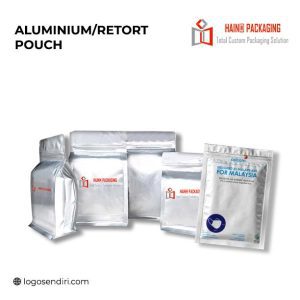
- Standard and custom retort laminate structures (PET/AL/NY/CPP, PET/AL/NY/PP)
- Stand-up gusset and flat pouch formats
- Spout pouch options for sauce and sambal retort products
- In-house printing (flexographic and rotogravure)
- Food-contact certified with full COA and migration test reports
- JAKIM halal-certified production facility
- Partnership with retort processing facilities for turnkey solutions
- Nationwide delivery including East Malaysia
12. Frequently Asked Questions
What is a retort pouch?
A retort pouch is a flexible laminated package that can withstand high-temperature sterilisation (typically 121°C for 15-30 minutes) to achieve commercial sterility. This allows ready-to-eat meals, curries, and sauces to be shelf-stable for 12-24 months without refrigeration.
How long does food last in a retort pouch?
Properly processed retort pouches achieve 12-24 months shelf life at ambient temperature (below 30°C). Malaysian products like rendang, kari, and sambal typically target 18 months. Shelf life must be validated through accelerated and real-time stability testing.
What temperature can retort pouches withstand?
Retort pouches are designed to withstand sterilisation temperatures of 116-130°C (typically 121°C / 250°F) under pressure for 15-60 minutes. The specific time-temperature profile depends on the product type, fill weight, and target F₀ value. Hain Packaging specializes in retort pouch manufacturing for ready-to-eat food applications.
Are retort pouches safe for food?
Yes, retort pouches are among the safest food packaging formats. The sterilisation process destroys all pathogenic microorganisms including Clostridium botulinum spores. The multi-layer barrier structure prevents recontamination. All materials are food-contact certified and must pass migration testing.
What is the difference between retort and aseptic packaging?
Retort packaging sterilises the product inside the sealed package using heat and pressure. Aseptic packaging sterilises the product and package separately, then fills in a sterile environment. Retort is simpler and more common for ready-to-eat meals; aseptic is used for liquid products like UHT milk and juice.
Can retort pouches be microwaved?
Some retort pouches are designed for microwave reheating after opening. These use CPP (cast polypropylene) inner layers instead of PE, which has higher heat resistance. Always check the product label — “microwave safe” means the opened pouch can be reheated, not that the sealed pouch should be microwaved.
13. Retort Pouch Manufacturing & Processing
13.1 Retort Pouch Manufacturing Process
- Laminate production — Multi-layer lamination with high-temperature adhesive. Each layer must withstand retort conditions without delamination.
- Printing — Rotogravure preferred for retort pouches (highest quality, best resistance to retort conditions). Ink must not bleed or fade during sterilisation.
- Pouch forming — Cutting, folding, gusset insertion, and heat sealing. CPP seal layer requires higher sealing temperature than PE (140-160°C vs 120-140°C).
- Spout insertion — For spout pouch formats, spout is welded into position before side sealing.
- Inspection — 100% visual or machine vision for seal integrity and print quality.
13.2 Retort Processing Facility Requirements
| Requirement | Specification | Purpose |
|---|---|---|
| Retort vessel | Pressure-rated, steam or water type | Sterilisation |
| Temperature monitoring | Minimum 3 calibrated thermocouples | Process validation |
| Pressure control | Auto-controlled, ±0.1 bar | Prevent pouch damage |
| Cooling system | Cascading or immersion with pressure override | Prevent seal failure on cooling |
| F₀ calculator | Real-time F₀ monitoring | Process control |
| Recording system | Continuous temperature and pressure logging | Regulatory compliance |
14. Retort Pouch Defect Analysis
14.1 Common Defects & Root Causes
| Defect | Visual Indicator | Root Cause | Corrective Action |
|---|---|---|---|
| Seal failure | Open or wrinkled seal | Insufficient seal temperature or pressure | Recalibrate sealer, check temperature |
| Delamination | Layers separating | Inadequate adhesive cure or contamination | Verify lamination process, check adhesive |
| Pouch swelling | Bloated appearance | Insufficient F₀ value or recontamination | Increase retort time, inspect for post-process contamination |
| Puncture | Small hole in pouch | Sharp product edge or mechanical damage | Debone product, handle carefully |
| Print degradation | Faded or smeared print | Ink not retort-stable | Switch to retort-grade inks |
| Cold spot | Spoilage in specific area | Inadequate heat penetration | Improve pouch orientation in retort |
15. Malaysian Retort Market & Opportunities
15.1 Market Size
Malaysia retort packaging market is estimated at RM 180 million (2026), growing at 8-10% annually driven by:
- Convenience food demand (busy urban consumers in KL, Penang, JB)
- Export of Malaysian traditional dishes (rendang, kari, sambal) to global markets
- Pandemic-driven shift to shelf-stable foods
- Government food export promotion under National Food Security Policy
15.2 Key Market Segments
| Segment | Market Share | Growth Rate | Key Products |
|---|---|---|---|
| Traditional RTE meals | 40% | 8-10% | Rendang, kari, sambal, asam pedas |
| Pet food | 25% | 12-15% | Premium cat and dog food pouches |
| Military / institutional | 15% | 5% | MRE rations, hospital meals |
| Baby food | 10% | 10-12% | Baby purée and meal pouches |
| Outdoor / camping | 10% | 15% | Backpacker meals, travel food |
15.3 Export Opportunities
Malaysian retort products are exported to:
- Middle East — Largest export market for halal retort meals (UAE, Saudi Arabia, Qatar)
- Singapore — Cross-border demand for Malaysian traditional dishes
- Japan & South Korea — Growing interest in Southeast Asian cuisine
- Europe — Malaysian halal retort meals for European Muslim communities
- Australia — Malaysian diaspora demand
16. Retort Pouch Design & Branding
16.1 Design Considerations for Retort Pouches
- Retort-resistant inks — Standard inks may fade or bleed during 121°C sterilisation. Use retort-grade inks tested for colour stability after processing.
- Visual cook indicator — Some retort pouches include a heat-sensitive colour-changing dot that confirms the product has been properly sterilised.
- Large branding area — Stand-up pouch format offers front and back panels of 200+ cm² for brand messaging.
- Heating instructions — Clear instructions for boil-in-bag or microwave reheating (if applicable).
16.2 Packaging Format Selection
| Format | Fill Weight | Best For | Unit Cost (RM) |
|---|---|---|---|
| Flat pouch | 100-250g | Sauces, sambal, side dishes | 0.40-0.80 |
| Stand-up gusset | 200-500g | Rendang, kari, main meals | 0.60-1.20 |
| Stand-up with spout | 150-400g | Sauces, soups, liquid meals | 0.80-1.50 |
| Large gusset (1kg+) | 500-2000g | Bulk/foodservice, catering | 1.20-3.00 |
17. Retort vs Alternative Preservation Methods
17.1 Decision Matrix for Malaysian Food Brands
| Factor | Retort Pouch | Frozen Pack | Hot Fill | Aseptic |
|---|---|---|---|---|
| Shelf life (ambient) | 12-24 months | N/A | 6-12 months | 6-12 months |
| Shelf life (frozen) | N/A | 6-12 months | N/A | N/A |
| Distribution cost | Low (no cold chain) | High (cold chain) | Low | Low |
| Product quality | Good | Very good | Good | Excellent |
| Processing cost | Medium | Low-Medium | Low | High |
| Packaging cost | RM 0.60-1.50 | RM 0.20-0.60 | RM 0.30-0.80 | RM 0.80-2.00 |
| Investment barrier | Medium (retort vessel) | High (cold chain) | Low | Very high |
| Best for | RTE meals, export | Premium quality | High-acid sauces | Liquids, UHT |
17.2 When Retort Is the Right Choice
- Product needs 12+ months ambient shelf life
- No cold chain distribution available (East Malaysia, export)
- Traditional Malaysian dishes (rendang, kari) that benefit from further cooking during retort
- Halal food export to Middle East requiring long shelf life without refrigeration
- Military, institutional, or emergency food supply
18. Retort Pouch Validation & Regulatory Submission
18.1 F₀ Validation Protocol
- Heat distribution test — Map temperature distribution across retort vessel using 12+ thermocouples. All locations must reach target temperature within ±0.5°C.
- Heat penetration test — Measure the slowest-heating point (cold spot) inside the product pouch using needle thermocouples. Minimum 3 replicates.
- F₀ calculation — Calculate actual F₀ achieved at cold spot. Must exceed target F₀ for every replicate.
- Inoculated pack study — Optional but recommended for new products. Inoculate with non-pathogenic surrogate (e.g., Bacillus stearothermophilus) and confirm ≥12D reduction.
18.2 Regulatory Submission Package
| Document | Purpose | Required By |
|---|---|---|
| Process authority letter | Confirms thermal process is adequate | MOH, NPRA |
| Heat distribution report | Proves retort heats evenly | MOH, export authorities |
| Heat penetration report | Proves product achieves commercial sterility | MOH, export authorities |
| Shelf life study report | Confirms shelf life claim | MOH, retailers |
| Packaging migration test | Proves food-contact safety | MOH, NPRA |
| Halal certificate | Confirms halal compliance | JAKIM, retailers |
| Product specification sheet | Full product details | All stakeholders |
19. Retort Pouch Troubleshooting Guide
| Problem | Root Cause | Solution |
|---|---|---|
| Pouch swelling after retort | Insufficient F₀ value; microbial growth | Increase retort hold time; verify cold spot F₀ |
| Seal failure during retort | Insufficient seal strength or pressure differential | Increase seal temperature/width; ensure pressure override during cooling |
| Delamination after retort | Inadequate adhesive or incomplete cure | Use retort-grade adhesive; verify full cure before processing |
| Product browning | Excessive retort time or temperature | Optimise F₀ value; use minimum effective process |
| Pouch floating in retort | Excessive headspace gas | Reduce headspace; use retort racks to hold pouches submerged |
| Cold spot not reaching F₀ | Poor pouch orientation or thick product | Reorient pouches; verify fill temperature; consider pre-heating |
| Print colour change after retort | Non-retort-grade inks | Switch to retort-stable inks validated for 121°C exposure |
20. Retort Pouch Process Validation Checklist
20.1 Pre-Validation Preparation
| # | Item | Status | Notes |
|---|---|---|---|
| 1 | Product formulation finalised | ☐ | pH, water activity, fill weight |
| 2 | Pouch specification confirmed | ☐ | Structure, size, seal width |
| 3 | Retort vessel calibrated | ☐ | Temperature and pressure gauges |
| 4 | Thermocouples calibrated | ☐ | Within ±0.1°C accuracy |
| 5 | Filling procedure documented | ☐ | Fill weight, headspace, fill temperature |
| 6 | Sealing procedure documented | ☐ | Temperature, pressure, dwell time |
| 7 | Target F₀ value determined | ☐ | Based on product pH, aW, and target organism |
20.2 Validation Day Requirements
- Minimum 3 replicate runs for heat distribution
- Minimum 3 replicate runs for heat penetration
- Thermocouples in at least 3 pouches per run (cold spot, warm spot, reference)
- Continuous temperature and pressure recording
- Post-retort pouch inspection (visual, seal test, burst test)
- Incubation of processed pouches at 37°C for 10 days (confirm no swelling)
20.3 Post-Validation Actions
- Compile validation report with all data, calculations, and conclusions
- Submit to MOH or NPRA as part of product registration
- Establish routine monitoring programme (F₀ verification per batch)
- Set up deviation procedures for process failures
- Annual re-validation or whenever process changes occur
21. Retort Pouch Quick Reference
21.1 Process Parameter Quick Guide
| Product Type | Retort Temp | Hold Time | F₀ Target | Shelf Life |
|---|---|---|---|---|
| Rendang daging | 121°C | 25-35 min | 4.0-6.0 | 18-24 months |
| Kari ayam | 121°C | 20-30 min | 4.0-6.0 | 18-24 months |
| Sambal udang | 121°C | 15-25 min | 3.0-5.0 | 12-18 months |
| Sayur lodeh | 121°C | 15-20 min | 3.0-4.0 | 12-18 months |
| Asam pedas | 121°C | 20-30 min | 3.0-5.0 | 12-18 months |
| Pet food | 121-130°C | 30-60 min | 6.0-10.0 | 18-24 months |
21.2 Retort Pouch Specification Checklist
When ordering retort pouches from HAIN Packaging, specify:
- Product type and pH value
- Fill weight and pouch size
- Target shelf life
- Laminate structure preference (or request recommendation)
- Spout requirement (yes/no, size)
- Print requirements (retort-stable inks)
- Halal certification requirement
- Estimated monthly volume
The retort pouch Malaysia market is expanding as more Malaysian food brands recognise the cost and shelf-life advantages over rigid canning.
The retort pouch Malaysia market is expanding as more Malaysian food brands recognise the shelf-life advantages over rigid packaging.
Related Articles
- Retort Pouch Malaysia: Heat-Stable Packaging Guide
- Retort Food Packaging Malaysia
- Retort Pouches Malaysia: Keep Food Fresh 12+ Months
- Retort Pouch Supplier Malaysia
Cross-Cluster Resources
- Spout Pouch Malaysia
- Sachet Packaging Malaysia
- Ziplock Bag Malaysia
- Packaging Supplier Malaysia
- Eco Friendly Packaging Malaysia
About HAIN Packaging
HAIN Packaging is Malaysia retort packaging specialist, providing heat-stable laminates and pouches for ready-to-eat meal manufacturers from Johor to Sabah.
📞 WhatsApp: +60 12-345 6789
📧 Email: [email protected]
🌐 Website: logosendiri.com Mordor Intelligence projects strong growth for retort pouches in the Asian ready-to-eat food market through 2030. Mordor Intelligence projects strong growth for retort pouches in the Asian ready-to-eat food market.
For expert guidance on your packaging requirements, contact HAIN Packaging for customised solutions and competitive pricing.