Sauce, Sambal & Condiment Packaging Malaysia: Complete Guide for Food Brands
May 22, 2026
Cling Film, Document Pouches & Specialty Packaging Malaysia
May 22, 2026
Eco Friendly & Recyclable recyclable ziplock bags recyclable stand up pouch Malaysia Packaging Malaysia: Your 2026 Sustainability Guide
Meta Title: Eco & Recyclable Packaging Malaysia: Sustainability Guide — logosendiri.com Meta Description: Eco-friendly, recyclable & compostable packaging in Malaysia. Compare sustainable options for your business, from mono-material to compostable pouches. Slug: eco-friendly-recyclable-packaging-malaysia Primary Keyword: eco packaging malaysia flexible Secondary KWs: recyclable packaging malaysia, compostable pouch malaysia Format: Ultimate Guide / Pillar Cluster: E9 — Eco Friendly & Sustainable Packaging
Introduction
Sustainability is no longer a nice-to-have in Malaysia’s packaging industry — it is a business imperative. As global brands tighten their environmental commitments and local consumers become increasingly eco-conscious, the demand for eco packaging Malaysia flexible solutions has surged dramatically.
Malaysian businesses — from F&B manufacturers and e-commerce retailers to cosmetics brands and industrial suppliers — are actively seeking ways to reduce their plastic footprint without compromising on product protection or shelf appeal. The good news? The technology has evolved rapidly. Today’s sustainable flexible packaging options match or exceed conventional plastics in performance while significantly lowering environmental impact.
This comprehensive guide walks you through everything you need to know about eco-friendly packaging in Malaysia: the materials available, certifications to look for, cost comparisons, and a practical roadmap for transitioning your business. Whether you are exploring recyclable stand-up pouches for your snack line or compostable pouches for your organic product range, this is your starting point.
What Makes Flexible Packaging Eco Friendly?
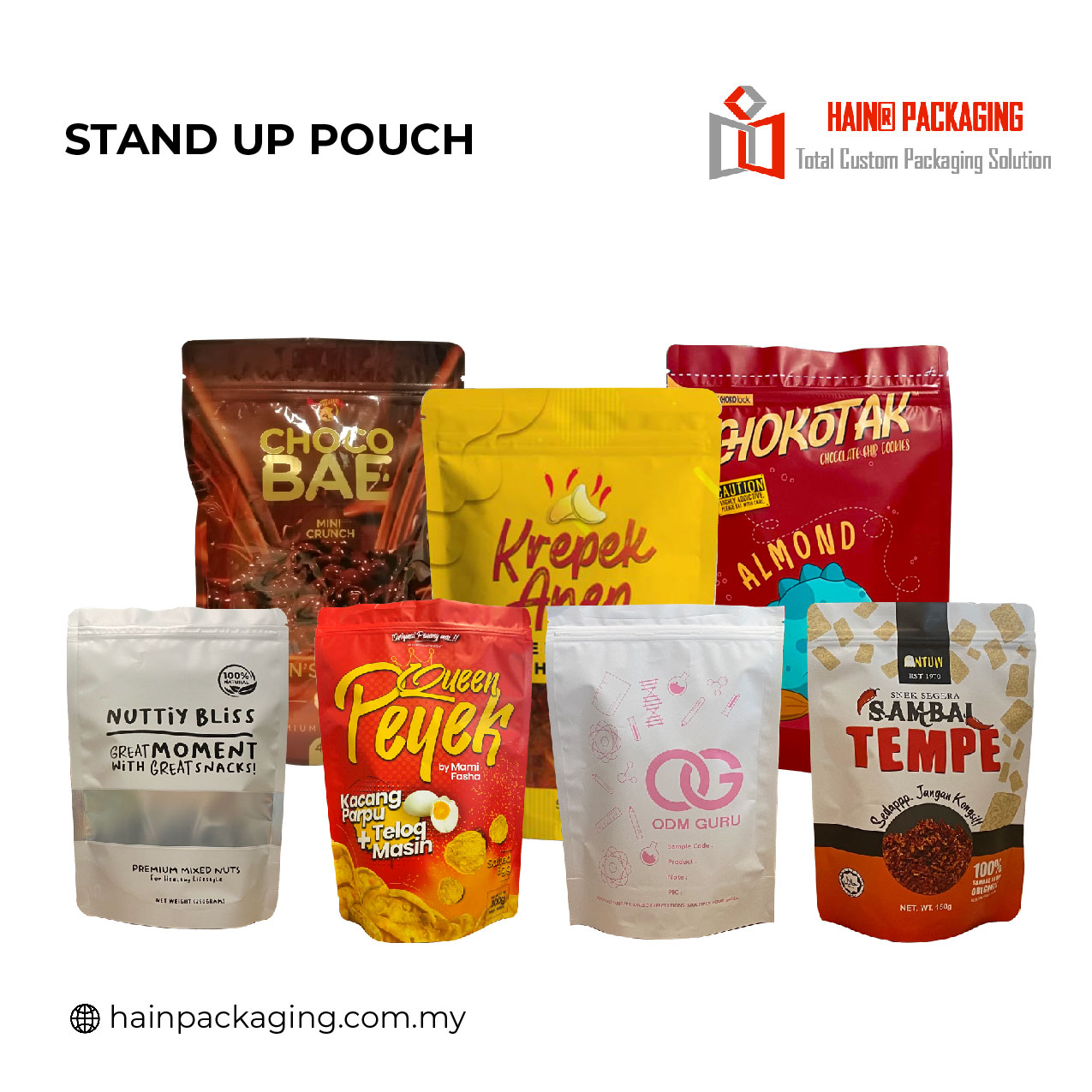
Flexible packaging has often been criticised for its multi-layer construction, which can make recycling difficult. However, the industry has responded with genuine innovations that transform flexible packaging into a sustainable choice. Here is what makes modern flexible packaging eco-friendly:
Material Reduction
Flexible packaging uses significantly less material than rigid alternatives. A stand-up pouch, for example, requires up to 70% less plastic by weight than a rigid bottle or jar for the same volume of product. Less material means fewer raw resources extracted, lower transportation emissions, and less waste at end-of-life.
Mono-Material Construction
Traditional flexible packaging often combines multiple materials — such as PET, aluminium foil, and polyethylene — bonded together to achieve barrier properties. While effective, these multi-material laminates are nearly impossible to recycle. The breakthrough has been mono-material structures: pouches and films made from a single polymer family (typically polyethylene or polypropylene). These offer comparable barrier performance but can be processed through existing recycling streams.
Lighter Carbon Footprint
Because flexible packaging is lightweight, it reduces fuel consumption during transport. A truckload of flexible pouches can carry the same number of units as multiple truckloads of rigid containers. This translates directly into lower Scope 3 emissions for your business.
Source Reduction Through Design
Eco-friendly flexible packaging is designed with optimisation in mind: thinner gauges where possible, right-sized formats that eliminate excess material, and print designs that use fewer inks and solvents. Every gram of material eliminated is a direct environmental saving.
Recyclable Packaging Malaysia: Materials & Options
Malaysia’s recycling infrastructure has improved considerably, and packaging manufacturers have responded with products designed for the circular economy. Here are the key recyclable packaging Malaysia options available today:
Mono-Material Recyclable Pouches
Mono-material pouches represent the biggest leap forward in sustainable flexible packaging. Made entirely from one polymer type — most commonly polyethylene (PE) or polypropylene (PP) — these pouches can be recycled through existing plastic recycling streams.
Key features:
- Excellent seal integrity and puncture resistance
- Good moisture and oxygen barrier (when engineered with specialised barrier coatings)
- Compatible with standard form-fill-seal (FFS) packaging machinery
- Available in clear, white, or metallised finishes
For Malaysian businesses exporting to Europe or North America, mono-material pouches are becoming a minimum requirement as those markets implement stricter packaging regulations.
Recyclable Stand Up Pouches
The iconic stand-up pouch has been given a sustainable makeover. Modern recyclable stand up pouches maintain the same retail-ready appearance and functionality while being fully recyclable.
What to look for:
- PE-based stand-up pouches with MDO (Machine Direction Orientation) technology that provides stiffness without needing mixed materials
- PP-based formats with higher heat resistance suitable for hot-fill applications
- Pouches with peelable seals for easy opening and potential reuse
These pouches are ideal for coffee, snacks, pet food, detergent refills, and powdered beverages — categories that traditionally relied on non-recyclable multi-layer laminates.
Recyclable Ziplock Bags
Recyclable ziplock bags (also called resealable pouches) solve a common packaging headache: how to combine convenience with sustainability. These bags feature a press-to-close zipper track while remaining fully compatible with recycling systems.
Applications in Malaysia:
- Frozen food packaging
- Hardware and spare parts
- Dry goods and staples
- Personal care refills
The key advance has been zipper tracks made from the same polymer as the bag body, eliminating the need to separate components before recycling.
Compostable Pouch Malaysia: What You Need to Know
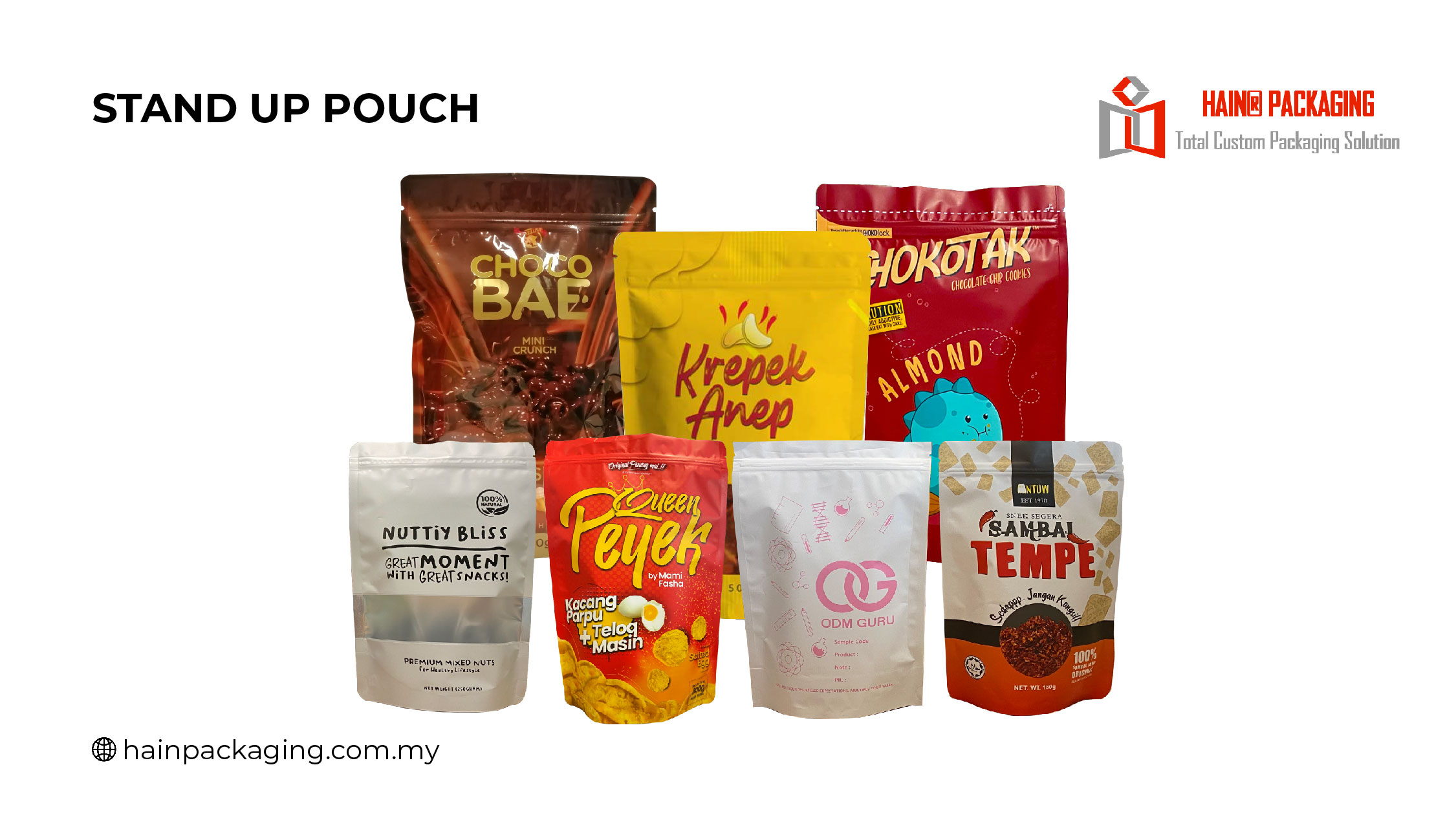
Compostable packaging has captured significant attention as a end-of-life solution. But the reality is more nuanced than the marketing suggests. Here is what Malaysian businesses need to understand about compostable pouch Malaysia options.
Industrial vs Home Compostable
This distinction matters enormously:
Industrial Compostable:
- Requires controlled conditions: 58–60°C temperature, specific humidity, and active microbial environment
- Must be processed in industrial composting facilities (few exist in Malaysia)
- Degrades within 90–180 days under these conditions
- Certified to EN 13432 or ASTM D6400 standards
Home Compostable:
- Designed to break down in ambient garden compost conditions (25–30°C)
- Typically degrades within 12–24 months
- More accessible for Malaysian households with composting setups
- Certified to NF T51-800 (France) or TÜV Austria Home Compostable
For most Malaysian businesses, home compostable films are currently more practical since industrial composting infrastructure is limited outside major industrial zones.
Certification Standards (EN 13432, OK Compost)
Do not accept compostability claims without certification. Genuine compostable packaging carries recognised third-party verification:
| Certification | Standard | Level | Region |
|---|---|---|---|
| EN 13432 | Industrial composting | 90% degradation in 180 days | Europe (widely referenced globally) |
| OK Compost INDUSTRIAL | Industrial composting | TÜV Austria certification | International |
| OK Compost HOME | Home composting | TÜV Austria certification | International |
| ASTM D6400 | Industrial composting | US standard | North America |
| Seedling Logo | Compostable | European Bioplastics | Europe |
Important caveat: Compostable plastics should not be mixed with conventional recycling streams. They require separate collection and processing. In Malaysia, this means compostable packaging currently makes most sense for closed-loop applications — such as food courts, events, or businesses with their own composting facilities.
Biodegradable vs Compostable vs Recyclable: Key Differences
These three terms are frequently used interchangeably, but they mean fundamentally different things. Understanding the differences is essential for making informed packaging decisions — and for avoiding greenwashing accusations.
| Attribute | Biodegradable | Compostable | Recyclable |
|---|---|---|---|
| Definition | Breaks down naturally over time | Breaks down into non-toxic compost | Can be reprocessed into new products |
| Timeframe | Variable (months to centuries) | Defined timeframe (90–180 days industrial) | Immediate (via collection system) |
| Conditions | Ambient environment | Controlled conditions required | Mechanical or chemical processing |
| Residue | May leave microplastics | Non-toxic biomass + CO₂ + water | New raw material |
| Certification | No standard required | Yes (EN 13432, etc.) | Yes (resin identification code) |
| Best suited for | Limited use cases | Closed-loop systems | Mainstream waste infrastructure |
Key takeaway for Malaysian businesses: Recyclable packaging is currently the most practical and scalable sustainable option given Malaysia’s waste management reality. Compostable packaging has its place for specific applications, especially in food service. Biodegradable plastics without certification should be approached with caution — some “oxo-biodegradable” formulations fragment into microplastics, which is worse than the original problem.
Sustainability Certifications for Malaysian Packaging
Navigating the certification landscape can be overwhelming. Here are the certifications most relevant to Malaysian packaging buyers:
FSC (Forest Stewardship Council)
Essential if your packaging includes paperboard, kraft paper, or any paper-based component. FSC certification ensures that fibre comes from responsibly managed forests.
ISO 14001 (Environmental Management)
While not a product certification, ISO 14001 signals that a packaging manufacturer operates with robust environmental management systems. Leading Malaysian packaging suppliers carry this certification.
Green Label Malaysia
The national ecolabelling scheme managed by SIRIM. Products carrying the Green Label have been independently verified to meet environmental criteria across their lifecycle.
For reference, visit SIRIM Berhad — Malaysian standards and certification.Cradle to Cradle Certified
A rigorous certification that assesses material health, material reutilisation, renewable energy, water stewardship, and social fairness. More common among premium sustainable packaging suppliers.
EU Single-Use Plastics Directive Compliance
While not a certification per se, compliance with the EU’s SUP Directive is increasingly important for Malaysian exporters. Packages must carry clear labelling about recyclability and recycled content.
Cost Comparison: Eco vs Conventional Packaging
One of the most common concerns Malaysian businesses raise is cost. Here is a realistic breakdown:
| Packaging Type | Conventional | Eco-Friendly | Premium Difference |
|---|---|---|---|
| Stand-up pouch (standard) | RM 0.15–0.30 | RM 0.25–0.50 | +30–70% |
| Side-gusset pouch | RM 0.10–0.20 | RM 0.18–0.35 | +40–75% |
| Flat ziplock bag | RM 0.05–0.12 | RM 0.08–0.20 | +30–60% |
| Compostable film/roll | RM 0.12–0.25 (per sqm) | RM 0.35–0.65 (per sqm) | +100–160% |
| Mono-material recyclable film | RM 0.12–0.25 (per sqm) | RM 0.18–0.35 (per sqm) | +30–50% |
Note: These are estimated ranges for mid-volume orders (10,000–50,000 units). Premium compression occurs at higher volumes.
Hidden Savings of Eco Packaging
While eco-friendly packaging commands a per-unit premium, many businesses find that total cost of ownership (TCO) narrows the gap:
- Lightweight savings — Lower shipping costs offset some of the material premium
- Brand premium — Sustainable packaging commands 15–30% higher perceived product value among eco-conscious consumers
- Regulatory readiness — Avoid future costs from plastic taxes and bans (the UK Plastic Packaging Tax already charges £210/tonne for packaging with less than 30% recycled content)
- Export market access — Retailers in Europe and North America increasingly mandate sustainable packaging; eco options maintain market access
How to Transition Your Business to Sustainable Packaging
Transitioning your packaging is not an all-or-nothing decision. A phased approach reduces risk while building momentum:
Phase 1: Audit (Weeks 1–4)
- Catalog every packaging SKU you currently use
- Identify which formats have eco-friendly alternatives available
- Assess your machinery’s compatibility with new materials (most modern FFS and VFFS machines handle mono-material films)
- Review your supply chain partners’ sustainability capabilities
Phase 2: Pilot (Weeks 5–12)
- Select 2–3 high-volume SKUs for initial conversion
- Request samples from suppliers of mono-material and/or recycled-content films
- Run production trials — test seal integrity, barrier performance, and shelf appearance
- Gather feedback from your logistics team on handling and storage
Phase 3: Validate (Weeks 13–20)
- Send packaged products for shelf-life testing
- Conduct consumer perception testing if applicable
- Finalise artwork updates to communicate recyclability (include recycling logos and instructions)
- Lock in pricing with your chosen supplier
Phase 4: Roll Out (Weeks 21+)
- Convert remaining SKUs in order of ease of transition
- Update your website and marketing collateral to highlight the sustainability improvements
- Consider adding FSC-certified outer cartons or recycled-content corrugated boxes
- Monitor cost savings and customer feedback
Pro tip: Start with packaging that has direct consumer visibility — your brand gets maximum benefit from the sustainability investment, and customers can participate by recycling correctly.
Frequently Asked Questions
1. Is eco-friendly flexible packaging available in Malaysia?
Yes. Several Malaysian packaging manufacturers now offer eco-friendly flexible packaging options, including mono-material recyclable pouches, compostable films, and recycled-content laminates. Major industrial areas including Selangor, Penang, and Johor have suppliers with certified sustainable packaging capabilities.
2. What is the difference between recyclable and compostable packaging?
Recyclable packaging can be collected, processed, and turned into new products through mechanical or chemical recycling. Compostable packaging breaks down into non-toxic biomass, water, and CO₂ under specific conditions. Recyclable is generally more practical for Malaysia’s current waste management infrastructure.
3. Can recyclable pouches go into the standard recycling bin?
It depends on local council capabilities. Many Malaysian recycling programs now accept mono-material PE and PP flexible packaging through drop-off points. Always check with your local council or waste management provider. Look for the resin identification code (2 for HDPE, 4 for LDPE, 5 for PP) on the packaging.
4. How long does a compostable pouch take to decompose?
Industrial compostable pouches (EN 13432 certified) break down within 90–180 days in controlled composting facilities. Home compostable options (OK Compost HOME certified) typically take 12–24 months in ambient garden compost conditions. Neither will degrade in a landfill environment.
5. Is eco-friendly packaging more expensive?
Eco-friendly packaging typically costs 30–70% more per unit than conventional alternatives, depending on the format and material. However, when factoring in shipping weight savings, brand value, and regulatory compliance, the total cost difference narrows significantly. Prices continue to decrease as demand grows.
6. What certifications should I look for in sustainable packaging?
For recyclable packaging, look for clear resin identification codes and recyclability claims backed by third-party testing. For compostable packaging, require EN 13432 (industrial) or OK Compost HOME certification. For paper components, FSC certification is essential. Green Label Malaysia is a trusted local certification.
Make the Switch to Sustainable Packaging
The shift towards eco packaging Malaysia flexible solutions is not a passing trend — it is the future of the packaging industry. Businesses that act now will build brand loyalty, future-proof against regulations, and contribute meaningfully to Malaysia’s environmental goals.
Whether you are looking for recyclable stand-up pouches, compostable films, or mono-material laminates, the right partner makes all the difference. HAIN Packaging offers a comprehensive range of certified sustainable flexible packaging solutions tailored to Malaysian businesses, from SMEs to multinational exporters.
Explore HAIN’s sustainable packaging range →
Last updated: May 2026