Retort Pouch Malaysia: Heat-Stable Packaging Guide
May 22, 2026
Plastic Bag Supplier Near Me: Malaysia Location Guide
May 22, 2026Why Food Industry Packaging Matters for Malaysian Businesses
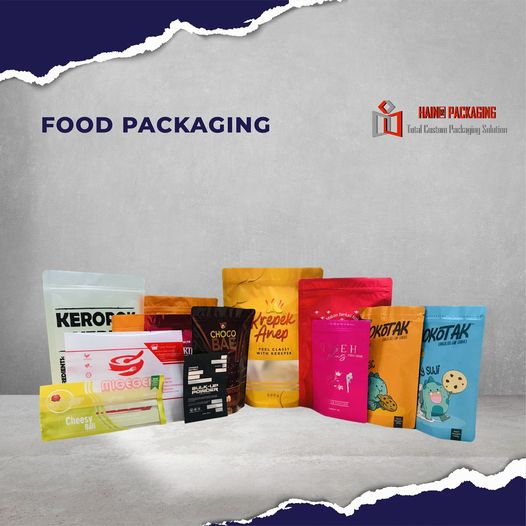
Food Packaging Supplier Malaysia — In Malaysia’s competitive F&B and retail market, packaging is more than just a container — it’s a branding tool, a compliance requirement, and a shelf-life protector. food industry packaging from HAIN Packaging gives your product the professional edge it needs to stand out on every shelf.
The Malaysian food processing industry contributed RM 25.8 billion to the nation’s GDP in 2025 and continues to grow at 5–7% annually. With over 8,000 registered food manufacturers nationwide, the demand for reliable food packaging suppliers in Malaysia has never been higher. Whether you’re launching a new brand of frozen sambal, expanding your bakery line, or producing sauces for export, your packaging partner determines product safety, shelf life, and brand perception. Whether you need food packaging supplier malaysia, choosing the right packaging partner is key to your success.
Food Packaging Supplier Malaysia — The Malaysian packaging market is projected to grow at a CAGR of 3.86% through 2031, driven by e-commerce expansion and processed food demand (Mordor Intelligence). For businesses seeking reliable packaging, HAIN® Packaging Food Industry Packaging offers manufacturing expertise backed by SIRIM certification and food-grade compliance.
How to Choose a Food Packaging Supplier in Malaysia
Selecting the right food packaging supplier is one of the most critical decisions for Malaysian F&B businesses. A wrong choice leads to product spoilage, regulatory non-compliance, brand inconsistency, and wasted budgets. With dozens of suppliers offering varying quality levels, price points, and capabilities, making an informed decision requires a structured evaluation approach.
This guide breaks down the 7 essential criteria every brand should evaluate, plus additional considerations around certifications, quality control, pricing, and sustainability that will help you identify the best food packaging supplier in Malaysia for your specific needs.
7 Essential Criteria for Evaluating Food Packaging Suppliers
1. Food-Grade Certification
Your supplier must provide documentation for food-contact compliance. In Malaysia, look for:
- KKM (Kementerian Kesihatan Malaysia) approval for food-contact materials — this is the minimum legal requirement for any food packaging sold in Malaysia
- FDA (US) compliance for export-grade products destined for North American markets
- EU Regulation 10/2011 for European market access — essential if you plan to export
- ISO 22000 food safety management system — demonstrates systematic quality control
- JAKIM Halal certification — critical if your products target the Muslim consumer market, which represents over 60% of Malaysia’s population
HAIN® Packaging Food Industry Packaging maintains full KKM and FDA certifications for all food-grade packaging, with Halal certification available for compliant product lines.

2. Minimum Order Quantity (MOQ)
MOQ determines your entry cost. For Malaysian SMEs starting with custom printed packaging:
| Printing Method | Standard MOQ | HAIN® Packaging MOQ |
|---|---|---|
| Rotogravure | 20,000–50,000 pcs | 10,000 pcs |
| Flexographic | 10,000–20,000 pcs | 5,000 pcs |
| Digital (no plate) | 1,000–5,000 pcs | Not offered |
Understanding MOQ is vital for cash flow planning. If you’re a startup selling 2,000 units per month, ordering 50,000 pouches ties up RM 15,000–25,000 in packaging alone. Look for suppliers like HAIN Packaging’s doypack solutions that offer flexible MOQ tiers. Some suppliers offer MOQ reductions of 20–30% for repeat orders, and many amortise tooling costs over the first 2–3 order cycles to reduce upfront investment.
3. Material Range & Barrier Options
A good supplier offers material structures for every product type. HAIN® Packaging provides 12+ laminate structures covering all barrier levels from basic OPP/PE to ultra-high-barrier PET/AL/NY/PP for retort applications. The right material structure depends on your product’s sensitivity to oxygen, moisture, and light:
- Basic barrier (OPP/PE) — Suitable for dry goods like biscuits, crackers, and snacks with short shelf life
- Medium barrier (PET/PE or NY/PE) — Ideal for frozen foods, chilled products, and confectionery
- High barrier (PET/AL/PE or PET/AL/NY/PE) — Required for oxygen-sensitive products like coffee, sauces, and cooked meals
- Ultra-high barrier (PET/AL/NY/PP retort) — For shelf-stable ready meals that require retort processing at 121°C
For eco-conscious brands, recycled PET (rPET) content and mono-material PE structures are emerging options. HAIN Packaging also offers recyclable stand up pouch solutions for brands prioritising sustainability without compromising barrier performance.
4. Custom Printing Quality
Request print samples before committing. Evaluate colour accuracy, registration precision, and ink adhesion. A poor print job ruins brand perception — blurry logos, misaligned text, and inconsistent colours signal low quality to customers.
HAIN® Packaging provides free physical samples within 7 business days. We recommend evaluating samples under retail lighting conditions and comparing against your brand colour guide (Pantone references). Check the print on both coated and uncoated areas, especially for intricate designs with fine text or gradients. For high-detail artwork, custom doypack pouch printing with rotogravure delivers superior registration accuracy compared to flexographic methods.
5. Delivery Coverage & Speed
Check that your supplier delivers to all your distribution zones. HAIN® Packaging ships nationwide — Peninsular Malaysia (3–5 days), Sabah & Sarawak (7–10 days). If you’re expanding into Singapore or regional markets, confirm cross-border shipping capabilities. Late deliveries disrupt production schedules and can cause stockouts at retail points, damaging both revenue and brand credibility.
6. Design Support
Free design assistance saves you RM 2,000–5,000 on external design fees. HAIN® Packaging’s in-house design team creates mockups within 3 business days. This is especially valuable for first-time brand owners who may not have design files prepared for print production. A good supplier will help you optimise your artwork for the printing method, including die-line templates, colour separation guidance, and bleed margin recommendations.
7. After-Sales Support
Packaging defects, seal failures, and print issues need fast resolution. HAIN® Packaging provides WhatsApp support with 24-hour response time and replacement guarantees for verified defects. Look for suppliers who maintain quality records and can provide traceability for every production batch — vital if a defect issue arises and you need to identify affected inventory quickly.
Food-Grade Certification Explained
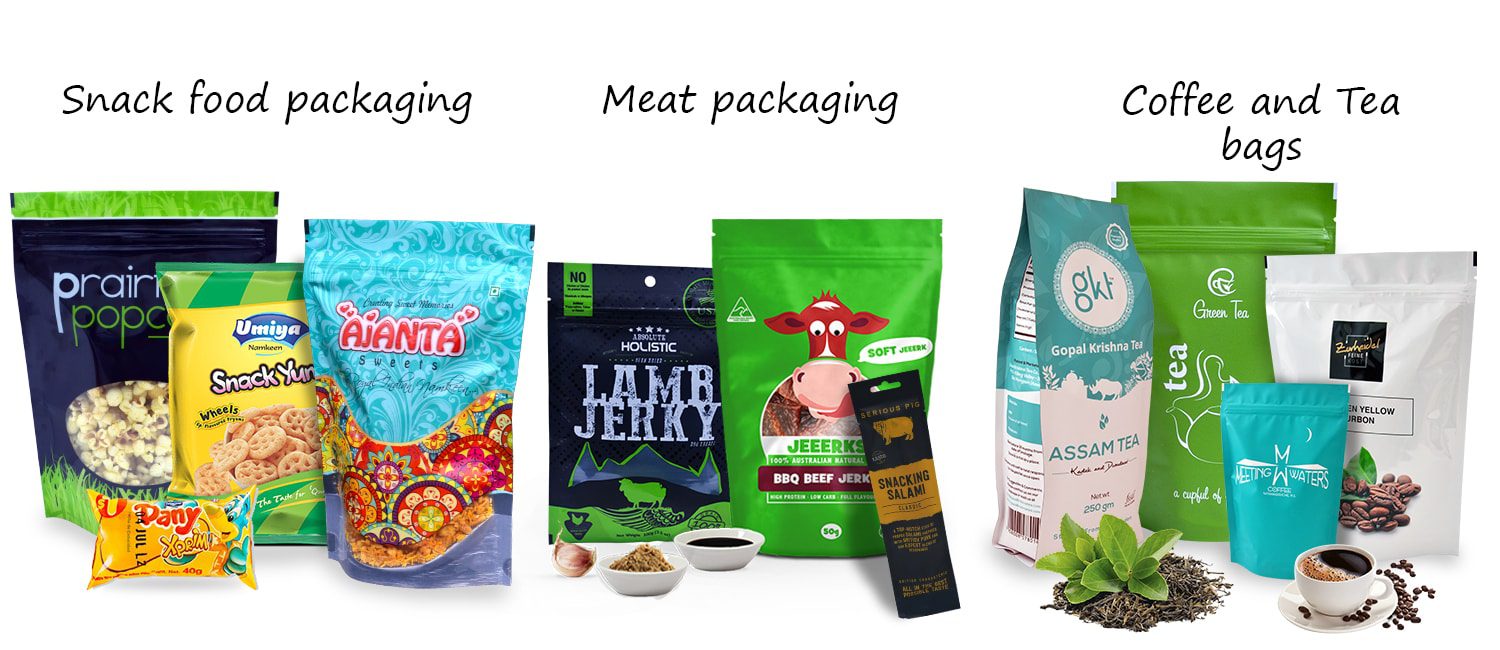
Understanding the certification landscape helps you ask the right questions when evaluating a food packaging supplier in Malaysia. Here’s what each certification means in practical terms:
KKM (Ministry of Health Malaysia) Approval
KKM approval under the Food Act 1983 and Food Regulations 1985 is the minimum legal requirement. It confirms that the packaging materials do not leach harmful substances into food under normal storage conditions. Every food packaging supplier in Malaysia must maintain this certification. Ask to see the current KKM registration certificate and verify it covers your specific material type.
ISO 22000 Food Safety Management
ISO 22000 integrates HACCP principles and requires documented procedures for hazard identification, traceability, and corrective actions. Suppliers with ISO 22000 certification maintain stricter process controls, consistent quality output, and better documentation — essential for brands that undergo third-party food safety audits.
GMP (Good Manufacturing Practice)
GMP certification ensures the production facility follows hygienic design principles: separate raw material and finished goods areas, controlled air quality, pest management systems, and operator hygiene protocols. While not always mandatory for packaging, GMP-certified suppliers produce lower contamination risk packaging. For high-risk food categories like infant formula, dairy, and cooked ready meals, GMP certification should be non-negotiable.
JAKIM Halal Certification
For products targeting Malaysia’s Muslim majority market (and export markets like Indonesia and the Middle East), Halal-certified packaging is increasingly expected. JAKIM Halal certification confirms that packaging materials do not contain non-Halal substances (e.g., animal-derived stearates in inks or adhesives) and are produced on dedicated equipment. HAIN® Packaging offers Halal-certified options for compliant product lines.
FDA & EU Compliance
If you export to the United States, your packaging must comply with FDA 21 CFR regulations for food-contact substances. The EU’s Plastics Regulation (EU) 10/2011 sets stricter migration limits than Malaysian regulations. Suppliers with dual certification save you the cost and time of retesting for each export market.
Quality Control: What to Expect from a Reliable Supplier
A professional food packaging supplier in Malaysia should have documented QC processes covering every stage of production:
Incoming Material Inspection
Raw film, inks, and adhesives are tested before production — checking film gauge, surface tension, ink viscosity, and adhesive bond strength. Substandard raw materials produce substandard packaging, regardless of how well the printing press runs.
In-Process Quality Checks
During printing and lamination, inspectors check colour density (with spectrophotometers or densitometers), registration accuracy (within 0.2–0.5mm depending on method), seal strength (minimum 20–35 N/15mm for food pouches), and laminate bond strength. Regular sampling at set intervals catches defects before they become a full production run issue.
Finished Product Testing
Before shipment, final QC includes:
- Seal integrity test — Air pressure or vacuum testing to verify leak-proof seals
- Barrier testing — Oxygen transmission rate (OTR) and water vapour transmission rate (WVTR) verification
- Dimensional inspection — Width, length, and gusset measurements against specifications
- Visual inspection — 100% or AQL-based visual check for print defects, contamination, or physical damage
Ask your shortlisted suppliers for their QC checklist and Acceptable Quality Limit (AQL) standards. Reputable suppliers maintain AQL 1.0–2.5 (major defects) and AQL 4.0 (minor defects) under ISO 2859 sampling standards.
Common Mistakes When Choosing a Supplier
- Choosing cheapest price over quality — Thin films and weak seals cause product spoilage that costs 10× the packaging savings. A pouch that costs RM 0.30 less but fails at a rate of 2% costs more in returned goods, lost customers, and brand damage than the savings justify.
- Ignoring MOQ alignment — Ordering 50,000 pouches when you only sell 5,000/month wastes cash flow and warehouse space. Calculate your 3-month inventory requirement and look for suppliers whose MOQ fits that volume.
- Skipping sample testing — Always test physical samples for seal strength, barrier performance, and print quality before bulk orders. Digital proofs on screen look different from printed film — what looks vibrant on your monitor may appear dull or washed out in production.
- Not checking certifications — Uncertified packaging can cause regulatory fines, product recalls, and export rejection. Verify current certification validity dates, not just whether the supplier claims to be certified.
- Overlooking delivery zones — Suppliers who can’t reach East Malaysia limit your market coverage. If you’re distributing in Sabah or Sarawak, confirm the supplier has reliable logistics partners for those regions.
- Failing to plan for growth — Your supplier should have the capacity to scale with you. A supplier who can deliver 10,000 pouches today but cannot handle 100,000 pouches next year forces you to requalify a new supplier, causing delays and branding inconsistency.
Pricing Guide for Malaysian Food Packaging Buyers
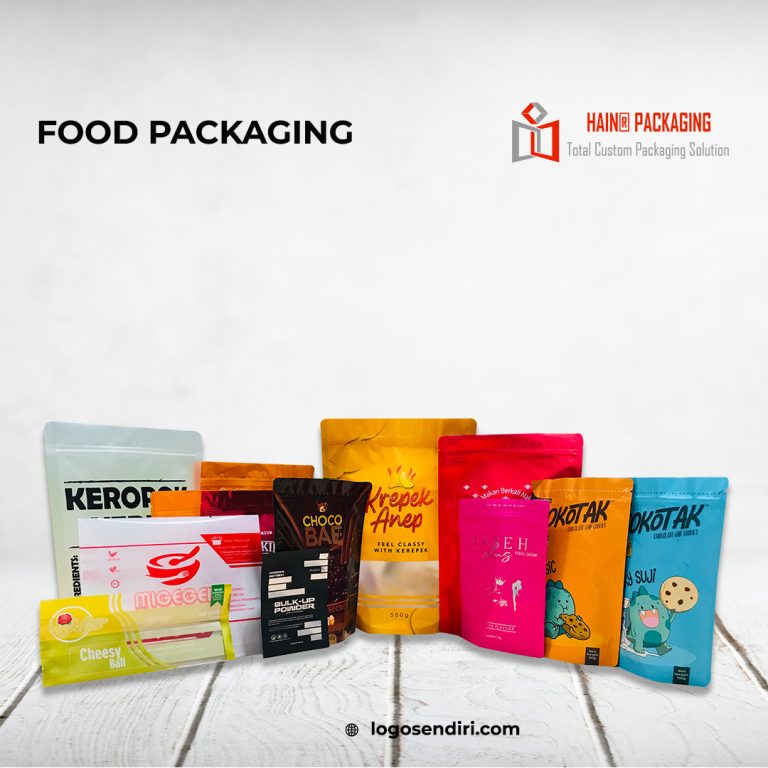
Understanding how food packaging suppliers structure their pricing helps you negotiate better and avoid hidden costs. Here’s what influences the final price per unit:
| Factor | Cost Impact | How to Optimise |
|---|---|---|
| Film structure | Base PET/PE: RM 0.15–0.25/pouch PET/AL/PE: RM 0.30–0.55/pouch Retort structure: RM 0.50–0.90/pouch |
Select only the barrier level your product needs. Don’t pay for aluminium barrier if your dry snack only needs 6 months shelf life. |
| Print colours | Up to 4 colours: standard cost 5–8 colours: +15–30% Full CMYK + 2 PMS: +25–40% |
Design within 4–6 colour limit for standard pricing. Use PMS colours sparingly for brand-critical elements only. |
| Coating / finish | Matt finish: +10–15% Gloss finish: standard Matte + soft-touch: +20–30% |
Matt finish adds premium perception but costs more. Reserve for premium product lines. |
| Tooling (plate/cylinder) | Flexographic: RM 200–500/colour Rotogravure: RM 800–2,500/colour |
Amortise tooling costs over multiple order cycles. Some suppliers offer free tooling for first orders above certain volume. |
| Quantity | Volume discounts of 10–30% at higher tiers | Consolidate SKU designs to reach higher volume tiers. Combine multiple products in one production run. |
Food Packaging Types: What Malaysian Brands Need
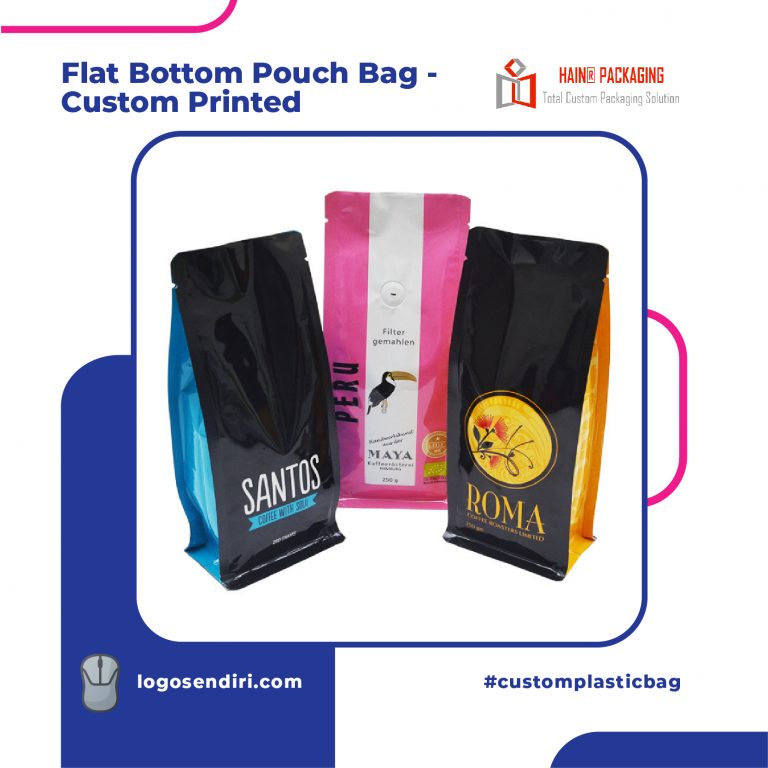
Different food products require different packaging formats. Here’s a quick guide to the most common types used by Malaysian F&B brands:
Stand Up Pouches (Doypack)
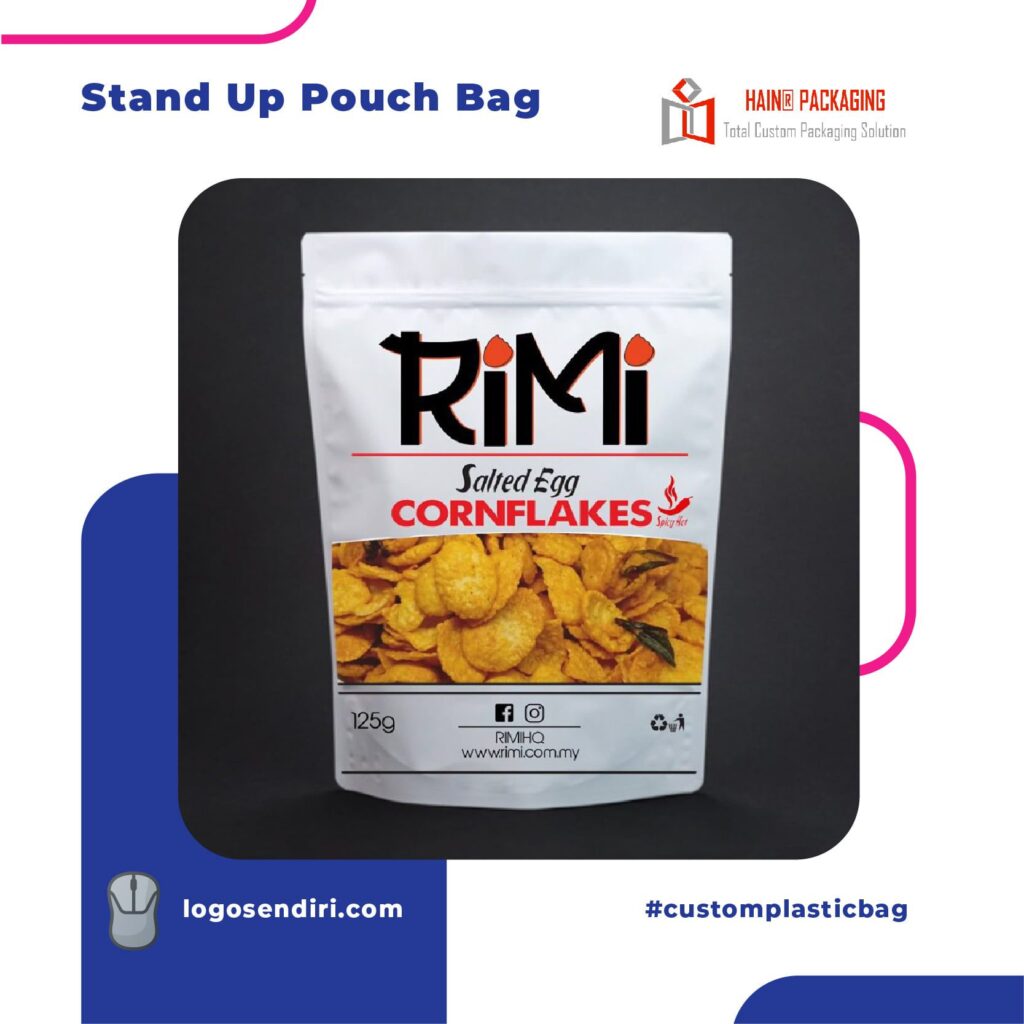
Ideal for sauces, snacks, frozen foods, and powdered products. These pouches stand on retail shelves, offering excellent branding real estate. Available with zipper closures for resealability, tear notches for easy opening, and gusseted bottoms for stability. For more details, see our comprehensive guide on doypack Malaysia solutions.
Flat Bottom Bags (Box Pouch)
Premium format with enhanced shelf presence. The flat bottom creates a box-like appearance while maintaining the lightweight and cost advantages of flexible packaging. Popular for premium snacks, coffee products, and gift packaging.
Center Seal / Pillow Pouches
Economical format for single-serve snacks, powders, and dry products. Sealed on three or four sides with simple branding options. Low tooling costs make this format accessible for startups with limited budgets.
Three Side Seal Pouches
Flat pouches sealed on three sides, ideal for liquid products, sauces, and condiments. Often used with spout fittings for easy dispensing. Requires high-integrity seals to prevent leakage during transport and retail display.
Vacuum and Retort Pouches
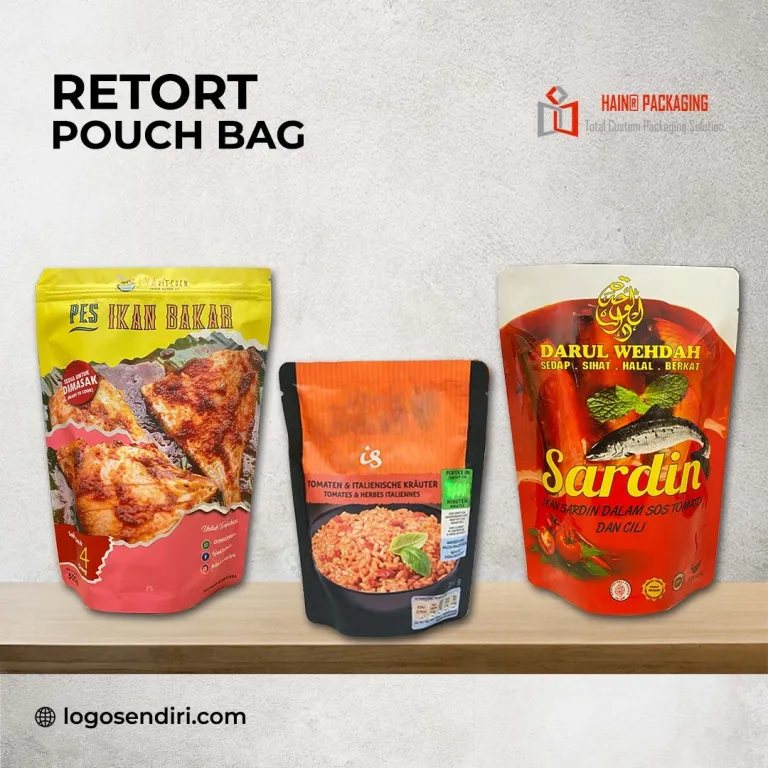
High-barrier formats designed for long shelf life without refrigeration. Retort pouches withstand the high-temperature, high-pressure retort process (121°C, 15–45 minutes) for shelf-stable ready meals. Essential for export-oriented brands targeting markets where cold chain logistics are challenging.
Sustainability Considerations for Food Packaging
Malaysian consumers are increasingly eco-conscious, with 68% willing to pay more for sustainable packaging (NielsenIQ Malaysia, 2024). Leading food packaging suppliers in Malaysia are responding with:
- Recyclable mono-material pouches — PE-only or PP-only structures that are compatible with existing recycling streams. HAIN Packaging offers recyclable stand up pouch options with excellent barrier performance.
- PCR content — Post-consumer recycled content in outer film layers reduces virgin plastic usage by 30–50%.
- Reduced material gauge — Thinner films with equivalent barrier performance reduce material usage without compromising protection. This typically saves 10–20% in plastic weight.
- Water-based inks and solvent-free lamination — Lower environmental footprint and reduced volatile organic compound (VOC) emissions during production.
Sustainability certifications to look for include the Malaysian SIRIM Eco-Label, global plastic recyclability certifications, and carbon footprint reporting. A growing number of retailers and export markets now require sustainability documentation from packaging suppliers.
Frequently Asked Questions
What certifications should a food packaging supplier have?
KKM (Malaysia food-contact) is the minimum legal requirement. For export and premium positioning, add FDA (US), ISO 22000, and JAKIM Halal certification. HAIN Packaging holds KKM, FDA, and ISO-compliant certifications.
What is a reasonable MOQ for custom printed food packaging?
5,000–10,000 for flexographic, 10,000–20,000 for rotogravure. HAIN Packaging offers competitive MOQs for Malaysian SMEs, with flexographic starting at 5,000 pieces and rotogravure at 10,000 pieces.
How to test packaging samples before bulk order?
Request physical samples, test seal strength (pull test), fill with your product, store at target conditions for 7–14 days, then evaluate seal integrity, barrier performance, and print quality. Run a transport simulation (drop test, vibration test) to confirm durability during distribution.
What delivery coverage should I expect from a Malaysian supplier?
National coverage including Sabah & Sarawak. HAIN Packaging delivers 3–5 days (Peninsular), 7–10 days (East Malaysia). Cross-border shipping to Singapore and regional ASEAN markets is available on request.
Can I get sustainable/recyclable food packaging in Malaysia?
Yes. HAIN Packaging offers recyclable mono-material stand up pouches, reduced-gauge films, and options with PCR content. See our eco-friendly packaging range for details.
How long does custom food packaging production take?
Typically 3–5 weeks from artwork approval. Flexographic: 2–3 weeks. Rotogravure: 3–5 weeks. Rush orders may be available at premium pricing. Factor in 1–2 weeks for design proofing and sample approval before production begins.
What’s the difference between rotogravure and flexographic printing?
Rotogravure uses engraved cylinders for superior registration accuracy, consistent colour, and suitability for long runs (10,000+ pieces). Flexographic uses flexible plates at lower cost but may show slight variation in colour and registration. For detailed artwork with fine text or gradients, rotogravure is recommended. See our printing comparison guide.
Is Halal certification available for food packaging?
Yes. HAIN Packaging offers JAKIM Halal-certified packaging for brands targeting the Muslim consumer market. Halal certification covers ink composition, adhesive materials, and production line segregation to prevent cross-contamination.
Ready to Order Food Industry Packaging from HAIN® Packaging?
Don’t compromise on your packaging. Choose HAIN® Packaging as your trusted food industry packaging supplier in Malaysia for quality, customisation, and competitive pricing.
Contact us today via WhatsApp or email [email protected] for a free consultation and quotation.
If you’re looking for a reliable packaging supplier, we at HAIN® Packaging are ready to help. Reach out to our sales representative for a consultation, or share your branding ideas with us. For businesses exploring food packaging supplier malaysia, finding the right packaging partner is essential.
You can reach us on WhatsApp, or find us on Facebook, Instagram, and Telegram!

HAIN® Packaging
No. B-6-3A, Streetmall, One South, Jalan OS, Taman Serdang Perdana, Section 6 Seri Kembangan, 43300 Selangor Darul Ehsan
Phone: +60 11-6987 2289
Email: [email protected]
Packaging Supplier Evaluation Checklist
Use this comprehensive checklist when evaluating potential packaging suppliers for your Malaysian F&B business:. For businesses exploring food packaging supplier malaysia, finding the right packaging partner is essential.
Technical Capability Assessment
- ☐ Material range: Does supplier offer structures for all your product types?
- ☐ Barrier capabilities: OTR, WVTR, light barrier options available?
- ☐ Print quality: Request print samples — evaluate colour accuracy, registration
- ☐ Custom size capability: Can they produce your required dimensions?
- ☐ R&D support: Technical team available for material recommendations?
- ☐ Testing capability: In-house QC lab for barrier and seal testing?
Compliance & Certification
- ☐ KKM food-contact certification (mandatory for food packaging)
- ☐ FDA certification (for export products)
- ☐ ISO 22000 / FSSC 22000 (food safety management)
- ☐ SIRIM certification (product quality)
- ☐ Halal certification (for Halal market products)
- ☐ Material traceability system
- ☐ GMP certification
Commercial Terms
- ☐ MOQ alignment with your production volume
- ☐ Pricing competitiveness (compare 3 suppliers)
- ☐ Payment terms (credit for established customers?)
- ☐ Lead time: Standard production and rush options
- ☐ Volume discounts for larger orders
- ☐ Tooling costs: Plates, cylinders — one-time or amortised?
Service & Support
- ☐ Design support: In-house design team?
- ☐ Sample policy: Free samples? Quick turnaround?
- ☐ Communication: WhatsApp/email responsiveness
- ☐ Problem resolution: Defect handling, replacement policy
- ☐ Technical support: On-site assistance if needed
Cost Analysis Framework
Total Cost of Packaging
Beyond unit price, consider total cost:. For businesses exploring food packaging supplier malaysia, finding the right packaging partner is essential.
| Cost Component | Typical Impact | Consideration |
|---|---|---|
| Unit price | 60–70% of total | Compare across suppliers |
| Tooling amortisation | 5–10% | Spread over expected volume |
| Inventory carrying cost | 5–10% | Storage, capital tied up |
| Quality cost | 5–15% | Rejects, returns, complaints |
| Logistics cost | 5–10% | Delivery, handling |
Hidden Costs to Avoid
- Product spoilage — Inadequate barrier leads to 5–20% product loss
- Seal failures — Weak seals cause leaks, returns, brand damage
- Print errors — Poor registration requires reprinting, delays
- MOQ excess — Ordering more than needed ties up capital
Learn more about food-grade flexible packaging by visiting HAIN® Packaging Food & Beverage Solutions for detailed product specifications and case studies.. For businesses exploring food packaging supplier malaysia, finding the right packaging partner is essential.