
10 Questions Before Choosing a Packaging Manufacturer MY
May 4, 2026
Custom vs Stock Packaging: When to Upgrade for Maximum ROI
May 7, 2026
How to Choose the Right Plastic Bag Thickness: Complete Guide for Malaysian Businesses
Selecting the correct plastic bag thickness is one of the most critical decisions when purchasing custom packaging in Malaysia. Use a film that is too thin, and your products risk tearing, leakage, or insufficient protection. Overspecify the thickness, and you waste money on material costs. This comprehensive guide explains everything Malaysian business owners need to know about plastic bag gauges — from micrometres and mils to the ideal thickness for LDPE, HDPE, and laminated films — so you can make an informed decision that balances cost, performance, and brand image.
Key Takeaways
- Plastic bag thickness is measured in micrometres (µm), mils, or gauge — 1 mil = 25.4 µm = 100 gauge.
- Common thickness ranges: HDPE bags 10–25 µm, T-shirt bags 15–20 µm, LDPE bags 30–100 µm, heavy-duty bags 80–200 µm.
- Thicker is not always better — choose the minimum thickness that safely supports your product weight and contents.
- Laminated films (multi-layer) deliver superior barrier properties without needing excessive thickness.
- Working with an experienced Malaysian packaging manufacturer ensures you get the right gauge for your specific product.
Table of Contents
- Understanding Plastic Bag Thickness Measurements
- Common Thickness by Plastic Bag Type
- How to Choose the Right Thickness for Your Product
- Thickness Comparison Table
- Cost Implications of Plastic Bag Thickness
- Plastic Bag Thickness Standards in Malaysia
- Frequently Asked Questions
Understanding Plastic Bag Thickness Measurements
Plastic bag thickness is measured in several units globally, which can be confusing for first-time buyers. The most common units used in Malaysia are:
- Micrometre (µm): The standard metric unit. 1 µm = 0.001 mm. Most packaging specifications in Malaysia use micrometres.
- Mil: An imperial unit equal to one-thousandth of an inch (0.001 inch). 1 mil = 25.4 µm. Common in US-based specifications.
- Gauge: A unit primarily used for polyethylene film. 1 gauge = 0.01 mil = 0.254 µm. 100 gauge = 1 mil = 25.4 µm.
When a supplier says “100 gauge plastic bag,” they are referring to a thickness of approximately 25.4 µm or 1 mil. Always confirm which unit your Malaysian packaging supplier uses to avoid misunderstandings that could affect your product protection. To learn more about different plastic film types and their properties, visit Plastic Packaging Facts for authoritative industry data. [HAIN Packaging] provides end-to-end packaging solutions Browse our complete custom packaging guide.
Common Thickness by Plastic Bag Type
Different plastic materials and bag types require different thicknesses to perform optimally. Here is a breakdown of standard thickness ranges for the most common packaging films used in Malaysia.
HDPE (High-Density Polyethylene) Bags
HDPE bags are known for their strength-to-weight ratio. They have a stiff, paper-like feel and are commonly used for retail shopping bags, grocery bags, and lightweight packaging.
- Typical range: 10–25 µm (0.4–1 mil / 40–100 gauge)
- T-shirt bags: 15–20 µm — enough for carrying lightweight retail items
- Shopping bags with logo: 20–25 µm — better durability for repeated use
- Thin produce bags: As low as 8–10 µm — one-time use only
HDPE bags are economical but have limited puncture resistance. They are best for dry goods, clothing, and items without sharp edges. For heavier or sharper products, consider LDPE or laminated alternatives.

LDPE (Low-Density Polyethylene) Bags
LDPE bags are softer, more flexible, and more puncture-resistant than HDPE. They have a typical glossy appearance and are widely used for food packaging and industrial applications.
- Typical range: 25–100 µm (1–4 mil / 100–400 gauge)
- Light general purpose: 30–50 µm — suitable for bakery items, clothing, and light hardware
- Medium duty: 50–75 µm — ideal for frozen food, meat packaging, and heavier retail products
- Heavy duty: 75–100 µm — used for hardware, tools, and industrial parts
LDPE bags offer excellent clarity when clear, making them ideal for displaying food products in retail environments. Many Malaysian food businesses prefer LDPE bags in the 50–80 µm range for their balance of protection and cost.
Laminated Films
Laminated films combine multiple layers of different materials (such as PET, aluminium foil, and LDPE) to achieve superior barrier properties. The total thickness is the sum of all layers, typically ranging from 70–150 µm.
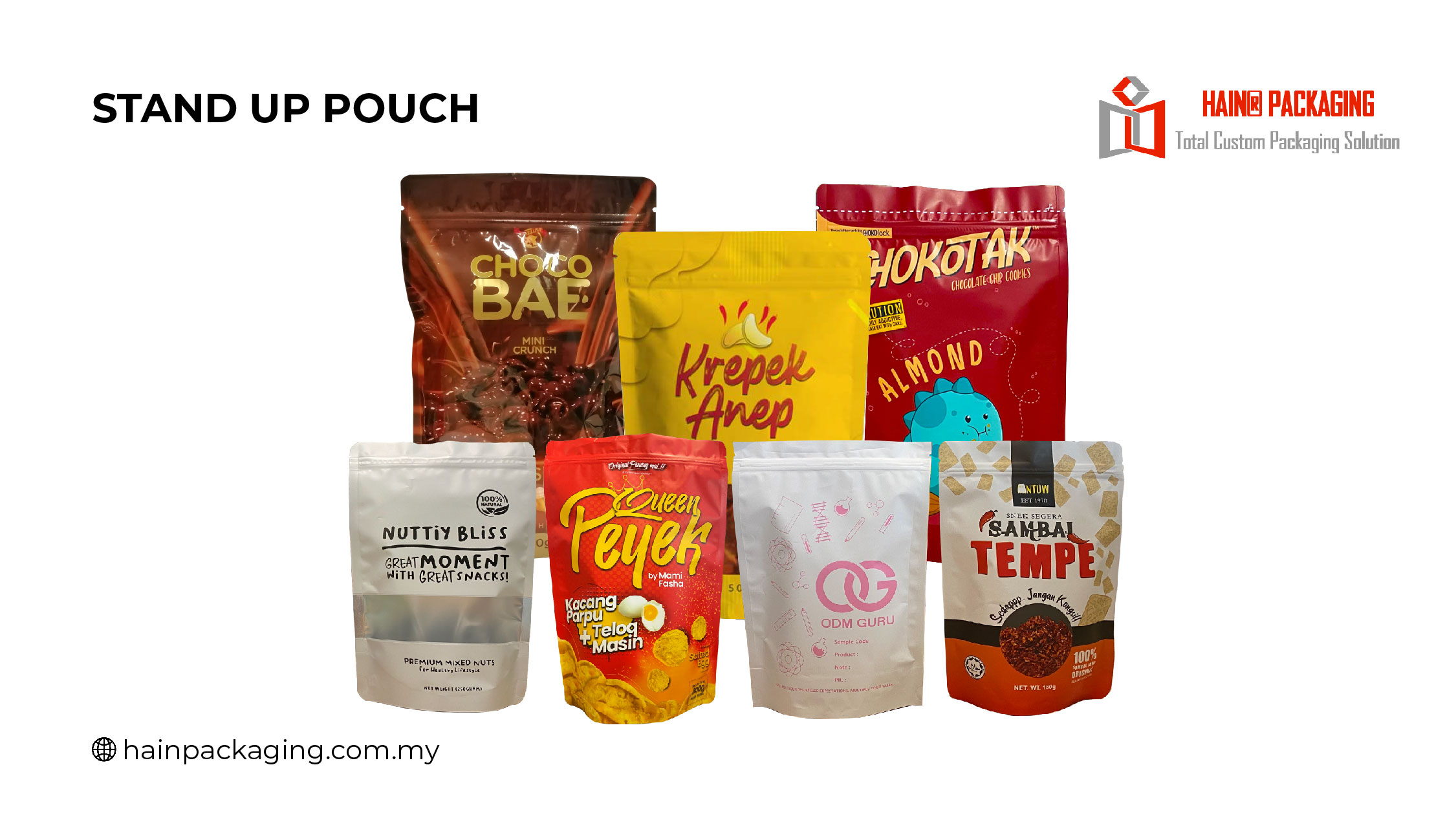
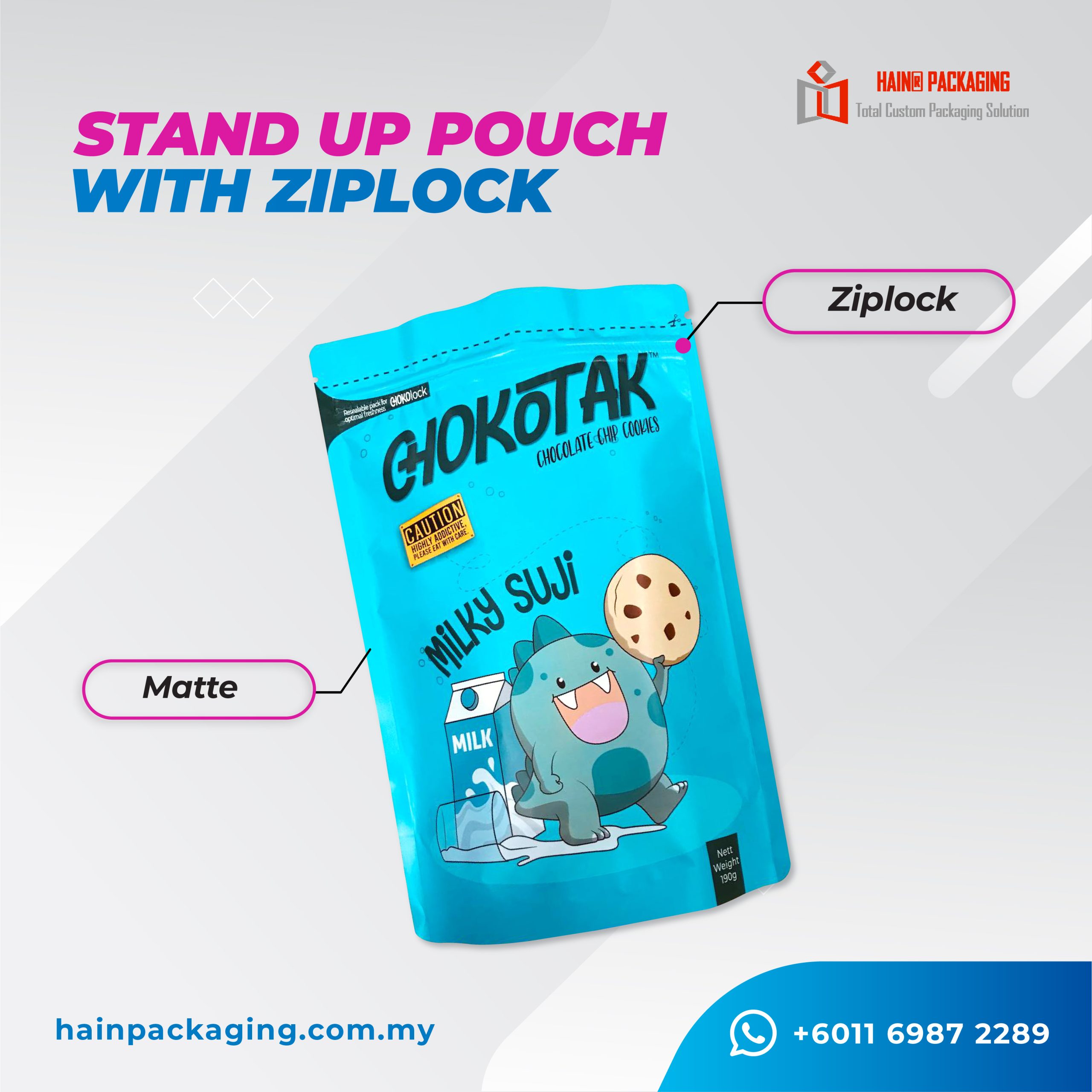
- Stand-up pouches: 70–120 µm total thickness, depending on barrier requirements
- Aluminium foil pouches: 80–150 µm — provide oxygen and moisture barriers for long shelf life
- Retort pouches: 100–150 µm — designed to withstand high-temperature sterilisation
The beauty of laminated films is that each layer serves a specific purpose — strength, barrier, heat seal ability — so the overall thickness can be optimised without compromising performance. This is why many premium food products in Malaysia use laminated stand-up pouches rather than single-material bags.
How to Choose the Right Thickness for Your Product
Choosing the correct plastic bag thickness requires evaluating several factors unique to your product and business:
1. Product Weight
The single most important factor. A general rule: for every 1 kg of product weight, you need approximately 25 µm (1 mil) of film thickness in standard LDPE. Heavier or denser products require proportionally thicker material.
2. Product Shape and Sharpness
Products with sharp corners, edges, or abrasive surfaces (such as screws, hardware, or frozen items with ice crystals) require thicker film — typically 75 µm or more — to prevent punctures and tears.
3. Storage Conditions
Will the packaged product be frozen, refrigerated, or stored at room temperature? Frozen environments make plastic films more brittle, so you may need to increase thickness by 20–30% compared to room-temperature storage.
4. Shelf Life Requirements
For products requiring extended shelf life, thicker laminated films with barrier layers are essential. A 100–120 µm laminated pouch with aluminium foil can protect coffee, spices, and dried foods for 12–18 months.
5. Handling and Transport
Bags that go through multiple handling stages (warehouse → delivery → retail shelf → customer) need higher durability. Consider adding 10–20 µm extra thickness to account for handling stress.
6. Printing and Branding
Heavy printing coverage affects film behaviour. High-opacity or full-colour printed bags may require slightly thicker base film (add 5–10 µm) to maintain bag strength after printing.

Thickness Comparison Table
| Bag Type | Material | Thickness (µm) | Common Uses | Max Load (kg) |
|---|---|---|---|---|
| Produce bag | HDPE | 8–12 | Fruits, vegetables | 0.5–1 |
| T-shirt bag | HDPE | 15–20 | Retail shopping | 2–4 |
| Promotional bag | LDPE | 30–50 | Clothing, gifts | 3–5 |
| Food ziplock bag | LDPE | 50–80 | Snacks, frozen food | 2–5 |
| Stand-up pouch | Laminate | 70–120 | Beverages, sauces | 1–3 |
| Heavy-duty sack | LDPE/LLDPE | 80–200 | Chemicals, building materials | 10–25 |
| Retort pouch | Laminate | 100–150 | Ready meals, curries | 1–2 |
Cost Implications of Plastic Bag Thickness
Thicker plastic bags cost more because they use more raw material. However, the relationship is not always linear — here is what you need to know about cost and thickness:
- Material cost: A 50 µm bag uses roughly twice the material of a 25 µm bag of the same size, doubling the raw material cost.
- Hidden savings: Using the right thickness reduces breakage, product damage, and customer complaints. The cost of replacing damaged goods often exceeds the extra material cost.
- Bulk pricing: Thinner bags can be packed more densely per roll or carton, reducing shipping and storage costs.
- Custom printing: Thicker films handle printing better and produce sharper graphics, potentially reducing print waste.
The sweet spot for most Malaysian SMEs is to choose the minimum thickness that passes a simple drop test with a 20% safety margin. A reputable custom packaging manufacturer like HAIN Packaging can help you conduct these tests before committing to a full production run.
Plastic Bag Thickness Standards in Malaysia
Malaysia has specific regulations regarding plastic bag thickness, particularly following the nationwide plastic bag ban initiatives in several states. Under the Malaysia Plastics Sustainability Roadmap 2021–2030, single-use plastic bags are targeted for reduction. Key points for business owners:
- Retail plastic bags for in-store use must be a minimum of 50 µm thickness in certain states (Penang, Selangor, KL) under the “No Plastic Bag” campaign exemptions.
- Food-grade plastic bags must comply with the Food Act 1983 and Food Regulations 1985, which specify that only food-grade materials be used — thickness is secondary to material safety.
- Export-oriented businesses should verify thickness requirements in destination countries. The EU restricts lightweight plastic carrier bags (below 50 µm) under Directive (EU) 2015/720.
Always confirm current regulations with your packaging supplier, as policies evolve rapidly across different Malaysian states. For official information on Malaysian plastic regulations, refer to resources from the Ministry of Natural Resources and Environmental Sustainability.
Frequently Asked Questions
What is the standard plastic bag thickness for food packaging in Malaysia?
Most food packaging bags in Malaysia range from 50–100 µm for single-layer LDPE films, and 70–120 µm for laminated stand-up pouches. The exact thickness depends on the food type, weight, and required shelf life. Dry snacks typically do well at 50–70 µm, while frozen foods need 75–100 µm.
How do I convert gauge to micrometres?
1 gauge = 0.254 µm. To convert gauge to micrometres, multiply by 0.254. For example, 200 gauge = 200 × 0.254 = 50.8 µm. Alternatively, 1 mil = 25.4 µm = 100 gauge. Most Malaysian suppliers work in micrometres, so always request specifications in µm to avoid confusion.
Can I use the same thickness for all my products?
No. Different products have different weight, shape, and protection requirements. Using one thickness across all products usually results in either overpaying for overengineered packaging or risking damage with too-thin bags. It is more cost-effective to use 2–3 standardised thickness profiles matched to product categories.
Does thicker plastic always mean better quality?
Not necessarily. Thicker plastic is stronger, but the material quality (virgin vs recycled content, density, additives) also plays a major role. High-quality LDPE at 50 µm can outperform poor-quality LDPE at 80 µm. Focus on appropriate thickness for your specific application rather than maximum thickness.
How can I test if my plastic bag thickness is adequate?
Perform a simple drop test: fill the bag with your product at maximum fill weight, seal it, and drop from 1 metre onto a concrete floor. If the bag survives 5 consecutive drops without tearing, the thickness is adequate for normal handling. Add 20% thickness margin for safety.
Conclusion
Choosing the right plastic bag thickness is a balancing act between protection, cost, and environmental impact. Understanding the measurement units, material properties of HDPE versus LDPE versus laminated films, and the specific requirements of your product will help you make the best decision for your Malaysian business.
At HAIN Packaging, we help businesses across Malaysia select the optimal film thickness for their custom packaging needs. Whether you need lightweight HDPE shopping bags, flexible LDPE food pouches, or premium laminated stand-up pouches, our team can guide you to the right gauge for your product and budget.
Ready to get the perfect custom plastic bags for your business? Contact us today for a free consultation and sample testing. For related products, explore our food packaging solutions.
📞 WhatsApp Us: +60 11-6987 2289 | Read More: Plastic Packaging Malaysia Guide | Compare Flexible Packaging Options