Shipping Pouch Malaysia Who Supplies Each Number
October 15, 2026
Tamper Proof Mailer Five Variables and Where They Fail
October 15, 2026
The spare room is 2.4 m by 3 m and it holds everything. A folding table along one wall, a shelving unit with nine boxes of stock, a printer under the table and a scale that has been calibrated once, in 2023. The bags hang on a hook behind the door, small business shipping bags in three sizes, all ordered in the same week from the same supplier, and only one of them gets used. The other two are a decision that was made quickly and paid for slowly.
Small business shipping bags fail in a predictable order, and the order is set by how much it costs to fix the mistake. Some specifications can be corrected in an email before anything is made. Others cannot be corrected at all once the film is extruded. Locking them cheapest first is the whole method, because the expensive ones stop being expensive if the cheap ones were right.
The Cheapest Mistake a Wrong Measurement on Small Business Shipping Bags
Size is the least expensive specification to get wrong, because it is wrong on paper and never reaches a machine. The cost of fixing it is one email and one revised drawing. The cost of not fixing it is a carton of bags that fit nothing, plus the storage space they occupy while you decide what to do with them.
Measure the largest item you ship, not the average one, and add the void fill around it. A pouch sized for your average product leaves the top 20 per cent of your orders unshippable, and those are the orders that end up in a box bought at a convenience store.
A second measurement catches the mistake before it ships, which is the packed item held against the bag with the flap closed. If the flap has to be folded twice, the size is wrong. If the film is drum tight across the corners, the size is one band too small and the seal will be carrying load it was not meant to carry.
Wrong Closure One Stage Up from the Cheapest Mistake
Closure costs more to fix than size, because the adhesive strip and the release liner are part of the film layup. Choosing a permanent seal when you needed a returns strip means the bags are unusable for the returns flow you run every week. Choosing a re-sealable second strip when nobody returns anything means paying for an adhesive nobody peels.
Decide the closure from the return rate you actually see, not from the one you expect. A seller with a 3 per cent return rate on apparel needs the second strip. A seller shipping non-returnable accessories does not, and the money is better spent on film thickness.
Strip Width and Packing Speed Where Millimetres Do the Talking
There is also a packing-speed side to this choice. A single permanent strip is one motion per parcel, while a returns flow needs the customer to keep the second liner somewhere. If your support inbox already carries messages about lost liners, the closure choice is costing you more in email than in film.
The width of the adhesive strip is the last part of this decision, and it is quoted in millimetres for a reason. A 10 mm strip on a bag carrying 2 kg is a different proposition from the same strip on a 200 g parcel, and widening it by 5 mm is a cheaper change than discovering the failure after the order has shipped.
Wrong Film Thickness Where the Grams Are Fixed by the Bracket
Thickness is more expensive again, because once the film is extruded and the bags are converted there is no correction available, only a re-order. Under-specifying gives you bags that puncture on a sharp corner and generate the complaint you least want, which is a customer photographing a damaged parcel.
The property that matters here is impact resistance, and it is measured rather than asserted. ASTM D1709 covers impact resistance of plastic film by the free-falling dart method, which is the test behind most film toughness figures a supplier quotes. Asking for the figure and its conditions is a reasonable question for an order of any size.
Over-specifying is the quieter version of the same mistake. A film two grades heavier than the contents need adds grams to every parcel, and on a volumetric bracket those grams are billed on every shipment for a year. The right thickness is the thinnest film that survives your worst product, not the thickest one available.
Wrong Artwork and What a Re Cut Adds to Cost Once Plates Exist
Artwork is expensive to fix because plates are already cut by the time the mistake is visible. A logo placed across the fold line, a wordmark smaller than the registration tolerance of the press, or a colour count that added a plate nobody budgeted for all cost the same thing, which is a re-cut and a re-run.
The fix is a flat-proof review before plate cutting. Look at the artwork at actual print size on screen, then at 50 per cent, because the 50 per cent view is closer to what a customer sees on a doorstep. If the mark disappears at that size, it will disappear on the bag.
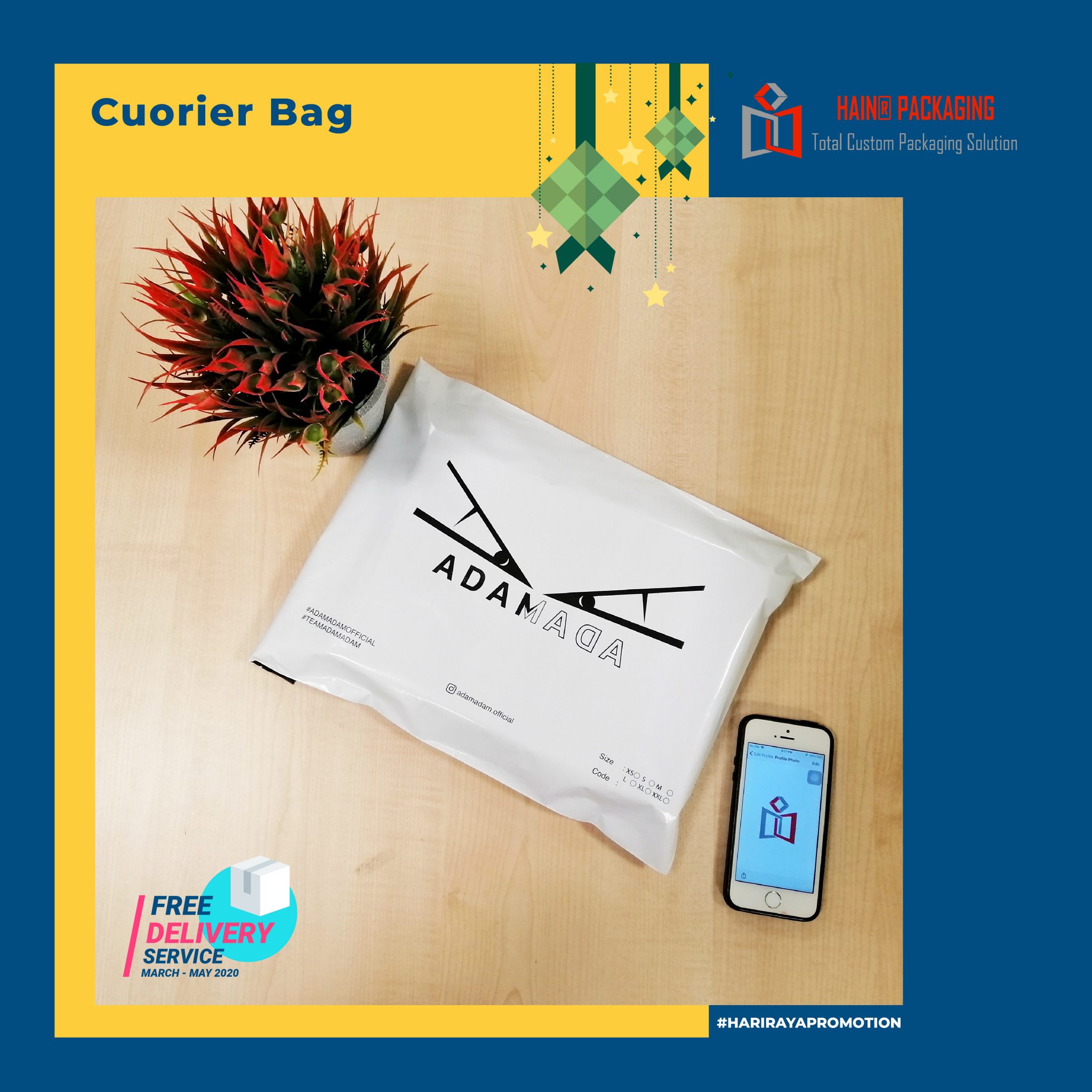
Colour Count and the Recurring Check on Every Reorder
Colour count is the part of artwork that carries a recurring cost rather than a one-off one. Each extra colour is a plate and a wash-up on every future order, so a four-colour mark that could be two colours costs you on every reorder for as long as you use it.
Our custom shipping bag notes set out the measurement-to-repeat-order sequence, and the artwork requirements page gives the file formats that survive plate cutting without a re-draw.
Wrong Quantity the Specification Nobody Writes Down on Small Business Shipping Bags
Quantity is the most expensive mistake on this list, and small businesses reach it before the others. Ordering 20,000 bags to reach a better unit price ties up cash, occupies the spare room for a year, and locks the artwork at a point when the brand is still moving. Ordering 2,000 at a time avoids all of that and pays a higher unit price on every single shipment.
The number to work from is months of cover rather than price per bag. If you pack 400 parcels a month, then 6,000 bags is roughly fifteen weeks of cover, which is long enough to absorb a supplier delay and short enough that a rebrand does not strand stock. Work out that figure before you look at the unit price.
Storage is the cost that never appears on the quote. A carton of 5,000 folded bags occupies roughly the footprint of a dining chair, and ten of those cartons in a 2.4 m by 3 m room is the difference between a packing line and an obstacle course. Count the cartons you can actually stand before you count the unit price saving.
Splitting the First Order With One Worked Example
A useful habit is to split the first order. Buy enough for eight weeks at the small quantity price, run them, then reorder at the larger quantity once the artwork has survived contact with real customers. The second order costs slightly more per bag and wastes nothing.
The last thing worth writing down before you order is what happens to the leftovers. A size that stops selling leaves a carton of branded bags with a logo you no longer use, and the only cheaper outcome is an artwork neutral enough to survive the change. Neutral artwork on a first order is not timid, it is the cheapest rework insurance available.
Turnaround, sample charges and delivery from the plant are worked out against bag size, print method and order volume. Hand our sales team those three and you get a figure back; nobody can quote honestly without them.
Send us three things and we can start on your small business shipping bags: internal dimension of your largest packed item, monthly parcel count, artwork in vector with colours named. The quote comes back with the rest decided.