Custom Shipping Bag From Measurement to Repeat Order
October 13, 2026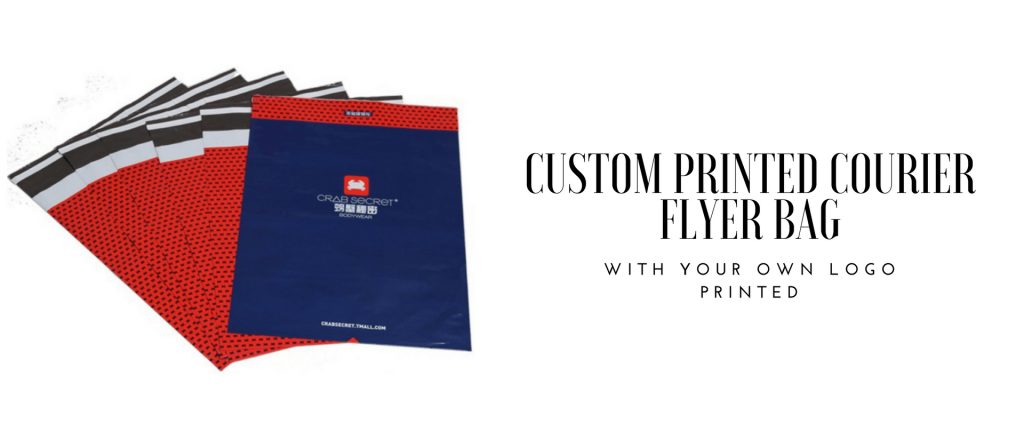
The bench is 1.2 metres of folding plywood against a bedroom wall in Setapak. On the left sits a stack of grey poly mailers, flat, roughly the thickness of a phone book. On the right, four folded cartons waiting for tape. In the middle, the thing being packed: a folded cotton shirt in a clear inner sleeve. The seller makes the same choice forty times an hour and never writes it down. Every mailer bag malaysia decision gets made at this scale — one lamp, one bench, one parcel — and the cost of getting it wrong arrives three days later as a return request with a photograph attached.
Two formats compete for that bench. The poly mailer is a co-extruded polyethylene film carrying a peel-and-seal closure; it arrives flat, stores flat and takes print across its whole surface. The carton is corrugated board with a fold-over lid; it arrives as a folded blank, needs tape, and takes print on one face plus whatever a label covers. Picking between them is not a question of which is better in the abstract. It is a question of which one loses money more slowly on your particular product mix, and that turns on three measurable things.
What the Parcel Network Charges You For
Courier tariffs bill against whichever is larger, the actual weight or the volumetric weight, and volumetric weight is length × width × height divided by a divisor the carrier sets. A shirt folded to 30 × 22 × 4 cm and slipped into a mailer measures close to 30 × 22 × 4 when it is packed, because the film collapses onto the contents. The same shirt in the smallest carton that will take it measures closer to 33 × 25 × 9, because corrugated board will not fold tighter than its own creases allow. Every one of those extra centimetres is air you are invoiced for, on every parcel, for as long as you ship that way. Pos Malaysia’s shipping FAQ spells out how the volumetric figure is derived and the point at which it overrides actual weight, which is the arithmetic your carton-versus-mailer comparison has to survive.

The carton takes this dimension back the moment an order stops being a single unit. A three-item basket shipped as three mailers carries three labels, three pickup scans and three tracking numbers, and the picking time to match. Shipped as one carton it carries one of each. The break-even is not a mystery — it is the point where the volumetric saving on three mailers is smaller than the handling and label cost of three consignments. Sellers with an average basket above roughly two items usually cross it.
Verdict on freight: the mailer wins on single-unit orders, where dead air is the entire bill. The carton wins on multi-item baskets, where consolidation beats volumetric efficiency.
What Survives the Sorting Belt
Stacking is where the carton earns its keep. Corrugated board is engineered against compression, and there is a standard way to express that: ASTM D642 is the standard test method for determining compressive resistance of shipping containers, which is why a carton can be specified to a box compression value before anyone orders it. A poly mailer has no equivalent number, because a film bag is not designed to carry a load from above. If your parcels habitually sit at the bottom of a cage under twenty others, that difference is not academic.

Closure integrity is where the mailer takes it back, and on apparel it matters more often. A carton is closed with tape, and tape loses grip on dusty board, on board that has been stored in a humid room, and on board that flexes. A mailer closes with a single peel-and-seal strip applied to a clean film surface at the factory, with no second material to fail. A mailer also has no corner to crush: it deforms under a point load and returns, where a carton takes a permanent crease that then becomes the weakest line in the box.
Put those together and the ordering is clear for most soft-goods sellers. Compression damage is real but concentrated in a small slice of the network; closure failure and abrasion are the two that show up in the return inbox week after week. If your damage rate is dominated by open parcels, switching to cartons will not fix it, because you are treating the less common failure.
Verdict on transit damage: the carton wins under sustained stacking load. The mailer wins on closure reliability and on any hazard that arrives as a point impact rather than a distributed one.
Both of these dimensions change the moment you know the actual numbers for your own parcels. The courier bag sizing guide walks through measuring a folded item so the volumetric figure you are quoted matches the one you are billed for.
What Lands on the Buyer’s Doorstep
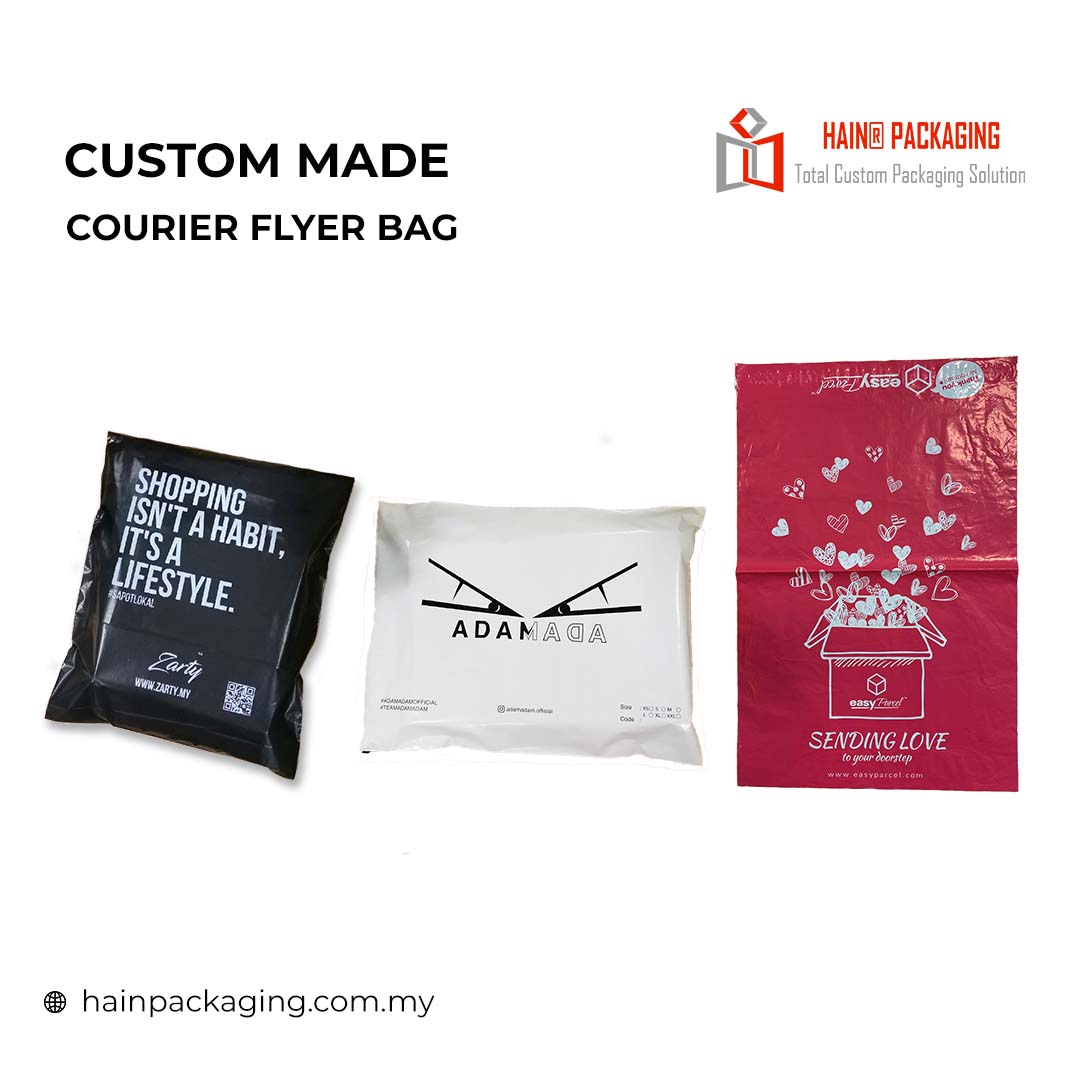
Print area is the mailer’s strongest card. A poly mailer takes artwork edge to edge, in any number of colours, with no label to cover it, so the brand mark is the first thing visible when the parcel is picked up off the mat. A carton generally gets a printed panel on one face and a shipping label slapped over part of it. For a seller whose unboxing moment is doing acquisition work — social shares, repeat purchase, word of mouth — that difference is worth more than the cents saved on freight.
Rigidity is what the carton gives back at the doorstep. A rigid product — a hardcover book, a jar, a small appliance, anything with a corner of its own — arrives in a mailer looking exactly as soft as the bag it came in, and buyers read that as damage even when it is not. A carton also survives being re-gifted or reused, which matters in categories where the parcel is handed onward rather than opened and discarded.
Verdict at the doorstep: the mailer wins on brand surface and on the unboxing moment. The carton wins on rigid contents and on any product whose shape is part of what the buyer paid for.
The Mailer Bag Malaysia Spec, Read in Order
Once the format is settled, the specification has six fields, and the order matters because each one constrains the next. Flat dimensions come first, measured off your bulkiest single unit rather than your average one, since the bag has to close over the worst case. Film gauge comes second, expressed in micron on the finished film, not on the raw resin. Structure, meaning mono-layer or co-extruded, comes third, and it is what determines whether the bag is opaque enough to hide the contents and tough enough to resist a puncture from a zip or a button.
Closure type comes fourth: a permanent peel-and-seal strip for single-use delivery, or a second strip if the buyer is expected to return the item in the same bag. Print method comes fifth, with flexographic for long runs and fixed artwork against digital for short runs and campaign artwork that changes. Quantity comes last, and it is the field that decides how much of the setup cost is spread across each unit.
For soft goods with no sharp hardware, a gauge in the 50 to 70 micron band is the common starting point and is worth testing before going heavier; sharp-edged or dense contents push the number up, and going up is cheaper than replacing a run that punctures. If the artwork needs to survive handling without scuffing, that is a print-method question rather than a gauge question, and it is answered in the custom printed mailer bag notes. Sellers running a returnable format should also read the courier bag with pocket option, which keeps the return label off the outer face.
Turnaround, sampling and any expedite option are quoted against the finished specification, the print method and the order quantity rather than against a published figure, so all three are settled with our sales team before an order is committed.
Where a Carton Still Wins the Mailer Bag Malaysia Order
Four situations hand the order back to corrugated board, and all four are about what is inside rather than what is printed on the outside. Fragile contents that need void fill. Rigid contents that arrive creased in film. Multi-item baskets where consolidation beats volumetric efficiency. And high-value parcels where the buyer’s expectation of the outer pack is part of the price they paid.
The way to settle it for your own operation is not a spreadsheet. Pack twenty units in each format, ship them through your normal lane, and record three things on arrival: whether the closure was intact, whether the contents were creased, and what the parcel measured. Twenty parcels is enough to see which format is actually costing you money, and it costs less than one month of guessing. Run the same twenty before a mailer bag malaysia run goes to print, because the print is the part of the decision you cannot take back.
Frequently Asked Questions
Is a poly mailer cheaper than a carton for Malaysian domestic parcels?
Per unit, usually yes, and the gap widens once you count volumetric weight rather than unit price alone. The gap closes on multi-item baskets, where one carton replaces several mailers and the saving moves to handling instead.
What film gauge should a mailer bag malaysia order start at?
Soft goods with no hardware usually start in the 50 to 70 micron range and get tested there. Contents with zips, buttons or hard corners push the figure higher, and the cheaper sequence is to test heavier before committing to a full run.
Can a printed mailer replace a shipping label?
It can carry the brand, but tracking still needs a scannable label or an integrated barcode panel. Printing the brand across the full surface simply stops the label from being the only thing the buyer sees.
So which format belongs on your bench tomorrow? Fill one mailer with your heaviest single-unit order, weigh it, and drop it once from waist height onto concrete. If the seal holds, a mailer bag malaysia run will serve you. If it opens, the carton is not a preference.