How Seed & Veterinary Packaging Holds Up From Filling Line to Final Dose
October 7, 2026
Three bags reached the same factory in the same week, all ordered as protection, and all wrong for the job they were bought for. The first was a clear laminate bought for a yard where product sits in direct sun for months; it chalked, lost strength and split within a season. The second was a metalised pouch bought because powder was clinging to film on a filling line; it blocked light nobody was worried about and did nothing for the cling, which turned out to be a machine setting. The third was a carefully specified dissipative bag, tested on delivery, and then wiped down every day with a solvent that removed the surface treatment it depended on. In each case the underlying worry was real. In each case the specification missed it, because it described a feature instead of a situation.
Features are easy to ask for and hard to verify. Situations are the opposite: they can be described precisely enough to turn into numbers, and they produce different answers from each other, which is the point. The three scenarios below cover most of what Malaysian converters are actually asked for, and each one ends in a different specification.
Key Takeaways
- Outdoor yard storage is a pack-survival problem, so it needs film stabilisation, not just opacity.
- Cleanroom and assembly handling is an electrical problem, so it needs resistivity and decay numbers.
- Export containers combine both, plus documentation that survives repacking by third parties.
- Anti-static performance can deplete, so specify how long it must last and under what wiping.
- Verify on delivered bags, not on a data sheet claim.
Table of Contents
- Sorting the requirement before the scenario
- Scenario 1 — outdoor yard storage
- Structure options for scenario 1
- Why scenario 1 fails without stabilisation
- The heat trap in scenario 1
- Scenario 2 — cleanroom and assembly handling
- Numbers to write for scenario 2
- How scenario 2 performance is built in
- When scenario 2 is the wrong answer
- Verification for both scenarios
- Scenario 3 — the export container
- Handling rules by scenario
- Documentation for scenario 3
- Spec sheet by scenario
Three Scenarios, Three Specifications
Read across each row. Where your situation matches more than one row, the requirements stack rather than replace each other.
| Scenario | What actually fails | Specification that fixes it |
|---|---|---|
| 1. Outdoor yard, months in sun | Film chalks, embrittles and splits | UV-stabilised outer layer; opacity only if contents are light-sensitive |
| 2. Cleanroom or assembly bench | Charge build-up, discharge, dust attraction | Resistivity and decay targets; durable dissipative layer |
| 3. Export container, multi-party handling | Heat, humidity, repacking, lost documentation | Combined structure; durable coding; stated handling on the carton |
Sorting the Requirement Before the Scenario
A buyer asking for a UV protection & anti-static bag may be describing one product with two requirements, or two products with one shared phrase. Sorting that out first saves money and prevents a specification that satisfies neither.
UV protection is needed when the product or the pack itself degrades in sunlight: pigments fade, oils oxidise, vitamins break down, polymers embrittle. Anti-static performance is needed when electrostatic discharge or charge attraction causes damage or contamination: components fail, films cling, dust is pulled onto surfaces, powders misbehave.
They overlap in a real case, which is outdoor or brightly lit storage of static-sensitive goods, but that combination is less common than the phrase suggests. Write down the dominant risk, specify fully against it, and treat the second requirement as an addition only if it has a measurable basis.
Scenario 1 — Outdoor Yard Storage
A UV protection & anti-static bag destined for an open yard is specified very differently from one destined for a bench.
Ultraviolet protection in flexible packaging works in two distinct ways, and the difference matters. The first is opacity: a structure that simply does not transmit visible or ultraviolet light, usually because it contains a metalised layer or a foil layer. The second is stabilisation: additives in the film that absorb or dissipate ultraviolet energy so the polymer degrades more slowly.
Opacity protects the contents. If a light-sensitive product is inside, blocking light at the pack wall is what matters, and a metalised or foil-containing laminate does that effectively. Stabilisation protects the pack. If the bag is going to sit outdoors for months, the film itself needs to survive, and ultraviolet-stabilised resin slows the embrittlement and chalking that otherwise follow.
These are not interchangeable. A metalised bag with an unstabilised outer layer will still crack after a season outdoors, because the outer film is what takes the sunlight. An unstabilised clear bag with a stabilised core will survive structurally but will not protect a light-sensitive product. Specify the one that matches the failure you are trying to avoid.
Structure Options for Scenario 1
Where the contents need protection, opacity is the primary lever and there are three common routes; comparable constructions are described in the aluminium foil pouch guide. A foil-containing laminate gives the highest barrier to light and also to gases and vapour. A metalised film gives strong light blocking with better flexibility and crease behaviour, and it is usually cheaper. An opaque pigmented film gives moderate protection and is often adequate where the requirement is modest.
The choice is a balance between protection, durability and cost. Foil blocks almost completely but creases, and creasing can create pinholes that compromise the gas barrier. Metalised films crease less and look brighter, but they transmit slightly more. Pigmented films are the cheapest route and suit short storage intervals.
Ask for light transmission figures where the requirement is critical, and check the structure after handling. A high-barrier laminate that has pinholed through rough treatment no longer delivers what the data sheet promised, so crease resistance belongs in the specification alongside transmission.
| Approach | What it protects | Where it suits |
|---|---|---|
| Foil-containing laminate | Contents, from light and gas | Long storage, high-value or sensitive product |
| Metalised film | Contents, from light | General retail and industrial light protection |
| Opaque pigmented film | Contents, moderate | Short intervals, cost-sensitive applications |
| UV-stabilised resin | The pack itself | Outdoor storage, extended exposure |
| Combination structure | Contents and pack | Outdoor storage of light-sensitive product |
Why Scenario 1 Fails Without Stabilisation
Outdoor storage is common in agriculture, construction and industrial supply, and it is hard on flexible packaging. Sunlight, heat and wet-dry cycling together break down polymer chains, and the visible results are chalking, colour shift, loss of strength and eventual cracking. A bag that looked sound at delivery can fail within a season.
UV-stabilised resin slows that process. Where bags will be stored outdoors, under semi-open roofing, or in a yard with strong reflected light, ask for a stabilised outer layer and state the expected exposure duration. The additive package costs little relative to the pack, and it is far cheaper than replacing split bags.
Colour choice interacts with this. Dark pigments absorb more energy and run hotter, which accelerates degradation in a different way; light pigments reflect more but may show soiling. Where outdoor life is the priority, discuss the pigment with the converter rather than choosing on brand grounds alone.
The Heat Trap in Scenario 1
A recurring specification error is to ask for UV protection when the underlying problem is heat. A dark, opaque bag in direct sun gets hot, and the contents suffer from temperature rather than from light. In that case the effective responses are shade, reflective outer surfaces, pallet layout and ventilation, not a thicker barrier.
Assessment is straightforward: compare a product stored in a dark hot place with the same product stored in a bright cool one. If the hot dark sample fails, the problem is thermal and the packaging response should be reflectivity and storage practice, not opacity.
This distinction matters because the remedies point in different directions. A reflective light-coloured outer film can reduce surface temperature while still blocking light, but a black opaque film may make the thermal problem worse. Ask which failure mode is actually present before choosing.
Scenario 2 — Cleanroom and Assembly Handling
At a bench, a UV protection & anti-static bag is an electrical specification first and a barrier specification second.
Anti-static performance is described with several related terms that are often used loosely. Antistatic generally refers to a surface treated to reduce charge build-up. Dissipative refers to a material with a resistivity range that lets charge flow away in a controlled manner rather than rapidly. Conductive refers to much lower resistivity, allowing faster flow. Shielding refers to a construction, typically including a metal layer, that attenuates a discharge from outside.
Which one is needed depends on the product. Powders that cling to film and attract dust usually need antistatic behaviour on the surface. Components sensitive to discharge generally need a dissipative or shielding construction, depending on how they are handled and what the assembly environment requires.
The practical advice is to specify the electrical requirement as a numeric range and let the converter propose the construction that meets it. Public guidance on electrostatic discharge control is published by the ESD Association, and test methods for related material properties are published by ASTM International.
Numbers to Write for a UV Protection & Anti-Static Bag
Two measurements do most of the work in an anti-static specification. Surface resistivity describes how readily charge moves across the material’s surface, and it is usually expressed in ohms per square over a defined range. Charge decay describes how quickly a charged surface returns to a neutral state, and it is expressed as a time.
Both should appear in the specification with target ranges, a test method reference and a defined conditioning environment. Resistivity is sensitive to humidity, so a figure measured at one humidity may not hold at another. Stating the conditioning condition alongside the target prevents disputes later.
Agree which measurement governs acceptance and write it into the purchase specification. A bag that meets the intent but has no agreed numeric acceptance criterion is hard to reject and hard to defend, which is how weak product enters a supply chain.
How Scenario 2 Performance Is Built In
There are two broad routes to anti-static behaviour, and they behave differently over time. An additive mixed into the polymer migrates to the surface and provides performance for a period, but it can deplete, and it is sensitive to humidity and to washing or wiping. A coating applied to the surface gives immediate performance but can be removed by abrasion or by contact with liquids.
A conductive or dissipative layer built into the laminate gives more durable performance, because it does not depend on surface chemistry alone. This is typically the route for shielding constructions that include a metal layer. It costs more and it changes the appearance, since such bags are often opaque or tinted.
Ask how long the performance is expected to last and under what conditions. Where bags are stored for months before use, or where the surface will be wiped, a migration-dependent additive may not be the right answer. This is one of the most useful questions in the whole specification.

When Scenario 2 Is the Wrong Answer
Anti-static packaging is sometimes requested when the actual problem is something else. Dust attraction on a retail pack is often a housekeeping or film-choice issue, and related industrial approaches are set out in the corrosion protection film guide. Cling on a filling line is frequently a machine setting or a film slip issue. Powders that bridge or misbehave may need a change in fill method rather than in bag chemistry.
There is also a cost dimension. Anti-static constructions, particularly shielding ones, cost more than standard film, and they may be opaque when a customer wants to see the product. Adding the feature speculatively across a whole range is expensive and can compromise other requirements such as print appearance or recyclability.
The disciplined approach is to identify where electrostatic behaviour causes a measurable loss, apply the feature there, and leave the rest of the range on standard film. That targeted approach usually satisfies the operation at a fraction of the cost.
Verification for Both Scenarios
Verification should happen on delivered bags, not only on development samples. Measure surface resistivity and charge decay on bags from a production run, conditioned as the specification states, and repeat the measurement after a realistic storage interval. That second measurement is what reveals whether performance is durable or depleting.
Where UV performance is specified, verify it in the way the pack will actually be used. Transmission figures can be checked on flat film, but the pack’s real performance depends on creases and seals, so inspect handled samples as well.
Keep the measurement records and the retained samples together by batch. When a downstream issue arises months later, having both makes the investigation short rather than speculative.
Scenario 3 — The Export Container
In transit, a UV protection & anti-static bag has to answer both requirements at once, usually with documentation attached.
There are genuine cases where both apply: static-sensitive goods stored outdoors or under bright lighting, agricultural products packed in film where cling is a filling problem and sunlight is a storage problem, and export consignments that see both yard storage and dry-air handling.
In those cases the construction has to deliver both without one undermining the other. A metalised or foil layer provides opacity and can contribute to shielding behaviour, but the anti-static surface requirement is about the outer or inner surface and has to be specified separately. A UV-stabilised outer resin can be combined with an anti-static surface treatment, but the treatment’s durability still needs checking.
Where a UV protection & anti-static bag is genuinely needed, ask for a construction proposal that names each layer and its job, then verify both properties on the delivered sample. Combining requirements is where vague specifications do the most damage, because each side assumes the other has been handled.

Handling Rules by Scenario
Anti-static performance depends on handling as much as on material; broader industrial bag practice is covered in the industrial and agricultural bags guide. Wiping surfaces with the wrong cleaning agent, transferring bags into non-controlled packaging, or storing them in very dry conditions all reduce performance. Where the feature matters, write the handling expectation into the operating procedure, not only into the bag specification.
Identification helps. A printed mark or a distinctive colour that signals the bag is a controlled item reduces the chance of it being substituted for a standard bag at a busy packing bench. That mark should survive handling and remain legible.
Housekeeping matters for the UV side too. Shade, pallet covers and stock rotation cost little and extend pack life substantially. Packaging measures and warehouse measures should be planned together, because each is cheaper when the other is done well.
Documentation for Scenario 3
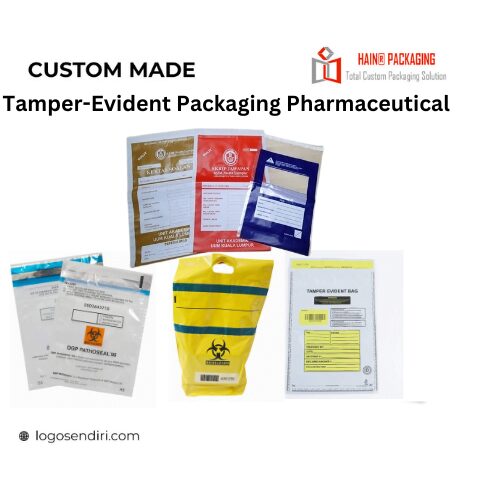
A UV protection & anti-static bag often travels. Export consignments see yard storage, container heat, dry aircraft or warehouse air and handling by several parties, each of whom may repack or rewrap. The specification should therefore be written for the whole journey, not for the packing bench.
Documenting the requirement helps it survive that journey. Where anti-static performance matters downstream, say so on the purchase order, on the carton label and in any packing instruction that travels with the goods. A repacker who does not know the bag is a controlled item will substitute whatever is on the shelf.
Consider the outer carton as part of the system. A carton that shields the bags from light and from mechanical damage reduces what the film has to do, and it is often the cheaper place to add protection. Evaluating the pack and the carton together usually produces a better result than optimising the bag alone.
Spec Sheet by Scenario
- State the dominant risk explicitly: light damage to contents, degradation of the pack, or electrostatic behaviour.
- Confirm whether outdoor or bright-light storage applies, and for how long.
- Choose the opacity route, or a stabilised resin, based on which failure is present.
- Specify anti-static requirements numerically, with resistivity or decay targets and conditioning conditions.
- Ask how long the anti-static performance is expected to last and under what handling.
- Request layer-by-layer construction detail naming the job of each layer.
- Verify both properties on delivered production bags, not only on development samples.
- Re-measure after realistic storage to confirm the performance is durable.
- Write handling and identification expectations into the packing procedure.
Frequently Asked Questions
Is a UV protection & anti-static bag always opaque?
Not necessarily. Opacity is only required when the contents are light-sensitive. Where the risk is purely electrical, a clear dissipative film can be the correct answer.
Does an opaque bag automatically protect against ultraviolet light?
It blocks light reaching the contents, which is usually the goal. It does not necessarily protect the bag itself, so outdoor storage also needs a UV-stabilised outer layer.
Is anti-static the same as dissipative?
No. The terms describe different resistivity ranges and different behaviours. Specify the requirement as a numeric range and let the converter propose the construction.
Why does anti-static performance sometimes fade?
Migratory additives deplete over time and are sensitive to humidity, while surface coatings can be removed by wiping. Ask about expected service life before specifying.
Should every product in a range use the same bag?
Usually not. Target the feature where static or light causes a measurable loss, and leave the rest of the range on standard film to control cost.
Write Down the Place First
Every failed specification in this article had one thing in common: it named a feature before it named a place. Once the place is written down — a yard in the sun for six months, a bench wiped twice a shift, a container handled by four parties — the rest of the requirement follows without argument, and the quote that comes back is usually cheaper because it no longer includes protection nobody needed. For constructions, minimum order quantities and sampling, contact HAIN Packaging through WhatsApp, or compare barrier structures in the aluminium foil pouch guide. Information on Malaysia’s manufacturing landscape is available from MIDA.