Woven Sacks or Barrier Laminate? Choosing Animal Feed & Fish Feed Packaging
October 7, 2026
Specifying a UV Protection & Anti-Static Bag for Outdoor Yards, Cleanrooms and Export Containers
October 7, 2026A packet of seed and a sachet of veterinary powder look like distant cousins, and in most packaging catalogues they sit in different chapters. Both, however, are low-volume, high-value, specialist products that pass through the same converters and the same equipment, and both fail for the same structural reason: a specification written for one stage of the journey and assumed to hold for all of them. What follows traces each product through its life cycle instead, stage by stage, from the moment it is filled to the moment it is used. Seed & veterinary packaging turns out to behave as two tracks on one timeline, and the timeline is where the requirements become concrete.
Key Takeaways
- Stage 1 is filling: moisture content for seed, dose accuracy for veterinary product.
- Stage 2 is storage: holding the sealed-in condition rather than correcting it.
- Stage 3 is the channel: retail rack for seed, dispensing counter for veterinary.
- Stage 4 is use: opening behaviour, product release and instruction legibility.
- Stage 5 is traceability: batch coding that survives every stage above.
Table of Contents
- Two tracks, one timeline
- The life-cycle timeline at a glance
- Seed track, stage 1 — filling
- Seed track, stage 2 — storage
- Seed track, stage 3 — storage environment
- Seed track, stage 4 — retail display
- Seed track, stage 4b — trade channel
- Vet track, stage 1 — filling and dose accuracy
- Vet track, stage 2 — unit-dose format
- Vet track, stage 3 — dispensing
- Vet track, stage 4 — in the home
- Every stage — labelling, coding and traceability
- Selecting materials for the whole timeline
- Final stage — end of life
- Planning the range around the calendar
- Checklist by stage
The Life-Cycle Timeline at a Glance
Read the two tracks side by side. The stages are the same; what changes is which property is at risk at each one.
| Stage | Seed track — property at risk | Veterinary track — property at risk |
|---|---|---|
| 1. Filling | Moisture content sealed in | Dose weight and product release |
| 2. Storage | Germination, held by barrier | Stability, held by compatibility |
| 3. Channel | Rack presentation, legibility | Dispensing fields, writing surface |
| 4. Use | Clean opening, sowing instructions | Accurate administration, tamper evidence |
| 5. Traceability | Batch code survives shelf life | Batch and expiry survive handling |
Two Tracks, One Timeline
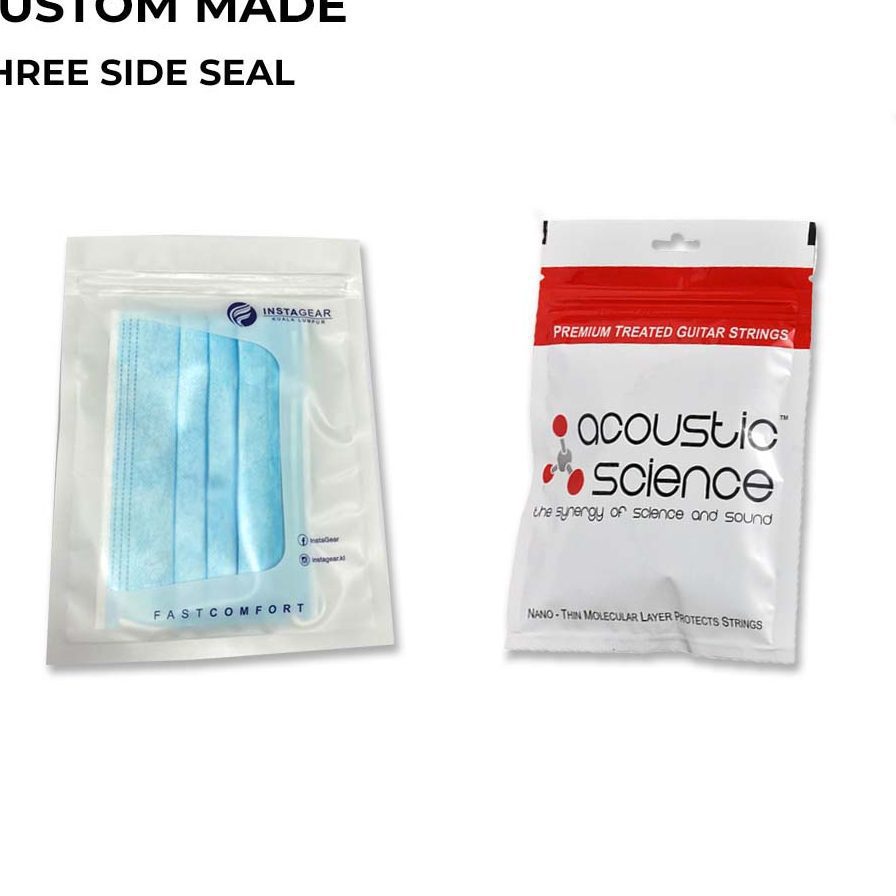
The reason seed & veterinary packaging appear together is practical rather than conceptual. Both are low-volume, high-value, highly regulated products sold through specialist channels, and both are packed in formats that range from a tiny foil sachet to a multi-kilogram bag. A converter able to handle one can usually handle the other, and the equipment, the print method and the quality discipline transfer directly.
The specifications do not transfer, though. A seed pack is protecting a biological system over months of storage. A veterinary pack is protecting a measured dose and a set of instructions over a shorter but far more scrutinised life. Copying one specification onto the other creates gaps, and those gaps tend to be discovered by the customer rather than by the packer.
Both categories reward the same habit: write down what destroys value, then specify against it. The rest of this guide follows that sequence for each.
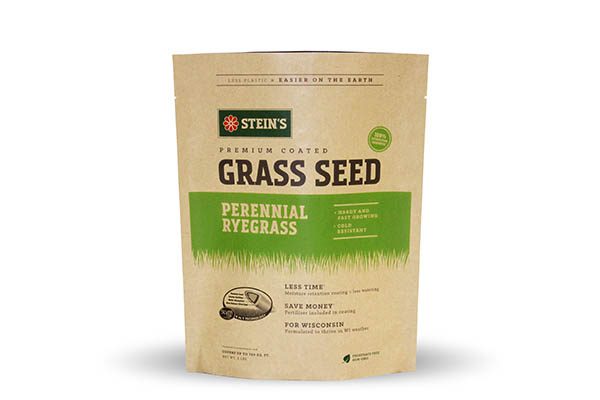
Seed Track, Stage 1 — What Seed & Veterinary Packaging Seals In
A seed is viable or it is not, and the customer finds out at sowing time, months after buying. Germination percentage is therefore the number that matters, and it declines with moisture, heat and time. Packaging cannot improve germination, but it can slow the decline, and that is the whole of its job.
Seed moisture content at packing is the starting condition and belongs in the specification. If seed is packed wetter than intended, no barrier will rescue it, because the water is already inside. Confirm the moisture content at filling, and treat the pack as a means of holding that condition rather than correcting it.
Storage temperature matters as much as the pack. Seed stored in a cool shed retains viability far longer than the same seed stored in a hot warehouse, regardless of film choice. When writing a specification, state the storage condition that the barrier is sized against, so that the number has a context.
Seed Track, Stage 2 — Storage: Holding the Condition
Seed & veterinary packaging shares one requirement at this stage: whatever condition was sealed in must be held, not corrected.
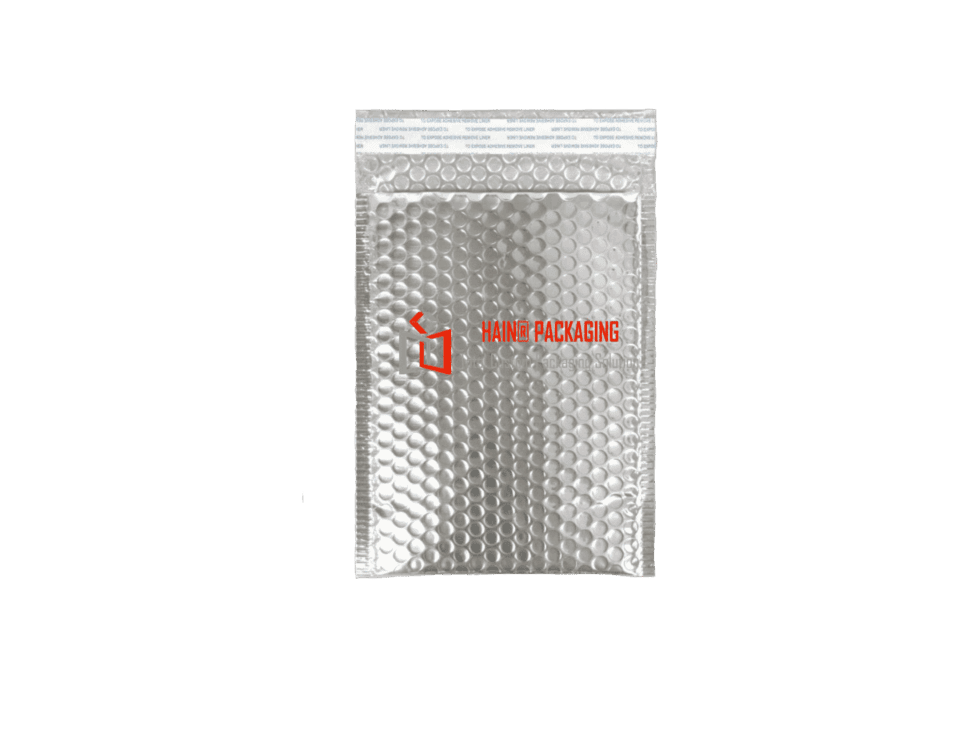
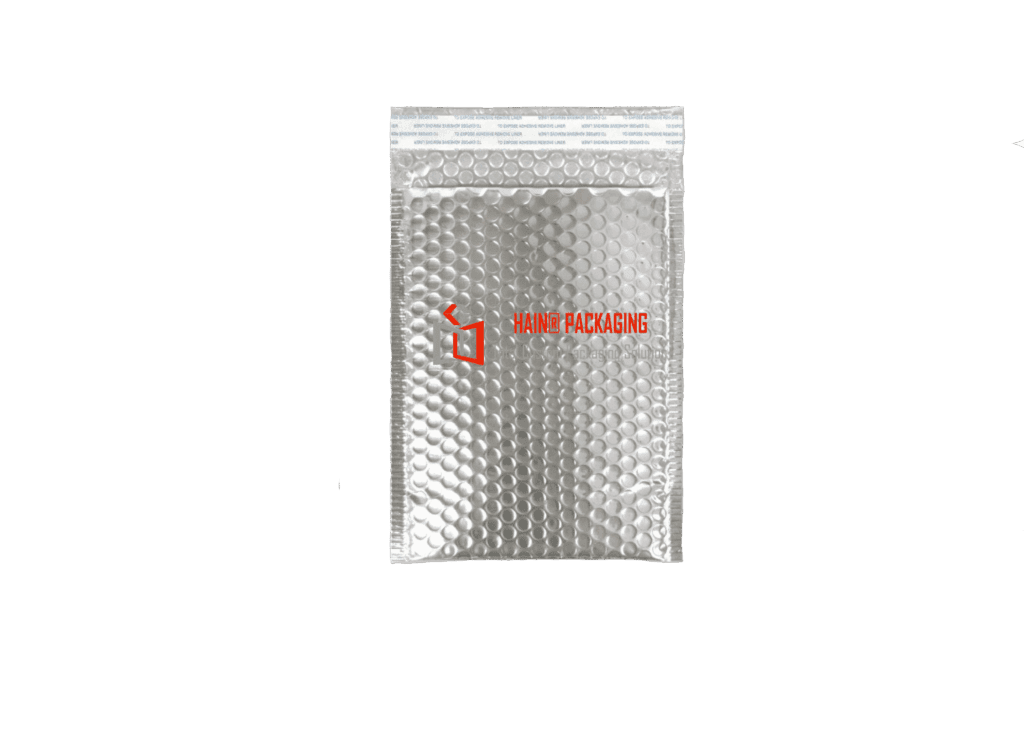
Water vapour transmission is the single most useful figure in a seed packaging specification. Ask for it for the exact structure, then check it against the intended storage interval. A foil-containing or metalised laminate gives a very low transmission rate and suits long storage or high-value seed. A simpler polyethylene structure suits fast-turning retail seed where the interval is short.
Seal integrity is the companion requirement. A perfect barrier film with a leaking seal is worse than a modest film with a sound one, because the leak is local, unpredictable and hard to diagnose. Confirm sealing parameters on the actual equipment, and include leak testing in routine quality checks rather than only in development.
| Seed category | Typical storage interval | Practical barrier approach |
|---|---|---|
| Retail vegetable and flower seed | One to two seasons | Foil or metalised sachet, clear label panel |
| Grass and forage seed | Up to a year | Laminated pouch with moisture barrier |
| Grain and cover crop seed | Weeks to months | Heavy-gauge film, sound seals |
| High-value hybrid seed | Extended, controlled | High-barrier laminate, validated by storage trial |
| Treated seed | Per treatment label | Barrier plus handling and labelling controls |
Where seed has been treated, the pack must also suit the treatment. Treated seed carries additional labelling and handling requirements, and the film and seal layer should be checked for compatibility with the treatment formulation.
Seed Track, Stage 3 — Storage Environment
Light matters less than moisture for most seed, but it matters for long storage and for seed with low natural dormancy. Opaque or metalised structures remove that variable at low cost, and they are standard in high-value retail seed for good reason.
Oxygen matters through respiration. Seed is alive and respires slowly, so a completely sealed high-barrier pack holds whatever atmosphere was sealed in. That is usually fine for dry seed, but it is worth stating the moisture content and the headspace assumption explicitly, because sealing damp seed into an impermeable pack can accelerate problems rather than prevent them.
Storage temperature is the dominant variable of the three, and it is outside the pack’s control. The practical response is to say so in the specification: state the temperature range the shelf life claim assumes, and put the corresponding storage guidance on the label. Doing both protects the brand when product is stored badly.
Seed Track, Stage 4 — Retail Display
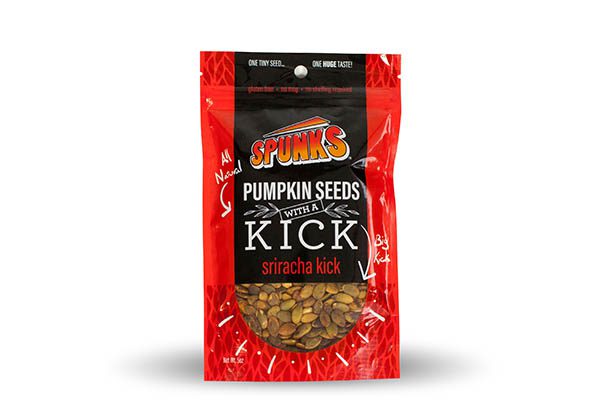
Retail seed packs are a display problem as much as a barrier problem, and the same trade-off appears in the fertilizer packaging guide. They hang on racks, they are picked up and compared, and they sell on imagery. The pack has to carry a photograph, a variety name, sowing instructions, a packed-on or best-before date and a batch code, all on a few square centimetres.
Foil sachets dominate this format because they give excellent barrier in a small, flat, printable pack. The trade-off is that foil creases, and creasing through the print area looks poor. Good dieline design keeps critical imagery away from likely fold lines.
Hang holes and rack compatibility should be confirmed with the retailer rather than assumed. Slot spacing differs, and a pack designed for one rack format may sit badly on another. Where seed is sold through more than one chain, ask for the rack specification before finalising the dieline.
Seed Track, Stage 4b — Trade Channel
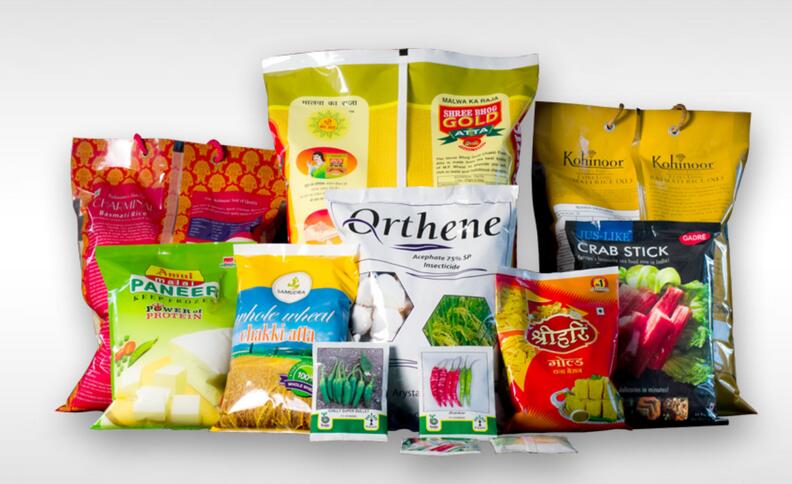
Trade seed moves in much larger units, and the brief shifts from display to handling. Related bulk formats are covered in the agriculture poly bag guide. Bags of ten, twenty or twenty-five kilograms need seam strength, drop resistance and a closure that can be opened and reclosed on a farm. Moisture barrier remains important, but mechanical performance moves up the priority list.
Laminated woven structures and heavy-gauge films are the usual answers. Both should be drop tested from realistic heights and stack tested over a realistic interval, because creep under sustained load is a common cause of delayed failure.
Bulk packs also need a clear, durable identity. Trade customers store bags in sheds where print scuffs and fades, so rub resistance and ultraviolet stability of the print are worth specifying rather than hoping for.
Vet Track, Stage 1 — Dose Accuracy in Seed & Veterinary Packaging
The veterinary half has a different centre of gravity. The product is measured, and the pack is part of the measurement. A sachet that holds ten grams but delivers nine because product clings inside is a dosing error, not a packaging quirk. Unit-dose accuracy, product release and label clarity come before appearance.
Product release deserves specific attention for powders and pastes; comparable medical formats are described in the pharmacy and medical packaging guide. An anti-static or low-friction inner surface, a shape that funnels toward the opening and a wide enough mouth all improve how much of the dose actually reaches the animal. Trial the pack by emptying it the way a user would, then weighing what remains.
Compatibility again matters, particularly for formulations containing solvents, oils or actives that interact with seal layers. The trial protocol is the same as elsewhere: fill the real product, seal with production parameters, store at elevated temperature and inspect.
Vet Track, Stage 3 — Dispensing
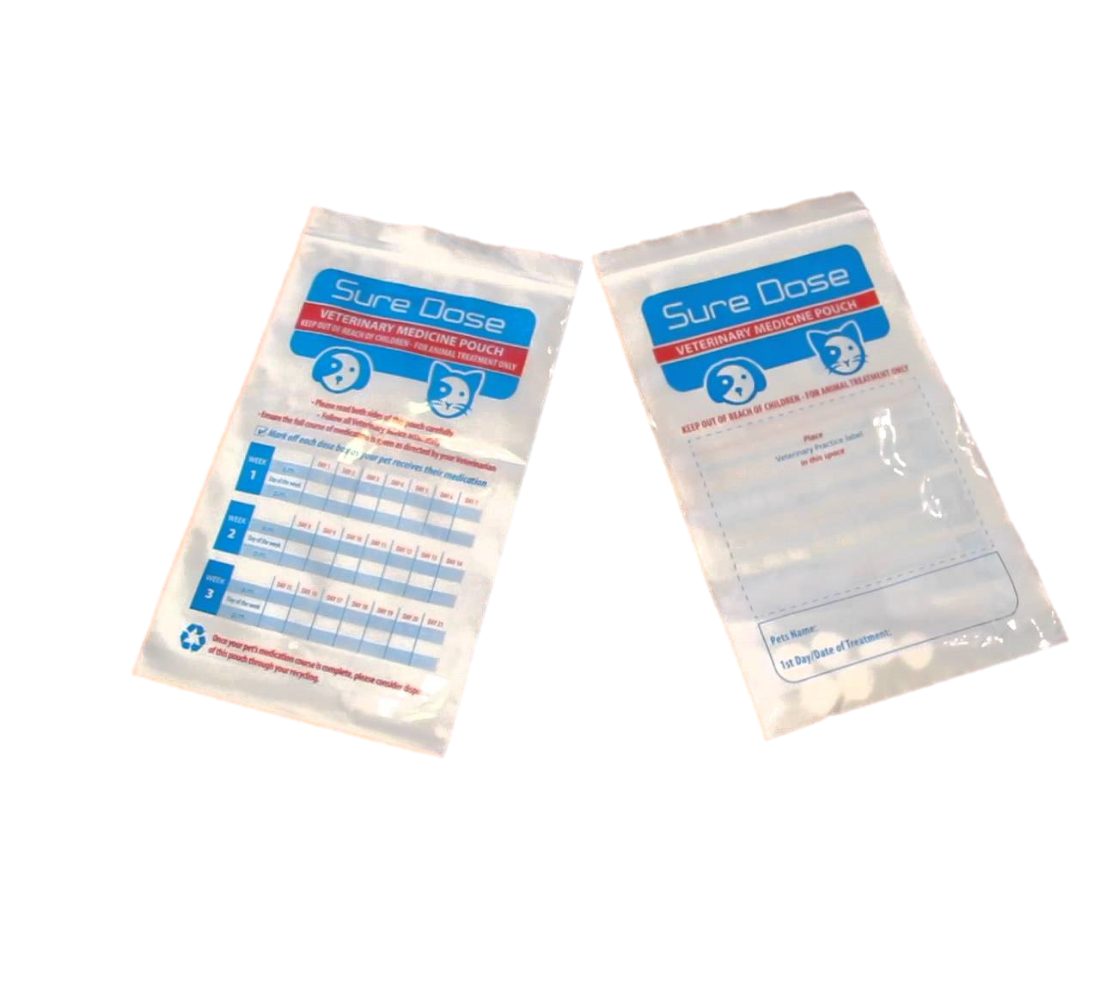
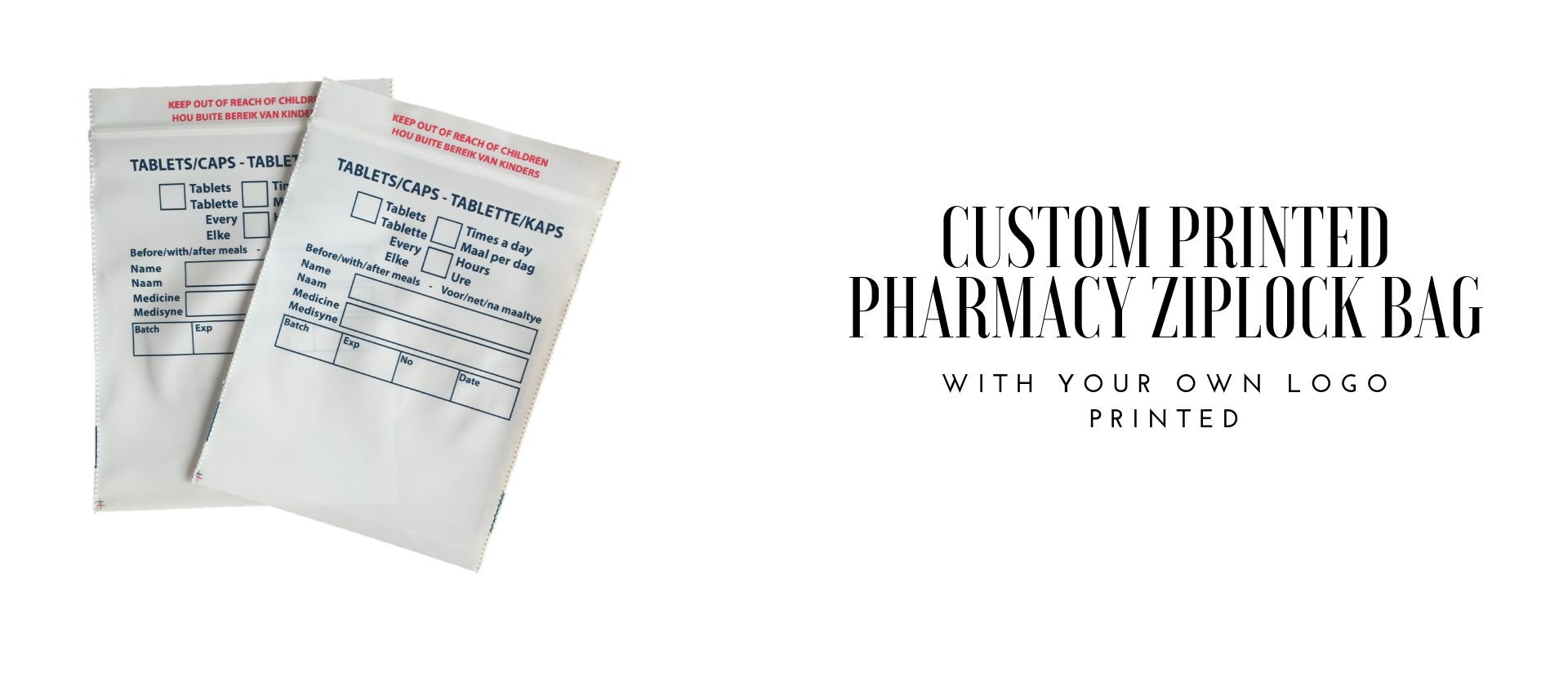
Dispensing packs are a distinctive veterinary format. Pharmacies and clinics hand over a course of treatment in a bag printed with fields for the animal’s name, the medicine, the dose schedule and the dates. The pack is doing clinical work: it is the instruction that travels home with the owner.
That makes print legibility and writing surface functional requirements. The printed fields must be readable, and the surface must accept pen or marker without smudging. A dispensing bag that cannot be written on is useless, however good it looks.
Grid layouts for multi-day or multi-week courses help owners comply, and they should be checked against the actual schedule the clinic uses. A grid designed for fourteen days is unhelpful for a seven-day course, so confirm the real regimens before fixing the artwork.
Vet Track, Stage 2 — Unit-Dose Format
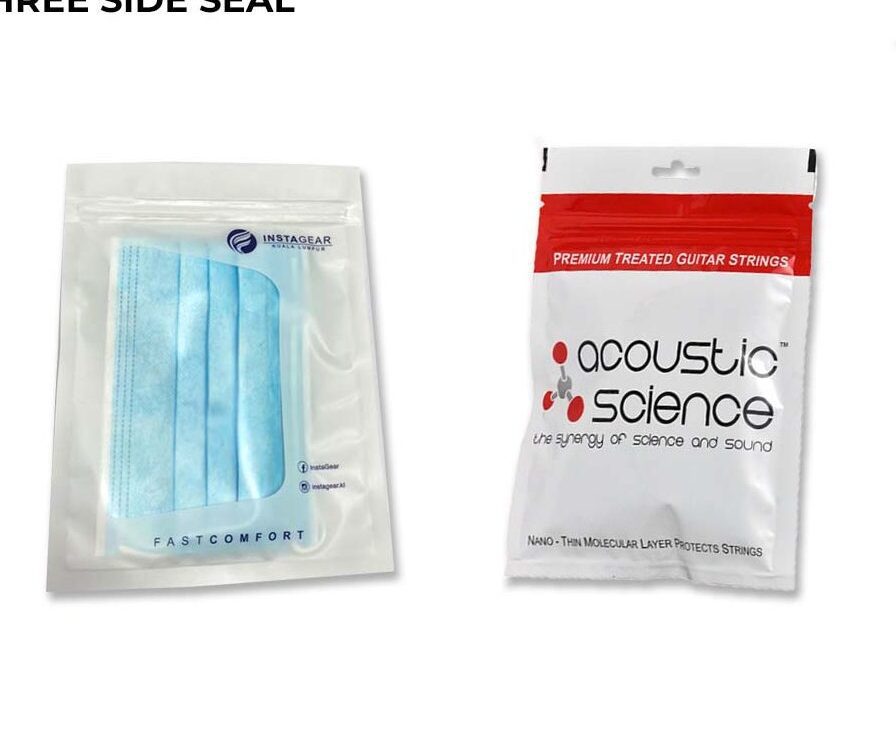
Sachets are the workhorse of veterinary and seed sampling alike: one dose, one portion, no measuring. They are cheap, hygienic and easy to distribute, and they remove a whole class of user error. They also concentrate the engineering into a very small area, where seal margin is a large share of the pack.
Fill accuracy is the main risk at small sizes. Specify the tolerance, verify it on a production run rather than on hand-filled samples, and check the declared content against what the filler actually achieves. A systematic shortfall across a run is a compliance problem, not a rounding error.
Tear behaviour is the second risk. A sachet that tears badly spills powder, wastes dose and annoys the user. Specify the tear notch position and test opening with the hands that will actually do it, including gloved hands in a farm or clinic setting.

Vet Track, Stage 4 — In the Home
Veterinary products are medicines, and they are frequently kept in homes with children. Where a formulation or a market requires a child-resistant closure, that requirement governs the specification and should be raised at the start rather than discovered late. Child-resistant features change the structure, the tooling and the cost, and retrofitting them is expensive.
Tamper evidence is the companion requirement and is far more commonly applicable. A pack that shows clearly whether it has been opened protects the clinic, the owner and the manufacturer. Options include tear-away seals, tamper-evident tapes and closures designed to deform on first opening.
Both features should be tested as a system with the chosen film. A child-resistant closure fitted to a film that tears easily defeats its own purpose, so evaluate the combination, not the component.
Every Stage — Labelling, Coding and Traceability
Both halves of this brief are documentation-heavy. Seed carries variety, germination and date information; veterinary products carry active ingredient, dose, withdrawal periods where relevant, batch and expiry. Neither has room for error, and neither has much surface area.
Plan the panel before the dieline. Put the mandatory block on the flattest available area, choose a font size that survives the chosen print method, and reserve a separate clean zone for coding. Check the smallest text on a physical proof at final size, not on a screen.
Coding durability deserves testing. Batch and expiry information that rubs off in transit creates a traceability gap precisely when a recall or a query depends on it. Confirm that the coding method adheres to the film and survives handling.
Selecting Materials for the Whole Timeline
Materials for seed & veterinary packaging are chosen against the whole timeline rather than against a single stage.
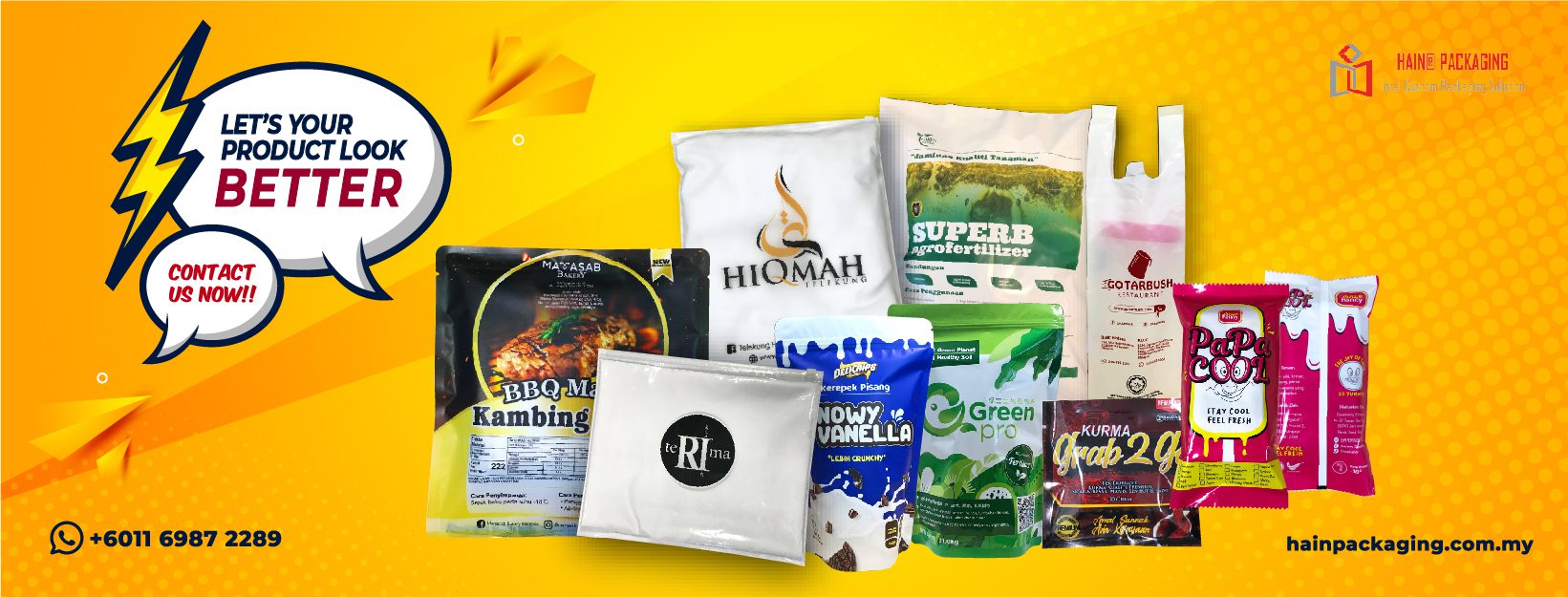
Foil-containing laminates give the best barrier and are standard where long storage or high value justifies the cost. Metalised films offer strong barrier with better crease behaviour and a brighter appearance. Clear high-barrier films suit products where visibility sells. Kraft-look laminates suit natural positioning but need a functional inner structure, because appearance and performance are separate decisions.
Paper-based and mono-material options are worth evaluating where the barrier requirement allows, because they simplify end-of-life handling. Where a multi-layer structure is genuinely required, say so plainly rather than implying a recyclability that local collection cannot deliver.
Final Stage — End of Life for Seed & Veterinary Packaging
Sustainability claims in both categories should be conservative and specific. The strongest defensible levers are right-sizing, so less material is used per unit delivered, and format choice, so a concentrated or unit-dose format avoids waste of the product itself. In veterinary use especially, the environmental cost of a spoiled or mis-dosed product dwarfs the cost of the pack.
Where a mono-material structure meets the barrier requirement, it is worth a trial. Where it does not, the honest statement is about the material the pack is made from and the disposal route it actually has locally. Overstating recyclability in a regulated category is a reputational risk with no upside.
Veterinary and animal health matters in Malaysia fall under the Department of Veterinary Services, which publishes reference material that is useful when writing internal specifications for veterinary packs.
Planning the Range Around the Calendar
Seed & veterinary packaging is bought seasonally, and that seasonality shapes every commercial decision around it.
Both halves of this category are seasonal. Seed demand peaks ahead of planting windows, and veterinary demand follows treatment calendars and disease cycles. Production has to be ready before the peak, which means artwork, structure and tooling decisions must be settled well in advance of it.
That seasonality collides with version control. A seed range may carry dozens of varieties on a shared artwork family, and a veterinary range may carry several strengths of the same product. Each version is a separate print setup, and each has its own minimum quantity. Understanding how versions are priced and scheduled is one of the more useful conversations to have with a converter before designing the range.
Digital print is often the right answer for seed & veterinary packaging at moderate volumes, because it removes plate cost and makes short runs and frequent version changes economical. Conventional print becomes attractive once a version reaches steady volume. Many ranges benefit from a hybrid approach: digital while a variety establishes itself, conventional once demand is predictable.
Finally, hold retained samples from every run. When a question arises months later about a batch, a physical reference from that production date is worth more than any record, and it costs nothing to keep.
Checklist by Stage
- Record the product: moisture content at filling for seed, dose and formulation for veterinary products.
- State the storage interval and the temperature range the shelf life assumes.
- Request water vapour transmission data for the exact structure and run a storage trial.
- Confirm seal integrity and leak testing on the intended filling equipment.
- Trial product release and dose accuracy by emptying the pack the way a user would.
- Specify drop testing and stack performance for bulk formats.
- Confirm whether child-resistant or tamper-evident features are required, and test them with the film.
- Reserve the mandatory text panel and a separate flat coding area on the dieline.
- Approve a physical print proof at final size, then approve one filled, sealed sample before volume.
Frequently Asked Questions
Why do seed & veterinary packaging requirements differ so much?
Because the failure modes differ. Seed loses value quietly through moisture and heat over months; veterinary packs fail through dose error, illegible labels or missing traceability.
Why is seed & veterinary packaging so documentation-heavy?
Because both halves carry mandatory panel information on small surfaces, and both depend on batch coding that survives the full shelf life.
Is foil always the right choice for seed?
Not always. It gives excellent barrier but creases, which affects appearance. Fast-turning retail seed may be served by a simpler structure at lower cost.
What is the most common veterinary packaging failure?
Poor product release and unclear labelling. Both are solved by trialling the pack with the real product and checking legibility at final print size.
How should batch coding be specified?
On a flat reserved area away from seals and folds, with a method tested for adhesion on the chosen film and for durability through handling.
Walking Your Own Timeline
Take one product, list the stages it actually passes through, and write one requirement against each. Most teams discover that two or three stages carry all the risk and the rest were being specified out of habit. That list is the specification, and it is short enough to send to a converter in a single email. For structures, minimum order quantities and sampling formats, contact HAIN Packaging through WhatsApp, or compare medical formats in the pharmacy and medical packaging guide. Broader reference material on seed and feed systems is published by the Food and Agriculture Organization.