Food Packaging Migration Testing Malaysia: Read the Report
October 23, 2026Lidding Film Malaysia: What the Sealing Line Decides
Lidding film is not chosen on a datasheet. It is chosen at the sealing jaw — and the jaw on your line is not the jaw the datasheet was written on. That is why one structure seals clean on a ready-meal tray line and leaks, or refuses to open, on another line running what looks like the same specification.
Most lidding film Malaysia enquiries come in as a material question: which structure, which thickness, peelable or weld. Those are real fields, but they are the last three to settle. The first three are conditions at the machine — what the jaw actually delivers, what is sitting in the seal area when it closes, and how evenly it presses. Miss those and no film change will rescue the pack.
Three conditions, two failure paths
– A lidding film seals to the tray flange, not to itself. The tray material is half the specification.
– Under-sealing and over-sealing have opposite causes, and the fix for one pushes you toward the other.
– Product residue in the seal area is the single most common root cause that no film change can fix.
– Uneven press produces a seal that looks continuous and fails in one zone — geometry, not material.
– Record the three conditions on site before you ask for a quote; it turns a wide price band into a structure answer.
A central kitchen in Selangor ran the same lidding structure on two tray sealers, for two different ready-meal lines, for about four months. Line A was fine. Line B leaked, roughly one tray in a shift, always somewhere along the same side. The buyer’s conclusion was that the film was inconsistent. It was not — the tray was. Line B’s trays were stored stacked near the door, and the flange on the bottom tray of each stack had taken a slight set. The jaw was pressing on a surface that was no longer flat in one zone, and no amount of extra heat was going to close a gap the film could not reach. The film never changed. The tray storage did.
Why the Same Lidding Film Behaves Differently on Two Lines
A datasheet describes a film measured under controlled conditions: a defined dwell, a defined pressure, a clean and flat sealing surface, a defined counterpart material. Production supplies none of those reliably.
Three things differ between any two lines, and they are the reason a specification that works in one place fails in another:
- Heat actually delivered to the seal interface. The number on the controller is the jaw temperature, not the temperature the sealant layer reaches.
- What is on the flange when the jaw closes. Oil, sauce, brine, powder or a crumb changes what the sealant has to bond through.
- How hard and how even the press is. Pressure that varies across the sealing area produces a seal that is strong in one zone and barely formed in another.
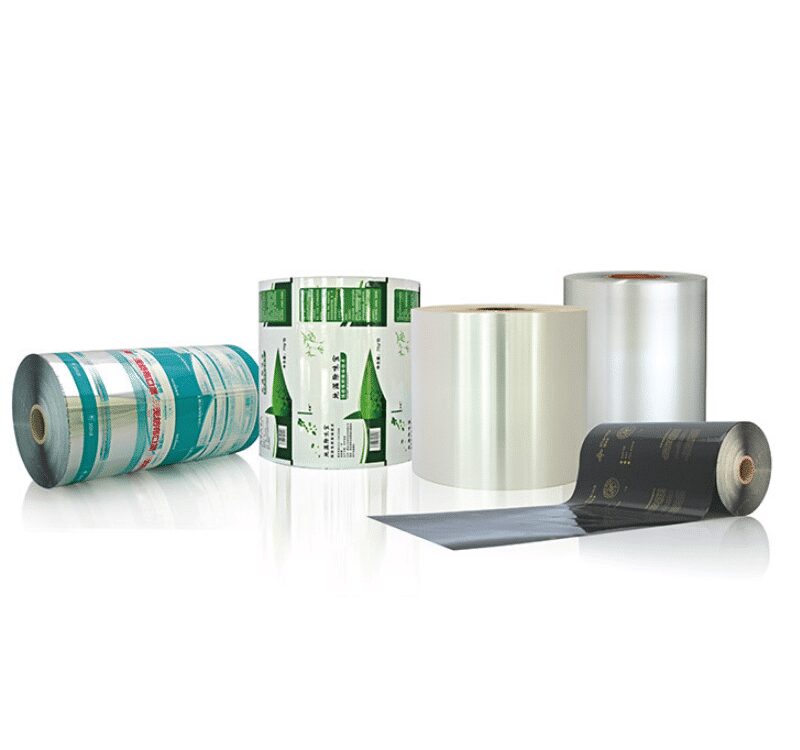
Add a fourth that is easy to overlook: the film seals to the tray, not to itself. A flange of PE-coated board, PP, APET or aluminium behaves differently against the same sealant layer, and a structure that is correct for one flange can be wrong for another. Lidding is supplied as roll stock, and our roll stock film page covers how the roll is specified before it ever reaches the jaw. If you are comparing forms of closure, our four side seal pouch page shows the alternative where the film seals to film instead.
Send the tray before you send the spec. A tray and a film together are the sample; either one alone is half a question, and we would rather quote against both.
Condition 1: What the Seal Jaw Actually Delivers
The controller shows a setpoint. What matters is the temperature the sealant layer reaches, and for how long, and how much of that heat the tray pulls away before the seal sets.
Too little heat at the interface, and the sealant never fully flows. The seal looks formed — it has a texture, it has a width — and it separates under load or during chilling. This is the leak that gets blamed on the film because the pack looks fine on the bench.
Too much, and two different things go wrong. On a weld-grade structure, the sealant can be pushed out of the seal area or the film can distort and thin at the seal edge. On a peelable structure, the peel layer can over-weld, and the pack that was designed to open cleanly either will not open or opens by tearing through the laminate rather than at the intended interface. That second failure is reported as “the film is too strong”, when the film is performing exactly as built and the heat is not.
Heat also drifts. Jaw zones age differently, the controller swings through a cycle, and a line that was set up in the morning is not the same line by the afternoon. If defects cluster at particular times or on particular stations, drift is a more likely cause than the material. Structures and sealant layers are covered on our customised laminated films page, which is where the sealant choice is made.
Condition 2: What Sits in the Seal Area Before the Jaw Closes
This is the condition most often missed, and it is the one that no film change will fix.
If product is on the flange when the jaw closes — a smear of sauce, a film of oil, brine from a wet fill, powder from a dry fill, a single crumb — the sealant has to bond through it. Sometimes it does, partially. Sometimes it bonds everywhere except where the residue is, which produces a channel rather than a hole: the pack passes a visual check and leaks slowly in the chiller.
What actually fixes it sits upstream of the sealer:
- Fill accuracy and fill placement. Overfilling, or a fill nozzle that dribbles, puts product where the flange has to be clean.
- Flange geometry. A wider or recessed flange gives residue somewhere to go other than the sealing surface.
- Wipe or air-knife stage. Many lines seal cleanly only because something removes residue before the jaw; if that stage is absent or mis-aimed, the sealer inherits the problem.
- Tray handling between fill and seal. Vibration on the conveyor throws product onto the flange.
Seal-through-contamination grades exist and they widen the window, but they do not make contamination irrelevant. Treat them as tolerance, not as a solution. Where the failure is a leak rather than a bad seal, our liquid tight packaging page takes the diagnosis further down the pack.
Condition 3: How Hard and How Even the Jaw Presses
Pressure is the condition that produces the most misleading seals, because an uneven press still makes a seal that looks continuous.
The causes are mechanical, and they are all fixable without touching the film:
- Worn or compressed sealing pad. The pad is the compliant layer that evens out the force. Once it has taken a set, it stops doing that.
- Worn or damaged tooling. A nicked or worn jaw edge removes pressure exactly where it matters.
- Tray not supported under the flange. If the flange is unsupported, it flexes away from the jaw instead of being pressed.
- Tray flange out of flat. Warped trays, or trays that have taken a set in storage, present a surface the jaw cannot press evenly against.
- Machine out of level or out of square. Force that is not perpendicular to the flange is uneven by definition.
The diagnostic is the position of the failure. A leak that always appears in the same place on the tray points to geometry — pad, tooling, support or flange flatness. A leak that wanders points more often to contamination or to web tension. Fixed-position failures have fixed causes.
The Two Failure Modes That Follow From Each Condition
Every sealing problem lands on one of two paths, and the important thing about them is that their causes run in opposite directions.
Path A — it did not seal. The pack leaks, the seal peels apart under load, or a channel opens in the chiller. Causes sit on the low side: heat that never reached the interface, dwell too short, contamination in the seal area, pressure that was uneven or absent in one zone, or a sealant layer that does not match the tray flange.
Path B — it sealed too well, or wrong. The pack will not open, it opens only with a tear, or the peel delaminates the laminate instead of separating at the intended layer. Causes sit on the high side: heat above what the peel system was built for, dwell too long, or a weld grade specified where a peelable grade was needed.
The trap is that the obvious first move for Path A — more heat, longer dwell — is the direct cause of Path B. A line chasing a leak with heat often converts a leak problem into an opening problem, and then concludes the film is at fault on both counts. Establish which path you are on before changing anything. If the seal is failing only on one tray format, our food packaging film roll page covers how the roll is specified against the tray it runs on.
Stuck between a leak and a lid that will not open? Describe which tray, which flange and which side the failure appears on. That combination usually identifies the path without a trial.
What to Record on Site Before You Ask for a Quote
The three conditions above are observable in about twenty minutes on the line, and writing them down is what turns a general enquiry into a structure recommendation. Nothing here needs a lab.
| Record | How to capture it | What goes wrong if you skip it |
|---|---|---|
| Tray material and flange condition | Material name if known, plus whether the flange is flat, warped, or has taken a set in storage | You get quoted a sealant for the wrong counterpart — the commonest single cause of a failed trial |
| Where the failure appears | Fixed position on the tray, or wandering pack to pack | Fixed points to press and geometry; wandering points to contamination or tension. The two have different fixes |
| What is in the seal area | Note residue type — oil, sauce, brine, powder, crumb — and whether anything removes it before the jaw | No structure is specified for contamination you did not mention |
| Jaw temperature indicated, and whether it drifts | Controller setpoint, plus whether it holds across a shift | A drifting jaw produces intermittent defects that look like material inconsistency |
| Dwell and line speed as run | What the machine is actually set to, not what the manual says | The sealant is chosen against dwell; the wrong one gives you Path A or Path B |
| Press setting and pad condition | Setting, plus when the pad was last replaced | A compressed pad is the cheapest fix on this list and the one nobody records |
| How the pack opens | Opens cleanly, will not open, or tears through the laminate | This single observation separates Path A from Path B faster than any measurement |
Bring those seven and a supplier can reason about structure, sealant and peel system with something to reason from. Bring a thickness and a material name and you will get a price band, because that is all anyone can honestly offer against two fields.
Lead time and unit price depend on specification, print method and order quantity — confirm both with our sales team before you place an order.
A film that seals on somebody else’s line has not been specified yet — it has only been described.