Nasi Lemak Packaging Malaysia Survives Three Tests, Not One
October 11, 2026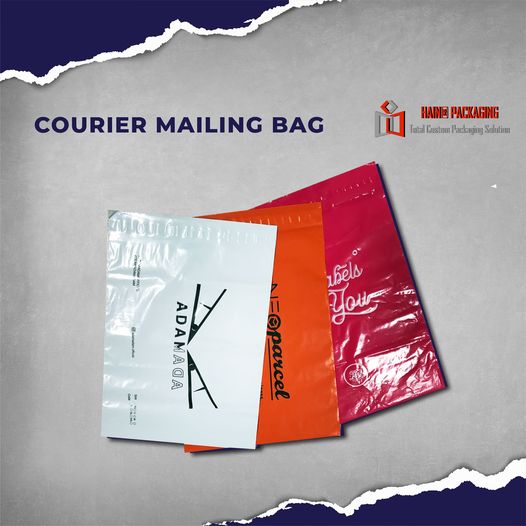
Custom Courier Packaging by Channel in Malaysia
October 13, 2026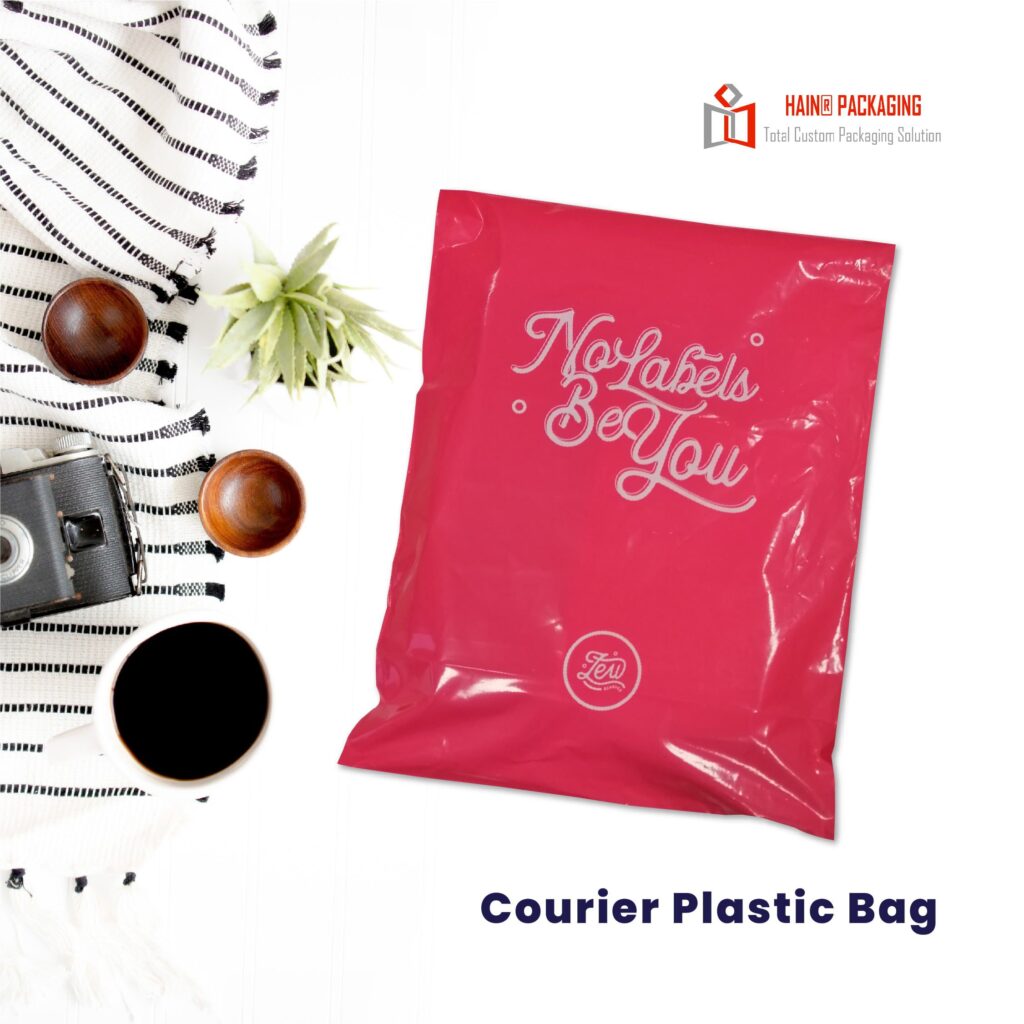
Hot tape and cut film are the two smells on a packing bench at eleven at night in a Shah Alam terrace house. Under a single work lamp, a seller is holding two options over the same folded batik shirt: a plain grey mailer bought by the bundle, and a printed one carrying her own mark. The shirt sells for RM180. The courier who collects it tomorrow will not know that, and will not treat the parcel any differently because of it. Branded shipping packaging decisions get made at exactly this hour, by people who are tired, which is why the useful question is not whether to brand but what the contents force the pack to be before a logo is drawn anywhere.
Two numbers do the forcing, and they are both yours rather than the printer’s. The first is what the carton is worth if it goes missing. The second is how much space the folded item takes before it is packed. Everything downstream — film gauge, print method, closure type, whether a rigid box enters the conversation at all — follows from those two. Sellers who start from the artwork instead end up ordering a lovely bag that is wrong for the thing inside it, and they usually find out on the first return request.
What Carton Value Demands From Branded Shipping Packaging
Value sets the consequence of failure, and the consequence of failure is what you are actually buying protection against. A RM25 accessory that arrives scuffed costs you a replacement and a bit of goodwill. A RM900 camera lens that arrives scuffed costs you the lens, the return leg, a dispute with the courier, and possibly the customer. The packaging answer is not proportional to price in a neat way, but it does move in steps, and those steps are worth naming because they map onto real structures rather than onto feelings.
Low-value soft goods — apparel, textiles, books, accessories below roughly RM50 — travel well in a single-layer polyethylene mailer with a self-seal strip. The failure mode here is not damage; it is the bag splitting at the seal or being opened and resealed in transit, so the money goes into seal integrity and tamper evidence rather than into padding. Mid-value goods, roughly RM50 to RM300, sit in an uncomfortable middle. These are the parcels most likely to be claimed against, and they usually need either a heavier film or a padded structure plus a closure that shows interference. Above RM300, the conversation stops being about the bag. A rigid or semi-rigid outer with internal void fill becomes the primary protection and the printed surface becomes secondary, because a rigid box that is slightly ugly still arrives intact.
What Volume Tells You Before Value Does
Volume is the number most sellers never measure, and it moves the freight bill more than weight does. Take the same batik shirt: folded flat to 300 × 250 × 40 mm it occupies 3,000 cm³, which is a small parcel under any volumetric divisor. Rolled loosely and pushed into a bag that is two sizes too big, it occupies perhaps 350 × 300 × 120 mm, or 12,600 cm³ — four times the billed volume for the identical garment. Malaysian couriers apply a volumetric divisor to convert that figure into a chargeable weight, so the air you ship is priced as if it were product.
The practical rule that falls out of this is arithmetic, not art. Measure the folded item, leave 15 to 20 mm of slack on each flat face so the film can close without straining the seal, add 50 to 70 mm for the flap fold and the seal band, and treat the result as your bag size. If that arithmetic produces a size that no stock bag matches, you are in custom territory for a reason that has nothing to do with branding. A courier bag that fits will always beat a printed one that billows, because billowing adds volumetric weight on every single shipment for the life of the design.
If you want those two numbers checked against a real carton before committing to artwork, the walkthrough on custom packaging cost in Malaysia shows how unit price moves with quantity and print method. How long the run takes, and whether a sample or an expedited slot is possible, is settled by your specification, the print method and the order size — sales confirm those against the actual order.
Where the Logo Has to Sit to Still Be Readable on Arrival
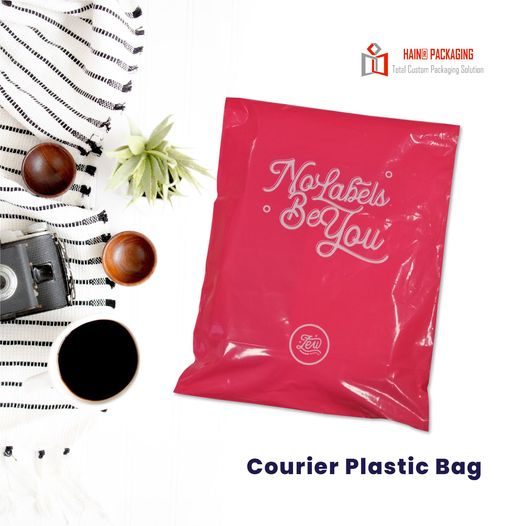
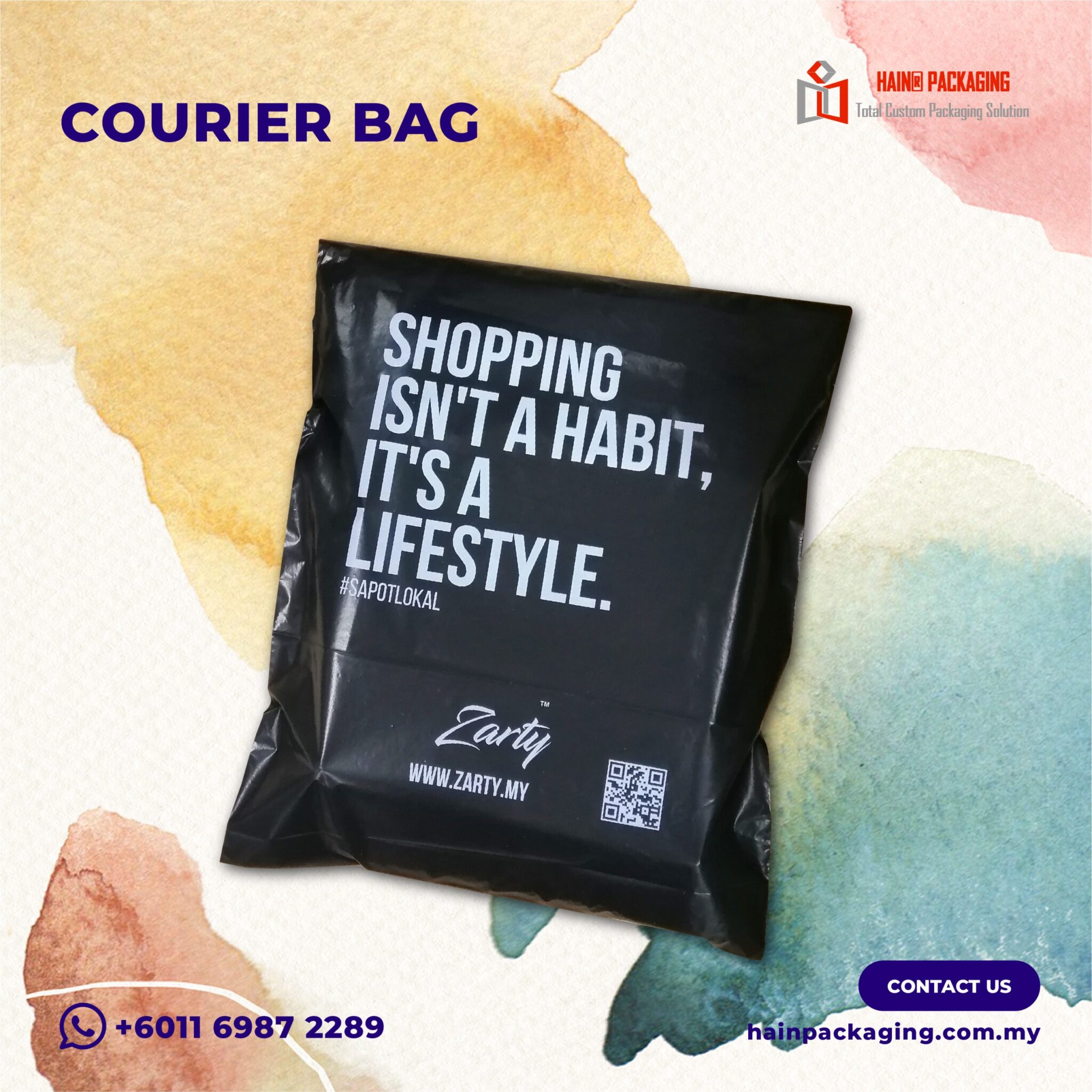
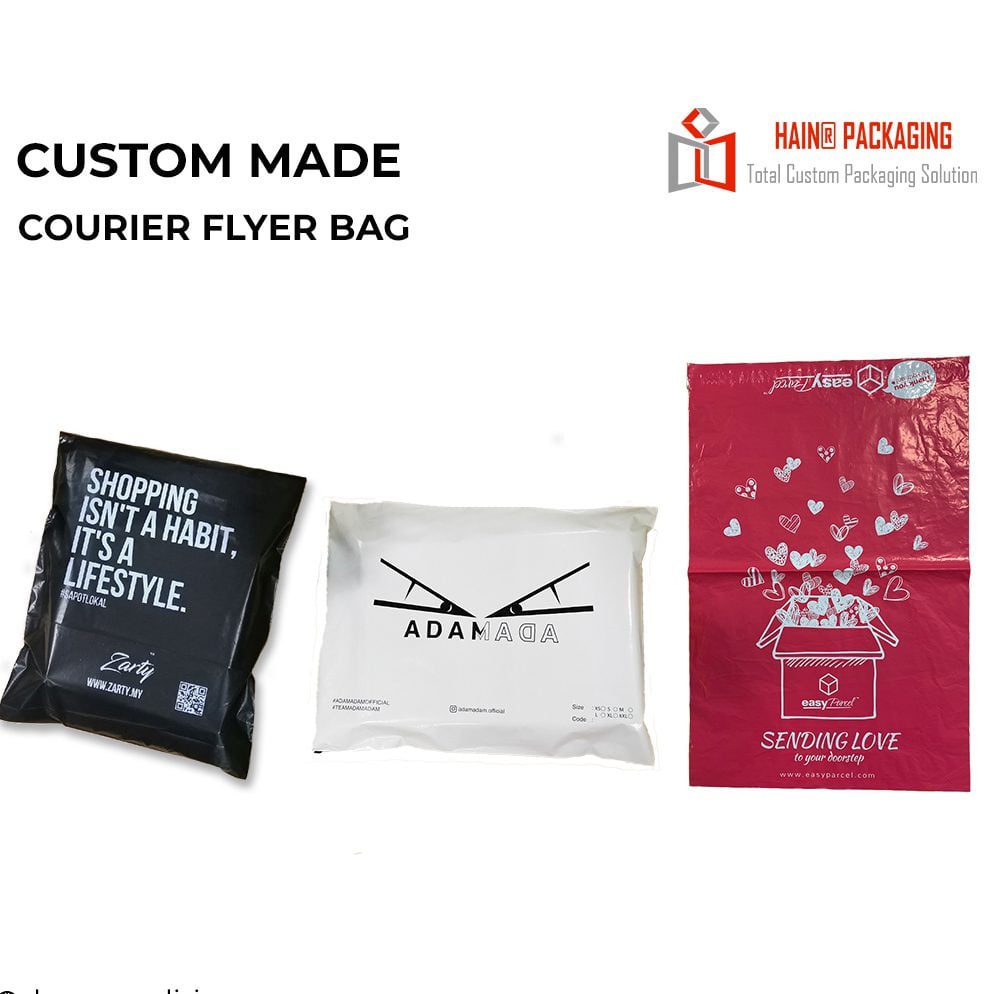
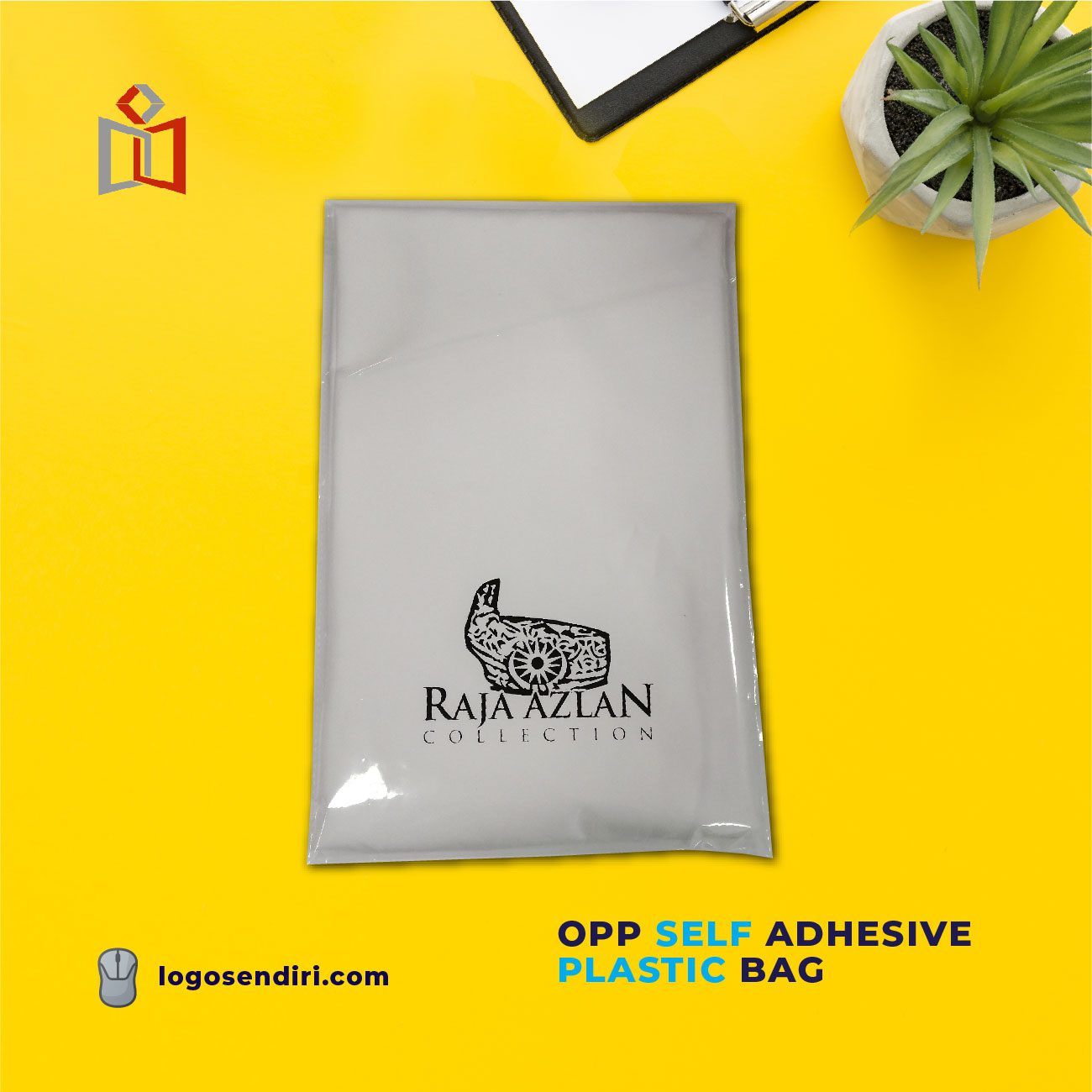
A printed mailer has three surfaces that behave differently in transit, and only one of them reliably survives. The flap is folded over and taped or sealed against the body, so anything printed there ends up creased and half-hidden. The side gussets are the first surfaces to abrade against conveyor belts and other parcels. The main front panel is the surface that arrives looking the way it left, which is why artwork is laid out for the panel and the flap is treated as a secondary space for a repeat mark, a QR code, or a short line of handling text.
One more constraint is not aesthetic at all. A label window of roughly 100 × 150 mm has to stay clear of ink, because the consignment label, the barcode and any marketplace tracking sticker all land in the same region. A design that fills the panel edge to edge looks excellent on a proof and forces the packer to stick the label over the logo. Leave the window, put the mark above or beside it, and the bag still reads as yours after the label goes on. Guidance on laying out artwork against a real print surface is covered in more detail on our custom printed mailer bag page.
Film Gauge Is a Question About the Contents, Not the Artwork
Gauge is quoted in microns and it is the single spec most often copied from a previous order without being re-thought. Soft, compressible contents let you run a lighter film, because the contents absorb impact and the bag only has to resist tearing and puncturing from outside. Hard or angular contents do the opposite: the product itself becomes the puncture source, and a sharp corner inside a thin bag working against a conveyor edge will find its way out. Co-extruded film gives you a different balance again, with a printable outer skin and a tougher inner layer, at a gauge that a single-layer film would not survive.
The second thing gauge buys you is opacity. A thin white film over dark contents shows the shape of what is inside, which is a pilferage signal as much as a privacy one. If your product is small, dense and valuable, opacity is protection, and it is cheaper protection than adding padding. Independent market work on the sector, including the e-commerce packaging market analysis from Mordor Intelligence, tracks demand for exactly this kind of lightweight protective format rather than for heavier board solutions.
What Branded Shipping Packaging Costs Once You Put Ink On It
Printing changes the cost curve, not just the unit price, and the change is mostly about setup rather than about ink. Flexographic printing carries a plate cost per colour and suits longer runs. Digital printing removes the plate cost and suits shorter runs and frequent artwork changes, which is why a seller running seasonal designs often ends up on digital even when the unit price looks higher. Gravure carries the highest setup and the lowest unit cost at volume, and it only makes sense once the artwork is genuinely frozen.
| Carton profile | Structure that fits | What the artwork has to respect |
|---|---|---|
| Soft goods under RM50, low volume | Single-layer polythene mailer, self-seal | Clear label window, mark on the panel |
| Soft goods RM50 to RM300 | Heavier film or padded mailer, tamper-evident closure | Abrasion allowance on the gussets |
| Hard or angular goods, any value | Co-extruded film or rigid outer with void fill | Panel artwork only, no ink on fold lines |
| Above RM300, dense contents | Rigid or semi-rigid outer, printed surface secondary | Opacity and tamper evidence before decoration |
The two levers that move unit price hardest are the number of colours in the artwork and the quantity per run. A one-colour design is not half the price of a two-colour one, but it does drop a plate and a pass. Quantity is the larger lever, because setup is spread across the run, and this is the reason a seller who prints 500 bags and a seller who prints 5,000 are not really buying the same product. Timing follows the specification, print route and quantity; sales confirm the schedule for your order before anything is booked in.
What to Hand Over Before Asking for a Quote
Four things make a quote accurate instead of indicative, and all four are things only you know. The folded dimensions of your heaviest and bulkiest product, not your average one, because the bag has to close over the worst case. The value band of a typical carton, which sets the structure. The monthly parcel count, which sets the run length and therefore the setup spread. And whether the artwork is fixed for the next year or likely to change with campaigns, which decides between digital and flexo.
If your average parcel value sits below RM50, start with a single-layer printed mailer and spend the difference on seal quality. If it sits above RM300, spend on rigidity first and on branding second. Branded shipping packaging is specified from carton value and folded volume, and both of those numbers are already sitting in your own picking data. Neither of them needs a supplier to hand it to you.