Why Pallet Stretch Film Malaysia Loads Fail at the Corner Before the Middle
October 11, 2026
Nasi Lemak Packaging Malaysia Survives Three Tests, Not One
October 11, 2026
The date on a Kota Bharu order is usually decided before anyone talks about price. A buyer calls in late October wanting bags for a school term promotion. The specification is easy and the quantity is easy. The delivery window is the hard part, because the east coast monsoon season and a working week that does not match the one on the calendar in Kuala Lumpur both sit between the enquiry and the doorstep. A plastic bag supplier Kota Bharu conversation that starts with price is starting one field too late. Every plastic bag supplier Kota Bharu enquiry we see opens at field one and skips field seven, and field seven bites. The eight fields below are the ones that actually have to be closed, and they are ordered by how much downstream damage an unanswered one causes.
This order matters more here than it does in the central region, and the reason is distance rather than difficulty. A consignment heading to Kelantan travels a long way on a single road, and every field left open becomes a round trip rather than a phone call. In the Klang Valley an unanswered question costs a day. On this route it costs a week, because the next departure, the next approval and the next production slot are all spaced further apart than they are for a buyer who can drive to the factory.
What follows is about specification, not about logistics as a subject in itself. It covers the retail and food service bags that a Kelantan buyer orders in volume: singlet bags, die cut handle bags, soft loop bags and the printed food bags that go with them. Courier mailers and laminated pouches sit outside it, and a buyer whose real question is which carrier to use needs a different set of fields entirely.

Naming the Bag Format a Plastic Bag Supplier Kota Bharu Will Quote
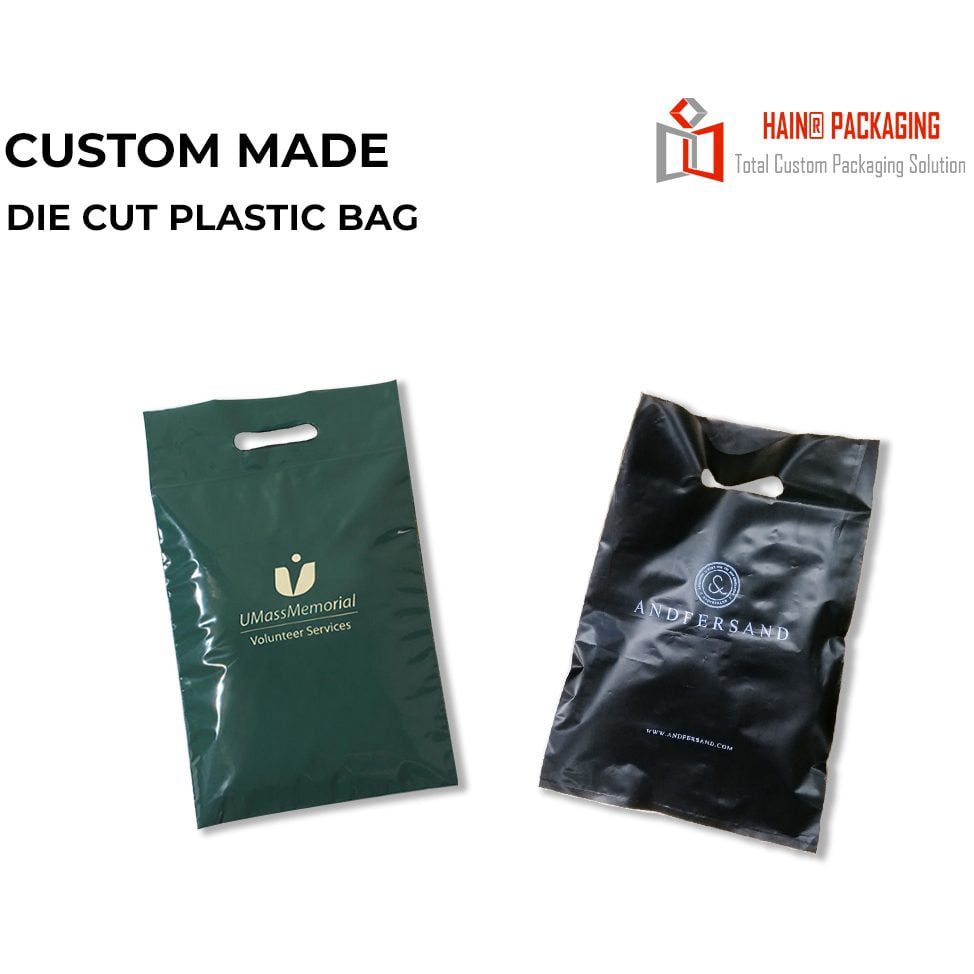
Format is the first field because everything downstream is priced off it, and it is the field most often answered with a description rather than a name. “The bag we always get” is not a specification. The four families that cover almost every Kelantan retail order are singlet, which is the vest style carried by most grocery and wet market traders; die cut, which has a reinforced handle cut into the film and is the standard for boutiques and pharmacy; soft loop, which has a separate loop handle welded on and is used where the bag has to look substantial; and the plain patch handle or no handle bags used for food service and takeaway.
The reason to name the format rather than describe it is that the four families differ in what they do to the next seven fields. A die cut bag has a smaller printable area than a singlet of the same width, because the handle region is reinforced and usually left clear. A soft loop bag is quoted by a different machine path and carries a different minimum. A singlet is priced by weight far more directly than the others, so a gauge change moves the price faster. Lock the family first and the rest of the conversation has somewhere to sit.
One practical note specific to this market. A great many Kota Bharu orders are for food, either a restaurant or a market stall, and food orders tend to want the bag to stand up on a counter while it is filled. That is a format question, not a thickness question, and the answer is usually a bag with a flat base or a gusset rather than a heavier gauge of the same shape. Buyers who solve it with gauge end up paying for material that does not solve the problem.
Material and Gauge, Where the Unit Price Is Won
Material and gauge are two fields that get quoted as one, and separating them is where most of the saving on this page comes from. High density polyethylene gives a crisp, noisy, thin bag that holds a printed edge well and carries weight efficiently. Low density polyethylene gives a softer, quieter, more translucent bag with better puncture resistance and a more forgiving seal. Neither is better, and the choice is made by what the bag has to survive rather than by what it costs.
Gauge is then chosen inside that material, and it is the number that moves the unit price most directly. The error is almost always to over-specify, because a buyer who has been burned once by a bag that split buys thickness and never revisits it. The test that settles it is simple and costs nothing: load the bag with the heaviest thing it will realistically carry, lift it by the handle, and hold it for thirty seconds rather than for two. A bag that passes that test at a lower gauge is the correct bag, and moving down one gauge on a monthly order is usually worth more than any negotiation on the print.
Colour of the film is a sub-field of material that belongs here too, because it changes what the bag can do. A coloured or opaque film hides the contents, which some food buyers want and others cannot use, and it changes the way light reaches the product, which matters for anything with a fat content that oxidises. A clear film lets a customer see what they are buying and lets a cashier check a quantity without opening the bag. Decide this on the counter rather than on the quotation, because it is a merchandising decision that happens to be priced as a material one.
The Size and Gusset Specification That Commits the Tooling
Size is quoted as width by length, and the gusset is quoted separately, which is why the two get confused. A bag listed as a size without a gusset dimension will be flat, and a flat bag that has to hold a container will not stand or open the way a buyer expects. Name the gusset explicitly, or name the object the bag has to hold, and let the supplier convert the object into a gusset. The second route is more reliable, because a photograph of a bowl of soup communicates more than three numbers typed into an enquiry form.
There is a tolerance question hiding inside this field and it is worth asking about once. Film bags are produced to a tolerance, and a buyer whose bag interacts with a machine, a dispenser or a fixed shelf will care about that tolerance in a way a buyer filling by hand never will. If the bag has to run through anything mechanical, say so at this field rather than after delivery, because a tolerance that is fine by hand is not automatically fine by machine and the fix is a different production setting rather than a different bag.
Handle strength is the other half of this field and it is worth testing in the same way, because the handle is where a bag actually fails. A bag that holds a heavy load in the body can still tear at the handle weld or at the top of a die cut, and the tear is almost always at the point where the handle meets the film rather than in the handle itself. Fold the handle over a finger and pull against it steadily rather than sharply. A bag that fails that test will fail in a customer’s hand, and it will fail at the worst possible moment, which is in the street outside the shop.
What Print Coverage and Colour Count Cost Separately
Print is quoted by colour count and by coverage, and the two are separate line items that buyers routinely merge. Colour count is the number of separate plates, and it drives the setup cost. Coverage is how much of the bag surface the ink touches, and it drives the running cost, the drying time and the rub resistance. A one colour design covering the whole face of the bag can cost more to run than a three colour design covering a corner, and an enquiry that only asks for the price of a two colour bag is asking half the question.
The second half of this field is where the artwork goes, and for Kelantan buyers it is worth being explicit about the text. A bag printed for this market often carries both Romanised and Jawi text, and mixed scripts on a single plate behave differently from a single script in terms of minimum stroke weight. Send the text as editable artwork rather than as an image, and say which parts must stay legible at the smallest size, because the elements that disappear first on a thin film are the ones with the finest strokes.
Quantity, Read Against the Price Break Rather Than the Minimum
Quantity is the field that buyers anchor on. The question asked there is almost always the least useful one available. “What is your minimum” produces a number that has no relationship to the buyer’s actual consumption. The useful question is where the price breaks are, because a printed bag has step changes rather than a smooth curve, and a step change is often within reach. An order sitting just below a break is usually better off rounded up, because the marginal cost of the extra bags is close to zero while the marginal cost of the next reorder at the lower tier is not.
Storage is the constraint that stops this from being a simple rule, and it is a real one for a shophouse operation. A year of bags bought at the best price break occupies space that a retail business needs for stock that turns over, and film does not appreciate. The correct quantity is the largest tier that fits in the space available without displacing anything that sells, which is a storage arithmetic rather than a packaging arithmetic. Buyers who ignore it end up with bags stacked behind a counter and a reorder that misses the break anyway.
There is a version of this field that catches out a buyer placing a first printed order. The first order carries a setup cost that subsequent orders do not, which makes the first unit price look unlike every price that follows. Comparing the first quotation against a competitor’s repeat order price is comparing two different things, and the correct comparison is the second order against the second order. If a supplier quotes a first order and a repeat price separately, that is a sign the quote has been built properly rather than a sign that the first price is inflated.
The Artwork File, and the Stage Where the Clock Starts
Artwork is the field that delays more Kota Bharu orders than any other, and the reason is almost never the design. It is the approval. A file that has to go from a shop owner to a head office and back takes longer than the production does, and on a route where a missed slot costs a week rather than a day, that delay is the difference between having bags for a promotion and having them for the week after. Name the person who signs off, and send the file to that person rather than through them.
The file itself has two requirements that are worth stating because they cause rework. Send vector artwork where the design is type or a logo, and send it with the fonts converted, because a font that is missing on the production machine is a font that gets substituted silently. Where the artwork is a photograph, send it at the largest size available rather than the size it was displayed at, because a file pulled from a social media post is almost always too small to be enlarged without visible softening at bag scale.
One more thing worth agreeing at this field, because it prevents the most common rework of all. Agree what the approval is approving. A digital mock-up shows the design on a bag shape and is the right thing to approve layout, proportion and colour placement. It does not show the print behaviour of the actual film, which is a function of surface energy, ink coverage and the way the film passes through the press. Approving a mock-up and then disputing the finished print is a dispute about two different objects, and agreeing upfront which one is being signed off removes it before it starts.
Where a Plastic Bag Supplier Kota Bharu Delivery Window Meets the Kelantan Working Week
This is the field that makes a Kota Bharu order different from the same order placed anywhere in the central region, and it has two parts. The first is the working week. Kelantan observes a Friday and Saturday weekend rather than the Saturday and Sunday pattern that most of the Peninsula follows, which means a factory and a buyer on opposite schedules have four common working days rather than five. An approval requested on a Thursday afternoon is not seen until Sunday. Every unanswered field loses a day that a Klang Valley buyer would not lose.
The second part is seasonal. The east coast monsoon brings heavy rain and periodic flooding to the Kelantan river basin, and road transport slows during that period in a way it does not on the west coast. A plastic bag supplier Kota Bharu order placed in September and delivered in December is two different jobs, and only one of the two has to be planned around the rain. A delivery window set without reference to the season is a window that will be missed, and the correct response is to set it earlier rather than to argue about it later. Kota Bharu buyers usually plan around a 5-7 weeks turnaround on printed work, and that clock starts when the artwork is approved rather than when the enquiry is sent, which is the single misunderstanding that costs the most time on this route.
Local trading conditions sit inside the same field, and the Kota Bharu municipal authority publishes the trading and licensing information that retail buyers in the town work under, including the market and hawker provisions that decide what a stall may hand a customer. Where a bag has to comply with a local trading requirement, that requirement is a specification field and belongs in the first conversation rather than in the last.
Eight Lines to Paste Into the Next Enquiry
Each field narrows the one after it, so closing them out of order produces rework. The format sets the machine path. Material and gauge set the unit price. Size and gusset set the tooling. Print coverage and then artwork set the setup cost and start the clock. Quantity can only be judged once the unit price is known. The approval path is most often the delay itself. And the delivery window depends on every one of the others.
Two of them deserve a second pass before the order is released. Confirm the artwork sign-off path in writing, naming a person rather than a role, because a role is filled by someone who may be on leave. And confirm the delivery window against the season rather than against the calendar, because a date that looks generous in September is not the same date in December. The buyers on this route who never miss a promotion are the ones who treat those two fields as part of the specification rather than as admin.
Worth adding one field that is not on the list because it is not a specification, but which decides whether the other eight hold. Keep one bag from every delivered order, labelled with the order reference, in a drawer rather than in a folder. When the reorder comes, the sample answers format, material, gauge and size in a single object, and it removes the single largest source of rework on this page, which is a buyer describing from memory a bag they ordered a year ago. A shoebox of labelled samples is the cheapest specification system any buyer on this route will ever own.
The rest of the specification behaves exactly as it would for a buyer anywhere else in the country, and the comparable southern orders and the west coast orders both run on the same eight fields. What changes in Kelantan is the spacing between them, and the spacing is what a plastic bag supplier Kota Bharu buyer is really managing.
Lock the delivery window before the freight schedule moves, then check Kota Bharu delivery slots against the season rather than the calendar.
Paste this into your next plastic bag supplier Kota Bharu enquiry and nothing comes back as a guess: the format family, named rather than described; material and gauge, separated; width, length and gusset, with the object the bag has to hold; colour count and coverage as two lines; the quantity you want priced at each break; the name of the person signing the artwork; and the week the bags have to be on the counter in Kota Bharu.