
Contract Packaging Malaysia: When to Outsource Filling & Packing
September 30, 2026
Biscuit, Cookie & Cracker Packaging Malaysia: Formats & Barriers
September 30, 2026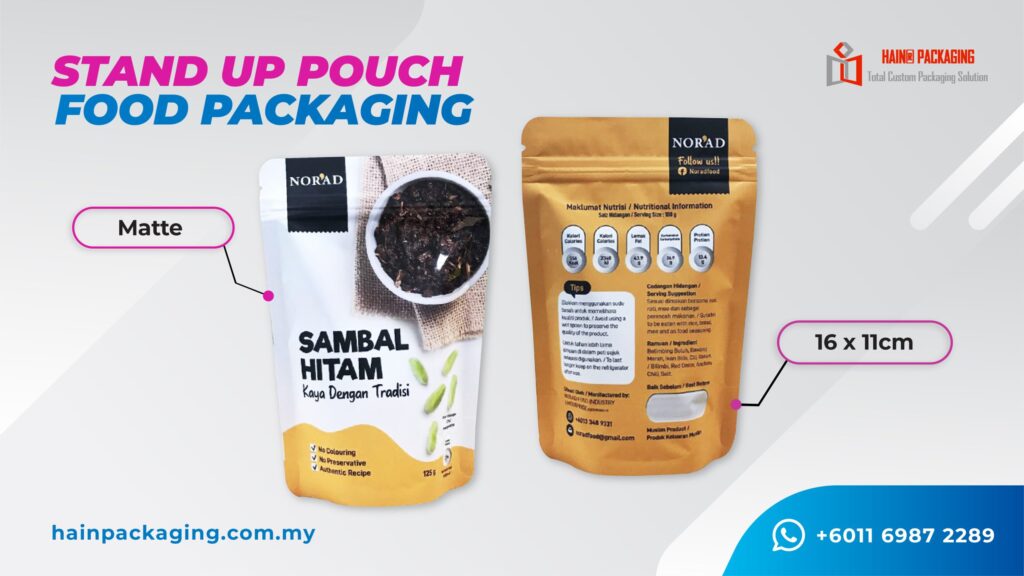
Malaysian pastes and sambal are among the most demanding products to package. They are oil-heavy, moisture-sensitive, and often cooked at high temperatures before packing — which means the pouch must resist oil migration, keep out oxygen, and survive the heat of filling without weakening its seals. Sambal, rendang and curry paste packaging in Malaysia is not a generic “pouch” purchase; it is a barrier-and-seal engineering decision that directly controls how long your product stays fresh on the shelf. This guide explains the three threats, the formats that work, and how to verify the structure before you commit.
Why Sambal and Rendang Packaging Is a Specialist Category
The good news is that flexible packaging technology has matured enough to handle these products well at realistic volumes. The bad news is that generic pouches designed for dry snacks will fail — leaking oil, absorbing odours, or losing seal strength — which costs far more than the extra cents a proper structure costs. Getting the structure right from the start is cheaper than fixing a failed batch later.
The Three Threats: Oil, Oxygen, and Heat
Every sambal or paste product faces three enemies that dictate the film structure:
- Oil migration — oil seeps through weak seals and can break down adhesives, so the inner seal layer must resist oil contact. PE/CPP seal layers with the right additive package handle this.
- Oxygen ingress — pastes oxidise quickly, darkening colour and degrading flavour. An aluminium foil or EVOH barrier layer blocks oxygen for months.
- Filling heat — hot-filled products need a pouch that seals cleanly while hot and does not distort. The sealant layer’s melt temperature matters as much as the outer film’s.
Once you name these three threats, the structure choices become logical rather than guesswork: a foil laminate for long shelf life, a thicker sealant for oil resistance, and a structure rated for your filling temperature.
Format Options: Pouch, Sachet, or Jar Alternative
Format follows how the customer uses the product:
| Format | Best for | Key advantage |
|---|---|---|
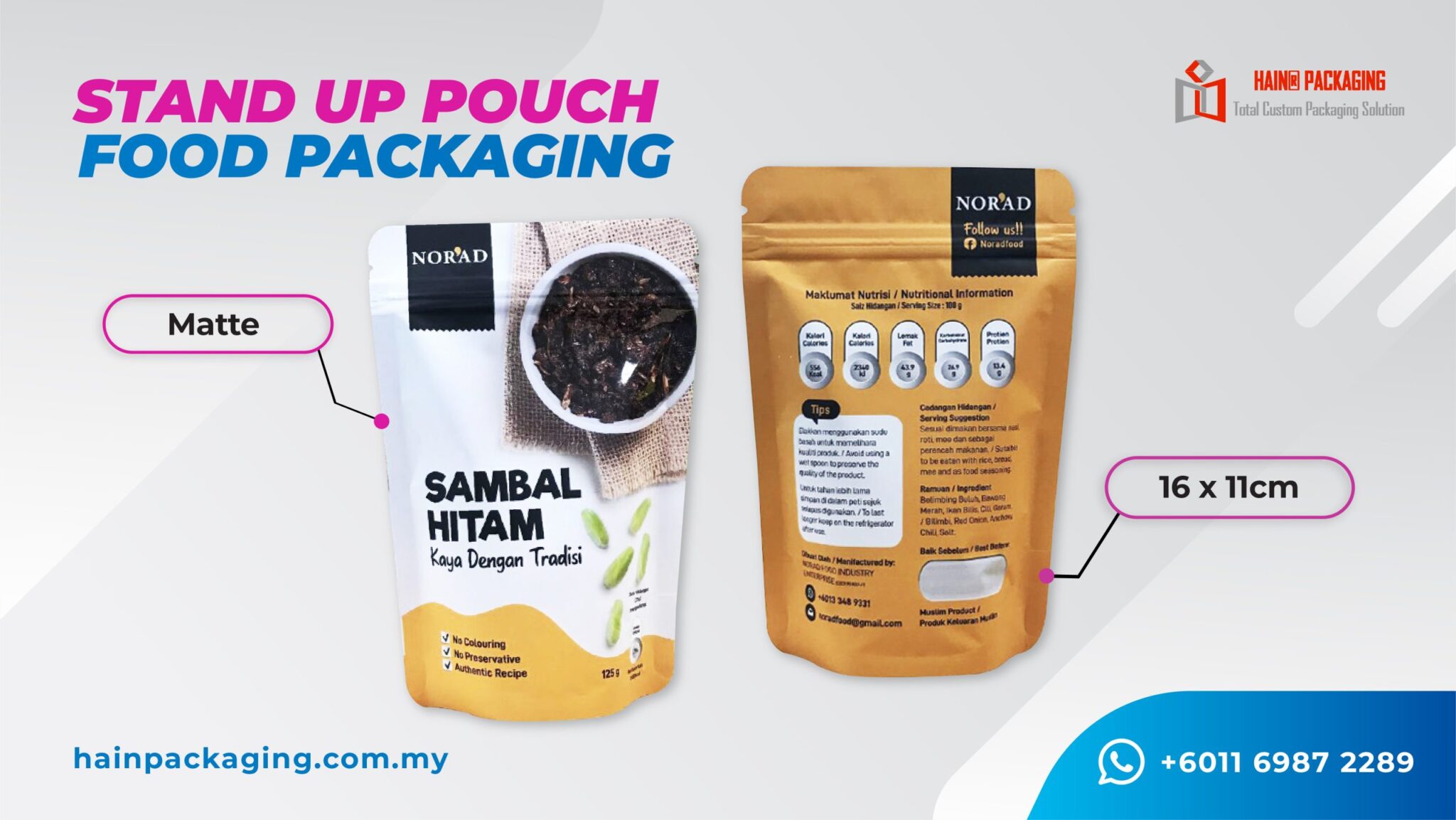
| Stand-up pouch with spout | Liquid sambal, curry sauce | Easy pouring, resealable, premium feel |
| Stand-up pouch with zipper | Thicker pastes used over multiple meals | Repeated opening and closing |
| Flat pouch / sachet | Single-serve portions, samples | Low cost per unit, portion control |
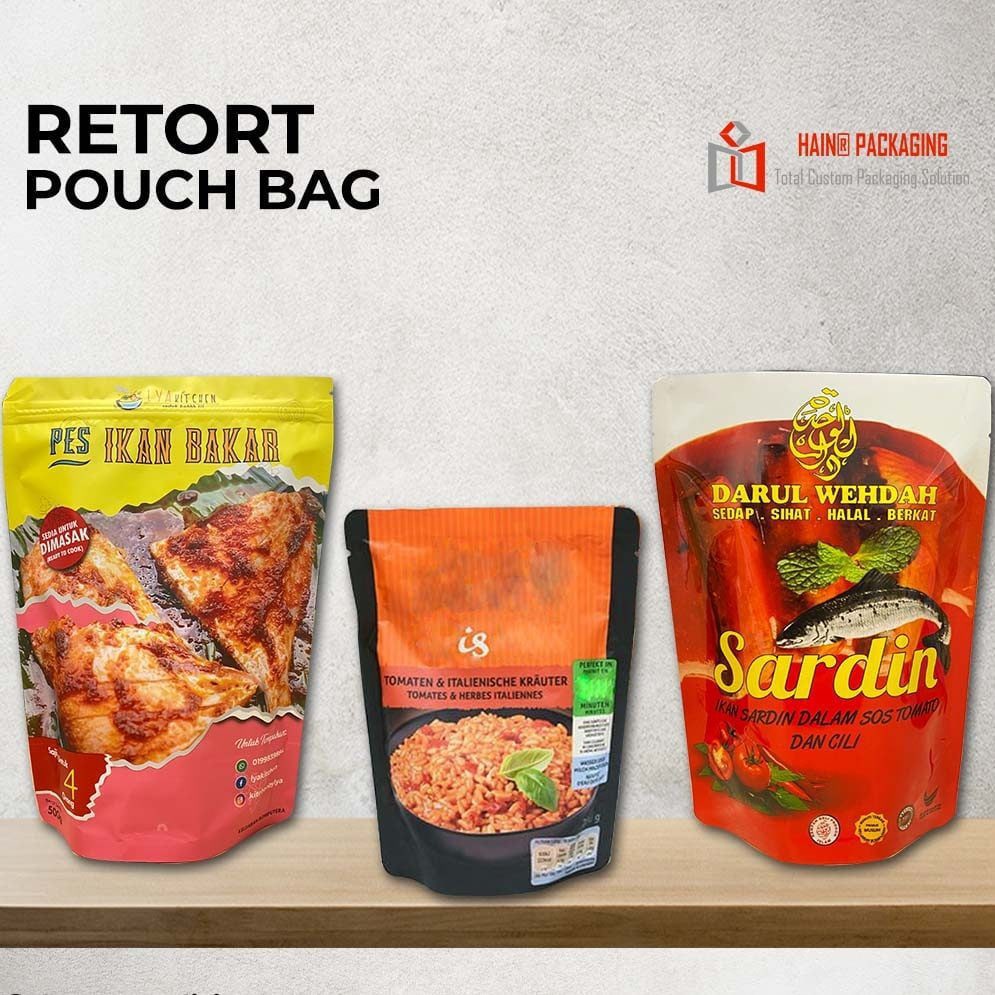
| Retort pouch | Rendang and ready-to-eat dishes | Shelf-stable without refrigeration |
Many Malaysian brands run a portfolio: stand-up pouches for retail, sachets for samples and food-service single servings, and retort pouches for the ready-to-eat line. Matching each format to its channel keeps costs aligned with revenue.
Barrier Structure Explained Simply
A typical sambal pouch is a laminate of three layers: an outer PET for print and scuff resistance, a middle aluminium foil or EVOH for the oxygen barrier, and an inner PE or CPP for the heat seal and oil contact. The foil layer is what gives 6–12 months of shelf life; without it, expect much shorter.
If you want a window to show the product, the barrier must move to the rest of the pouch and the window film must still block oxygen — usually with a clear EVOH patch. Windows are a branding trade-off: they increase visual appeal but reduce the total barrier area. Brands that sell through retail shelves often accept the trade; export brands usually do not.
Seal Strength and the Filling Line
The seal is the critical point in paste packaging: a failed seal defeats even the best film. Verify how the factory tests seal strength on every batch, and confirm the pouch is designed for your filling method — hand-filling, piston filling, or hot-fill. Hot-fill products also need a venting or cooling step before sealing to avoid ballooning.
Ask your supplier for the seal-strength test results on a sample run with your actual product, not with water. Water tests flatter seals that fail under oil. A simple practical check: fill a sample pouch with hot product, let it cool, and inspect whether oil has crept through the seal or the folds.
Compliance and Documentation for Retail and Export
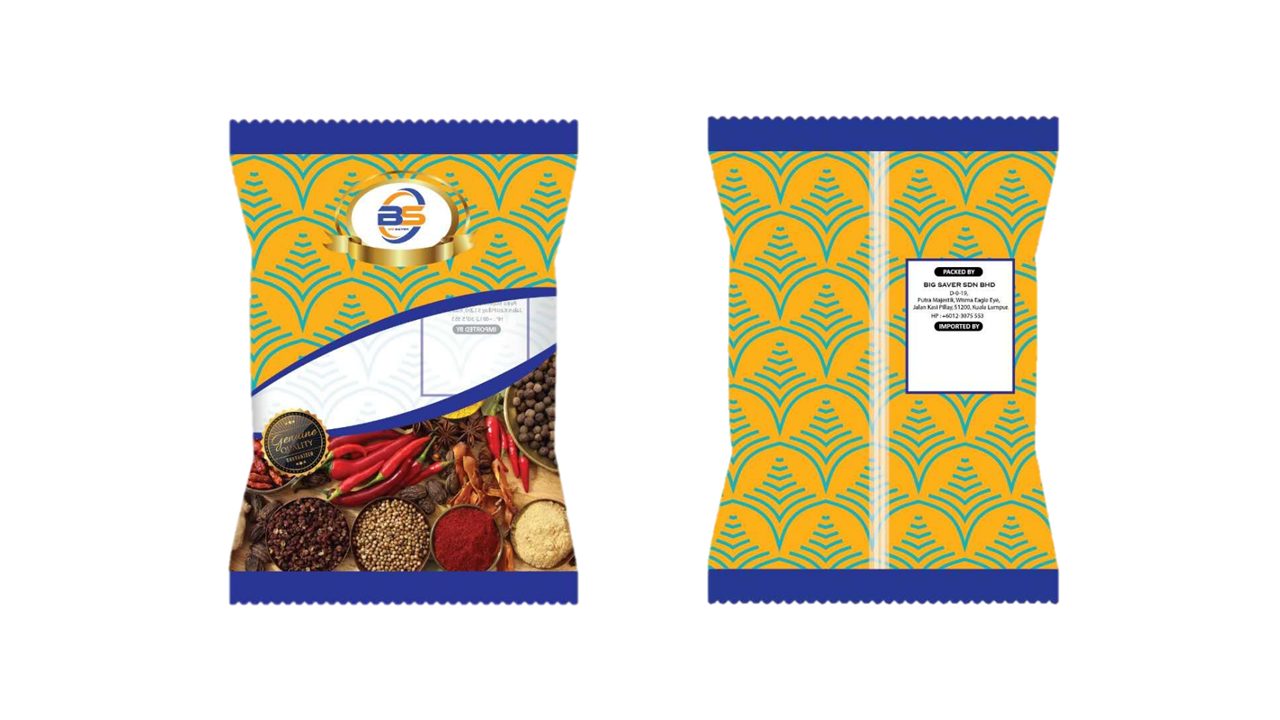
Food-contact compliance is non-negotiable (for food-contact and labelling reference points, see SIRIM’s standards). Confirm the film and inks are food-safe, that documentation is available on request, and that your claims (halal, no preservatives, shelf life) are supported by the packaging barrier and your own product testing. Retail buyers and export partners will request this folder, so build it at the first order rather than scrambling before an audit.
For export, labelling space matters: destination markets often require bilingual or specific labelling, and the pouch must carry it legibly without crowding the brand design. Reserve a labelling zone in the artwork from the start. Our sauce and sambal packaging guide covers the category in more depth.
Testing Shelf Life for Your Paste Product
Before committing to a pouch structure, run a structured shelf-life test with your actual recipe. Pack samples in the candidate pouch, store them at ambient temperature and, if relevant, under accelerated conditions, and check colour, aroma, and seal integrity at set intervals. Malaysian brands often discover that their formulation is more acidic or more oily than the generic spec suggested, which changes the film choice and the shelf-life claim they can print on pack.
Document the test results: they become part of your compliance folder, support the shelf-life statement on the label, and give your retail buyer confidence. A paste brand that can show six months of stable colour and aroma in a foil pouch is a brand with a defensible product story, not just a recipe.
Seasonal and Promotional Packaging for Sambal
Festive periods — Raya, Chinese New Year, Deepavali — are when Malaysian paste brands sell the most, and promotional formats earn their keep. Sachet multi-packs for gift sets, smaller trial pouches for new flavours, and spout pouches for the hero SKU can run side by side from one artwork family. Planning these formats together, rather than one-off, keeps the printing cost per unit lower and the brand look consistent across the campaign.
Work with the factory on a promotional timeline that accounts for artwork approval, sample, and production lead time, because festive demand does not wait. The brands that win the season are the ones whose packaging was planned two months before it started.
Retort Pouch Option for Ready-to-Eat Rendang
For ready-to-eat rendang, a retort pouch extends shelf life without refrigeration by heat-processing the sealed product. The structure must withstand retort temperatures while the seal stays intact, and the format suits export markets where chilled distribution is not guaranteed. Discuss retort feasibility with your supplier early, because the filling process and the pouch spec are designed together, not separately.
Why continuous focus-phrase usage matters: beyond the structure itself, how your brand talks about sambal rendang curry paste packaging Malaysia in product listings, FAQs, and the pack copy should repeat the exact phrase buyers search with. Consistent terminology across your site and packaging strengthens the association between the category and your brand, which compounds with every published guide.
Sambal, Rendang & Curry Paste Packaging Malaysia: Barrier and Seal Choices
This section explains the practical choices that shape sambal, rendang & curry paste packaging malaysia.
Sambal, Rendang & Curry Paste Packaging Malaysia: FAQ
Can sambal be packed in a plain ziplock bag? Only for very short shelf life or chilled distribution. For ambient shelf life, use a foil barrier and oil-resistant sealant.
What is the MOQ for custom printed paste pouches? Digital printing supports 500–1,000 pieces; gravure needs higher volume. Ask for the ladder.
Does hot filling require a special pouch? Yes — the sealant layer must tolerate the filling temperature, and the structure should resist distortion. Confirm the spec with your supplier.
How long does sambal stay fresh in a foil pouch? Typically 6–12 months at ambient temperature, depending on formulation, pH, and storage.
Can the same pouch hold both sambal and rendang? Yes if the structure is matched to the heavier product’s requirements; the oil resistance and barrier decide it.
Packaging your paste or sambal line? Contact HAIN® Packaging via WhatsApp for a structure consultation. See our pouch range on the brand site.